Award-Winning Biostatistics Tutors
serving Denver, CO
Who needs tutoring?
FEATURED BY


TUTORS FROM
- YaleUniversity
- PrincetonUniversity
- StanfordUniversity
- CornellUniversity
Award-Winning Biostatistics Tutors serving Denver, CO
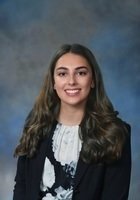
Certified Tutor
8+ years
Amanda
Most biostatistics struggles come down to not knowing which test to use or why — is this a chi-square situation or a t-test, and what does the p-value actually mean? Amanda's Master of Public Health training required heavy coursework in epidemiological statistics, so she teaches biostatistics with t...
The University of Alabama
Bachelor of Science, Biology, General
Baylor College of Medicine
Doctor of Medicine, Public Health
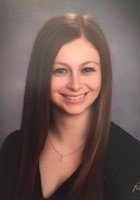
Certified Tutor
10+ years
Nina
Nina is finishing a doctorate in biostatistics at NYU after completing her master's at Columbia, which means she lives and breathes this subject — logistic regression for clinical outcomes, survival curves, study design for epidemiological research. She was a teaching assistant in Columbia's biostat...
Columbia University
Masters in biostatistics
Northwestern University
Bachelor of Arts in biological sciences (focus in neurobiology)
Columbia University in the City of New York
Current Grad Student, Biostatistics
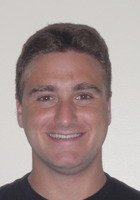
Certified Tutor
14+ years
Jason
Having completed pre-med coursework at Bryn Mawr and then medical school at Penn, Jason encountered biostatistics where it matters most — evaluating clinical trial designs, interpreting odds ratios in journal articles, and assessing whether a study's methodology actually supports its conclusions. Hi...
University of Pennsylvania
PHD, Medicine and Education
University of Pennsylvania
Master's degree in Education
Yale University
Bachelor's degree in History
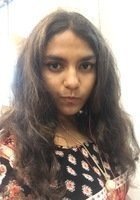
Certified Tutor
Natasha
Engineering coursework at MIT forced Natasha to build statistical models from biological and chemical datasets — the kind where understanding variance, distributions, and experimental design isn't optional but essential to getting meaningful results. Her chemical and biomolecular engineering backgro...
Johns Hopkins University
Bachelor of Science, Chemical and Biomolecular Engineering
Certified Tutor
Applying to medical school while pursuing a Master's in Public Health means Jakobi is knee-deep in the kind of data analysis biostatistics courses demand — study design, hypothesis testing, and interpreting results in health contexts. His biology degree gives him the scientific grounding to explain ...
Princeton University
Bachelors

Certified Tutor
8+ years
Ruth
Three years as an ESL instructor and a summa cum laude biology degree taught Ruth something most tutors learn the hard way — explaining quantitative concepts clearly matters as much as understanding them. Now in medical school, she breaks down biostatistics topics like study design, sensitivity and ...
The University of Alabama
Bachelor of Science, Biology, General
The University of Michigan
Doctor of Medicine, Alternative and Complementary Medicine and Medical Systems, General
Certified Tutor
Courtney
Courtney's graduate research in aquatic ecology means she's wrestled with the messy, real-world datasets that make biostatistics click — figuring out which test to run when sample sizes are uneven, or whether a correlation in field data actually holds up under regression. That experience analyzing e...
Arizona State University
Master of Science, Biology, General
University of Notre Dame
Bachelor of Science, Environmental Sciences
Certified Tutor
8+ years
Emily
Between her biology major, math minor, and four years of medical school coursework in community health and preventive medicine, Emily has encountered biostatistics from every angle — interpreting clinical studies, running analyses on biological datasets, and applying concepts like sensitivity, speci...
Indiana University-Bloomington
Bachelor of Science, Biology, General
Indiana University-Purdue University-Indianapolis
Doctor of Medicine, Community Health and Preventive Medicine
Certified Tutor
6+ years
Ingrid
Ingrid's biomedical engineering coursework at Northwestern — including undergraduate research in the John Rogers Lab — gave her hands-on experience designing experiments and interpreting the statistical methods that underpin clinical and biological research. She breaks down concepts like survival an...
Northwestern University
Bachelor of Science, Biomedical Engineering
Certified Tutor
8+ years
Sanjul
Medical school trains you to read studies critically — picking apart odds ratios, questioning sample sizes, and spotting when a confidence interval undermines a paper's bold conclusion. Sanjul, now in his final year of osteopathic medical training with a biology foundation, brings that clinical lens...
Cleveland State University
Bachelor of Science, Biology, General
University of Medicine and Health Sciences
Doctor of Medicine, Osteopathic Medicine (DO)
Nearby Biostatistics Tutors
Other Denver Tutors
Related Science Tutors in Denver
Frequently Asked Questions
Biostatistics applies statistical methods specifically to biological and health sciences data. While general statistics covers broad probability and inference concepts, biostatistics focuses on applications like clinical trial design, epidemiological studies, survival analysis, and interpreting medical research. Courses typically cover hypothesis testing, confidence intervals, regression analysis, and study design—but with examples and problems drawn from health sciences rather than business or social sciences.
This subject-specific focus means students need to understand both the statistical theory and how to apply it in medical and biological contexts, which can require different problem-solving approaches than traditional statistics courses.
Many biostatistics students struggle with connecting mathematical concepts to real-world health applications—understanding when to use a t-test versus ANOVA, or how to interpret p-values in clinical contexts. Another frequent challenge is mastering study design concepts like randomization, blinding, and confounding variables, which require conceptual thinking beyond just calculations.
Students also find data interpretation difficult, especially when reading published research and evaluating whether study conclusions are statistically justified. Personalized tutoring helps students move beyond memorizing formulas to truly understanding the reasoning behind statistical methods and their appropriate use in health sciences.
Most biostatistics courses require proficiency in algebra, basic probability concepts, and comfort with mathematical notation. Some programs expect familiarity with calculus fundamentals, though intensive calculation isn't always emphasized. The real foundation you need is logical reasoning—the ability to think through multi-step problems and understand how different concepts connect.
If your math background feels shaky, working with a tutor before starting biostatistics can help you build confidence in these fundamentals, making the course material less overwhelming and helping you focus on the biological applications rather than struggling with basic math skills.
Biostatistics requires seeing patterns across different problem types—recognizing when to apply specific tests, understanding why assumptions matter, and interpreting results in meaningful ways. Personalized tutoring helps you move from procedural understanding (knowing the steps) to conceptual understanding (knowing why those steps work). A tutor can identify exactly where your thinking breaks down and help you build stronger mental models of statistical concepts.
Tutors also help with the unique challenge of biostatistics: connecting abstract statistical theory to actual health research scenarios. They can work through real case studies with you, help you practice interpreting published studies, and build your confidence in applying methods to new problems—skills that are difficult to develop through textbooks alone.
Denver is home to several universities and health institutions where biostatistics is actively studied and taught. With 9 school districts and over 116,000 students across the Denver area, there's a strong academic community. However, finding expert biostatistics support can be challenging since it's a specialized subject—not all tutors have the health sciences background or statistical expertise needed to teach it effectively.
Varsity Tutors connects students in Denver with expert tutors who specialize in biostatistics, so you can get personalized instruction without having to search through multiple tutoring services. Whether you need help with a specific course or preparing for graduate-level work, you can find a tutor with the right expertise for your goals.
Study design is foundational to biostatistics because even the most sophisticated statistical analysis can't rescue a poorly designed study. Understanding concepts like randomization, control groups, blinding, and sample size helps you evaluate whether research findings are actually credible. Many students memorize design types without truly grasping why each element matters, which makes it hard to apply these concepts to new situations.
Working with a tutor on study design means engaging with real examples—reading actual research papers, discussing why certain design choices were made, and practicing the reasoning behind study planning. This conceptual approach helps you develop the kind of critical thinking that biostatistics courses expect, and it's essential preparation for reading and conducting health research.
Math and statistics anxiety is common, especially in challenging courses like biostatistics. Often, anxiety comes from gaps in understanding—when you can't see why a method works or how it connects to other concepts, every new problem feels unpredictable. Building confidence comes from moving from procedural knowledge to genuine understanding, so problems start to make sense rather than feeling random.
Personalized tutoring reduces anxiety by letting you work at your own pace, ask questions without judgment, and gradually build stronger conceptual foundations. As you start seeing patterns, understanding the reasoning behind methods, and successfully working through increasingly complex problems, your confidence naturally grows. Tutors help you recognize your progress and celebrate what you're learning, which is crucial for overcoming math anxiety.
Connect with Biostatistics Tutors in Denver
Get matched with local expert tutors