Award-Winning Economics Tutors
serving San Jose, CA
Economics
Tutors in San Jose
Private 1-on-1 tutoring, weekly live classes for academic support, test prep & enrichment, practice tests and diagnostics, and more to elevate grades and test scores.
Based on 3.4M Learner Ratings
UniversitiesSchools & Universities
DeliveredHours Delivered
ProficiencyGrowth in Proficiency
Who needs tutoring?
No obligation. Takes ~1 minute.
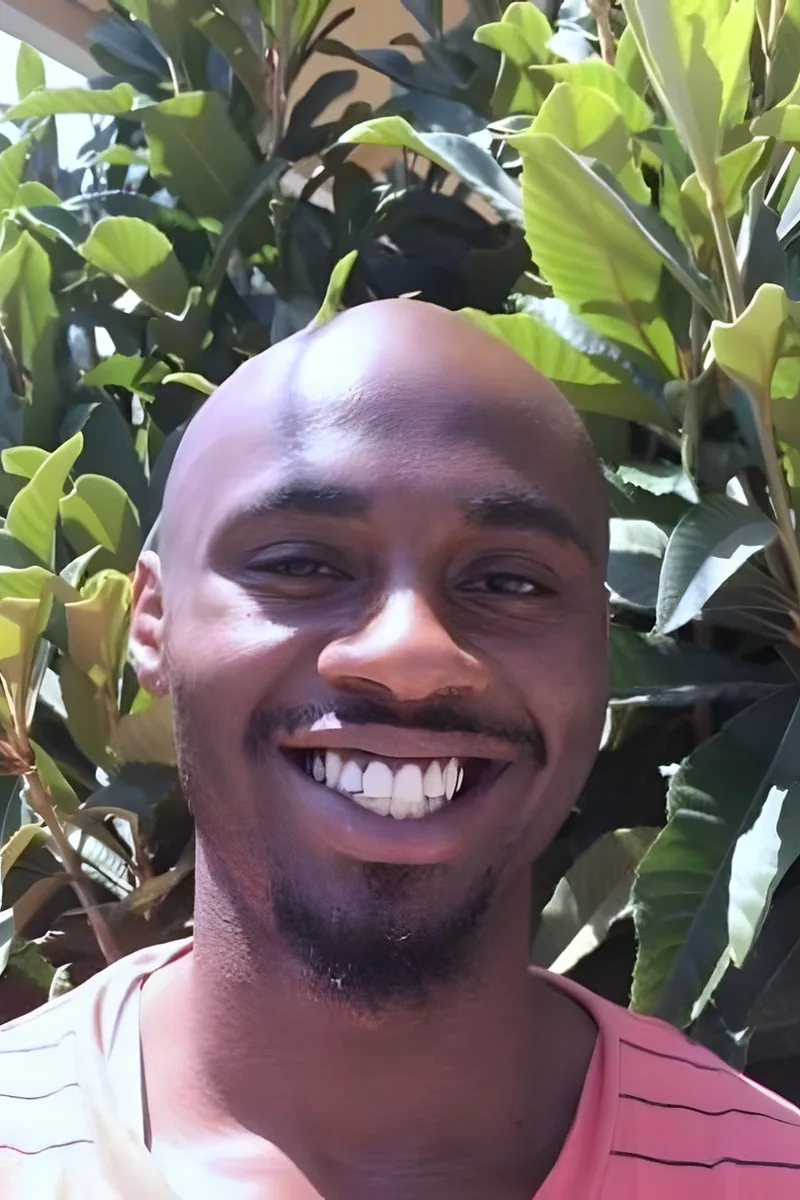
Caltech's economics program is heavily quantitative — Brian's coursework there meant building economic models with real calculus and statistical tools, not just sketching supply-and-demand curves. His computer science double major adds a computational edge that's particularly useful for students tackling game theory, optimization problems, or any econ course where the math suddenly gets serious. His 1580 SAT reflects the kind of analytical precision he brings to breaking down dense material.

Supply and demand curves are deceptively simple until students have to apply them to price ceilings, tax incidence, or market failures. Milan approaches economics the way he approaches code: by tracing the logic step by step and identifying exactly where an argument breaks down or a graph shifts.
Jacob's accounting coursework at both the undergraduate and graduate level means he doesn't just understand supply-and-demand diagrams — he can connect microeconomic theory to actual financial statements and business decisions. He digs into concepts like elasticity, market structures, and GDP accounting with the quantitative rigor that makes economics click.
I'm an affable chemistry-loving person whose joy come from delivering knowledge :D
Studying economics and finance at Wharton means Samica encounters micro and macroeconomic theory daily — supply and demand curves, market structures, GDP modeling — and can translate those concepts into clear, intuitive explanations. She connects abstract ideas like elasticity or comparative advantage to real-world business cases, which makes the material stick far better than rote definition review.
Shreya's AP Micro and AP Macro teaching experience means she knows exactly where students get tripped up — confusing movement along a curve with a shift, or mixing up fiscal and monetary policy tools. Her molecular biology coursework at Yale loaded her schedule with statistics and quantitative reasoning, so she's comfortable walking through the graphs and mathematical models that make economics click. Rated 5.0 by her students.
Carter earned his economics degree at Brown and then taught game theory to advanced middle school students at a Johns Hopkins CTY program in Hong Kong — so he knows how to make concepts like Nash equilibria, marginal analysis, and market structures click for learners at very different levels. He connects economic models to real decisions rather than leaving them as abstract graphs. His approach digs into the intuition behind supply-and-demand shifts, elasticity, and welfare analysis so the math and the logic reinforce each other.
Supply and demand curves are simple enough on the surface, but the real challenge is applying them — shifting curves correctly, interpreting elasticity, or reasoning through market failures. Benjamin's Economics degree from Notre Dame gave him deep fluency with both micro and macro frameworks, and he teaches students to think through cause-and-effect chains rather than memorize graph shapes.
Studying both History and Economics at Harvard, Finley tackles economics the way it actually works — as a discipline shaped by real-world policy decisions and historical context. He breaks down concepts like supply-and-demand elasticity, market structures, and game theory by grounding them in concrete examples rather than abstract graphs alone. Rated 5.0 by students.
Noah's political science background at Penn gave him serious exposure to economic policy — trade theory, fiscal policy debates, and how markets interact with government institutions. He teaches economics as a way of thinking about tradeoffs and incentives, connecting supply-and-demand models to real policy questions students actually care about.
Three engineering degrees — including one in applied mathematics — mean Rahi is fluent in the quantitative side of economics that often catches students off guard: optimization problems, marginal analysis, and the calculus lurking behind supply and demand curves. He also tutors macroeconomics and accounting, so he can connect microeconomic theory to the bigger fiscal picture and the financial statements where these forces show up in practice.
Environmental Science and Public Policy intersects constantly with economics — cost-benefit analysis, externalities, market failures, trade policy. Ethan brings that applied perspective to economics tutoring, connecting abstract models like supply-and-demand curves or GDP accounting to tangible policy questions students can reason through. His strong quantitative background (36 ACT, AP Statistics and Calculus) means the math side of econ never becomes a bottleneck.
Studying economics at Yale means Conor is working through the same problem sets, models, and exam formats that many of his students are currently facing — from micro concepts like elasticity and market structures to macro topics like GDP accounting and monetary policy. That proximity to the material, paired with a 1590 SAT that signals serious quantitative chops, makes him especially sharp at walking through the graphs and algebra that tend to separate students who memorize definitions from those who actually understand how economic models work.
Physics training builds a specific habit that transfers directly to economics: modeling complex systems with graphs, equations, and simplifying assumptions. Avram's three physics degrees mean he's deeply practiced at translating real-world behavior into formal models — exactly the skill students need when working through supply-and-demand curves, elasticity calculations, or equilibrium analysis.
Three economics degrees deep, Simon lives in supply-and-demand curves, GDP models, and game theory the way most people live in their native language. He unpacks concepts like elasticity, monetary policy, and market equilibrium by tying them to real headlines — tariff debates, Federal Reserve decisions, housing markets — so the math and the intuition reinforce each other.
I am a graduate of Cornell University's College of Arts and Sciences. I received my Bachelor of Arts in Chemistry with Distinction in 2015. Since graduation, I was a physics/chemistry teacher and soccer coach at a private school in Virginia for a year, where I led the soccer team to an undefeated season. Before teaching and coaching professionally, I was a Teaching Assistant for the Cornell Math and Physics Departments, where I taught many subjects including calculus, mechanics, electromagnetism. Throughout my time at Cornell and as a teacher, I tutored subjects ranging from the SAT to AP Physics and Algebra II, which is where my true talents lie: in small group or one-on-one settings where I can give students the full attention they deserve and tailor my approach specifically to their learning styles. This is why I am now pursuing tutoring as a part-time occupation at Varsity Tutors. I embrace teaching all math and science subjects, especially physics and calculus, at both the college and high school level and will go above and beyond to make sure all of my students succeed, according to their definition of success. In my spare time, I enjoy playing league soccer, basketball, tennis and guitar, and also like to travel and see as much of the world as I can.
Testimonials
Because the right Economics tutor makes all the difference.
Average Session Rating – Based on 3.4M Learner Ratings
Nearby Economics Tutors
Other San Jose Tutors
Related Business Tutors in San Jose
Frequently Asked Questions
Economics requires students to think abstractly about systems, incentives, and cause-and-effect relationships—concepts that don't always click in a traditional classroom setting. Many students struggle with graphing and interpreting supply-and-demand curves, understanding macroeconomic principles like inflation and GDP, or applying microeconomic theory to real-world scenarios. With an average student-teacher ratio of 22:1 in San Jose schools, personalized 1-on-1 instruction can help clarify these concepts at your own pace and address specific gaps before they compound.
In a classroom, teachers must move at the pace of the group, which often means some students fall behind on foundational concepts like elasticity or comparative advantage. Personalized 1-on-1 instruction allows tutors to identify exactly where your understanding breaks down, reteach concepts using different approaches, and spend extra time on problem areas without slowing down or rushing ahead. This targeted approach helps you build confidence and mastery rather than just keeping up with the curriculum.
High school Economics courses in California typically cover microeconomics (supply, demand, market structures, consumer choice), macroeconomics (GDP, inflation, unemployment, fiscal and monetary policy), and international economics. AP Economics courses go deeper into these areas with calculus-based analysis. Middle school introductions often focus on basic economic systems, scarcity, and trade. Varsity Tutors connects you with tutors who understand California's standards and can help you master these topics whether you're in a foundational course or preparing for AP exams.
Graphs are the language of Economics, and many students find them intimidating at first. The key is understanding what each axis represents and how shifts in curves reflect real economic changes—not just memorizing shapes. Personalized tutoring allows you to practice graphing problems repeatedly with immediate feedback, learn to interpret complex multi-curve diagrams, and connect visual representations back to the economic concepts they represent. With consistent practice and clear explanations, graph interpretation becomes a strength rather than a stumbling block.
During your first session, a tutor will assess your current understanding of Economics concepts, identify specific areas where you're struggling, and learn about your goals—whether that's improving your grade, preparing for the AP exam, or building foundational knowledge. This diagnostic helps the tutor create a personalized learning plan tailored to your needs. Subsequent sessions build on this foundation with targeted instruction, practice problems, and strategies to help you think like an economist.
Yes. AP Economics (Micro and Macro) requires both conceptual understanding and the ability to apply theory to new situations quickly—skills that are difficult to develop in a classroom alone. Tutors can help you master the specific content tested on the AP exam, practice free-response and multiple-choice questions under timed conditions, develop test-taking strategies, and build confidence in your ability to analyze unfamiliar economic scenarios. Personalized preparation typically focuses on your weakest topics to maximize score improvement.
Understanding that Economics isn't just abstract theory—it's about how the world actually works—transforms the subject from confusing to compelling. Expert tutors connect supply-and-demand concepts to housing prices in San Jose, use current events to illustrate inflation or unemployment, and help you see how government policy affects your own life. This real-world context makes concepts stick and helps you remember them for exams and beyond.
Varsity Tutors connects you with expert tutors who specialize in Economics and understand the curriculum standards for California schools. You can share your specific goals, current grade level, and availability, and we'll match you with a tutor whose expertise and teaching style fit your needs. The process is straightforward, and you can typically start your first session within days of connecting.
Let’s find your perfect tutor
Answer a few quick questions. We’ll recommend the right plan and match you with a top 5% tutor.