Award-Winning AP Human Geography Tutors
serving Murrieta, CA
AP Human Geography
Tutors in Murrieta
Private 1-on-1 tutoring, weekly live classes for academic support, test prep & enrichment, practice tests and diagnostics, and more to elevate grades and test scores.
Based on 3.4M Learner Ratings
UniversitiesSchools & Universities
DeliveredHours Delivered
ProficiencyGrowth in Proficiency
Who needs tutoring?
No obligation. Takes ~1 minute.
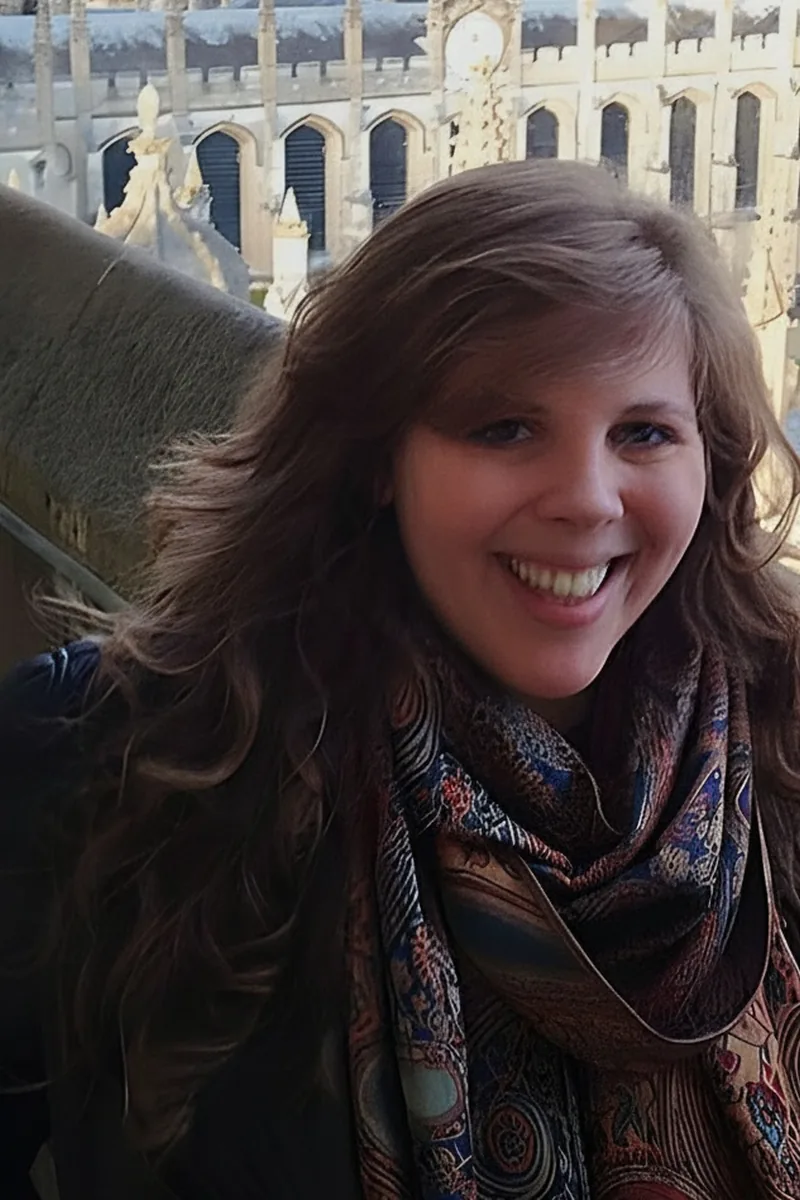
An anthropology degree from Northwestern means Samantha spent years studying exactly what AP Human Geography tests — how cultures form, spread, and collide across regions, and why migration and political organization look different depending on where you are in the world. She brings that ethnographic lens to units on cultural patterns, population dynamics, and political geography, turning abstract models into the kind of human stories that actually stick before exam day.

A Spanish degree builds the kind of cross-cultural literacy that pays off in AP Human Geography — Sydney has spent years studying how language, identity, and colonial history intersect across regions, which maps directly onto units covering cultural diffusion, language families, and political boundaries. She's also a strong writer (rated 4.9 by students), which she channels into coaching FRQ responses where students need to connect geographic models to stimulus material with clear, structured arguments.
An American Studies degree means Olivia spent years studying how cultural identity, migration, and political power play out across regions — the exact lens AP Human Geography applies to topics like cultural diffusion, ethnicity, and nation-state formation. She pairs that background with sharp reading and writing skills (1560 SAT) to coach students through the stimulus-based questions and FRQ prompts where they need to do more than recall vocabulary and actually build geographic arguments from maps and data.
Population pyramids, Ravenstein's laws of migration, and the Wallerstein world-systems model can feel abstract until someone ties them to actual places and patterns. Kshitij approaches AP Human Geography by grounding each model in concrete examples — why Rostow's stages look different in Sub-Saharan Africa versus East Asia, or how gerrymandering reshapes political boundaries. That real-world anchoring makes the free-response questions far less intimidating on exam day.
The IB program's interdisciplinary structure — connecting science, politics, and cultural analysis across a global curriculum — mirrors exactly how AP Human Geography asks students to think about spatial patterns and human decision-making. Rithika draws on that IB training and her Science, Technology, and Society coursework to unpack how technological change drives urbanization, agricultural shifts, and industrial development across Units 5 through 7. She's especially sharp at helping students see connections between models rather than treating each unit as a separate vocabulary list.
Economics and finance training at Notre Dame means Benjamin already thinks in the spatial and systems-level frameworks AP Human Geography demands — trade networks, development models like Rostow's stages, and how economic forces reshape urban and agricultural landscapes. He's especially useful for students who struggle to connect the course's vocabulary to the data-interpretation and stimulus-based questions on the exam. Holds a 5.0 rating.
Christopher's economics degree from UCLA means he already thinks in the supply-demand and development frameworks that underpin some of AP Human Geography's densest units — Rostow's modernization theory, core-periphery dynamics, and how economic incentives drive agricultural and industrial land use. His history training adds the colonial and migration context that turns those economic models into full geographic arguments on FRQ prompts. Rated 4.7 by students.
Population pyramids, Ravenstein's laws of migration, the Burgess model — AP Human Geography throws a lot of spatial concepts at students who've never taken a geography course before. Juan breaks these models down by tying them to real places and current events, which makes the free-response questions far less intimidating.
The trickiest part of AP Human Geography for most students isn't the content — it's learning to write FRQ responses that explain geographic concepts rather than just describe them. Samantha's writing and essay-editing expertise makes her particularly sharp at teaching students how to structure those responses, connecting models like the gravity model or Rostow's stages to specific evidence. Rated 5.0 by students.
Debate coaching gives Rohit a real edge on the trickiest part of AP Human Geography — the FRQ prompts where students need to construct an argument linking geographic models to stimulus material, not just recall definitions. His economics and political science training at Minnesota means concepts like Rostow's development stages, trade networks, and supranational political organization are things he's studied formally, not just skimmed in a review book. Holds a 5.0 rating.
Charlotte's economics training at Vanderbilt gives her a natural handle on the development and globalization units that dominate AP Human Geography — she can unpack concepts like Rostow's modernization model or core-periphery dynamics with real economic reasoning instead of rote definitions. Her 36 ACT composite means she's also sharp on the stimulus-based multiple choice, where reading maps and data tables quickly matters as much as knowing the content. Rated 5.0 by students.
Engineering students learn to think in systems — how inputs, feedback loops, and spatial constraints shape outcomes — which is exactly the reasoning AP Human Geography rewards when students tackle topics like urbanization models or agricultural land-use patterns. Kashish applies that analytical mindset to help break down stimulus-based questions, teaching students to extract geographic arguments from maps and data sets the way she'd approach a technical problem at Brown. Rated 5.0 by students.
Testimonials
Because the right AP Human Geography tutor makes all the difference.
Average Session Rating – Based on 3.4M Learner Ratings
Practice AP Human Geography
Free practice tests, flashcards, and AI tutoring for AP Human Geography
Nearby AP Human Geography Tutors
Other Murrieta Tutors
Related Social Studies Tutors in Murrieta
Frequently Asked Questions
Your first session is all about understanding where you are in the course and what you need most. A tutor will likely review your class notes, discuss which units or concepts feel challenging, and assess your familiarity with AP exam format and timing. This helps create a personalized study plan focused on your specific gaps—whether that's mastering cultural geography, understanding spatial patterns, or building confidence with FRQ (free-response question) writing.
Many students struggle with the breadth of content—the course covers eight units with dozens of concepts, case studies, and geographic examples. Others find it hard to connect theoretical concepts to real-world examples, or they underestimate the writing demands of the FRQs. Time management during the exam is another common issue, since students must complete 60 multiple-choice questions and three FRQs in 3 hours. Personalized tutoring helps you prioritize what matters most and develop efficient study strategies.
Score improvement depends on where you're starting and how consistently you engage with tutoring and practice. Students who work with a tutor typically see gains in both multiple-choice accuracy and FRQ writing quality within 4-6 weeks of regular sessions. The most significant improvements come from targeted practice on weak units, learning to identify question patterns, and refining your ability to support answers with geographic evidence and examples.
FRQ success in AP Human Geography requires three things: understanding what the question is asking, organizing your response with clear reasoning, and supporting claims with specific geographic examples. A tutor can help you practice the FRQ format, teach you how to read prompts for command words like "explain" versus "compare," and give you feedback on whether your examples are specific and relevant. Many students improve significantly once they see patterns in how College Board phrases questions and what graders are looking for.
The exam gives you 50 minutes for 60 multiple-choice questions and 75 minutes for three FRQs—pacing is critical. A tutor can help you practice timed sections, figure out how long to spend on each question type, and develop strategies for flagging difficult MC questions to return to later. Many students benefit from practicing full practice tests under timed conditions so the pace feels natural on test day, reducing anxiety and helping you stay confident.
Practice tests do three things: they help you identify which units or question types trip you up, they build your stamina for the full 3-hour exam, and they reduce test anxiety by making the format familiar. Taking at least 2-3 full practice tests before exam day is standard for strong AP prep. A tutor can review your practice test results with you, pinpoint patterns in your mistakes, and adjust your study focus to address weak areas before the real exam.
Case studies and real-world examples are essential—they're what separate students who memorize concepts from students who truly understand them and can apply them on the exam. The AP exam expects you to use specific geographic examples to support your answers, whether you're discussing cultural diffusion, urbanization patterns, or political boundaries. A tutor can help you build a toolkit of strong, relevant examples across all eight units so you're never stuck without evidence to back up your reasoning.
Look for tutors with strong knowledge of AP Human Geography curriculum and exam format, ideally with experience helping students prepare for the test. Tutors should understand both the content (the eight AP units) and the exam's specific demands—multiple-choice strategy, FRQ writing, time management, and how to use geographic examples effectively. Varsity Tutors connects you with expert tutors in Murrieta who know the AP exam inside and out and can tailor their teaching to your learning style and goals.
Let’s find your perfect tutor
Answer a few quick questions. We’ll recommend the right plan and match you with a top 5% tutor.