Award-Winning High School Chemistry Tutors
serving Murrieta, CA
High School Chemistry
Tutors in Murrieta
Private 1-on-1 tutoring, weekly live classes for academic support, test prep & enrichment, practice tests and diagnostics, and more to elevate grades and test scores.
Based on 3.4M Learner Ratings
UniversitiesSchools & Universities
DeliveredHours Delivered
ProficiencyGrowth in Proficiency
Who needs tutoring?
No obligation. Takes ~1 minute.
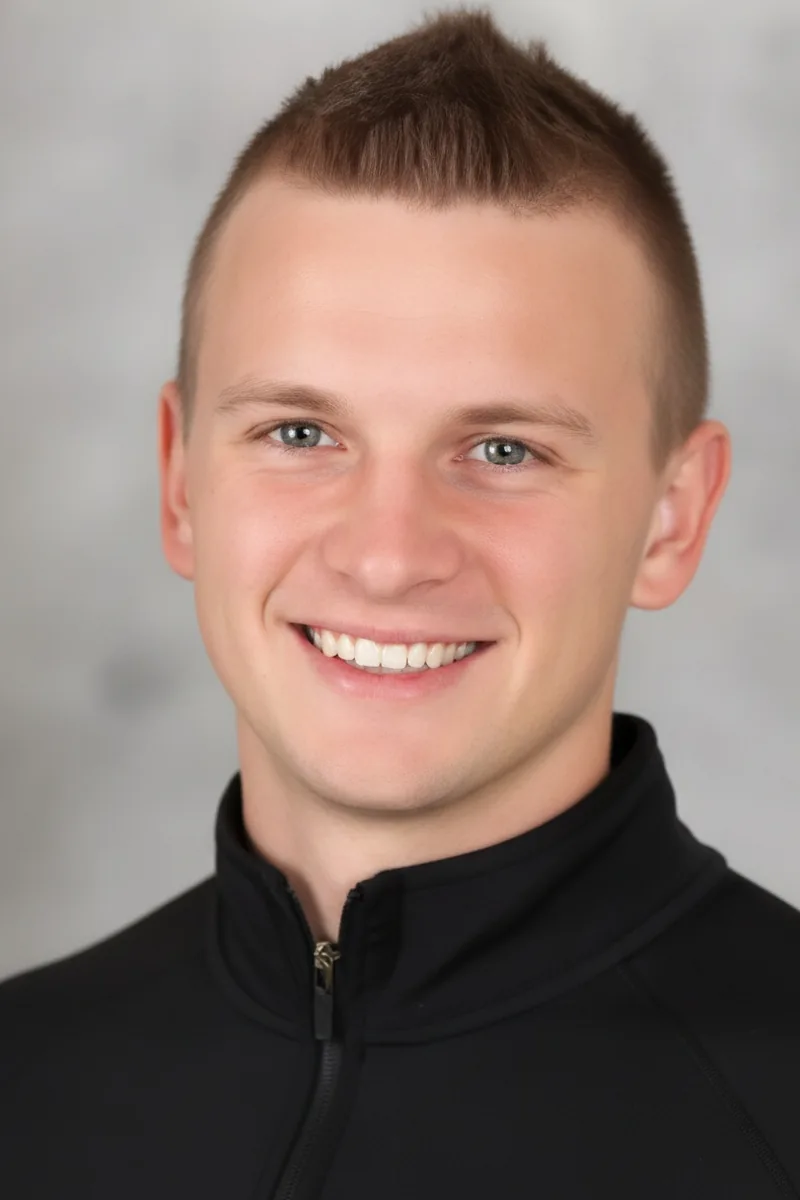
Studying bio-psychology on a pre-med track at UCSB means Aaron uses chemistry constantly — understanding neurotransmitter interactions, drug mechanisms, and cellular processes all depend on concepts like molecular polarity, bonding, and reaction energetics. He talks through problems conversationally, pushing students to explain the reasoning back to him, which quickly reveals whether they actually understand something like electron configuration or are just repeating steps. Rated 5.0 by students.

Balancing equations and stoichiometry problems click faster when you understand what's actually happening at the molecular level — and Timothy's path through AP Chemistry, AP Biology, and AP Physics in high school, followed by pre-med coursework in his current M.D. program, means he's built that deeper understanding across multiple science disciplines. He connects high school chemistry topics like gas laws and periodic trends back to the biological and physical systems where they show up again, giving students context that makes the material easier to retain. Rated 4.9 by students.
Balancing equations, understanding mole ratios, and predicting products of reactions can feel like learning a foreign language — Shant treats it that way, teaching students the vocabulary and grammar of chemistry before asking them to write full sentences. His science-heavy UCLA background means he can explain why an acid-base titration works, not just walk through the steps. He holds a 5.0 client rating.
Accepted to medical school after graduating cum laude from UCLA, Nicole has worked through general and organic chemistry at a level where topics like stoichiometry, gas laws, and reaction predictions became second nature rather than isolated chapters. She teaches nomenclature and equation balancing by anchoring each rule to the periodic table patterns that explain it, so students carry forward reasoning instead of rote memorization.
Balancing equations, predicting reaction types, and navigating the mole concept tend to be the places where high school chemistry students get stuck. Mitch approaches each of these as an engineering problem: identify what you know, figure out what's missing, and apply a logical method to close the gap. That structured thinking turns chemistry from memorization into something that actually makes sense.
Balancing equations, understanding molarity, and predicting reaction outcomes all came up regularly in Krista's Earth Sciences coursework at USC, where geochemistry was part of the core curriculum. She tackles stoichiometry and periodic trends by grounding them in tangible examples — like how mineral formation depends on the same bonding principles students encounter in class.
The jump from memorizing element symbols to actually predicting how substances react trips up a lot of high school students. Whitney tackles this by teaching the logic behind periodic trends, electron configurations, and bonding so that reaction predictions and stoichiometry calculations start to feel intuitive. Her neuroscience background means she's especially comfortable bridging chemistry with biology when those connections help concepts stick.
Balancing equations is mechanical, but understanding why a reaction happens — electronegativity differences driving bond polarity, or enthalpy changes predicting spontaneity — is where chemistry gets interesting. Nicholas connects these ideas back to the atomic-level behavior that explains them, drawing on his biology degree's heavy chemistry coursework. He's especially effective at demystifying stoichiometry and equilibrium for students who find the math side intimidating.
Stoichiometry clicks once a student sees it as unit conversion rather than abstract math — that's the kind of reframing Zhenrui brings to high school chemistry. As an electrical engineering and premed student at Columbia, he's applied these foundational concepts across physics, biology, and engineering courses, so he can show students how mole ratios, gas laws, and electron configurations actually matter beyond the textbook.
Balancing redox equations or predicting products in a double-replacement reaction often trips students up because they're trying to memorize steps instead of understanding what's actually happening at the atomic level. Pooja's biology background at UC Irvine gave her a strong command of chemistry fundamentals, and she teaches students to trace electron movement and molecular interactions so the logic behind each reaction type sticks.
Studying cancer cells at the molecular level in his M.S. program at Cal State Northridge means Siavash deals with chemical reactions, molecular structures, and solution chemistry as everyday lab realities — not abstract textbook exercises. He uses that hands-on context to unpack topics like the mole concept and chemical bonding, tying the math and theory to what actually happens when you're preparing reagents or analyzing cell behavior at the bench.
Studying neuroscience and physiology at the college level means Justin had to genuinely internalize chemistry — understanding how electrochemical gradients depend on ion behavior, or why enzyme kinetics hinge on reaction rates and activation energy. That gives him a concrete way to teach topics like bonding, equilibrium, and gas laws: he connects the abstraction to the biological machinery that runs on it, which tends to make the logic click rather than feel arbitrary. Rated 4.8 by students.
Kellie describes chemistry as her favorite subject to teach, and that enthusiasm shows up in how she digs into topics like stoichiometry and chemical equilibrium — treating them as puzzles to reason through rather than formulas to memorize. Her 1520 SAT and teaching across biology, college chemistry, and calculus give her the quantitative fluency to connect what's happening at the molecular level to the math students need to master on paper.
I'm an affable chemistry-loving person whose joy come from delivering knowledge :D
The jump from middle school science to high school chemistry trips up a lot of students right around mole conversions and electron configurations. Mark tackles these sticking points by slowing down the math and tying each calculation back to what's physically happening at the atomic level. His 5.0 student rating speaks to how well that approach lands.
Balancing equations, stoichiometry, and gas laws all click faster when students see the logic underneath the formulas. Tito breaks down each concept by connecting it to real physical behavior — why pressure and volume are inversely related, or how mole ratios actually predict what happens in a reaction. Rated 4.8 by students, he makes the quantitative side of chemistry far less intimidating.
Balancing redox reactions, predicting molecular geometry with VSEPR, and navigating stoichiometry are the three places most high school chemistry students lose their footing. Fady's approach is to make each of these visual and systematic — drawing Lewis structures step by step, for instance, rather than guessing at bond angles. Chemistry is one of his favorite subjects to teach, and that enthusiasm comes through in how he unpacks even the driest topics.
A molecular biology background requires serious chemistry fluency — Caroline spent years at UC Berkeley working through reaction stoichiometry, molecular bonding, and thermodynamics as prerequisites for her major. She approaches high school chemistry by connecting abstract concepts like electron configuration and periodic trends to tangible examples students can visualize. Rated 5.0 by students.
The periodic table, mole conversions, balancing equations — high school chemistry introduces a lot of abstract ideas in a short time. Alan tackles these by anchoring each new concept to something tangible, drawing on real examples from his university science courses. He's particularly effective at walking students through dimensional analysis and unit conversions, which tend to be the first major stumbling block.
Balancing equations, predicting products, and navigating the mole concept all become more manageable when a student sees the mathematical structure underneath. Sarah's math and physics background lets her explain high school chemistry topics like stoichiometry and gas laws with a clarity that turns confusing unit conversions into straightforward problem-solving.
Balancing equations, stoichiometry, and periodic trends can feel like a foreign language at first, but they follow clear internal logic once someone lays it out properly. Jonathan's biology degree required significant chemistry coursework, so he tackles these topics from the perspective of someone who had to truly master them — not just pass a test. He's particularly good at breaking down mole conversions and reaction types into repeatable steps.
General chemistry was the first subject Alec taught as a TA at Cornell, running problem-solving sessions where students worked through stoichiometry, equilibrium, and acid-base reactions in real time. That hands-on teaching background means he knows exactly where high schoolers get tripped up — whether it's balancing redox equations or making sense of periodic trends. Rated 4.8 by students.
Balancing equations and stoichiometry are mechanical once you see the logic, but topics like equilibrium, thermodynamics, and acid-base chemistry require real conceptual understanding. Annie tackles these through her engineering lens, connecting abstract chemical principles to tangible applications — like how reaction kinetics govern drug delivery systems she studies in her biomedical program at Cornell.
Whether it's naming ionic compounds, predicting products of a reaction, or working through gas law calculations, Ravnoor zeroes in on the specific concept causing trouble and drills it with targeted practice problems. His 5.0 rating comes from a hands-on style that keeps sessions focused on doing chemistry, not just reading about it.
Devon's pre-med track at Vanderbilt means she's taken chemistry well beyond the high school level, and that deeper exposure sharpens how she explains topics like molecular geometry, intermolecular forces, and the logic behind predicting reaction products. She emphasizes understanding the patterns on the periodic table so students can reason through unfamiliar problems instead of treating each one as a brand-new challenge.
Stoichiometry, equilibrium, and thermodynamics tend to click faster when a student can see how the math actually maps onto what's happening at the molecular level. Ellie's pre-med and engineering background means she teaches these concepts with an eye toward why the numbers behave the way they do, not just how to balance the equation.
Stoichiometry, electron configurations, and equilibrium reactions tend to feel like disconnected rules until someone shows how they fit together. Waleed's engineering coursework required strong chemistry fundamentals — particularly in thermodynamics and molecular interactions — and he uses that background to teach the logic underneath the formulas rather than just the formulas themselves.
Balancing redox equations, predicting products, and navigating stoichiometry all become more manageable when a student understands the 'why' behind each reaction type. Maggie's molecular and cellular biology degree gave her deep fluency in chemical principles, and she applies that knowledge to demystify everything from periodic trends to equilibrium calculations. She holds a 5.0 rating from students.
Cognitive studies at Vanderbilt might not scream chemistry, but Vy's science coursework and her 35 ACT mean she's no stranger to reasoning through problems involving moles, gas laws, or balancing equations. She's especially effective at teaching students how to read what a chemistry problem is really asking — a skill she honed tutoring algebra and science in under-resourced schools where clear, patient explanation wasn't optional.
A chemistry major at Harvard who's heading to Columbia Medical School, James teaches high school chemistry with the kind of depth that makes concepts like stoichiometry and electron configurations click on a conceptual level — not just as formulas to memorize. He connects classroom topics to real-world applications in medicine and materials science, which tends to turn chemistry skeptics into students who actually enjoy the subject.
Between his UCLA biology coursework and medical school, Abrahim has taken chemistry from multiple angles — stoichiometry, equilibrium, acid-base reactions, thermodynamics. He's direct about pinpointing where a student's understanding breaks down, whether that's balancing redox equations or interpreting periodic trends. His 5.0 rating speaks to how well that targeted approach works.
Three-plus years of classroom instruction in advanced chemistry means Sugi has seen exactly where high school students get stuck — balancing redox equations, applying Le Chatelier's principle, or connecting molecular geometry to polarity. She teaches the underlying logic of each topic so students build real problem-solving skills, and her biochemistry training at Rice keeps the material grounded in real-world applications.
Stoichiometry, equilibrium, and electron configurations each demand a slightly different kind of thinking, and Emily switches between them fluidly thanks to her science-heavy coursework at Cornell. Her biology concentration means she often connects chemistry concepts to real biochemical contexts — why buffer systems matter, how thermodynamics drives reactions — which tends to make the material click faster for students who need more than rote formulas.
Testimonials
Because the right High School Chemistry tutor makes all the difference.
Average Session Rating – Based on 3.4M Learner Ratings
Nearby High School Chemistry Tutors
Other Murrieta Tutors
Related Science Tutors in Murrieta
Frequently Asked Questions
High school chemistry requires balancing abstract molecular concepts with practical problem-solving skills. Students often struggle with visualizing atoms and molecules, balancing chemical equations, unit conversions (like moles and molarity), and understanding why reactions occur rather than just memorizing them. Personalized tutoring helps bridge the gap between memorization and true conceptual understanding, which is essential for success on exams and in lab work.
During an initial session, a tutor will assess your current understanding of chemistry concepts, identify specific areas where you're struggling—whether it's stoichiometry, equilibrium, or lab technique—and discuss your goals for the course. This personalized evaluation allows the tutor to create a targeted learning plan that addresses your unique needs and learning style, ensuring every session builds on your progress.
Yes. Tutors can help you understand the scientific method, prepare for lab reports, review experimental design, and clarify the chemistry concepts behind your hands-on work. This support strengthens both your technical lab skills and your ability to connect theoretical concepts to real-world applications, making you more confident and prepared in the lab.
Balancing equations and stoichiometry are foundational skills that many students find challenging because they require both pattern recognition and conceptual understanding. A tutor can break down the process step-by-step, help you develop systematic strategies, provide targeted practice problems, and explain the chemistry principles behind why equations must balance—turning a frustrating skill into something you can master.
Personalized tutoring focuses on your specific weak areas rather than generic test prep. Tutors use practice problems, exam-style questions, and retrieval practice techniques to reinforce learning and build test-taking confidence. With a 23.5:1 student-teacher ratio in many Murrieta classrooms, personalized 1-on-1 instruction gives you the focused attention needed to close knowledge gaps before exams.
Chemistry is built on interconnected concepts—understanding atomic structure helps you grasp bonding, which explains reactions, which informs stoichiometry. When you memorize facts in isolation, you struggle to apply knowledge to new problems or lab situations. Personalized tutoring emphasizes conceptual understanding and scientific reasoning, so you can solve unfamiliar problems and truly grasp why chemistry works the way it does.
Varsity Tutors connects you with expert tutors who have strong backgrounds in chemistry, whether through advanced degrees, teaching experience, or specialized expertise in high school curricula. Tutors are vetted professionals who understand how to teach chemistry concepts clearly and can adapt their approach to your learning style and goals.
Chemistry involves visualizing things you can't see—atoms, electrons, molecular geometry, and reaction mechanisms. Tutors use diagrams, models, analogies, and interactive explanations to make these abstract concepts tangible and easier to understand. This visual and conceptual approach helps concepts stick, making it easier to apply them to problem-solving and exams.
Let’s find your perfect tutor
Answer a few quick questions. We’ll recommend the right plan and match you with a top 5% tutor.