Award-Winning Physics Tutors
serving Concord, CA
Physics
Tutors in Concord
Private 1-on-1 tutoring, weekly live classes for academic support, test prep & enrichment, practice tests and diagnostics, and more to elevate grades and test scores.
Based on 3.4M Learner Ratings
UniversitiesSchools & Universities
DeliveredHours Delivered
ProficiencyGrowth in Proficiency
Who needs tutoring?
No obligation. Takes ~1 minute.
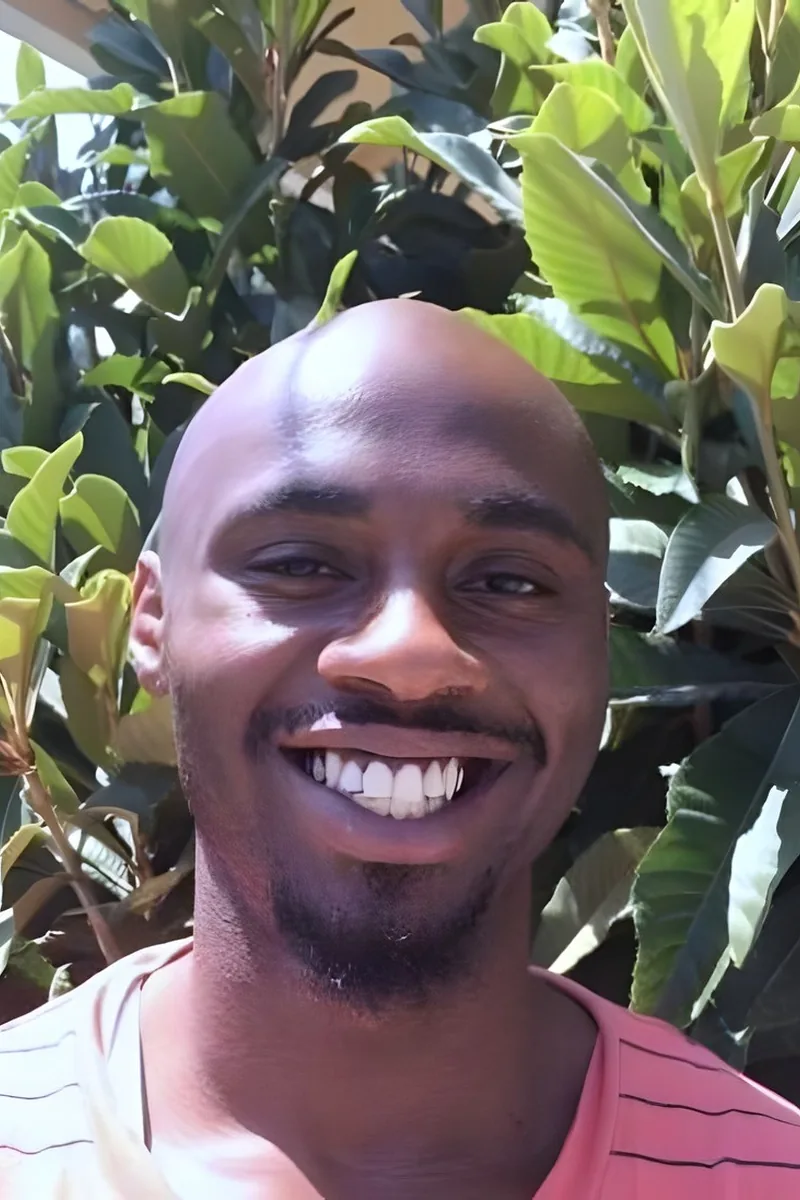
A Caltech economics and computer science graduate, Brian brings serious quantitative depth to physics — from Newtonian mechanics and energy conservation through electromagnetism and wave behavior. He teaches students to set up problems systematically, identifying which principles apply before touching a single equation, which is the skill that separates students who understand physics from those who just memorize formulas.
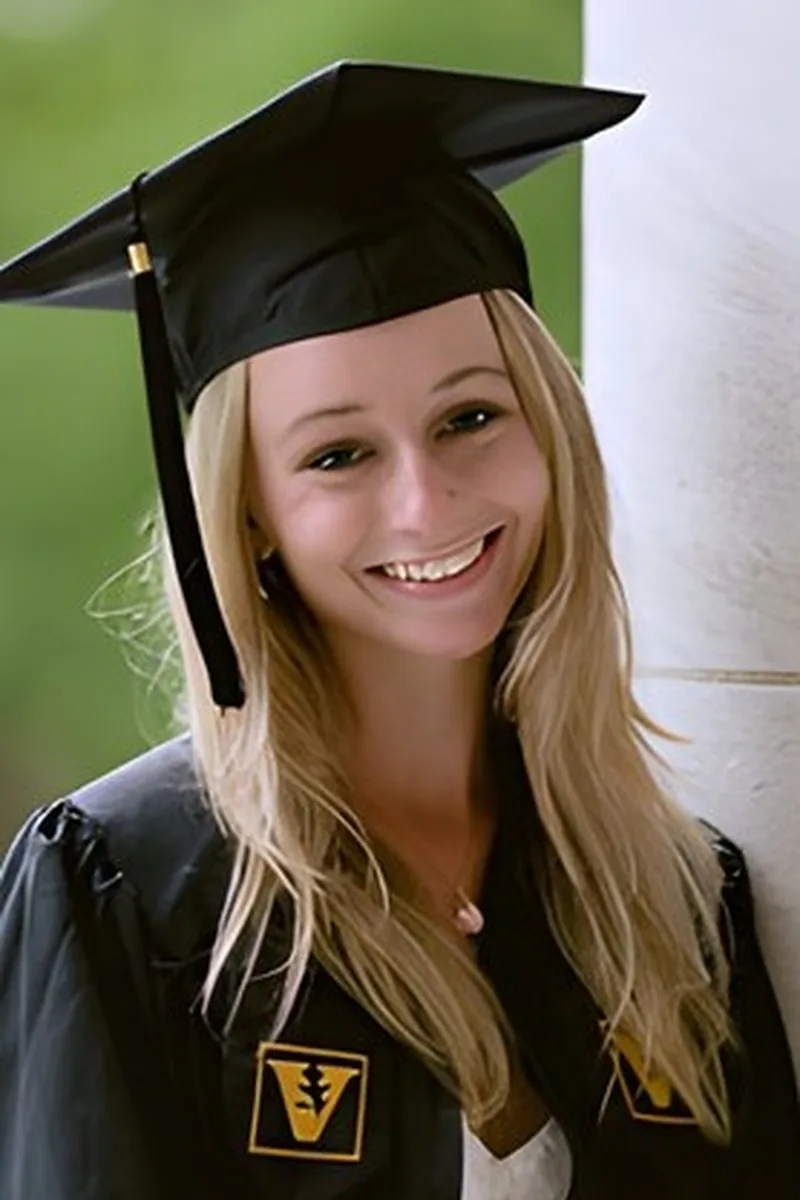
Jackie took AP Physics C — the calculus-based version — and scored a 5 on the exam, which means she's comfortable with everything from Newtonian mechanics to electromagnetic induction. She unpacks free-body diagrams and energy conservation problems by tying the math to real physical situations students can visualize. That combination of calculus fluency and physical intuition makes her especially effective for students preparing for AP or college-level physics.
Engineering school means solving physics problems under pressure for four straight years — kinematics, electromagnetism, thermodynamics, all of it applied to real systems. Mitch uses that background to teach physics as a problem-solving discipline: sketch the diagram, identify the forces, choose the right equation, then let the math do the work.
Studying both biological and physical sciences at UC Santa Barbara gave Kevin an unusually broad grip on physics — from Newtonian mechanics and energy conservation to electromagnetism and wave behavior. He teaches students to start every problem by identifying what's actually being conserved or balanced, which cuts through the intimidation of long word problems. Once that framework is in place, the math becomes a tool rather than an obstacle.
With dual physics degrees and state teaching certification, Gerardo has taught the full introductory sequence — from Newton's laws through electromagnetism — enough times to know exactly where students start mixing up concepts like net force and acceleration or confusing work with force. He breaks each problem down to its physical story first, getting students to describe what's actually happening before any equation appears on the page. That teacher-trained instinct for pacing and scaffolding means even students who dread physics start building real confidence with multi-step problems.
Nicholas treats physics as the foundation underneath his other sciences, which gives him a practical angle on topics like kinematics, energy conservation, and electromagnetism. He walks through problems by identifying which principles apply before touching a single equation — a habit that keeps students from grabbing random formulas and hoping for the best. His 33 ACT composite reflects the same analytical rigor he brings to physics problem-solving.
Neuroscience at Pomona College meant Whitney spent years applying physics principles — from electrical circuits in neural signaling to fluid dynamics in the cardiovascular system — long before she started teaching them. She walks students through kinematics, force diagrams, and energy conservation by emphasizing the physical intuition behind each equation, so problem-solving becomes reasoning rather than formula-hunting.
Tutoring physics since her undergraduate years at UC Irvine, Pooja developed her approach by teaching both calculus and physics side by side — so when a student gets stuck on a projectile motion or work-energy problem, she can tell whether the gap is in the physics reasoning or the underlying math. Her biology background also gives her a knack for grounding abstract force and momentum concepts in real-world systems students can visualize, like how tension and equilibrium play out in the human body.
Integrative biology at UC Berkeley isn't just memorizing organisms — Jack's coursework pulls heavily from mechanics, thermodynamics, and wave behavior to explain everything from biomechanical forces to diffusion across membranes. That constant back-and-forth between biological systems and physical principles gives him a knack for making abstract physics scenarios feel concrete, especially when students need to connect a real-world setup to the right equation. His 1590 SAT score speaks to the quantitative precision he brings to problem-solving.
Studying both physics and mathematics at Occidental means Drew tackles the same mechanics, wave, and energy problems his students encounter — and he understands the algebra and trig machinery behind them well enough to pinpoint exactly where the math is tripping someone up versus the physics. He breaks problems down by first identifying what type of interaction is at play — collision, field, restoring force — then builds the solution step by step so students see the logic rather than guessing at formulas.
Pursuing a physics-engineering 3-2 dual degree means Valerie is deep in the coursework right now — mechanics, electromagnetism, and wave phenomena aren't distant memories but problems she's actively solving every week. That real-time fluency with the material, plus experience tutoring AP Physics 1 students, lets her pinpoint exactly where a concept like Newton's third law or rotational inertia stops making sense and rebuild the reasoning from there.
Understanding physics means learning to translate a messy real-world scenario into a clean free-body diagram or energy equation — and that translation step is exactly where most students get stuck. Tito walks through problem setup methodically, showing how to identify which principles apply before touching any math. His 4.8 rating speaks to how well that structured approach clicks with students.
Neuroscience coursework at Indiana University Bloomington put Jenna through the full gauntlet of mechanics, electricity, and wave physics — the same material that shows up in introductory courses — plus the biophysics applications that make those principles feel concrete rather than theoretical. She leans on that science background to teach students how to read a problem, identify the relevant forces or energy transfers, and build toward the math step by step. Rated 4.9 by students.
Kinematics, free-body diagrams, energy conservation — physics problems often require translating a word problem into the right equation before you can even start solving. Fady tackles that translation step explicitly, teaching students to map physical situations onto mathematical frameworks. His comfort with both the math and the science side means he can address gaps in either without losing momentum.
A Physics and Mathematics degree from Clark University gave Sarah the rare combination of physical intuition and mathematical rigor that this subject demands. She digs into everything from Newtonian mechanics to electromagnetism by connecting the underlying math — differential equations, vector calculus, linear algebra — to the physical phenomena students are trying to understand.
I am one of many Varsity Tutors. I attended Jesuit High School in Carmichael, CA where I graduated with a 4.3 GPA taking multiple AP and honors courses (AP Bio, Chem, Physics B, Gov, Macroeconomics, Microeconomics, English Lit, and English Lang). I also participated in several tutoring organizations throughout high school.
I am a UCLA Bioengineer. I am a well qualified tutor and have had many years of experience in both paid and unpaid roles from 6th grade to 12 grade to present. I have always excelled in academics, math, writing, and english and have scored well on all standardized tests and state tests. I have scored 800/800 in SAT 1 math, SAT 2 math. I have scored 760/800 in SAT writing. I received scores of 5/5 in AP Calculus AB and BC and have taken numerous other APs, passing the APs in Physics, Biology, Literature, Language and Composition, Environmental Science, Economics, US history, and Chemistry. I was the President of my high school's only tutoring club and only math club, Infinity Math Club, where I dedicated my time tutoring struggling students in all math levels. I was a tutor in my high school's RAMS program for all academic subjects. I love working with students and love to see them succeed in subjects that they once struggled in.
I am a BS/MS student at Columbia University studying Electrical engineering and also following the premed curriculum. After my undergraduate, I hope to pursue an MD-PhD and work in a teaching/research hospital as a physician-engineer.
I'm Arian. I graduated from Wesleyan University with degrees in English and Environmental Studies, with a focus on creative writing. For my senior thesis, I wrote a 50-page epic poem that intertwined the geobiological evolution of the earth with my family history.
I'm an affable chemistry-loving person whose joy come from delivering knowledge :D
Engineering students see physics differently than most tutors do — every force diagram, energy conservation problem, and wave equation is a tool they actually use. Ellie's biomedical engineering program at Yale means she tackles mechanics, electricity, and thermodynamics regularly in applied contexts. She unpacks the math behind each physics concept so students understand the equations instead of just memorizing them.
Between a mechanical engineering bachelor's and a PhD program at Rice, Jeffrey has spent years solving statics, dynamics, and thermodynamics problems that most students only encounter in their first physics course. He taught calculus-based physics at Notre Dame and assisted in Differential Equations and Mechanics, so he knows exactly where students lose the thread — especially when multi-step force and energy problems demand both physical reasoning and clean math. Rated 4.9 by students.
A Stanford computer science and political science student, Margaret went through the Project Lead the Way STEM magnet program, where physics wasn't just a class but a daily toolkit for engineering challenges. She teaches kinematics, force diagrams, and energy conservation by tying each concept to tangible scenarios that make the math feel purposeful.
Engineering is applied physics, so Kate spent years solving the exact kinds of problems — free-body diagrams, energy conservation, circuit analysis — that show up in introductory physics courses. She walks through each problem by identifying what physical principle applies and why, which builds the kind of intuition that makes new problems feel approachable instead of intimidating.
Studying biochemistry means Elijah lives at the intersection of physics and chemistry, applying concepts like thermodynamics, electrostatics, and wave behavior to molecular systems every semester. He tackles physics problems by teaching students to sketch the situation, identify forces, and translate the diagram into equations — a process that works from kinematics through electromagnetism. That systematic breakdown turns intimidating multi-step problems into something students can actually navigate.
Studying applied math at Stanford gave Alex a deep comfort with the mathematical backbone of physics — setting up differential equations for oscillating systems, working through vector fields, or translating a word problem into a free-body diagram. He teaches the problem-solving process itself, showing students how to identify which principles apply before touching a single equation.
Dylan has taken both mechanics and electricity/magnetism at the college level through Northwestern's engineering program, giving him deep familiarity with everything from free-body diagrams to circuit analysis. He unpacks problems by identifying which physical principles apply first — conservation of energy, Newton's laws, Gauss's law — before touching a single equation.
Mechanical engineering grad school is essentially applied physics on repeat — Aaron solves statics, dynamics, thermodynamics, and fluid mechanics problems daily, so the concepts in introductory and AP-level courses are second nature rather than something he has to dust off. He's especially sharp at breaking down free-body diagrams and energy conservation setups, connecting the physical picture to the math so students see why an equation applies instead of guessing which one to use. Rated 5.0 by students.
Three science degrees from Yale — including one in chemistry — mean Zosia has worked through mechanics, thermodynamics, and electromagnetism problems repeatedly across disciplines, building the kind of cross-subject fluency that makes her especially clear on where physics concepts connect to the math underneath. She digs into the specific step where a student's reasoning breaks down, whether that's setting up Newton's second law for a pulley system or tracking signs through a conservation-of-energy equation. Rated 4.9 by students.
Engineering students solve physics problems differently than most — they diagram forces, track units obsessively, and translate word problems into equations almost automatically. Annie brings that engineering instinct from her Cornell coursework to topics like kinematics, Newton's laws, energy conservation, and circuits, showing students a systematic approach that works across problem types.
Bidyut's dual focus in biomedical engineering and computer science at Johns Hopkins means physics isn't something he studied once — it's embedded in his daily coursework, from mechanics to electromagnetism to fluid dynamics. He teaches students to translate word problems into free-body diagrams and equations systematically, rather than guessing which formula to use. That structured approach, combined with his 5.0 client rating, makes him especially effective for students who feel lost in problem-solving.
Dennis doesn't just teach physics — he does it. His research at Princeton simulating cosmic ray acceleration at supernova shock fronts and his engineering work designing optical filters at Norfolk State mean he can connect textbook topics like kinematics, energy conservation, and wave behavior to real systems. That context turns abstract force diagrams and equations into something students can actually picture.
Testimonials
Because the right Physics tutor makes all the difference.
Average Session Rating – Based on 3.4M Learner Ratings
Practice Physics
Free practice tests, flashcards, and AI tutoring for Physics
Nearby Physics Tutors
Other Concord Tutors
Related Science Tutors in Concord
Frequently Asked Questions
Many students struggle with visualizing abstract concepts like forces, motion, and electromagnetic fields—topics that are hard to grasp without hands-on practice. Others find the math side challenging, especially unit conversions, equation balancing, and applying formulas to real-world scenarios. With Concord's average student-teacher ratio of about 21:1, personalized instruction can help you work through these specific sticking points at your own pace.
Your first session focuses on understanding where you are right now—whether you're struggling with Newton's laws, circuits, thermodynamics, or test preparation. A tutor will assess your current understanding, identify gaps, and talk with you about your goals, whether that's improving your grade, preparing for the AP Physics exam, or building confidence in the subject. This personalized approach helps create a tutoring plan that actually fits your needs.
Physics is everywhere—from how your phone's accelerometer works to how bridges stay standing—but textbooks don't always make those connections clear. Expert tutors can explain concepts through practical examples, design simple experiments, and help you see why the theory matters. This deeper understanding makes physics less abstract and much easier to remember and apply on tests.
Absolutely. Many students understand the physics but get stuck on the mathematical execution—solving for variables, unit conversions, or manipulating equations. Tutors can break down the math skills you need, show you how to set up problems correctly, and help you practice until these steps become automatic. This bridges the gap between understanding the concept and actually solving the problem.
Yes. Tutors can help you understand the scientific method behind your lab work, interpret data, draw valid conclusions, and write clear lab reports that explain your findings. They can also help you prepare for lab practicals and understand how experimental results connect to the theory you're learning in class.
AP Physics requires both deep conceptual understanding and the ability to apply knowledge to novel problems quickly. Tutors can help you master the core content, practice with released AP exam questions, identify your weak areas, and develop test-taking strategies. With focused preparation, many students improve their scores significantly.
Varsity Tutors connects you with tutors who have strong backgrounds in physics—often with degrees in physics, engineering, or related sciences, plus real teaching experience. Tutors understand both the content and how to explain complex ideas clearly, so you actually understand the material rather than just memorizing formulas.
Pricing varies based on the tutor's experience, your specific needs, and how frequently you meet. We offer flexible options to fit different budgets and schedules. Contact us for a personalized quote and to get matched with a tutor who's the right fit for your physics goals.
Let’s find your perfect tutor
Answer a few quick questions. We’ll recommend the right plan and match you with a top 5% tutor.