Award-Winning ACT Science Tutors
serving Concord, CA
ACT Science
Tutors in Concord
Private 1-on-1 tutoring, weekly live classes for academic support, test prep & enrichment, practice tests and diagnostics, and more to elevate grades and test scores.
Based on 3.4M Learner Ratings
UniversitiesSchools & Universities
DeliveredHours Delivered
ProficiencyGrowth in Proficiency
Who needs tutoring?
No obligation. Takes ~1 minute.
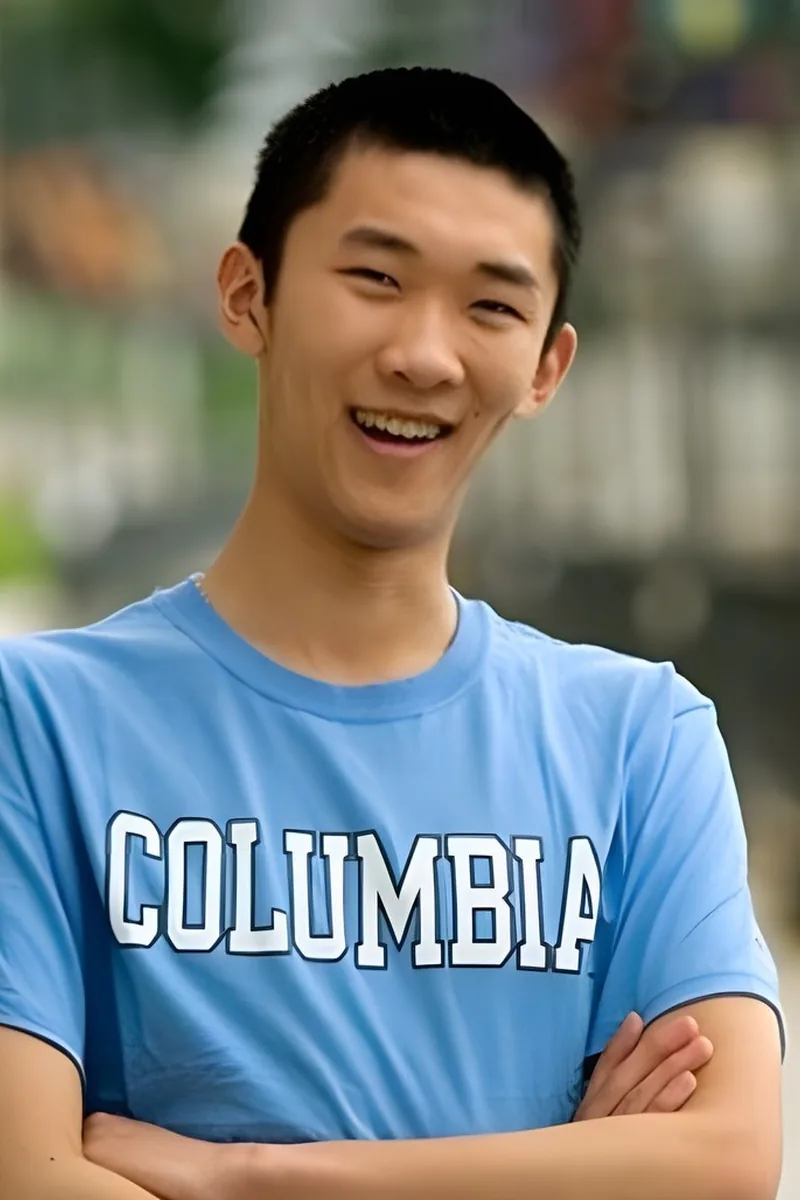
Treating the ACT Science section as a data-interpretation exercise rather than a science quiz is the key shift most students need. Zhenrui's background in electrical engineering and premed coursework at Columbia means he can quickly decode graphs, conflicting viewpoints passages, and experimental designs — and he teaches students the same systematic reading approach that earned him a perfect 36 composite.

Most students panic when they see dense graphs and conflicting scientist viewpoints on the ACT Science section, but the actual science knowledge required is minimal. Jackie, who scored a 35 here, treats it as a data interpretation exercise — teaching students to read axes, identify trends, and compare experimental setups before even glancing at the answer choices. Her 5.0 rating speaks to how quickly that approach clicks.
I'm an affable chemistry-loving person whose joy come from delivering knowledge :D
I am currently attending UCLA School of Dentistry. I have spent a big chunk of my life tutoring. I had 600 hours of volunteer experience tutoring 5th graders in language. I also was the Tutoring Head of the Science National Honor Society in high school and spent every week tutoring high school level biology and chemistry. I spent one summer working at Kumon tutoring children in basic math and reading. In college, I spent two years tutoring adults to pass their GED. I was also an Undergraduate Teaching Assistant (UTA) for a development and physiology biology class, as well as a Peer Tutor for other intro level biology classes. If you chose me as your tutor, I look forward to working with you and helping you be the best student you can be!
I am currently a sophomore at NYU studying English and Journalism. However, I can help with almost any subject, including math and science, as I took advanced-level courses and 13 AP tests in high school. I have years of experience tutoring students of all ages, from elementary school through high school. In my spare time, I enjoy playing the violin, reading, and writing. I live in New York City during the academic year (September - May) and would be happy to tutor in-person (depending on the travel distance) then. Of course, if you/your child is more comfortable with online tutoring, I can tutor online year-round. Thanks for dropping by, and I hope to work with you/your child soon!
The ACT Science section is really a data-interpretation exam dressed up in lab coats — students rarely need outside science knowledge. Michael treats each passage like a puzzle: he teaches students to read graphs and tables first, ignore jargon that doesn't appear in the questions, and identify conflicting viewpoints in the Dueling Scientists format before time runs short.
The ACT Science section is really a data-interpretation exam disguised as science — students rarely need outside knowledge and almost always need to read graphs, compare experimental setups, and spot trends under time pressure. Ben treats it like a close-reading exercise, teaching students to identify what each figure actually shows before jumping to the questions. His 33 ACT composite speaks to his command of this approach.
I am passionate about living life to the fullest and making a difference in the lives of others.
I am a recent graduate of Harvard University, where I received my Bachelor of Arts in English Literature with an emphasis on screenwriting. Although I love literature and writing, I am most passionate about tutoring math. I have five years of experience as a math tutor, during which time I helped students ages 3-17 with math ranging from basic arithmetic to pre-calculus. My favorite math topic is algebra, particularly because of its usefulness in solving real-world word problems. In addition to mathematics, I find joy in teaching/elucidating Shakespeare to high-school students. As a classically trained actor, I find it fun to tackle Shakespeare’s dense texts from a performance and character-driven perspective. In my spare time, I enjoy vegan baking and roller-blading.
Most of the ACT Science section isn't testing what students know about biology or chemistry — it's testing whether they can read graphs, compare experimental setups, and draw conclusions from data. As a scientist with a computer science background built on data analysis, Christina walks students through exactly how to extract answers from figures and tables without getting distracted by unfamiliar terminology.
I am a 2018 graduate of University of California Santa Barbara, with a B.S. degree in Biological Sciences through the Honors Program. I consider education to be tremendously important not just during development, but also throughout life. I believe it's critical to establish the right attitude toward learning; a feat that once accomplished can improve a student's long-term output in school. Education is an integral part of my career choice: I aspire to become a physician, a career intertwined with knowledge and education. However, teaching and learning are present in every career, and every part of life for that matter.
Most students overthink the ACT Science section by trying to recall biology or chemistry content, when the real skill is reading graphs, interpreting experimental designs, and spotting trends in data tables under time pressure. Chandler pairs his 34 ACT composite score with daily lab experience as a Chemistry major at Occidental, so he teaches students exactly how to extract answers from figures without getting distracted by unfamiliar terminology.
Most students panic when they see unfamiliar experiments on the ACT Science section, but Aaron treats it as a data-reading exercise — the actual science knowledge required is minimal compared to the skill of extracting trends from tables and graphs under time pressure. As a bio-psychology major on the pre-med track, he's comfortable with every content area the section throws in, from chemistry to biology to physics. He scored a 32 ACT composite and holds a 5.0 student rating.
I am confident that by tailoring personalized learning sessions to individual student needs and giving students the resources and skills they need to succeed, any student can ace their next exam, get the best grade, or get into the college of their dreams.
I'm particularly passionate about chemistry, and am excited to share my enthusiasm for science with others. With the life sciences, I emphasize overall understanding in place of rote memorization. With math, I stress practice to best develop critical thinking and problem solving techniques. These are general strategies that can be adapted to meet the unique learning style of each student.
I am a graduate of Southern Methodist University. I received my Bachelor of Fine Arts in Theatre Studies, with a focus on acting and directing. Since beginning high school, I have spent much of my extracurricular and summer time tutoring, mentoring, and counseling students elementary though high school age. While a tutor a fair amount of subjects, I sincerely enjoy exploring English, Literature, and French. I love the English and Literatue because both subjects connect deeply to my love for theatre, and I love French because I have lived in France twice; once when I was 7 in Paris, and again when I was 16 in the Nord Pas-de-Calais region. I would say my teaching style depends directly on the student, but generally, I love acting like I'm a student too and find fun ways to address the issues they're facing in practical ways. I always try to get my students to appreciate the skills they develop by showing them how they're useful in everyday life. When I'm not tutoring, I enjoy trying new restaurants, going for a swim, practicing my singing, and going to acting class.
As a biology major who also tutors chemistry and physics, Nicholas is unusually well-suited for the ACT Science section — he can explain the actual science behind a confusing graph when that context makes the question click faster. But he also emphasizes that most Science questions are really about reading data tables and interpreting experimental design, not recalling content. His 33 ACT composite backs up that dual approach of scientific literacy and test strategy.
I am a certified ESL instructor with bachelor's and master's degrees in linguistics. I received my Bachelor of Arts from the University of Illinois in 2006, and my Master of Arts from the Graduate University of Applied Linguistics in Dallas, Texas in 2012. My teaching experience includes one year of teaching elementary classes in South Korea (2009-2010), one year of teaching all ages at a private school in Japan (2013-2014), and one year of teaching adult classes in Pasadena, California (2014-present). I have also tutored students in a variety of subjects and grade levels. In addition to ESL, I offer tutoring in reading, writing, grammar, and test prep for the ACT, SAT, and TOEFL. I love teaching because it allows me to use my passion for language to help other people. I believe that we should always be learning, and that learning should be wonderful and exciting. I strive to inspire my students to curiosity and guide them towards independence in their education. In my free time, I enjoy reading, going out for coffee with friends, and occasionally going dancing.
I'm Katrina--a recent transplant to LA and also a recent grad of Yale University! Reading and writing have been integral to my life over the past few years as a Film and Media Studies and Sociology double major. I believe that crafting text can be a fun hobby and a very useful skill. Yet, it can often be challenging. I know what it is like to need help with schoolwork, and I know what it is like to provide that help for others. I believe that with patience and effort, we can solve any problem!
The ACT Science section barely tests science knowledge — it's really about reading graphs, interpreting data tables, and comparing experimental setups under time pressure. As a physics-engineering major who lives in data and lab reports, Valerie is in her element here. She teaches students to extract trends from figures in seconds and ignore the intimidating scientific jargon that's designed to slow them down.
I am able to tutor in multiple science subjects, standardized tests (SAT, ACT) and social sciences (public health, political science). I would be happy to help with any age. I help students by getting to know their background and understanding of the subject and helping them build upon that knowledge base through the sessions.
Most students overthink ACT Science because they assume they need to know biology, chemistry, and physics cold. Gabriel reframes the section as a data-interpretation exercise: reading graphs, comparing experimental setups, and spotting trends in tables, all under tight time constraints. His dual strength in science and reading comprehension — plus a 34 ACT composite — makes him especially effective at teaching this hybrid skill.
The ACT Science section is really a data interpretation test disguised as science — success depends on reading graphs, tables, and conflicting viewpoints quickly and accurately. Luke scored a 32 ACT composite and teaches students to strip each passage down to its visual data before touching the questions, a strategy that cuts wasted time on dense scientific jargon. Rated 4.9 by students.
I am a graduate of the University of Miami, where I received my Master of Fine Arts in Creative Writing. I also earned a Bachelor of Arts in English from the University of California Irvine. In my eight years of tutoring and teaching, I have worked with teens and adults across the United States, as well as two years teaching young children in Japan. My tutoring specialty is in Verbal, Writing, and Critical Reading for the GRE, SAT, and ACT, but I have an overall passion for English language and literature. I believe that the best teaching is usually calm and fun, which springs from a personal relationship based on care and trust for one another. When I'm not teaching, I enjoy writing, cooking (especially vegetarian and gluten-free/allergen-free cuisines), running, and traveling to new cities.
I am in my second year at MIT studying mathematics, and I am currently doing a research project in Spectral Graph Theory. I have been a tutor since my junior year in high school, and I enjoy teaching all levels of math; everything from pre-algebra through calculus and linear algebra! I focus primarily on making sure that the definitions and processes given in class make intuitive sense, so that math can begin to feel like second nature.
The ACT Science section is really a data-interpretation exam disguised as science, and Talia treats it that way. She breaks down how to read conflicting-scientist passages, extract trends from dense graphs, and eliminate answer choices without needing any outside scientific knowledge — the same approach that earned her a perfect 36 composite.
Most students panic when they see the ACT Science section, but it's really a test of graph interpretation, data comparison, and experimental design reasoning — not science knowledge. Liz teaches students to isolate variables in tables, read conflicting viewpoints passages like arguments rather than textbook chapters, and answer questions in under a minute each. Her 34 ACT composite and years directing tutors at a Boston middle school mean she knows how to break these skills into repeatable steps.
Treat the ACT Science section like a data-interpretation exercise, not a biology or chemistry quiz — that's the approach Benjamin teaches, and it's how he earned a perfect 36 composite. His computer science training makes him especially sharp at reading graphs, tables, and conflicting experimental designs quickly, and he walks students through the exact process for each passage type.
The ACT Science section barely tests science knowledge — it tests whether you can read a graph under pressure and extract the right data point in seconds. Emily scored a 36 composite and, as a computational biology major at Cornell, spends her coursework interpreting exactly these kinds of data-heavy figures. She walks students through conflicting-viewpoints passages and experimental design questions until the format feels routine.
I am available to tutor in a broad range of subjects, though I am most passionate about Economics, History, and Civics. Please feel free to contact me and I would be happy to arrange a session.
The ACT Science section tests data interpretation far more than scientific knowledge, but students with science backgrounds still have an edge in parsing unfamiliar experiments quickly. Danielle is a first-year med student at Pitt with a biology degree from Tufts, so conflicting-viewpoints passages and complex data tables are second nature to her. She scored a 36 composite and teaches students to read graphs before reading text — a simple shift that consistently saves time.
Sreya treats the ACT Science section as a data interpretation exercise, not a science quiz — which is exactly what it is. Her chemistry background at the University of Michigan means she's comfortable with the conflicting viewpoints passages that trip up most students, but she emphasizes that graph-reading speed and experimental design logic matter far more than content knowledge. Rated 5.0 by students.
Most students overthink the ACT Science section because they treat it like a science test — but it's really about extracting trends from graphs, tables, and conflicting viewpoints under time pressure. As a biology researcher who interprets experimental data daily, Max reads these passages the way a scientist would: figure labels first, then axes, then relationships. That systematic approach, paired with his 36 ACT composite, makes the section far less intimidating.
The ACT Science section is really a data interpretation exam disguised with lab coats and beakers. Alex approaches it that way — teaching students to read graphs, compare experimental setups, and spot conflicting hypotheses without getting lost in unfamiliar terminology. As a medical student with a chemical engineering background and a 36 ACT composite, he knows exactly when the section requires outside science knowledge and when it doesn't.
Most students panic when they see unfamiliar experiments on the ACT Science section, but the trick is that it's really a data-interpretation test disguised as science. Aleeza's biology background and 36 composite mean she can teach students to read graphs, compare experimental setups, and identify conflicting viewpoints quickly — without needing to actually know the science behind every passage.
I am a junior at Purdue University studying Aerospace Engineering and am part of the Air Force ROTC program. I have 6 years of tutoring experience at places including Kumon, Mathnasium, and Purdue University. I have worked with kids of all ages from kindergarten to sophomores in college, each with their own set of unique strengths, and tutored a variety of subjects, including calculus, trigonometry, geometry, thermodynamics, chemistry, and physics. Like many of my previous students, I struggled to understand concepts that I was being taught and was a terrible test taker. However, I found ways to overcome my obstacles and develop an better intuition for what I was learning. I believe that it is only this intuition and understanding that helps overcome these obstacles. My least favorite thing to see people be discouraged, so with a little bit of guidance and reassurance, I want to show people that they are capable of anything they put their mind to.
Testimonials
Because the right ACT Science tutor makes all the difference.
Average Session Rating – Based on 3.4M Learner Ratings
Practice ACT Science
Free practice tests, flashcards, and AI tutoring for ACT Science
Nearby ACT Science Tutors
Other Concord Tutors
Related Test Prep Tutors in Concord
Frequently Asked Questions
The ACT Science section tests your ability to interpret data, understand scientific concepts, and reason through problems—not memorize facts. You'll encounter three question types: data representation (graphs and tables), research summaries (experimental design), and conflicting viewpoints (evaluating different scientific perspectives). The section has 40 questions in 35 minutes, so pacing and quick comprehension are essential skills.
Most students struggle with pacing—40 questions in 35 minutes leaves little room for hesitation. Others find it hard to extract relevant information from dense passages and graphs quickly, or they waste time reading every detail instead of targeting what the questions ask. Many also underestimate how much reading comprehension matters; ACT Science isn't just about science knowledge, it's about reading and interpreting data efficiently.
Score improvement depends on your starting point and effort, but students typically see meaningful gains—often 2-4 points on the composite ACT—with focused preparation and strategic practice. Personalized 1-on-1 instruction helps identify your specific weak areas (whether that's data interpretation, timing, or question format confusion) and builds targeted skills. Consistent practice with feedback accelerates improvement more than studying alone.
Your first session focuses on assessment and strategy. A tutor will review your practice test results, identify which question types and science topics trip you up most, and discuss your timeline and goals. You'll learn about the section's structure, timing strategies, and get a personalized study plan. This foundation helps your tutor tailor future sessions to your exact needs rather than generic test prep.
Practice tests are critical—they build stamina, reveal patterns in your mistakes, and help you refine pacing strategies under real time pressure. Taking full-length practice tests regularly (ideally every 1-2 weeks) shows whether you're improving and where to focus effort. Between full tests, targeted practice on specific question types helps you master individual skills before putting it all together.
Timing strategy is learnable. Most students benefit from skimming the passage first, then reading questions before diving deep into data—this tells you what to focus on. Tutors help you practice this approach repeatedly so it becomes automatic, and they teach you which questions to tackle first (usually easier data representation questions) versus which to save for later. With deliberate practice, you can comfortably finish or nearly finish the section.
Concord students benefit from personalized 1-on-1 instruction that fits your schedule and learning style—something large classroom settings can't provide. With an average student-teacher ratio of 20.9:1 in local schools, many students need extra support to stand out. Varsity Tutors connects you with expert tutors who understand ACT Science deeply and can accelerate your preparation beyond what you'd achieve studying alone.
Not necessarily—the section tests data interpretation and reasoning more than science content knowledge. That said, familiarity with basic biology, chemistry, physics, and earth science concepts helps you move faster through passages. A tutor can quickly identify any content gaps and fill them in, so you're not held back by missing background knowledge while you're learning test-taking strategies.
Let’s find your perfect tutor
Answer a few quick questions. We’ll recommend the right plan and match you with a top 5% tutor.