Award-Winning Statistics Graduate Level Tutors
serving St. Louis, MO
Statistics Graduate Level
Tutors in St. Louis
Private 1-on-1 tutoring, weekly live classes for academic support, test prep & enrichment, practice tests and diagnostics, and more to elevate grades and test scores.
Based on 3.4M Learner Ratings
UniversitiesSchools & Universities
DeliveredHours Delivered
ProficiencyGrowth in Proficiency
Who needs tutoring?
No obligation. Takes ~1 minute.
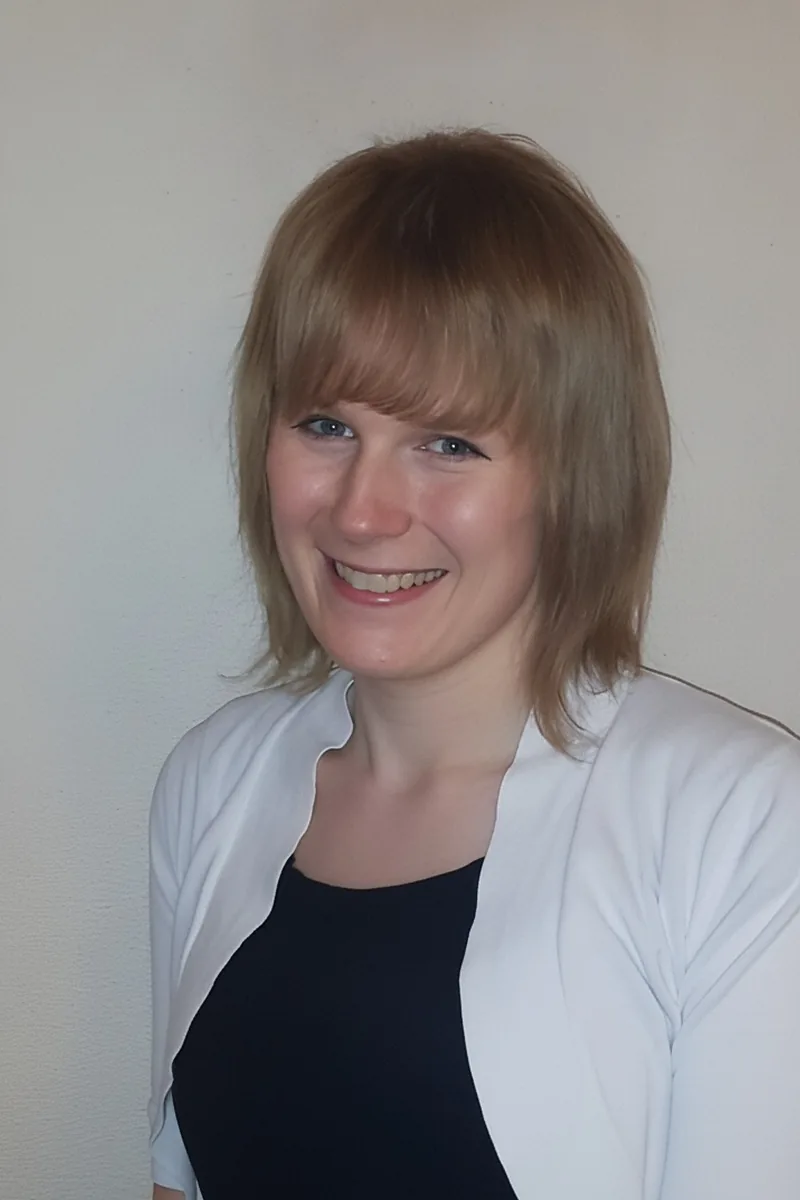
Seven years of experimental psychology research means Anna doesn't just teach graduate statistics — she uses it daily, from designing multivariate models to running hierarchical regressions and interpreting interaction effects. Her PhD work at Saint Louis University required mastering advanced techniques like structural equation modeling and mediation analysis, so she teaches these methods with the fluency of someone who actually applies them. Rated 4.9 by students.

Graduate-level statistics demands more than plugging data into software — it requires understanding why a likelihood ratio test applies in one scenario and a Wald test in another. Mayuri's PhD in Physics meant designing experiments and running advanced statistical analyses firsthand, from Bayesian inference to multivariate regression. She breaks down the mathematical derivations behind each method so the theory clicks alongside the application.
Graduate-level statistics demands fluency with concepts like maximum likelihood estimation, Bayesian inference, and multivariate analysis — not just running software but understanding the theory underneath. Michelle brings a quantitative biology perspective to these methods, having applied advanced statistical frameworks to biological data throughout her science training. Rated 4.9 by students.
Graduate-level statistics often means wrestling with multivariate methods, hierarchical models, and software like SPSS, Stata, or R while simultaneously trying to apply them to a thesis or dissertation dataset. Hidefusa's doctoral work in clinical neuropsychology gave him hands-on experience designing studies, running complex analyses, and interpreting output — skills he now breaks down for other graduate students navigating their own research.
Graduate-level statistics demands fluency with topics like maximum likelihood estimation, multivariate distributions, and regression diagnostics that go well beyond introductory coursework. Dana holds a degree in statistics and is pursuing PhD-level economics research involving econometrics, so she's actively working with these methods. She unpacks the mathematical theory behind statistical procedures while keeping the applied interpretation clear.
Graduate-level statistics demands comfort with proofs and derivations that most intro courses skip — maximum likelihood estimation, Bayesian inference, and the mathematical foundations behind common tests. Brian's Caltech background in economics and computer science gave him deep exposure to these methods in both theoretical and applied contexts, and he breaks down dense notation into intuitive steps.
Graduate-level statistics often demands fluency with multivariate analysis, mixed models, and experimental design — topics Dan tackled extensively during his Master's in Plant Biology and Conservation, where statistical modeling was central to his research. He breaks down the logic behind tests like ANOVA, regression diagnostics, and maximum likelihood estimation so the methodology clicks, not just the software output. Rated 5.0 by students.
Graduate-level statistics is where psychology and research methods collide, and Jessi has lived that intersection — her psychology degree from Rice and ongoing bioethics work at UPenn mean she's run regressions, interpreted ANOVA tables, and designed studies with real data. She breaks down concepts like multivariate analysis and hypothesis testing by grounding them in the research contexts where they actually matter.
I am highly praised by my students and supervisors. Even today I still kept the communication with many students.
Graduate-level statistics demands fluency with concepts like maximum likelihood estimation, Bayesian inference, and multivariate distributions that go far beyond introductory coursework. Yuanxin's master's in financial engineering at USC required exactly this depth — she built and analyzed stochastic models where getting the statistics wrong meant getting the entire financial model wrong.
Graduate-level statistics can feel like a different language — survival analysis, multivariate regression, Bayesian inference — especially for students outside traditional math backgrounds. Kimberly runs these methods daily in her Columbia MPH program, where biostatistics is central to public health research. She breaks down the logic behind each technique so students can apply it confidently in their own coursework and thesis work.
Graduate-level statistics demands comfort with proofs and distributions that introductory courses barely mention — maximum likelihood estimation, Bayesian inference, multivariate hypothesis testing. Channing digs into the mathematical machinery behind these methods, connecting measure-theoretic ideas to practical applications so the theory actually sticks. His broad math background, spanning calculus through biostatistics, keeps the explanations rigorous without losing sight of real-world relevance.
Graduate-level statistics demands more than running tests — it requires understanding why you'd choose a mixed-effects model over a fixed-effects one, or when bootstrapping outperforms parametric assumptions. Snipta's computer science and cognitive science training at UT Dallas, plus hands-on research at the National Institutes of Health, means she's applied techniques like Bayesian inference and multivariate regression to real datasets, not just textbook exercises.
Graduate-level statistics demands comfort with concepts like hypothesis testing, regression modeling, and ANOVA that go well beyond intro courses. Dillon's engineering background — including a master's in welding engineering technology — required heavy applied statistics work, from designing experiments to interpreting multivariate data in real research contexts. He teaches the reasoning behind each method so students can choose and defend the right analytical approach.
Testimonials
Because the right Statistics Graduate Level tutor makes all the difference.
Average Session Rating – Based on 3.4M Learner Ratings
Nearby Statistics Graduate Level Tutors
Other St. Louis Tutors
Related Math Tutors in St. Louis
Frequently Asked Questions
Graduate statistics programs usually progress from foundational probability theory and mathematical statistics through advanced topics like inference, hypothesis testing, regression analysis, and experimental design. Depending on your program, you might also encounter specialized areas such as Bayesian methods, multivariate statistics, time series analysis, or machine learning applications. A tutor can help you navigate your specific curriculum and ensure you're building strong conceptual understanding at each stage, not just memorizing formulas.
Many graduate students struggle with the transition from computational statistics to theoretical understanding—knowing how to run a test is different from understanding why it works mathematically. Connecting abstract probability concepts to real-world applications, managing complex proofs, and working through multi-step derivations are frequent pain points. Personalized 1-on-1 instruction helps you identify gaps in foundational knowledge and build the conceptual bridges that make advanced topics click.
Your first session focuses on understanding your specific course, current challenges, and learning goals. A tutor will likely review a problem or concept you're struggling with to assess your understanding and identify whether issues stem from gaps in probability, computational skills, or conceptual grasp. From there, you'll develop a personalized plan that targets your needs—whether that's working through proofs, interpreting results, or connecting theory to applications.
Graduate statistics requires not just correct answers but clear reasoning and mathematical justification. A tutor can teach you how to structure solutions, explain your logic step-by-step, and present derivations in ways that demonstrate mastery. They'll also help you develop problem-solving strategies—like breaking complex questions into manageable pieces and recognizing which statistical tools apply to different scenarios—that make your work more organized and your thinking more transparent.
Graduate statistics can feel intimidating when you're working with unfamiliar notation, abstract concepts, and rigorous proofs. A tutor breaks material into digestible pieces, explains the 'why' behind formulas, and celebrates progress along the way. By working through challenging problems in a supportive environment and seeing patterns emerge, you'll build confidence in your ability to tackle complex material. Many students find that understanding concepts deeply—rather than rushing through—actually reduces anxiety.
For graduate-level statistics, you want someone with strong theoretical knowledge in probability and mathematical statistics, ideally with experience in your specific focus area (Bayesian methods, time series, etc.). Look for tutors who can explain abstract concepts clearly, have worked with graduate students before, and understand your program's expectations. Varsity Tutors connects you with expert tutors who have the subject expertise and teaching ability to help you master both the theory and applications.
Yes, Varsity Tutors connects students throughout St. Louis with expert tutors in graduate-level statistics. Whether you're attending a program in the area or working remotely, you can access personalized instruction tailored to your course requirements and learning style. With 40 schools and nearly 14,000 students in the St. Louis area, there's strong demand for advanced tutoring support, and we have tutors ready to help you succeed.
Graduate statistics is cumulative, so improvement often builds gradually as foundational concepts strengthen. Some students see clearer understanding of specific topics within a few sessions, while deeper conceptual shifts and grade improvements typically emerge over several weeks of consistent work. The timeline depends on your starting point and how frequently you meet, but personalized 1-on-1 instruction accelerates progress by targeting your exact gaps rather than generic review.
Let’s find your perfect tutor
Answer a few quick questions. We’ll recommend the right plan and match you with a top 5% tutor.