Award-Winning Science Tutors
serving Providence, RI
Science
Tutors in Providence
Private 1-on-1 tutoring, weekly live classes for academic support, test prep & enrichment, practice tests and diagnostics, and more to elevate grades and test scores.
Based on 3.4M Learner Ratings
UniversitiesSchools & Universities
DeliveredHours Delivered
ProficiencyGrowth in Proficiency
Who needs tutoring?
No obligation. Takes ~1 minute.
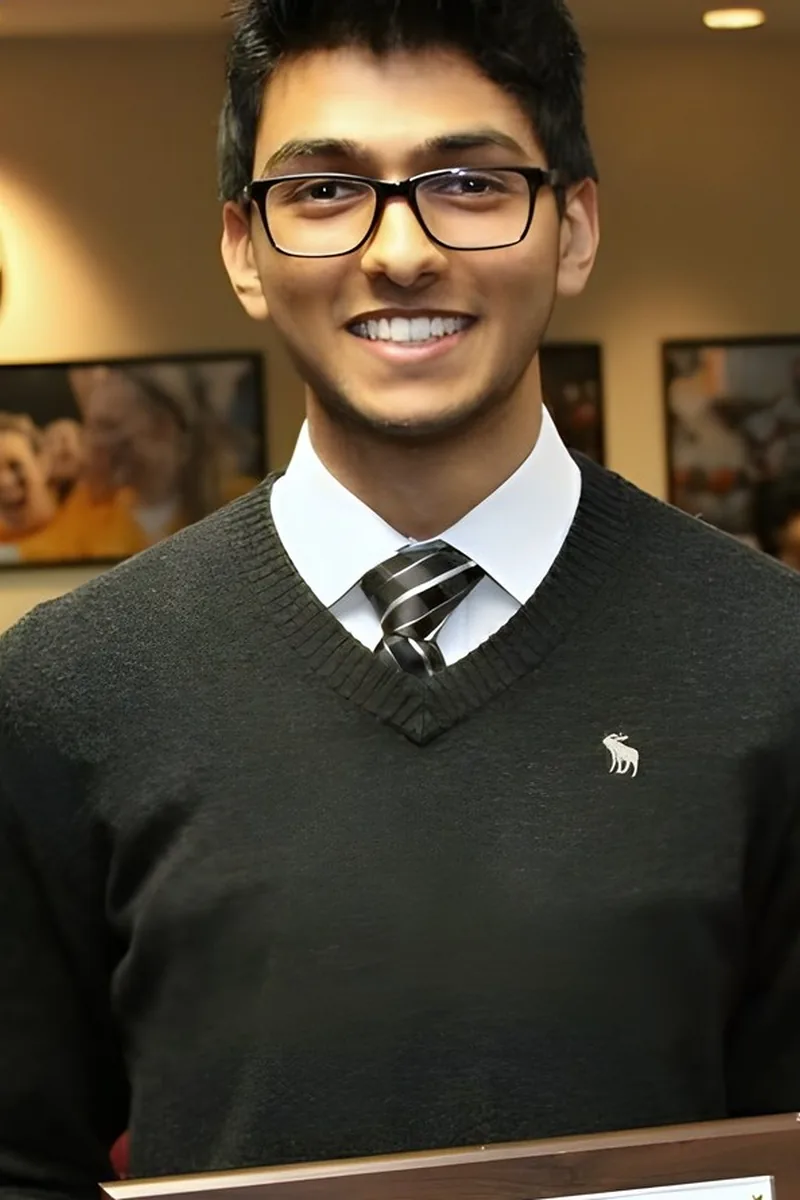
A molecular biophysics major at Brown, Srini lives at the intersection of physics, biology, and chemistry every day. He unpacks scientific concepts — from cellular respiration to Newtonian mechanics to thermodynamics — by tying them back to real phenomena, making the material stick instead of just surviving the next test.
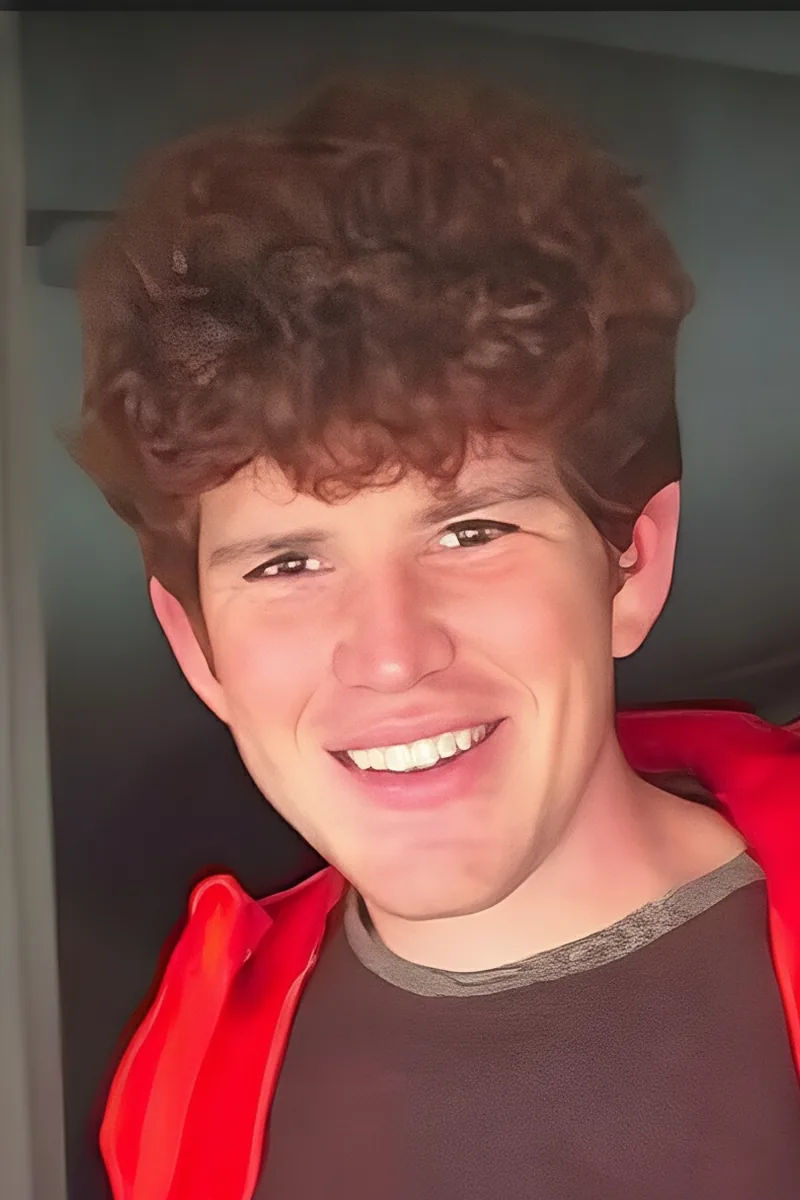
An economics major at Brown, Clive spends most of his time building models from data — testing assumptions, isolating variables, and figuring out whether the numbers actually support a conclusion. That process is identical to what science coursework asks students to do, and his 35 ACT confirms he can handle the quantitative and analytical reasoning involved. He's especially useful for students who need to get comfortable reading graphs, interpreting experimental results, and explaining the logic behind their answers.
Studying medical anthropology at Brown means sitting at the intersection of biological science and human behavior, so Katie understands both the content and the reasoning frameworks that science courses demand. She's particularly effective at teaching students how to read experimental setups, interpret data, and connect evidence to conclusions — skills that show up everywhere from biology labs to standardized test passages.
Teaching after-school science at Archway Classical Academy means Hasan sees daily which concepts actually trip students up — whether it's confusing mass with weight, misreading a data table, or blanking on how to set up a controlled experiment. His approach leans on the same close-reading instincts he built studying literary arts at Brown: slow down, look at what's actually in front of you, and explain what it means in your own words before jumping to conclusions. Rated 5.0 by students.
June's science background is unusually broad — she's conducted electrophysiology research on dementia using a mollusk model while also studying physics and engineering at Brown. That combination means she can walk a student through biology's memorization-heavy content one day and tackle force diagrams or circuit problems the next, always tying concepts back to how scientists actually investigate questions in the lab.
A Classics major spends a lot of time parsing Latin and Greek roots — the same roots that make up most scientific vocabulary, from "photosynthesis" to "mitochondria" — so Joshua can help students decode terminology that often feels like a foreign language. His 1530 SAT also signals comfort with data interpretation and evidence-based reasoning, two skills that show up constantly in science coursework. Rated 4.7 by students.
Education Studies at Brown required Abby to dig into how people actually learn — including coursework in cognitive development and research design that overlaps heavily with the scientific method. She's especially strong at teaching students to move from observation to explanation, walking them through how to set up a question, test it, and articulate what the results mean. Her 1590 SAT confirms she can handle the quantitative and analytical reasoning science demands.
A neuroscience degree from Brown means Sophie spent years immersed in biology, chemistry, and data analysis — skills that translate directly to breaking down topics like cell structure, genetics, and the scientific method for younger students. She connects abstract science concepts to how the brain and body actually work, making material click rather than just float on the page.
Three years in a UPenn research lab gave Kahini hands-on experience with experimental design, data analysis, and the scientific method before she moved into her Columbia neuroscience PhD. She teaches science as a way of asking questions — forming hypotheses, interpreting results, and understanding why an experiment is set up the way it is.
Ariel tackles elementary and middle school science by connecting abstract concepts — like the difference between physical and chemical changes, or how ecosystems maintain balance — to experiments and real-world examples students can picture. Her psychology training also means she reads frustration and confusion quickly, adjusting explanations before a student shuts down. Rated 5.0 by students.
While science isn't Anna's primary concentration, her analytical approach to learning and her experience tutoring across subjects make her a strong fit for students who need support connecting scientific concepts to reading-heavy assignments like lab reports and research summaries. She's particularly effective at teaching students how to extract key information from dense textbook passages and diagrams.
An engineering background means Geraldine learned science by applying it — calculating forces, analyzing circuits, interpreting lab data. She brings that applied mindset to tutoring, connecting abstract scientific concepts to tangible problems so students understand the 'why' behind formulas and processes.
Neuroscience at Brown sits at the intersection of biology, chemistry, and data analysis, so Oladele tackles science tutoring with genuine cross-disciplinary fluency. Whether a student is struggling with cellular respiration, experimental design, or interpreting graphs, he connects each concept to a bigger picture that makes the details easier to retain.
Serena's strongest subjects are history and literature, but her experience tutoring math and her 1410 SAT — which requires interpreting data tables, graphs, and evidence-based passages — mean she can walk students through the reading-heavy and analytical sides of science coursework. She's especially handy when the assignment asks students to pull conclusions from a passage or explain an experiment in writing, since clear argumentation is her wheelhouse.
Engineering coursework at Brown means Kashish lives inside physics, chemistry, and applied math daily, giving her a practical lens on the science concepts students encounter in middle and high school. She unpacks topics like energy conservation or stoichiometry by tying them to real mechanisms rather than asking students to memorize formulas in isolation.
Having spent the past year teaching both life science and chemistry to 10th and 11th graders, Bintou knows exactly where students get stuck — balancing chemical equations, interpreting cell diagrams, or connecting abstract molecular concepts to observable phenomena. Her Penn chemistry background gives her the depth to answer the "but why?" questions that come up when textbook explanations fall short.
Earning an Evolutionary Biology degree from Brown meant mastering ecology, genetics, cellular biology, and the quantitative methods tying them together. Alyna breaks down scientific concepts by linking them to observable phenomena — explaining natural selection through real case studies or teaching cellular respiration as an energy budget rather than a memorized diagram.
Urban studies coursework pulls from ecology, public health, and environmental science constantly — Katharine reads research on air quality, water systems, and population dynamics as part of her regular classwork, not as an add-on. That cross-disciplinary habit means she can teach students to connect scientific concepts to tangible, real-world systems rather than treating each chapter as isolated vocabulary to memorize. Her 34 ACT confirms she handles the quantitative and analytical demands of science material with ease.
For students who need support in general science — understanding the scientific method, interpreting data tables, or connecting chemistry and biology concepts across disciplines — William draws on his chemistry background and analytical training. He breaks down how to read experimental results and construct evidence-based explanations, skills that transfer across every science class.
A history degree builds a surprisingly transferable skill for science: reading dense source material, pulling out what matters, and constructing an argument from evidence. Ankita applies that same analytical process to teaching students how to work through scientific texts, interpret diagrams, and explain cause-and-effect relationships in their own words rather than parroting definitions. Her 1510 SAT confirms she handles the quantitative and reasoning demands of science just as comfortably as the verbal ones.
A math major at Brown, Alexandra brings quantitative rigor to science topics like data analysis, unit conversions, and interpreting experimental results — the exact skills where many students lose points. She's especially effective at connecting scientific reasoning to the underlying math, making formulas and graphs feel intuitive rather than arbitrary.
Pre-med coursework at Brown means Leah has recently sat through the same biology, chemistry, and physics sequences her students are navigating now. She explains concepts like cellular respiration or stoichiometry by tying them back to concrete examples — how a drug metabolizes, why a bridge holds weight — so the material sticks beyond the test.
As a biology major who also teaches chemistry and calculus, Christopher covers science from the molecular level up through whole-organism systems. He's especially sharp at connecting lab concepts — like experimental design and data interpretation — to the theory students read about in their textbooks. That ability to bridge hands-on and conceptual understanding makes complex topics like cellular respiration or chemical equilibrium far more concrete.
Medical training gave Victoria a deep, working knowledge of biology, chemistry, and physics — not as separate textbook chapters, but as interconnected systems. She's especially effective at explaining concepts like energy transfer, cellular processes, or force and motion by tying them to real scenarios students can visualize. That cross-disciplinary perspective makes her a strong fit for students who need science to click, not just be memorized.
A comparative literature MFA might not scream 'science tutor,' but Kareem's training in close reading and systematic analysis translates well when students need to parse dense textbook passages, extract meaning from diagrams, or write up lab conclusions that actually communicate their reasoning. He treats science vocabulary the way he treats literary terminology — breaking unfamiliar words into roots and context clues until students can decode new concepts on their own.
Seven years in public school classrooms taught Belmary exactly how to scaffold unfamiliar material — a skill she now applies to science topics like classification, ecosystems, and the scientific method, where students often know the vocabulary but can't explain the underlying process. Her social work training also sharpened her ability to read how a student is processing information in real time and adjust explanations on the fly. Rated 5.0 by students.
Breond's interdisciplinary training — spanning sociology, philosophy, and American studies across USC and Harvard — gave him practice reading and interpreting scientific research methodologies and data. He's strongest at teaching students how to break down scientific texts, understand experimental design, and connect evidence to conclusions.
Few science tutors can move fluidly between physics, biology, and molecular-level topics the way someone in a combined MD program can. Orlando draws on coursework spanning cell biology, microbiology, and physics to explain concepts like enzyme kinetics or force diagrams with real clinical context that makes abstract science tangible.
Studying biology at the college level means Jacob doesn't just recall science facts — he's immersed in experimental design, data interpretation, and the kind of critical thinking that high school science courses are building toward. He breaks down tricky topics like cell energetics or genetics by connecting them to concrete examples students can actually picture.
While science isn't Daniel's core area of expertise, his graduate-level research skills — reading dense material carefully, extracting key claims, and evaluating evidence — apply directly to understanding scientific texts and lab reports. He's a strong fit for students who struggle more with the reading and writing demands of science courses than with the concepts themselves.
Devon's background is in English rather than a lab science, so her strength here is in the skills that overlap: interpreting data in a passage, writing clear lab reports, and understanding how to read a science textbook critically. She's a good match for students who struggle more with the reading and reasoning side of science than with the formulas.
A liberal arts education forces you to take science courses alongside humanities — and Anne's broad academic background means she can connect scientific concepts to the reading comprehension and analytical writing skills that often determine whether a student actually understands the material or just memorizes it. She's particularly useful for students who need to untangle word-heavy science questions, interpret what a passage is really asking, and explain their reasoning in complete thoughts.
As a biology major at Brown with coursework spanning organic chemistry, cell biology, and molecular biology, Uloma covers an unusually wide range of science topics. She excels at explaining mechanisms — how enzymes catalyze reactions, why osmosis drives water movement, what makes a covalent bond polar — in concrete terms that stick. Students walk away understanding the why behind each concept, not just the vocabulary.
As a passionate person pursuing a Master's degree in Biotechnology from Brown University, I have over 2 years of tutoring experience in subjects such as AP Biology, AP Spanish Language & Culture, and Biostatistics. I believe in fostering a supportive and engaging learning environment where students feel comfortable exploring complex concepts and asking questions. My teaching philosophy centers on connecting the material to real-world applications, which ignites curiosity and enhances understanding. I am particularly motivated by the transformative power of education that encourages students. I take pride in helping students achieve their academic goals and discovery of self. Outside of tutoring, I enjoy exploring different cultures through travel and language, which enriches my approach to teaching Spanish, my double major in undergrad. I'm not afraid of the hard questions or difficult topics! I'm so excited to work with you. God bless!!
For students who need support in general science coursework — life science, earth science, or introductory biology — Virginia takes a reading-and-reasoning approach that treats science assignments like analytical problems to decode. Her social work and psychology training sharpened her ability to explain how systems interact, which translates naturally to topics like ecosystems, the scientific method, and basic human biology.
As a certified social studies teacher who also tutors across multiple disciplines, Julio approaches science by emphasizing the literacy skills that underpin it — reading data tables, interpreting graphs, and constructing evidence-based explanations. This cross-disciplinary angle is especially useful for students who understand science concepts in class but struggle on assessments that require them to analyze and communicate findings in writing.
Having taught middle school science alongside math and reading for years, Marty knows that the biggest barrier in science isn't usually the content itself — it's students not recognizing when a problem is really about reading a graph, setting up a ratio, or defining a term precisely. His M.A. in Education and cross-subject experience let him diagnose whether a student is stuck on the science or stuck on the underlying skill, then address the actual gap. That versatility is especially useful for younger students whose science struggles often have roots in math or literacy.
A licensed secondary math teacher with a master's in liberal arts and sciences, Lee brings genuine cross-disciplinary range to science — especially the quantitative backbone that trips students up, like calculating density, balancing equations, or interpreting rate-of-change in lab data. Teaching math and science side by side means he can spot exactly when a student's confusion is really a math gap dressed up as a science problem, and fix the root issue on the spot. Rated 4.9 by students.
A physics degree from the University of Rhode Island means Dale learned science the hard way — deriving equations from first principles, designing experiments, and defending results in lab reports. He brings that same rigor to general science tutoring, whether a student is struggling to isolate variables in an experiment or make sense of energy and motion concepts. His approach mirrors physicist Richard Feynman's rule: if you can't explain it simply, you don't really understand it yet.
While science isn't Valerie's primary discipline, the University of Chicago's core curriculum required her to take rigorous coursework in the natural sciences alongside her Classics major. She's also trained in Emergency Medical Services, which gave her hands-on fluency with anatomy, physiology, and clinical reasoning that she brings to science tutoring sessions.
Testimonials
Because the right Science tutor makes all the difference.
Average Session Rating – Based on 3.4M Learner Ratings
Practice Science
Free practice tests, flashcards, and AI tutoring for Science
Other Providence Tutors
Related Science Tutors in Providence
Frequently Asked Questions
Many Providence students struggle with connecting abstract scientific concepts to real-world applications, especially in chemistry and physics where visualization is critical. Lab skills, data analysis, and balancing conceptual understanding with memorization of formulas and terminology also present challenges. With an average student-teacher ratio of 14.3:1 across Providence's 17 school districts, personalized attention to these specific gaps can make a significant difference in comprehension and confidence.
During an initial session, a tutor will assess your current understanding of science concepts, identify specific areas where you're struggling, and learn about your learning style and goals. This might include reviewing recent tests or assignments, discussing which topics feel most confusing, and establishing a personalized plan. The tutor will then tailor future sessions to address your exact needs, whether that's foundational concepts, lab techniques, or test preparation.
In a classroom setting, teachers must pace instruction for 20-30+ students with varying needs, which often means some students fall behind on foundational concepts while others move too slowly. Personalized tutoring allows a tutor to work at your exact pace, spend extra time on difficult topics like stoichiometry or photosynthesis, and use teaching methods that match how you learn best. This targeted approach has been shown to significantly accelerate learning compared to whole-class instruction, particularly in STEM subjects where building strong fundamentals is essential.
Yes. Varsity Tutors connects you with tutors who understand Rhode Island science standards and the specific curricula used across Providence's school districts. Whether your student is working through middle school life science, high school biology, chemistry, physics, or AP-level courses, tutors can align their instruction with classroom content and pacing. This ensures tutoring reinforces what's being taught in school while filling in gaps and deepening understanding.
Absolutely. Beyond theory, many students need support with lab safety, data collection, graphing results, and drawing conclusions from experiments. Tutors can help you understand the reasoning behind lab procedures, practice analyzing experimental data, and develop strong scientific thinking skills. This is especially valuable for students preparing for AP Biology, AP Chemistry, or science classes that include significant lab components.
A tutor can help you identify which concepts you haven't fully mastered, work through practice problems similar to those on your exam, and teach test-taking strategies specific to science (like process of elimination for multiple choice or how to structure short-answer responses). They can also help you create a study schedule leading up to the test and review previous exams to spot patterns in what you're missing. This targeted prep is far more effective than cramming or generic test prep.
Varsity Tutors connects you with tutors who have strong backgrounds in science—many hold degrees in biology, chemistry, physics, or related fields, and many have classroom teaching experience or advanced certifications. All tutors are vetted to ensure they can explain complex concepts clearly and adapt their teaching to different learning styles. You can discuss a tutor's specific qualifications and experience during the matching process to ensure they're the right fit for your needs.
Many students notice improved understanding and confidence within 2-4 weeks of consistent tutoring, especially when addressing specific skill gaps like problem-solving or lab techniques. Larger improvements in grades or test scores typically appear within 6-8 weeks as foundational concepts solidify and students develop stronger study habits. The timeline depends on how frequently you meet, the complexity of the material, and how actively you engage with practice between sessions.
Let’s find your perfect tutor
Answer a few quick questions. We’ll recommend the right plan and match you with a top 5% tutor.