Award-Winning Chemistry Tutors
serving Denver, CO
Chemistry
Tutors in Denver
Private 1-on-1 tutoring, weekly live classes for academic support, test prep & enrichment, practice tests and diagnostics, and more to elevate grades and test scores.
Based on 3.4M Learner Ratings
UniversitiesSchools & Universities
DeliveredHours Delivered
ProficiencyGrowth in Proficiency
Who needs tutoring?
No obligation. Takes ~1 minute.

From balancing redox equations to predicting molecular geometry, chemistry rewards students who understand the "why" behind each rule. Colton studied chemistry extensively through his biomedical engineering program at UVA and brings that applied perspective — connecting abstract concepts like thermodynamics and equilibrium to real systems students can visualize. Rated 4.7 by students.
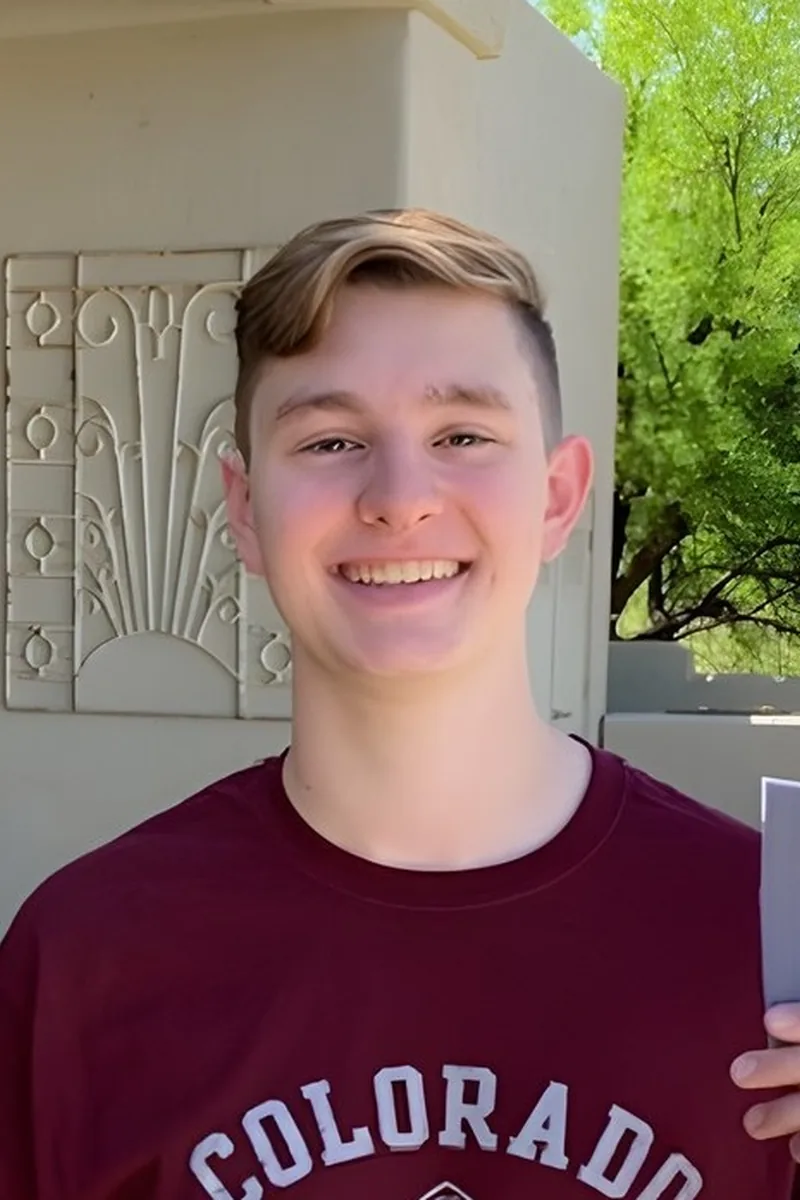
Studying engineering physics at Colorado School of Mines means Jude works with chemistry's core ideas — electron behavior, energy transfer, thermodynamic systems — as daily tools rather than abstract textbook topics. He uses that physics-trained intuition to unpack why reactions happen at the molecular level, particularly when students struggle with concepts like orbital theory, bond energies, or enthalpy changes that sit right at the chemistry-physics boundary. Rated 4.9 by students.
Balancing equations and stoichiometry are just the entry point — where chemistry gets interesting is understanding why reactions happen, from electronegativity trends to thermodynamic favorability. Graham is double-majoring in chemistry and astrophysics at CU Boulder with a 4.0 GPA, so he can connect abstract concepts like orbital hybridization and molecular geometry to real physical intuition. Rated 5.0 by students.
I am a student at the Georgia Institute of Technology studying Chemical Engineering. For the past several years, I have worked with students extensively. Through hosting events for younger kids to learn about STEM and for older teens to practice empathetic design, I know the importance of teaching students in ways that engage them rather than frustrate them, which I apply to my teaching. I have tutored high school students in a drop-in resource center in various subjects including math of all levels, chemistry, and English, making me adequately equipped in a variety of topics. I have also tutored several students long-term. Establishing relationships with students and exploring their unique learning styles is my favorite part of tutoring. I prioritize helping students discover HOW to learn in a manner that is the most effective for them, so they can begin to use those skills on their own throughout their education. Learning is a lifelong skill that requires practice for improvement; I strive to help my students gain confidence in their ability to learn.
I am a graduate of the University of Colorado at Boulder. I received my Bachelor of Arts in Biochemistry as well as MCD (Molecular, Cellular, and Developmental) Biology while minoring in Chemistry in 2015. I love exploring all of the cool things that this world has to offer. By dabbling in a little of everything I can set my sights on what really holds my attention. My primary interests lie in the sciences, where learning what makes our world turn drives my passion for knowledge.
I am a problem solver, and I love to help solve other's problems when they need it. I also love taking tests, and I hope that my excitement will translate to better scores for you!
I am a graduate of Arizona State University. I received my two Bachelors of Science degrees in Biological Sciences (Animal Physiology and Behavior) and Political Sciences with a certificate in Civic Education. Since graduating, I have started working with the Denver Math Fellows helping close the opportunity gap for high need students by providing small group math instruction. I find the most excitement in tutoring middle school math and science, Algebra I, and General Biology. I find that for most students what makes any subject hard is being unable to use what you already know and not knowing how to tackle the subject. I want to help students by giving them multiple access points and allowing them to access whatever content they desire at their current level. I believe the most important way to help students learn in is to relate content to their current interests and future goals. In my spare time, I enjoy reading non-fiction about technology and neurobiology, hiking, watching sports (mainly football and basketball) and listening to jazz and classical music.
I am a graduate of Trinity University with a B.S. in biology and a minor in spanish. I am available for tutoring in math and science courses, as well as beginner spanish and ACT prep. In my tutoring experience, I have primarily worked with high school students in science and math courses, and have really enjoyed the opportunity to encourage enthusiasm for their classes during these sessions. I work to help my students understand the material at a conceptual level so that they can build upon what they have learned in the future, and also focus on organization in problem-solving methods. Outside of tutoring, I study physical therapy at UCD and spend my free time running and hiking with friends.
I am not working, I can often be found outside soaking up the Colorado sun with my dog Syd.
Alec started his teaching career running problem-solving sessions as a general chemistry TA at Cornell, walking students through stoichiometry, equilibrium, and thermochemistry. That hands-on experience taught him exactly where students lose the thread — often at the jump from conceptual understanding to quantitative problem-solving — and he's been closing that gap ever since. Rated 4.8 by students.
A chemistry degree gives Sung the depth to teach everything from stoichiometry and equilibrium to organic reaction mechanisms and thermodynamics at the college level. He treats problem sets as opportunities to trace the reasoning behind each step — balancing equations, for instance, becomes an exercise in conservation laws rather than trial and error. Rated 5.0 by students.
Balancing redox reactions or predicting products from a solubility table requires a kind of structured problem-solving that doesn't always come naturally. Akarsh's molecular biology training gave him deep fluency in chemical bonding, stoichiometry, and reaction kinetics, and he teaches students to approach each problem type with a clear, repeatable method.
Stoichiometry, equilibrium, and thermodynamics all share one thing in common: they reward students who understand the "why" behind each calculation. Bidyut's biomedical engineering training at Johns Hopkins required deep chemistry coursework, and he draws on that background to explain concepts like reaction kinetics and molecular bonding with precision. He's especially good at walking through dimensional analysis and unit conversions until they become second nature.
Balancing equations, understanding molarity, and predicting reaction products all require a mental model of what atoms are actually doing — not just symbol shuffling on paper. Devon's pre-medical training at Vanderbilt means she's spent years applying chemistry concepts in biological and clinical contexts, which gives her a practical vocabulary for explaining why reactions behave the way they do. She's especially strong at connecting stoichiometry to lab scenarios that make the math meaningful.
Balancing equations, predicting reaction products, understanding mole ratios — chemistry has a language of its own, and Nima teaches students to read it fluently. His physics degree gives him an unusual strength in the quantitative side of chemistry, from unit conversions to gas law calculations, where many students first start to struggle.
Having designed and optimized light filters for optical-electronic multiplexers, Dennis understands chemical bonding, molecular geometry, and spectroscopy from a hands-on engineering perspective. He tackles tricky chemistry topics — stoichiometry, reaction balancing, periodic trends — by grounding them in the physical principles that explain why atoms behave the way they do.
David approaches chemistry by anchoring every new idea to something tangible: stoichiometry becomes a recipe problem, electron orbitals explain why molecules have specific shapes, and equilibrium constants predict which direction a reaction actually goes. That habit of connecting abstract rules to observable outcomes comes from his neuroscience training at Yale, where chemistry was the foundation for everything else.
Mechanical engineering at Harvard means Christopher lives in the overlap between chemistry and physics — material properties, thermodynamics, and reaction energetics show up constantly in his coursework. He breaks down topics like bonding, gas laws, and enthalpy calculations by tying them to tangible engineering problems, which gives abstract concepts a concrete anchor. Rated 4.8 by students.
A chemistry degree from MIT gives Max fluency across the discipline — thermodynamics, equilibrium, electrochemistry, kinetics — but what makes him effective is his habit of letting students arrive at conclusions themselves rather than handing them answers. He sets up problems so that the logic of stoichiometry or periodic trends reveals itself step by step, building real understanding that holds up on exams.
A chemistry degree from Yale means Zosia has spent serious time with stoichiometry, equilibrium, acid-base theory, and thermochemistry — the exact topics that tend to make or break a student's grade. She approaches each concept by building up from the atomic level, so balancing equations or predicting reaction products starts to feel like reasoning rather than guesswork. Rated 4.9 by students.
A neuroscience degree with a chemistry minor means Matt didn't just take general chemistry — he built on it through organic, analytical, and biochemistry courses that kept reinforcing core principles like equilibrium, thermodynamics, and molecular bonding. He unpacks abstract concepts like Le Chatelier's principle or orbital hybridization using concrete examples that make the logic click rather than feel arbitrary.
Testimonials
Because the right Chemistry tutor makes all the difference.
Average Session Rating – Based on 3.4M Learner Ratings
Practice Chemistry
Free practice tests, flashcards, and AI tutoring for Chemistry
Nearby Chemistry Tutors
Other Denver Tutors
Related Science Tutors in Denver
Frequently Asked Questions
Chemistry involves visualizing molecules, atomic structures, and reactions that can't be seen with the naked eye—making it challenging for many students. Personalized 1-on-1 instruction allows tutors to break down these abstract ideas using diagrams, models, and real-world examples tailored to how you learn best. Whether you're struggling with electron configurations, molecular geometry, or reaction mechanisms, a tutor can work at your pace to build genuine understanding rather than just memorization.
Balancing equations is one of the most common stumbling blocks in chemistry, but it becomes manageable with the right approach. Tutors can teach you systematic strategies—like identifying oxidation states, using the inspection method, or mastering redox balancing—and then practice equations with you until the process feels intuitive. Rather than memorizing rules, you'll develop problem-solving skills that apply across different equation types.
Absolutely. Lab work teaches the scientific method and helps you see chemistry concepts in action, but many students struggle with data collection, analysis, and drawing conclusions. Tutors can help you understand experimental design, work through pre-lab questions, analyze your results, and connect what happened in the lab to the theory behind it. This builds both your technical skills and your ability to think like a scientist.
Unit conversions and dimensional analysis are foundational skills in chemistry that show up in stoichiometry, gas laws, thermodynamics, and more. Personalized tutoring breaks this down into manageable steps, showing you how to set up conversion factors logically and avoid common mistakes. With targeted practice and immediate feedback, you'll build confidence tackling problems that require multiple conversions.
The best time to start is when you first notice concepts becoming confusing—whether that's early in the semester or before an exam. With Denver's 14.4:1 average student-teacher ratio across the district's 9 school systems, classroom instruction can feel rushed. Getting connected with a tutor early helps you build a strong foundation in foundational topics like atomic structure and bonding, which makes everything else in chemistry (equilibrium, kinetics, organic chemistry) easier to grasp.
AP Chemistry requires both deep conceptual understanding and the ability to apply that knowledge to complex problems—a challenging combination for many students. Tutors can help you master the big ideas (like atomic structure, bonding, thermodynamics, and kinetics), develop strong problem-solving strategies for the free-response section, and build your skills in analyzing data and experimental design. With focused preparation, you'll be ready to tackle the exam confidently.
Varsity Tutors connects you with expert chemistry tutors in Denver who understand the local curriculum and can provide personalized 1-on-1 instruction that fits your schedule and learning style. The process is straightforward: tell us about your goals (whether it's improving a grade, preparing for an exam, or mastering specific topics), and we match you with a tutor who has the expertise and experience you need. You can start learning right away.
Let’s find your perfect tutor
Answer a few quick questions. We’ll recommend the right plan and match you with a top 5% tutor.