Award-Winning AP Chemistry Tutors
serving Fort Worth, TX
AP Chemistry
Tutors in Fort Worth
Private 1-on-1 tutoring, weekly live classes for academic support, test prep & enrichment, practice tests and diagnostics, and more to elevate grades and test scores.
Based on 3.4M Learner Ratings
UniversitiesSchools & Universities
DeliveredHours Delivered
ProficiencyGrowth in Proficiency
Who needs tutoring?
No obligation. Takes ~1 minute.

Thermodynamics, equilibrium, and electrochemistry each demand a different kind of thinking, and AP Chemistry punishes students who treat them as separate chapters instead of interconnected ideas. Jonathan's background spans both biology and chemistry at Cornell, so he unpacks concepts like Gibbs free energy and Le Chatelier's principle by showing how they govern real chemical and biological systems. Rated 4.9 by students.
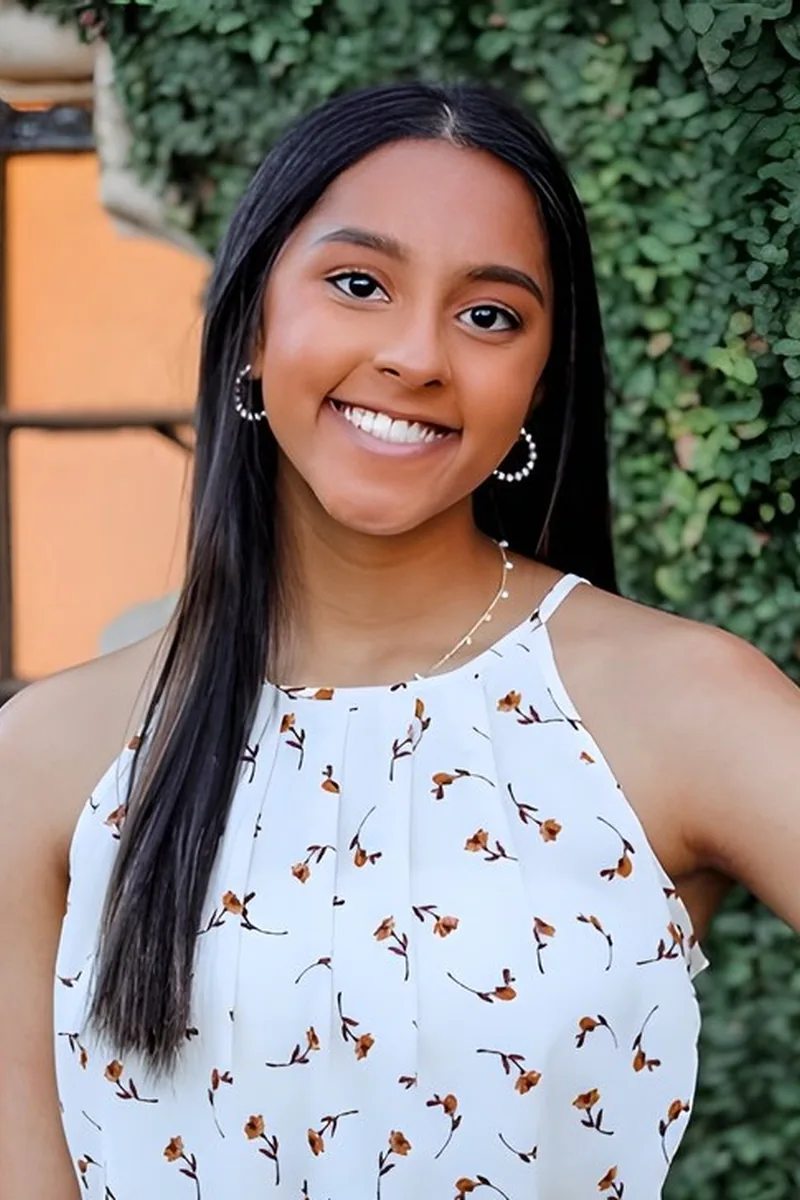
Premed neuroscience coursework at Rice University means Aditi has worked through college-level chemistry where concepts like electron configuration, molecular geometry, and acid-base reactions aren't optional — they're prerequisites for understanding how the brain functions at a chemical level. She unpacks AP Chemistry's conceptual questions by tying abstract ideas back to observable phenomena, making topics like periodicity and bonding theory stick. Rated 4.8 by students.
Raj's biochemistry and molecular biology degree means he's lived through the college-level versions of every AP Chemistry topic — from reaction kinetics and acid-base equilibria to the thermodynamic principles that trip up most students on free-response questions. He teaches the quantitative side (stoichiometry, ICE tables, rate law setups) by anchoring each calculation in what's physically happening at the molecular level, so students build intuition alongside technique. His 36 ACT and 5.0 rating back up that approach.
Stoichiometry, equilibrium, and thermodynamics each require a different kind of problem-solving, and AP Chemistry expects fluency in all of them by May. Kendall approaches each unit by anchoring the math in the underlying chemical logic — why a reaction favors products, what a mole ratio actually represents — so students can reason through unfamiliar problems on the exam. She also dedicates time to the lab-based questions that many students overlook in their prep.
I am most passionate about biology and chemistry. I am a firm proponent of education, believing it to be absolutely necessary for an improved quality of life, and I try to impart this appreciation to all of my students.
A PhD in chemical engineering means Steven didn't just study chemistry — he lived in thermodynamics, kinetics, and equilibrium for an entire career. For AP Chemistry, he unpacks topics like electrochemistry, reaction mechanisms, and Le Chatelier's principle by explaining the concept, restating it differently, and then grounding it in a real-world scenario that makes the logic stick. Rated 4.9 by students.
Samantha's psychology studies at Princeton might seem unrelated to AP Chemistry, but her neuropsychology focus requires understanding the chemical processes underlying brain function — neurotransmitter synthesis, ion channel dynamics, and the thermodynamics of cellular signaling all draw on the same principles tested in AP Chem. She applies that molecular-level thinking to topics like atomic structure and reaction energetics, teaching students to reason through problems rather than memorize isolated facts. Rated 4.9 by students.
The jump from regular chemistry to AP Chemistry usually hits hardest around equilibrium, thermodynamics, and electrochemistry — topics where memorizing formulas isn't enough. Enoch tackles these by connecting the math to what's actually happening at the molecular level, an approach sharpened by years of college-level chemistry coursework in his premed track at Texas A&M.
Going from organic chemistry in medical school to pharmacology and biochemistry in his MPH, Thomas has seen how AP Chemistry concepts like reaction kinetics, acid-base equilibria, and thermodynamics play out in real clinical and research contexts. He teaches the free-response side of the exam by unpacking what's happening at the molecular level first, then layering in the math — so students build intuition instead of just memorizing setups. Rated 5.0 by students.
A chemistry degree means Peyton has spent serious time with the concepts AP students find most daunting — she's worked through electrochemistry, kinetics, and thermodynamics at the college level, not just memorized them for a high school exam. That depth lets her teach topics like galvanic cells or enthalpy diagrams by explaining the molecular reasoning behind each calculation, which is exactly what the free-response section rewards. She holds a 34 ACT and a 5.0 student rating.
Scoring well on the AP Chemistry exam means mastering both the conceptual reasoning and the quantitative problem-solving — thermochemistry calculations, equilibrium expressions, electrochemical cell potentials. As a Rice chemistry graduate heading to medical school, Asad has lived in these topics for years and teaches students to attack multi-step problems by identifying what's actually being asked before touching a calculator.
Between equilibrium calculations, thermodynamics, and electrochemistry, AP Chemistry asks students to juggle conceptual understanding and quantitative problem-solving at the same time. Andrew earned his degree in chemistry and applies that depth by connecting abstract ideas — like why Le Chatelier's principle works — to lab-scale and real-world examples. His example-based approach means students practice applying concepts under exam-like conditions, not just reading about them.
As a Biology major in UT Austin's Health Science Scholars Honors program, Harsh has taken the college-level chemistry sequence where concepts like Le Chatelier's principle and galvanic cells aren't just exam topics — they're tools he applies in upper-division coursework. He zeroes in on the conceptual reasoning behind AP Chemistry's free-response questions, teaching students to trace what's happening at the particle level before touching a calculator. His 35 ACT and 1520 SAT point to the kind of cross-disciplinary precision that a content-dense course like this rewards.
Earning a two-time National AP Scholar distinction means Whitney sat for — and scored well on — a heavy slate of AP exams, including chemistry. She unpacks equilibrium, thermodynamics, and electrochemistry by connecting each concept to the quantitative problem-solving style the AP exam actually tests, so students aren't blindsided by free-response questions in May.
AP Chemistry's toughest stretch for most students is the leap from memorizing reactions to applying thermodynamic and kinetic principles on multi-step free-response problems. Meghana's science-heavy courseload at Texas A&M means she tackles equilibrium, electrochemistry, and molecular orbital theory regularly, and she teaches students to reason through unfamiliar prompts instead of hunting for a formula to plug into.
An MIT PhD in inorganic chemistry means Toshiki has taught college-level general and organic chemistry courses across multiple universities — so the leap from coordination compounds and crystal field theory to AP Chemistry's coverage of bonding, electron configuration, and periodic trends is second nature. He approaches the exam's free-response questions by training students to think like chemists: building arguments from molecular structure outward rather than reverse-engineering from answer choices. Rated 4.9 by students.
AP Chemistry's toughest moments — equilibrium calculations, thermodynamics, and electrochemistry — demand more than memorization of formulas. Huan is actively studying chemistry at UT Austin and brings a college-level perspective to every AP concept, showing students how each unit connects to the next. Rated 5.0 by students, he treats AP prep as genuine mastery-building for the college coursework ahead.
Having tutored organic chemistry through UT's Engineering Student Services for over a year, Felipe built a deep command of chemical principles that starts well before orbitals and reaction mechanisms — it starts with the fundamentals tested in AP Chemistry. He's especially sharp on equilibrium, thermodynamics, and atomic structure, breaking down quantitative problems step by step while explaining the conceptual logic behind each calculation. That combination of rigor and clarity is exactly what AP Chem's mix of multiple choice and free response demands.
Neuroscience coursework gave Arlin a front-row seat to college-level chemistry — particularly the thermodynamics, acid-base systems, and molecular interactions that explain how neurons fire and proteins fold. That background lets him teach AP Chemistry's trickiest conceptual leaps, like why Le Chatelier's principle actually works or what drives spontaneity, by anchoring abstract ideas in tangible molecular behavior. Rated 4.8 by students.
Rice University's electrical and computer engineering program put Omar through rigorous chemistry coursework where atomic structure, bonding theory, and energy transformations weren't optional — they were essential for understanding semiconductor behavior and material properties. He applies that quantitative engineering mindset to AP Chemistry's most calculation-heavy areas, teaching students to set up stoichiometric and gas law problems with the kind of systematic precision that holds up under exam pressure. Rated 5.0 by students.
As a DAT instructor for Kaplan and a math and science tutor at Austin Community College, Roozbeh regularly teaches the general and organic chemistry concepts that overlap heavily with the AP Chemistry curriculum — everything from stoichiometry and gas laws to acid-base equilibria. He approaches each topic as a puzzle, breaking multi-step problems into smaller logical pieces until students can see the path from question to answer without needing to memorize every possible variation. Rated 5.0 by students.
AP Chemistry's free-response questions demand more than memorized formulas — they require students to connect kinetics data to reaction mechanisms or explain why entropy drives a nonspontaneous-looking process. Snipta breaks down these multi-concept problems by teaching students to identify what the question is really testing before touching a calculator. Her dual background in computer science and cognitive science means she's comfortable with both the quantitative rigor and the conceptual reasoning AP Chem requires.
Bioinformatics training means Hamza spent years applying chemical principles computationally — analyzing molecular structures, modeling interactions, and quantifying reaction behaviors in ways that map directly onto AP Chemistry's emphasis on periodicity, bonding, and thermodynamics. He teaches the free-response section by drilling the setup logic behind each problem type, particularly Lewis structures and equilibrium expressions, so students know how to reconstruct an approach when the question looks unfamiliar. Rated 4.6 by students.
AP Chemistry's toughest unit for most students is equilibrium — not because the math is hard, but because the conceptual reasoning behind Le Chatelier's principle and ICE tables demands a different kind of thinking. Don's biochemistry coursework at UT Austin means he's worked through thermodynamics, kinetics, and acid-base chemistry at the college level and can unpack those ideas clearly for AP students. His 35 ACT and 1540 SAT scores reflect the analytical precision he brings to problem-solving.
Rakhi's applied math degree gives her a quantitative edge when teaching the calculation-heavy side of AP Chemistry — particularly equilibrium expressions, pH calculations, and calorimetry problems where algebraic fluency makes the difference between a clean solution and a tangled mess. She approaches each topic by connecting the math to the chemistry, so students understand what an equilibrium constant actually describes about a system rather than just plugging numbers into a formula. Rated 4.8 by students.
As a medical student at Nova Southeastern, Brianna didn't just survive college chemistry — she built on it through biochemistry and the MCAT's chemical foundations section, giving her a practical feel for how AP Chemistry topics like electrochemistry, equilibrium, and thermodynamics actually matter beyond the exam. She teaches the quantitative side by connecting each calculation back to the molecular behavior driving it, which makes free-response questions less about formula recall and more about reasoning. Rated 4.9 by students.
Balancing redox equations or predicting reaction spontaneity from Gibbs free energy requires more than memorizing rules — it demands understanding why electrons move and energy changes. Sakshat pairs his strong chemistry foundation with a biology major's perspective on how chemical principles show up in living systems, giving AP Chemistry students an extra layer of intuition for topics like thermodynamics and equilibrium.
A microbiology degree requires surviving a rigorous chemistry sequence, and Maria carried that foundation from the University of Florida into her tutoring. She digs into the AP Chemistry topics that students struggle with most — equilibrium expressions, thermodynamics calculations, and molecular geometry — by tying each concept back to observable, real-world behavior. Her 5.0 rating speaks to how well that approach lands.
Thermochemistry, equilibrium, and electrochemistry each require a different style of thinking, and AP Chemistry expects students to switch between them fluently under time pressure. Mutaharah unpacks each unit by tying abstract ideas — like Gibbs free energy or Le Chatelier's principle — to the quantitative problem-solving her engineering program at Texas A&M drills into every exam. She's rated 4.9 across her students.
Between a biology degree and coursework spanning molecular biology, genetics, and cell biology, Barnabas has spent serious time with the chemical principles that underpin life sciences — particularly the kind of atomic-level reasoning AP Chemistry demands around electron configurations, bonding, and reaction energetics. He unpacks topics like Lewis structures and periodic trends by tying them back to biological systems students already find intuitive, making the abstract feel concrete. Rated 4.8 by students.
Thermochemistry, equilibrium, and electrochemistry aren't just AP exam topics for Siddharth — they were core to his chemical engineering degree, where he worked with these principles at industrial scale. He teaches students to connect Le Chatelier's principle or Hess's law to the underlying math so they can reason through unfamiliar free-response prompts. That depth makes a real difference on exam day.
AP Chemistry's toughest moments — equilibrium calculations, thermodynamics sign conventions, electrochemistry cell notation — demand both conceptual understanding and mathematical precision. William's dual strength in biology and chemistry, sharpened through pre-med coursework at UT, means he can unpack why a reaction favors products at a molecular level while still drilling the stoichiometry. He builds each session around problem sets, treating every error as a teaching opportunity.
Engineering coursework at Texas A&M put Venkata through the same college-level chemistry gauntlet AP students are preparing for — stoichiometry, gas laws, and thermodynamic calculations all showed up in his core curriculum before he could touch any engineering electives. He teaches those quantitative problems by emphasizing dimensional analysis and unit tracking, habits that prevent the kind of setup errors that cost students points on free-response sections. Holds a 5.0 rating.
Most students who love the humanities assume they're just not wired for a course like AP Chemistry — Megan, an applied math and biology double major who's also a reader, writer, and musician, is living proof that's wrong. She teaches the quantitative backbone of the course, from stoichiometry to equilibrium expressions, by making the problem-solving feel structured and approachable rather than intimidating. Rated 4.9 by students.
AP Chemistry's free-response questions demand more than knowing content — they require students to construct arguments using equilibrium data, thermodynamic calculations, and molecular-level reasoning all at once. Samir earned his biochemistry degree doing exactly that kind of multi-concept problem-solving, and he applies it to everything from electrochemistry to kinetics in his tutoring sessions.
A biology major who also tutors organic chemistry, biochemistry, and genetics, Sazid understands how chemical principles ripple outward into living systems — which gives him a useful angle when teaching AP Chemistry topics like molecular polarity, Lewis structures, and reaction energetics. He connects abstract concepts to biological contexts that make them stick, like explaining why electronegativity matters by showing how it shapes protein folding. Rated 4.9 by students.
A biochemistry major at the University of Oklahoma, Jacob is currently deep in the college-level chemistry that AP students are working toward — from reaction mechanisms and thermodynamics to the kind of lab reasoning that shows up in free-response questions. He pairs that hands-on coursework with a 1550 SAT's quantitative precision, which pays off when students need to nail stoichiometric calculations or work through equilibrium expressions without second-guessing their math.
About With over three years of experience as a Financial Accountant at FXSpotStream LLC, contributed to enhancing financial processes and accuracy through expertise in FX derivatives, general ledger reconciliations, and analytics. Previous experience as a private tutor honed problem-solving and communication skills.
Hi! My name is Kendrick, and I am deeply passionate about education. I believe that the very best way for students to grasp concepts is for them to explore those concepts themselves and arrive at logical conclusions that they make through their own thinking. Because of that, my teaching has a strong emphasis on guided exploration, where my students are posed questions that they answer through their own critical thinking, as opposed to being expected to absorb and memorize answers.
Hi, I'm Kristen! I help students build real confidence, not just get through the next assignment, but truly understand the material so it sticks. I specialize in Math (K-12, Geometry, Algebra, test prep), Writing and Essay Structure (college-level, APA/MLA), Study Skills, and Digital Marketing for adult learners. My approach: I break complex topics into clear steps and teach you how to think through problems on your own. I adapt to every learning style, whether you need whiteboard visuals, step-by-step walkthroughs, or pa That's what I bring to every session. What I specialize in: Math (K-12, including Geometry, Algebra, and I test prep), Writing and Essay Structure (college-level academic writing, argument essays, APA/MLA formatting), Study Skills and Organization (especially for students who feel overwhelmed or behind), and Digital Marketing and Business Fundamentals (for adult learners and professionals).
Testimonials
Because the right AP Chemistry tutor makes all the difference.
Average Session Rating – Based on 3.4M Learner Ratings
Practice AP Chemistry
Free practice tests, flashcards, and AI tutoring for AP Chemistry
Nearby AP Chemistry Tutors
Other Fort Worth Tutors
Related Science Tutors in Fort Worth
Frequently Asked Questions
Score improvements depend on your starting point and how consistently you engage with tutoring. Students who work with tutors typically see gains of 1-2 points on the AP scale (out of 5), though some see larger improvements by addressing specific weak areas like equilibrium or thermodynamics. The key is identifying which concepts are holding you back and building a focused study plan—personalized 1-on-1 instruction makes this much more efficient than studying alone.
Students typically struggle most with equilibrium, kinetics, thermodynamics, and electrochemistry because they require both conceptual understanding and mathematical problem-solving. Many students also find the free-response section intimidating because it requires explaining reasoning clearly, not just getting the right answer. Tutors can break down these topics into manageable pieces and show you how to approach FRQ questions strategically, which builds confidence quickly.
The AP Chemistry exam gives you 3 hours and 15 minutes total—about 90 minutes for 60 multiple-choice questions and 105 minutes for 7 free-response questions. A smart strategy is spending 1.5 minutes per MC question, which leaves time to review, and allocating roughly 15 minutes per FRQ. Tutors can help you practice with real AP exams under timed conditions so you develop a rhythm and don't panic on test day.
Most students benefit from taking 4-6 full-length practice tests spaced throughout their preparation—ideally starting 2-3 months before the exam. Taking practice tests under real exam conditions (timed, no distractions) helps you identify weak areas and get comfortable with pacing. After each test, reviewing mistakes with a tutor is crucial; they can explain not just what you got wrong, but why and how to avoid similar errors.
Ideally, start tutoring early in the school year so you can build a strong foundation in core concepts like bonding, stoichiometry, and gas laws. If you're already partway through the course, starting tutoring can still help significantly—even a few months of focused work on your weakest topics can boost your score. For Fort Worth students, connecting with a tutor by January or February gives you plenty of time to prepare for the May exam.
FRQ success comes down to showing your work clearly and explaining your reasoning—even if your final answer is wrong, you can earn partial credit. A solid strategy is reading the question carefully, identifying what's being asked, writing out your approach before calculating, and checking that your answer makes sense. Tutors can give you feedback on your FRQ responses and teach you how to structure answers so graders can follow your thinking.
The best way is to take a diagnostic practice test or review your recent exams and quizzes to see where you're losing points. Common weak spots include calculation-heavy topics like equilibrium constants and electrode potentials, or conceptual areas like molecular geometry and orbital theory. A tutor can analyze your performance patterns, prioritize the topics that will give you the biggest score boost, and create a targeted study plan.
Your first session is typically an assessment and planning meeting. A tutor will review your current level, ask about your goals (target score, timeline), and identify which topics need the most work. From there, you'll develop a study roadmap together and start diving into specific concepts. Most students find that even the first session clarifies confusing material and builds momentum.
Let’s find your perfect tutor
Answer a few quick questions. We’ll recommend the right plan and match you with a top 5% tutor.