Award-Winning Physics Tutors
serving Nashville, TN
Physics
Tutors in Nashville
Private 1-on-1 tutoring, weekly live classes for academic support, test prep & enrichment, practice tests and diagnostics, and more to elevate grades and test scores.
Based on 3.4M Learner Ratings
UniversitiesSchools & Universities
DeliveredHours Delivered
ProficiencyGrowth in Proficiency
Who needs tutoring?
No obligation. Takes ~1 minute.
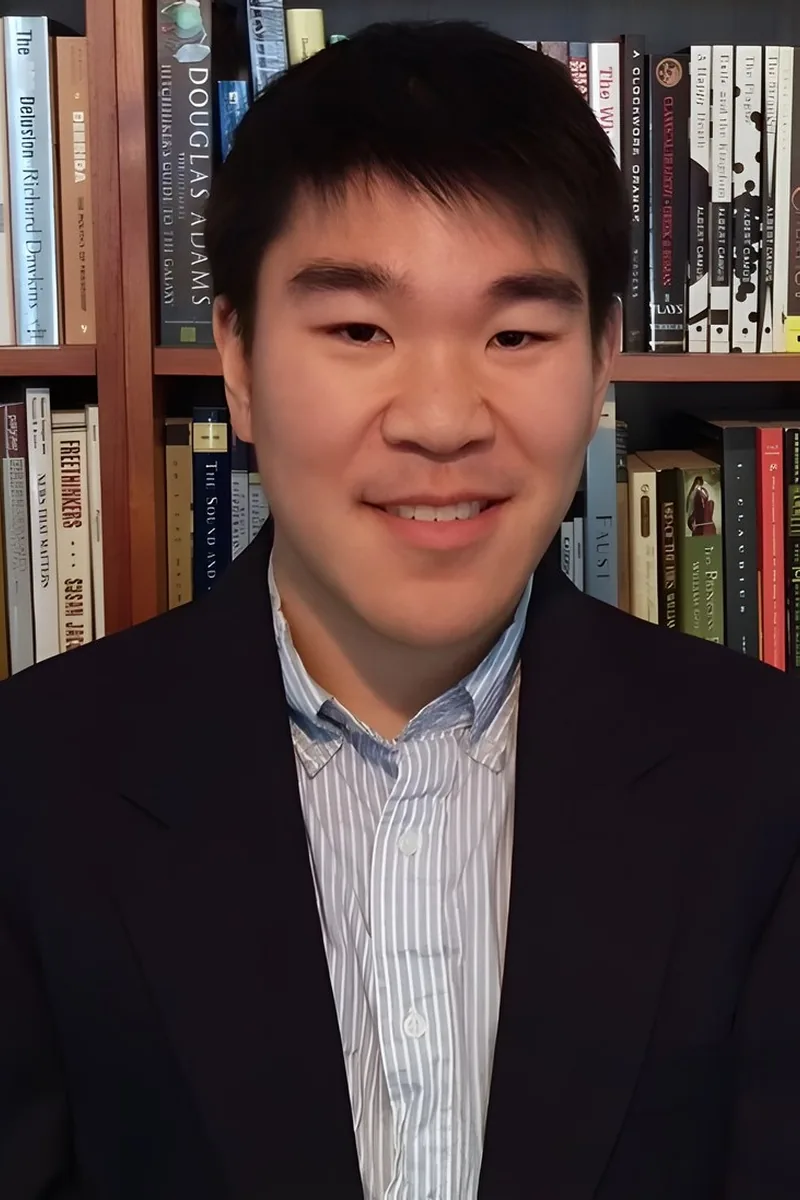
Understanding physics means learning to translate a word problem into a free-body diagram or energy equation — and then trusting the math to get you to the answer. Dennis developed that skill set through years of quantitative research at Vanderbilt, where physical principles underpinned his graduate work in Chemical and Physical Biology. He's patient enough to let students wrestle with a concept before stepping in to clarify.

Engineering training means Rhamy doesn't just recall physics formulas — he derives them, applies them to circuits and mechanical systems, and knows which assumptions break in edge cases. He unpacks topics like electromagnetism and energy conservation by tying equations back to the physical situations they describe, so problem-solving becomes intuitive. His 1570 SAT composite hints at the analytical precision he brings to every session.
An electrical engineering student at Vanderbilt, Daniel lives in the world of circuit analysis, electromagnetism, and wave mechanics — which means he doesn't just recall physics concepts, he actively uses them. He's especially sharp at breaking down force diagrams and energy conservation problems, translating word-heavy scenarios into clean mathematical setups. Students who feel lost between the conceptual reasoning and the math tend to find his approach clarifying.
Elsa has tutored college students through calculus-based physics, so she's deeply familiar with the conceptual leaps that make mechanics, energy, and electromagnetism challenging. As a Vanderbilt chemistry major, she naturally bridges the gap between the math and the physical reasoning — showing students how to set up free-body diagrams or energy equations from a problem's actual scenario.
Kinematics equations and free-body diagrams become far less intimidating when someone shows you the logic underneath the formulas. Jakobi approaches physics problems by first building a conceptual picture — what forces are actually doing, why energy is conserved — before translating that understanding into the math.
Aerospace engineering at its core is applied physics — orbital mechanics, fluid dynamics, thermodynamics — so Matthew's degree means he's solved thousands of problems where Newton's laws and conservation principles aren't abstract exercises but design constraints. He teaches students to sketch the physical situation and identify governing principles before writing a single equation, turning intimidating multi-concept problems into a clear sequence of steps. Rated 5.0 by students.
Engineering coursework demands applying physics under pressure — Matthew doesn't just know Newton's laws and conservation of energy, he's used them to solve complex design and analysis problems. He teaches students to diagram a problem before touching an equation, which builds the kind of structured thinking that transfers across kinematics, electromagnetism, and wave mechanics alike.
Studying psychology and neuroscience at Vanderbilt means Julia regularly encounters the physics underlying brain imaging, signal propagation, and sensory systems — giving her a concrete frame for the mechanics and wave concepts that show up in introductory courses. She's especially strong at translating wordy, intimidating problems into clean diagrams, a skill sharpened by years of tutoring across math and science subjects simultaneously.
A biomedical engineering degree is essentially a physics degree applied to the human body — mechanics of bones and joints, fluid dynamics of blood flow, electrical signals in neurons. Kevin draws on that training to unpack everything from kinematics to electromagnetism with real-world context that sticks. Rated 33 on the ACT, he pairs deep subject knowledge with clear, structured explanations.
Behavioral neuroscience at Lehigh required Katherine to work through the same mechanics, waves, and thermodynamics problems that dominate introductory physics — plus the biophysics applications like modeling neural signal propagation and fluid pressure in biological systems. Her public health graduate work keeps her sharp on quantitative analysis, so she can trace a problem from the physical setup through the math without skipping the reasoning that makes the answer make sense. Rated 5.0 by students.
Engineering is applied physics, and Kacey has spent years at Georgia Tech turning Newton's laws, energy conservation, and stress-strain relationships into real designs. She approaches physics problems by teaching students to draw clear free-body diagrams and translate word problems into equations before ever picking up a calculator.
Understanding physics means getting comfortable with the back-and-forth between a real situation and the math that models it — drawing a free-body diagram, choosing the right kinematic equation, checking whether the units make sense. Nicole's Baylor science training included heavy coursework in physics, and she teaches students to read a problem like a story before reaching for any formula.
Computer science training at Belmont means Braden thinks algorithmically — and that structured problem-solving translates directly to physics, where breaking a scenario into sequential steps (draw the diagram, identify the forces, pick the right equation) is half the battle. He teaches across calculus, trigonometry, and physics, so when a kinematics or energy problem demands comfortable math, the quantitative side never becomes a separate obstacle. Rated 5.0 by students.
I'm pursuing a double major in Mathematics and English at Vanderbilt University. I have been tutoring math since High School and have native proficiency in Mandarin Chinese. I am dedicated to helping students explore the study methods that will fit their individual needs.
I am a junior at Vanderbilt University studying Economics and Math, and I intend to get my PhD in Economics after graduating. Taking the GRE was the first step of my graduate admissions process, and I want to help others achieve similar success so that they can pursue their dreams. In addition, I enjoy tutoring economics and chemistry, as those are my favorite subjects. During my spare time, I like to play cello, read, and bake pies (especially peach pie).
I am a math and science enthusiast, always curious to learn more and share my knowledge with others. In my free time I love to hike, bike, lift weights, play badminton, play drums, and just relax or meditate.
I am today, and is something I love to share with the students I teach.
Testimonials
Because the right Physics tutor makes all the difference.
Average Session Rating – Based on 3.4M Learner Ratings
Practice Physics
Free practice tests, flashcards, and AI tutoring for Physics
Nearby Physics Tutors
Other Nashville Tutors
Related Science Tutors in Nashville
Frequently Asked Questions
Physics students often struggle with translating abstract concepts—like forces, energy, and motion—into concrete understanding. Many find it challenging to connect theoretical equations to real-world applications, balance complex equations, perform unit conversions accurately, and visualize phenomena they can't directly observe. Personalized tutoring helps students build conceptual understanding rather than relying on memorization, which is essential for success in Physics.
During an initial session, a tutor will assess your current understanding of Physics concepts, identify specific areas where you're struggling, and learn about your learning style and goals. This might involve reviewing recent assignments, discussing which topics feel confusing, or working through a practice problem together. The tutor uses this information to create a personalized plan tailored to your needs, whether you're preparing for an exam, working through difficult units, or building foundational skills.
Yes. Tutors can help you understand the scientific method, design experiments, interpret lab results, and connect experimental observations to theoretical concepts. Whether you're struggling to understand why an experiment produced certain results or need help writing lab reports, personalized instruction can strengthen both your hands-on skills and your ability to think like a scientist. This support is especially valuable for students in Nashville's diverse school districts who may have varying lab resources available.
Many students memorize equations without understanding when or how to use them. Tutors teach the reasoning behind equations—what each variable represents and why it matters—so you can apply them confidently to new problems. For unit conversions, tutors break down the process step-by-step and provide practice with dimensional analysis, turning a frustrating task into a systematic skill you can master. This conceptual approach builds lasting confidence rather than temporary fixes.
Abstract concepts like electromagnetic fields, quantum behavior, and molecular forces are difficult to picture. Expert tutors use diagrams, analogies, real-world examples, and sometimes interactive tools to help you build mental models of these invisible phenomena. By connecting abstract ideas to things you can observe or understand intuitively, tutors help you develop the visualization skills that are crucial for Physics problem-solving and deeper comprehension.
Tutors in Nashville are familiar with Physics curricula across the city's five school districts and can support students whether they're in introductory Physics, AP Physics, honors courses, or IB programs. They align their instruction with what you're learning in class, help you master your textbook's approach, and prepare you for district assessments and standardized exams. This personalized support is especially valuable given Nashville's 18.3:1 student-teacher ratio, ensuring you get the individual attention needed to truly understand the material.
Tutors create targeted study plans that focus on the concepts and problem types most likely to appear on your specific exam. They teach test-taking strategies, help you practice with released exams or similar problems, and identify knowledge gaps before test day. Whether you're preparing for a unit test, AP Physics 1, AP Physics 2, AP Physics C, or another assessment, personalized instruction helps you build both content mastery and confidence in your problem-solving approach.
Varsity Tutors connects you with expert Physics tutors who understand the subject deeply and know how to teach it effectively. You can share your specific needs—whether it's help with a particular unit, exam preparation, or building foundational skills—and get matched with a tutor whose expertise and teaching style fit your learning goals. The process is straightforward, and you can start personalized instruction as soon as you're ready.
Let’s find your perfect tutor
Answer a few quick questions. We’ll recommend the right plan and match you with a top 5% tutor.