Award-Winning Physics Tutors
serving Knoxville, TN
Physics
Tutors in Knoxville
Private 1-on-1 tutoring, weekly live classes for academic support, test prep & enrichment, practice tests and diagnostics, and more to elevate grades and test scores.
Based on 3.4M Learner Ratings
UniversitiesSchools & Universities
DeliveredHours Delivered
ProficiencyGrowth in Proficiency
Who needs tutoring?
No obligation. Takes ~1 minute.
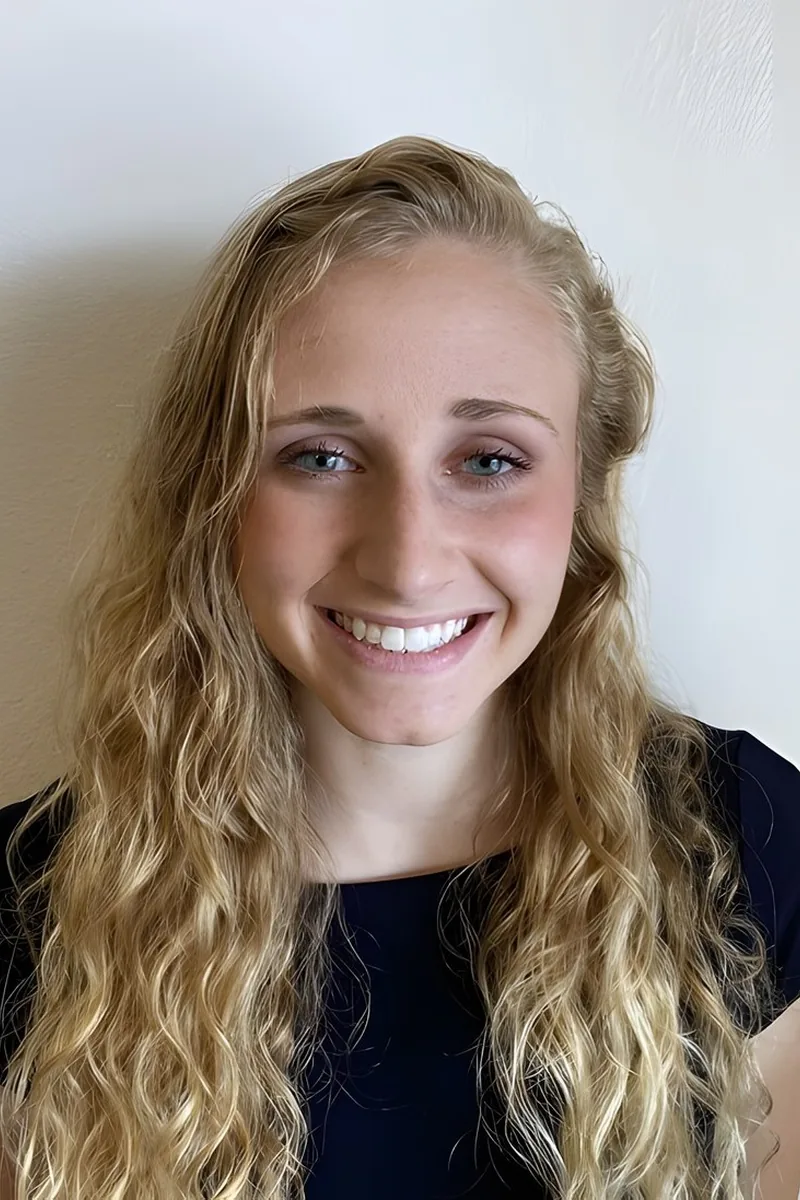
I am an Applied Physics Major with an Emphasis in Mechanical Engineering at Brigham Young University. I love to share the joy I have in the sciences and math to show truly the applications are so far-reaching.

Studying aerospace engineering at the University of Tennessee means Aubrey has worked through the full physics sequence — mechanics, electromagnetism, waves, and thermodynamics — and applied those principles to aircraft and spacecraft design. She teaches Physics by anchoring each concept to a physical scenario first, then layering in the math, so free-body diagrams and energy conservation problems stop feeling like formula hunts.
Engineering is applied physics, which means Charles doesn't just remember the formulas for kinematics, energy conservation, or rotational dynamics — he uses them to solve design problems at Yale every week. That practical fluency lets him explain not just how to set up a free-body diagram but why each force matters and what happens when you change a variable. Rated across math and science subjects, he's especially sharp on real-world application problems.
Understanding physics means learning to translate a word problem into a free-body diagram or energy equation — and then trusting the math to get you to the answer. Dennis developed that skill set through years of quantitative research at Vanderbilt, where physical principles underpinned his graduate work in Chemical and Physical Biology. He's patient enough to let students wrestle with a concept before stepping in to clarify.
Engineering training means Rhamy doesn't just recall physics formulas — he derives them, applies them to circuits and mechanical systems, and knows which assumptions break in edge cases. He unpacks topics like electromagnetism and energy conservation by tying equations back to the physical situations they describe, so problem-solving becomes intuitive. His 1570 SAT composite hints at the analytical precision he brings to every session.
Elsa has tutored college students through calculus-based physics, so she's deeply familiar with the conceptual leaps that make mechanics, energy, and electromagnetism challenging. As a Vanderbilt chemistry major, she naturally bridges the gap between the math and the physical reasoning — showing students how to set up free-body diagrams or energy equations from a problem's actual scenario.
Kinematics equations and free-body diagrams become far less intimidating when someone shows you the logic underneath the formulas. Jakobi approaches physics problems by first building a conceptual picture — what forces are actually doing, why energy is conserved — before translating that understanding into the math.
An electrical engineering student at Vanderbilt, Daniel lives in the world of circuit analysis, electromagnetism, and wave mechanics — which means he doesn't just recall physics concepts, he actively uses them. He's especially sharp at breaking down force diagrams and energy conservation problems, translating word-heavy scenarios into clean mathematical setups. Students who feel lost between the conceptual reasoning and the math tend to find his approach clarifying.
Every chemistry major spends serious time with physics — forces, energy conservation, wave behavior, electromagnetism — because the two disciplines are deeply intertwined. Eric approaches physics problems by teaching students to identify which principles apply before touching any equations, turning intimidating multi-step problems into a logical sequence of smaller decisions.
Aerospace engineering at its core is applied physics — orbital mechanics, fluid dynamics, thermodynamics — so Matthew's degree means he's solved thousands of problems where Newton's laws and conservation principles aren't abstract exercises but design constraints. He teaches students to sketch the physical situation and identify governing principles before writing a single equation, turning intimidating multi-concept problems into a clear sequence of steps. Rated 5.0 by students.
Studying psychology and neuroscience at Vanderbilt means Julia regularly encounters the physics underlying brain imaging, signal propagation, and sensory systems — giving her a concrete frame for the mechanics and wave concepts that show up in introductory courses. She's especially strong at translating wordy, intimidating problems into clean diagrams, a skill sharpened by years of tutoring across math and science subjects simultaneously.
Engineering coursework demands applying physics under pressure — Matthew doesn't just know Newton's laws and conservation of energy, he's used them to solve complex design and analysis problems. He teaches students to diagram a problem before touching an equation, which builds the kind of structured thinking that transfers across kinematics, electromagnetism, and wave mechanics alike.
Behavioral neuroscience at Lehigh required Katherine to work through the same mechanics, waves, and thermodynamics problems that dominate introductory physics — plus the biophysics applications like modeling neural signal propagation and fluid pressure in biological systems. Her public health graduate work keeps her sharp on quantitative analysis, so she can trace a problem from the physical setup through the math without skipping the reasoning that makes the answer make sense. Rated 5.0 by students.
An illustration degree might seem unrelated to physics, but Brennan's BFA training built serious spatial reasoning skills — the same mental rotation and vector thinking that makes free-body diagrams and projectile motion problems intuitive. He also teaches calculus and ACT Science, so he's comfortable with both the math backbone and the data-interpretation habits that physics demands. His 31 ACT composite confirms the quantitative chops behind the artistic background.
A biomedical engineering degree is essentially a physics degree applied to the human body — mechanics of bones and joints, fluid dynamics of blood flow, electrical signals in neurons. Kevin draws on that training to unpack everything from kinematics to electromagnetism with real-world context that sticks. Rated 33 on the ACT, he pairs deep subject knowledge with clear, structured explanations.
A biology degree builds more physics intuition than most people realize — Andrew spent semesters working through biomechanics, fluid dynamics, and thermodynamics principles that map directly onto introductory physics curricula. He leans on that life-science context to make force and energy problems feel concrete, connecting Newton's laws to systems students can actually picture. Holds a 5.0 rating.
Studying mathematics while also teaching AP Physics 1, calculus, and differential equations gives Lawton an unusually tight grip on the exact place where students get stuck — the math inside the physics. He breaks down problems in mechanics and electromagnetism by first making sure the underlying algebra or calculus isn't a mystery, so the physical reasoning can actually take center stage. Rated 5.0 by students.
Engineering is applied physics, and Kacey has spent years at Georgia Tech turning Newton's laws, energy conservation, and stress-strain relationships into real designs. She approaches physics problems by teaching students to draw clear free-body diagrams and translate word problems into equations before ever picking up a calculator.
Christean's teaching load spans math, calculus, and science alongside physics, which means students get someone who can untangle the algebra or trig holding up a force problem without losing sight of the physical reasoning underneath. He leans on concrete, everyday examples — pulling a sled, dropping a ball, braking a car — to anchor Newton's laws and energy concepts before any variables hit the page. That step-by-step, build-from-the-familiar approach works especially well for students who freeze when a problem looks purely abstract.
A chemistry degree and dental doctorate gave Jackson years of applied physics — from fluid dynamics in biological systems to electromagnetic wave behavior. He unpacks force diagrams, energy conservation, and kinematics by tying each concept back to a concrete scenario, making the math feel like a tool rather than an obstacle.
Understanding physics means getting comfortable with the back-and-forth between a real situation and the math that models it — drawing a free-body diagram, choosing the right kinematic equation, checking whether the units make sense. Nicole's Baylor science training included heavy coursework in physics, and she teaches students to read a problem like a story before reaching for any formula.
I am currently a Junior at The University of Alabama pursuing degrees in both Mathematics & Economics. After I graduate, I intend to stay at Alabama to get an M.A. in Economics. I have been tutoring both Math and ACT Prep since I was a Sophomore in High School. After 4 years of experience, I continue to enjoy tutoring these subjects, and the constant challenge of improving my abilities and techniques. I get a great sense of satisfaction in helping those I tutor improve their grades, test scores, and overall understanding of the subjects I am teaching them. Not only do I focus on the subject matter being taught, but I also focus on helping students develop the study skills and habits that are imperative to success later in their academic careers. Through my four years of tutoring, I have developed the ability to mold my tutoring style around however the student learns best whether that be visually, through examples, etc. This allows me to provide an individualized tutoring session to each person I tutor. I believe no two students should be tutored the same was; every student has different learning methods and I view it as my responsibility to modify my tutoring style to fit each individual student.
Computer science training at Belmont means Braden thinks algorithmically — and that structured problem-solving translates directly to physics, where breaking a scenario into sequential steps (draw the diagram, identify the forces, pick the right equation) is half the battle. He teaches across calculus, trigonometry, and physics, so when a kinematics or energy problem demands comfortable math, the quantitative side never becomes a separate obstacle. Rated 5.0 by students.
I'm pursuing a double major in Mathematics and English at Vanderbilt University. I have been tutoring math since High School and have native proficiency in Mandarin Chinese. I am dedicated to helping students explore the study methods that will fit their individual needs.
I am a junior at Vanderbilt University studying Economics and Math, and I intend to get my PhD in Economics after graduating. Taking the GRE was the first step of my graduate admissions process, and I want to help others achieve similar success so that they can pursue their dreams. In addition, I enjoy tutoring economics and chemistry, as those are my favorite subjects. During my spare time, I like to play cello, read, and bake pies (especially peach pie).
I am a math and science enthusiast, always curious to learn more and share my knowledge with others. In my free time I love to hike, bike, lift weights, play badminton, play drums, and just relax or meditate.
I am a rising sophomore at the University of Alabama and I am majoring in Mechanical Engineering. I have been working with fellow students ever since kindergarten with questions they had on the subject matter the teacher was going over or on concepts from other classes I had previously taken. I personally enjoy tutoring many areas of mathematics. Math has always been my favorite subject as many of the concepts come easy to me upon initially learning them. My personal way of tutoring involves breaking down the problem into its individual concepts and making sure the student understands each of the concepts and then moving on to explain how the concepts tie together into the problem.
I am today, and is something I love to share with the students I teach.
As a physics major with a deep interest in particle physics, Ismael doesn't just teach formulas — he unpacks the reasoning that makes Newton's laws, energy conservation, and wave mechanics click. He's especially sharp at identifying the specific conceptual gap behind a wrong answer, then rebuilding understanding from that exact point. Students come away knowing how to set up problems from scratch, not just pattern-match from examples.
Mechanical engineering grad school is essentially applied physics on repeat — Aaron solves statics, dynamics, thermodynamics, and fluid mechanics problems daily, so the concepts in introductory and AP-level courses are second nature rather than something he has to dust off. He's especially sharp at breaking down free-body diagrams and energy conservation setups, connecting the physical picture to the math so students see why an equation applies instead of guessing which one to use. Rated 5.0 by students.
Understanding physics means seeing the same core principles — Newton's laws, conservation of energy, wave behavior — show up in wildly different problems. Amber teaches students to identify which principle applies and how to set up the math, drawing on her strong background in both science and mathematics. Her 5.0 client rating speaks to an approach that makes even tricky free-body diagrams and projectile motion problems feel manageable.
Dylan's physics major at Vanderbilt means he's not recalling intro-level material from years ago — he's actively working through classical mechanics, electromagnetism, and modern physics right now, which keeps his explanations current and sharp. His instinct is to ground every abstract concept in a physical, graphical picture: showing what a free-body diagram actually represents, or why a velocity-time graph reveals more about acceleration than a formula ever could. That visual-first approach, backed by a 36 ACT and a math minor, makes the subject click for students who've been drowning in equations without understanding what they mean.
Between a mechanical engineering bachelor's and a PhD program at Rice, Jeffrey has spent years solving statics, dynamics, and thermodynamics problems that most students only encounter in their first physics course. He taught calculus-based physics at Notre Dame and assisted in Differential Equations and Mechanics, so he knows exactly where students lose the thread — especially when multi-step force and energy problems demand both physical reasoning and clean math. Rated 4.9 by students.
Kathleen's math background at Washington University gives her a natural advantage when teaching physics — she treats kinematics equations, force diagrams, and energy conservation as applied math problems rather than disconnected formulas. She digs into the specific step where a student gets stuck, whether that's setting up a free-body diagram or knowing when to apply Newton's second law versus conservation of momentum.
Holding degrees in both mechanical and electrical engineering, Steve has solved the full spectrum of physics problems professionally — from statics and dynamics in mechanical systems to electromagnetism in circuit design. That dual perspective is especially useful when students hit the transition from mechanics to E&M, since he can show how the same problem-solving structure carries across both halves of a physics course. Rated 4.9 by students.
Applied math at Caltech means Samuel's daily coursework is the calculus and differential equations that power every physics problem — from projectile motion to oscillating springs to electric fields. He teaches students to build the mathematical setup first, identifying which principles apply and why, so that plugging into formulas becomes the easy final step rather than a frantic guessing game.
Earning a BS in physics from Yale gave Anthony deep comfort with the subject's core challenge: translating a physical scenario into a mathematical model and then interpreting the result. He breaks down force diagrams, energy conservation, and wave behavior by tying each concept back to the underlying math rather than treating equations as formulas to memorize.
Bryan holds a B.S. in Physics and teaches the subject the way it's actually practiced — starting from a real situation, identifying the relevant principles, and building a solution step by step. Whether the problem involves conservation of momentum or circuit analysis, he emphasizes drawing clear free-body diagrams and checking units before touching a calculator.
Medical school at the Medical College of Wisconsin demands a command of mechanics, fluid dynamics, and thermodynamics that goes well beyond intro-level physics — Abrahim applies those principles daily in contexts like blood pressure dynamics and respiratory mechanics. His biology degree from UCLA (cum laude) and a 34 ACT underscore the quantitative chops he brings to breaking down force diagrams, energy conservation setups, and multi-step kinematics problems. Rated 5.0 by students.
Engineering training changes how you see physics problems — instead of hunting for the right equation, you learn to diagram forces, track energy, and let the math follow the physics. Christine brings that engineering mindset from her biomedical engineering studies at Johns Hopkins, where mechanics and electromagnetism aren't just coursework but tools she applies in lab and design projects.
Testimonials
Because the right Physics tutor makes all the difference.
Average Session Rating – Based on 3.4M Learner Ratings
Practice Physics
Free practice tests, flashcards, and AI tutoring for Physics
Nearby Physics Tutors
Other Knoxville Tutors
Related Science Tutors in Knoxville
Frequently Asked Questions
Physics students often struggle with three key areas: understanding abstract concepts like forces and energy that can't be directly observed, balancing equations and managing unit conversions accurately, and connecting theoretical principles to real-world applications. Many students memorize formulas without grasping the underlying concepts, which makes problem-solving difficult when questions require deeper reasoning. Personalized tutoring helps students build conceptual understanding alongside computational skills, making physics feel less like memorization and more like logical problem-solving.
Knoxville's schools generally offer Physics I (introductory mechanics and energy), Physics II (electricity, magnetism, and waves), and AP Physics courses for advanced students. Many schools also offer specialized options like Physics for Life Sciences or Physics electives focused on specific applications. The exact curriculum varies by school and grade level, but most students encounter foundational concepts in kinematics, forces, work and energy, and waves before moving to more advanced topics. Tutors experienced with Knoxville's school systems can align instruction with your specific course requirements.
One of physics's biggest challenges is visualizing forces, fields, and energy that we can't see directly. Expert tutors use multiple strategies—diagrams, simulations, real-world demonstrations, and step-by-step problem breakdowns—to make abstract concepts concrete and intuitive. For example, a tutor might use everyday scenarios (like a car braking) to explain friction and Newton's laws, or interactive tools to show how changing variables affects motion. This multi-sensory approach helps concepts stick in ways that lectures alone often don't.
Yes. Tutors can help you understand the scientific method, design experiments, analyze data, and interpret results—all critical skills for lab success. Whether you're preparing for a lab report, troubleshooting why an experiment didn't work as expected, or trying to connect lab observations to theoretical concepts, personalized instruction bridges the gap between theory and practice. Strong lab skills also reinforce conceptual understanding, making both classroom learning and hands-on work more meaningful.
Your first session focuses on understanding your goals, current challenges, and learning style. The tutor will assess your grasp of foundational concepts, identify specific topics causing confusion (whether it's kinematics, energy, circuits, or something else), and learn about your course requirements and timeline. From there, you'll develop a personalized plan that targets your weak areas while building on your strengths. This diagnostic approach ensures every session after that is focused and efficient.
Varsity Tutors connects you with expert tutors who have strong backgrounds in Physics and experience teaching students at your level—whether you're in high school Physics, AP Physics, or preparing for college-level work. When you describe your specific challenges and goals, you'll be matched with a tutor whose expertise and teaching style fit your needs. Many tutors in the Knoxville area have experience with local school curricula and can tailor lessons to your course's specific focus.
Many students notice improved understanding and confidence within 2-3 sessions, especially when tutoring targets specific problem areas. However, building strong Physics skills—particularly the ability to apply concepts to new problems—typically requires consistent work over several weeks or months. The timeline depends on your starting point, the complexity of topics you're tackling, and how frequently you meet with your tutor. Regular practice between sessions, guided by your tutor, accelerates progress significantly.
Expert tutors teach you a systematic approach to problem-solving: identifying what you know, determining what you're solving for, selecting the right concepts and equations, and checking whether your answer makes sense. Rather than just showing you how to solve one problem, tutors help you recognize patterns and develop strategies you can apply to new, unfamiliar problems. This builds genuine problem-solving ability instead of formula memorization, which is especially important for exams and real-world applications of physics.
Let’s find your perfect tutor
Answer a few quick questions. We’ll recommend the right plan and match you with a top 5% tutor.