Award-Winning AP Computer Science Tutors
serving Nashville, TN
AP Computer Science
Tutors in Nashville
Private 1-on-1 tutoring, weekly live classes for academic support, test prep & enrichment, practice tests and diagnostics, and more to elevate grades and test scores.
Based on 3.4M Learner Ratings
UniversitiesSchools & Universities
DeliveredHours Delivered
ProficiencyGrowth in Proficiency
Who needs tutoring?
No obligation. Takes ~1 minute.
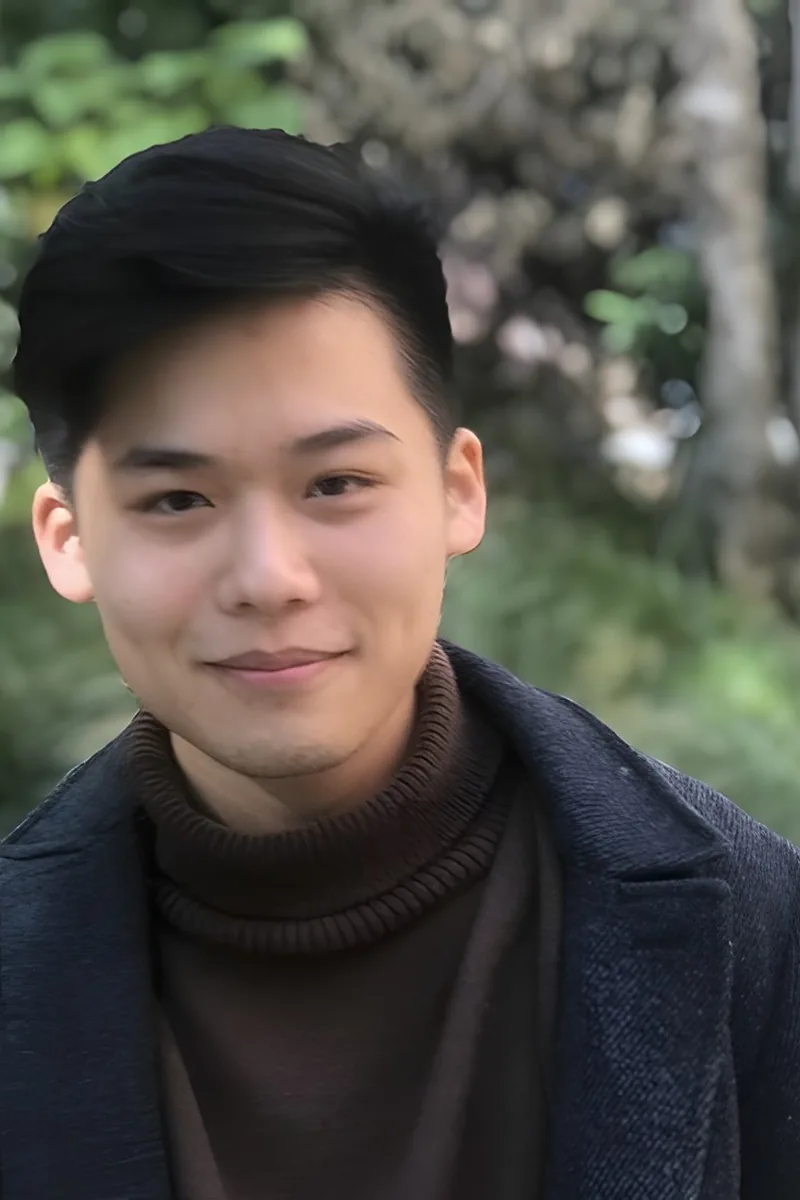
I'm a sophomore at Vanderbilt University studying computer science, currently focusing on iOS and game development. I like growing as a person, but I find it much more interesting and rewarding to grow other people. Seeing a student change, not in intellect but in perspective, is fascinating. I like to focus more on concepts rather than memorization so that students will have the tools to excel in any facet of academia, beyond some random test that holds too much significance.
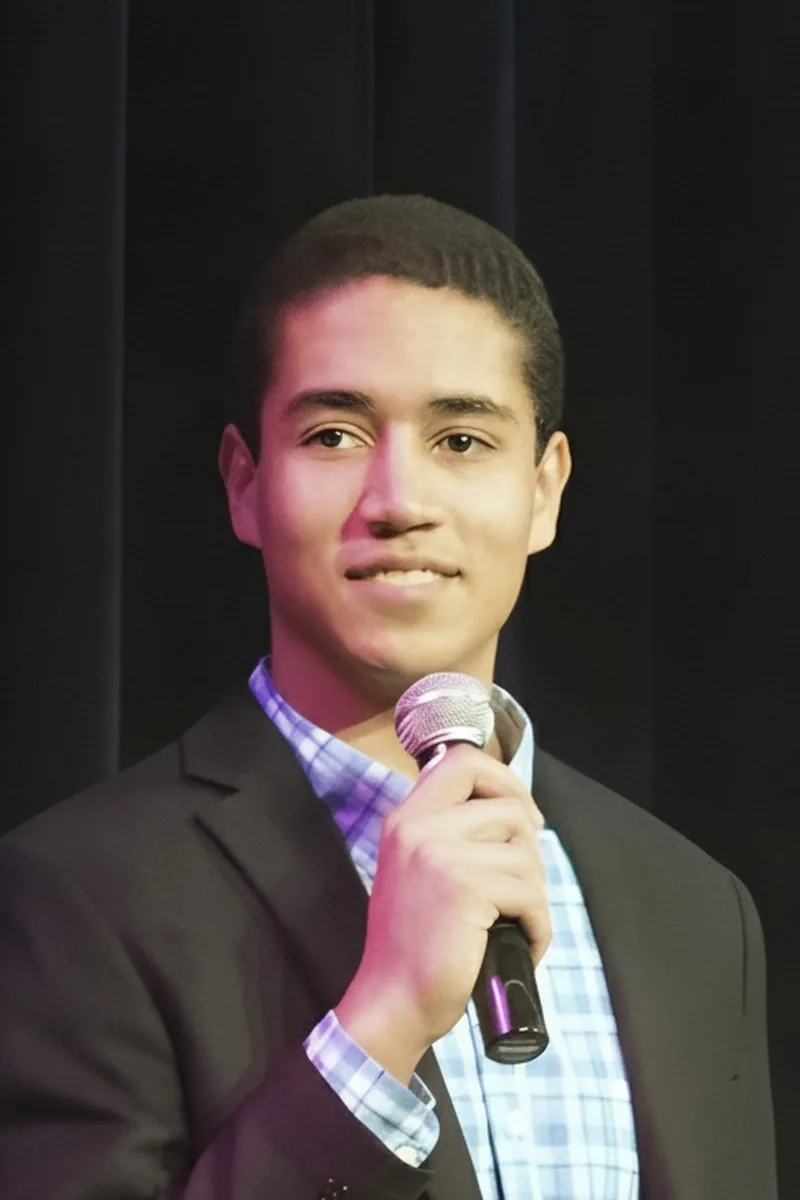
I am a Thomas Jefferson High School for Science and Technology graduate and currently attend Vanderbilt University majoring in Computer Engineering with a minor in Business. I've tutored in various subjects for about 6 years now. I've done it so much, one of the companies I started was tutoring-based. In all, I am a technology-oriented entrepreneur, an impact-driven member of the community, and a striving academic. My passion for computer engineering and dedication to solving the world's problems push me to continue to be better tomorrow than I am today. I am currently pursuing a career in engineering and business where I hope to improve the lives of those around me every step of the way.
I am an Undergraduate Student at Vanderbilt University. With years of tutoring experience and a solid academic foundation, I am fully equipped to teach in various subjects at many different levels.
I am an incoming CSE PhD student at the University of Michigan. I graduated from Duke University with a B.S. in Computer Science and Sociology in May 2025. I am passionate about making meaningful connections with students and helping others understand high-level concepts!
I am a 2023 graduate of the University of Notre Dame with a Finance/Economics major and a minor in Innovation and Entrepreneurship. I am a passionate student in the math and business realms, as I enjoy the intuitiveness of the former and the real-world potential of the latter. During classes in middle and high school, I developed a reputation of being a good source of help within my classes in a non-tutor capacity, and grew that into a peer tutor role a couple times a week during lunch my senior year of high school. What I hope to accomplish with my tutoring is ensure that you not only achieve your desired grade/score, but see how the different concepts relate to each other in the bigger picture. The more important part is to critically think about the subject matter in other, more unfamiliar contexts. Also, in my math subjects, I seek to provide personal secrets in realms including quicker computation strategies, unique acronyms for certain rules, and other intuitive shortcuts.
I'm a recent graduate of the California Institute of Technology in Economics and Computer Science. I was also accepted at Harvard, Princeton, MIT, and Stanford. I have a broad range of interests spanning science, math, engineering, social science, the humanities, the arts, and athletics (I also played on the Caltech basketball team). My background allows me to tutor general college prep, especially the SAT, ACT and the GRE. I love to teach analytical thinking, ranging from advanced Math and Physics to strategies for understanding literature and developing arguments.
I'm Dennis. I study physics, math, and computer science. I have done research about cosmic ray acceleration at supernova shock fronts in the Princeton University Department of Astrophysics, simulating how the turbulent plasmas push protons and ions. I have also worked at the Norfolk State University Department of Engineering, designing, simulating, optimizing, and building light filters for wavelength-division optical-electronic multiplexers. Another field I study is the mathematics of quasicrystals and aperiodic tilings, such as the Penrose tiling of rhombuses.
Hackathons and robotics competitions taught June to debug under pressure and think through code systematically — exactly the skills AP Computer Science A tests on free-response questions. Her electrical engineering studies at Brown mean she understands computing from the hardware up, giving her a concrete way to explain why Java handles variables, memory, and control flow the way it does.
I am a Stanford student from Maryland studying Political Science and Computer Science. I graduated from high school in 2015, where I was active as the captain of my high school sailing team, a section leader in the orchestra, and part of the STEM magnet program Project Lead the Way. I am currently taking some time off from school to be around family here in Massachusetts and while I will be taking a few classes, I have plenty of time and lots of flexibility. I am excited to work with middle and high school students in math, reading and writing, social studies, and computer science. In addition to taking classes and tutoring this fall I will be volunteering in after school programs with low income middle and elementary school students.
Between physics problem sets and computer science coursework at Cornell, Joel writes Java and Python to solve real computational problems — not just classroom exercises. That dual perspective is especially useful for AP Computer Science A topics like algorithm design and object-oriented programming, where understanding the logic behind the code matters as much as getting it to compile. His 35 ACT reflects the kind of precise, systematic thinking that translates directly to tracing through free-response questions.
Engineering coursework trains you to think in systems — breaking complex problems into modular, testable pieces — which is exactly the reasoning AP Computer Science A demands when students write classes, trace through nested loops, or debug recursive methods. Wesley's biomedical engineering degree and research in biophysical chemistry mean he's been coding to solve real scientific problems, not just completing textbook exercises. That applied perspective makes abstract Java concepts feel purposeful rather than arbitrary.
Ryan studies computer science at UVA and knows the AP Computer Science curriculum inside out — from object-oriented design and recursion to array manipulation and sorting algorithms in Java. He teaches students to think through problems before writing a single line of code, building the kind of algorithmic reasoning that earns 5s on the exam. Rated 5.0 by students.
I am an incoming student at Yale University studying computer science and economics. I'm also interested in math and chemistry. My favorite area to tutor is SAT, specifically the SAT math section. In my spare time, I enjoy playing golf, cooking, and reading thriller novels. I'm excited to start working with you!
Double-majoring in computer science and English gives Milan an unusual edge when it comes to AP Computer Science A — he writes Java with technical precision but also explains it in plain language, which matters when students are stuck on why a recursive call unwinds the way it does or how inheritance actually changes method behavior. His CS coursework means topics like array traversal, class design, and algorithm tracing are daily practice, not distant exam material.
Robotics engineering at Penn means Mohamed writes code daily to solve real problems — sensor integration, control systems, data processing. He brings that applied perspective to AP Computer Science, teaching algorithmic thinking and program design principles through problems that show students why the concepts matter beyond the exam.
Swarthmore's CS curriculum throws students into Java early and often, so Eric isn't just reviewing AP Computer Science A material — he's actively building on it in his own coursework every week. That proximity to the content means he can pinpoint exactly where topics like array manipulation or class hierarchy design tend to trip students up, and explain them in the clear, plain-language style his liberal arts training sharpened.
Testimonials
Because the right AP Computer Science tutor makes all the difference.
Average Session Rating – Based on 3.4M Learner Ratings
Nearby AP Computer Science Tutors
Other Nashville Tutors
Related Technology and Coding Tutors in Nashville
Frequently Asked Questions
AP Computer Science focuses on programming fundamentals, algorithms, and data structures using Java as the primary language. The course covers topics like variables, control structures, object-oriented programming, arrays, ArrayLists, 2D arrays, inheritance, and recursion. You'll also learn to analyze algorithm efficiency and solve computational problems—skills tested on the AP exam in May, which includes multiple-choice questions and free-response coding problems.
Score improvement depends on your starting point and how consistently you engage with tutoring. Students who work with tutors to target specific weak areas—like understanding inheritance, debugging complex code, or mastering algorithm design—typically see meaningful gains. Many students improve by 1-2 score points (on the 1-5 scale) when they combine personalized instruction with regular practice on released AP exams and coding problems.
Many students struggle with object-oriented programming concepts, particularly inheritance and polymorphism, as well as tracing through complex code logic and recursion. Time management during the exam is another frequent challenge—the free-response section requires writing correct, efficient code under pressure. Additionally, students often find it difficult to debug their own code and understand why their solutions don't work as expected.
The exam has two sections: 40 multiple-choice questions (90 minutes) and 4 free-response coding questions (90 minutes). The multiple-choice section tests conceptual understanding and code tracing, while free-response requires you to write working Java code to solve problems. Success requires both conceptual knowledge and practical coding skills, so effective preparation balances studying core topics with hands-on coding practice and timed practice exams.
Start by identifying your weakest topics using released AP exams and practice problems, then prioritize those areas in your study plan. Focus on understanding core concepts deeply rather than memorizing syntax—you can reference the AP Java subset during the exam. Take full-length practice tests under timed conditions every 1-2 weeks to build exam stamina and identify patterns in your mistakes, then use tutoring sessions to target those specific gaps.
Varsity Tutors connects you with expert tutors who have strong Java programming backgrounds and AP Computer Science exam experience. When getting matched, look for tutors who can explain complex concepts clearly, provide real-time code feedback, and adapt to your learning style—whether you learn best through problem-solving, visual explanations, or hands-on coding practice. Your first session is a great opportunity to assess whether the tutor's teaching approach matches your needs.
Your tutor will likely assess your current understanding of core AP Computer Science topics, discuss your goals (score target, timeline, specific weak areas), and learn your preferred learning style. Together, you'll create a personalized study plan that focuses on your biggest challenges, whether that's mastering inheritance, improving code-tracing skills, or building confidence with timed practice problems. This foundation helps your tutor tailor each subsequent session for maximum impact.
Time management comes down to practice under exam conditions. Spend your first few practice tests focusing on accuracy rather than speed, then gradually work on completing problems faster as you build confidence. For the free-response section, allocate roughly 20-25 minutes per question, leaving time for review. A tutor can help you develop strategies for quickly identifying what a problem is asking, planning your code before writing, and recognizing when to move on rather than getting stuck on one question.
Let’s find your perfect tutor
Answer a few quick questions. We’ll recommend the right plan and match you with a top 5% tutor.