Award-Winning AP French Tutors
serving Buffalo, NY
AP French
Tutors in Buffalo
Private 1-on-1 tutoring, weekly live classes for academic support, test prep & enrichment, practice tests and diagnostics, and more to elevate grades and test scores.
Based on 3.4M Learner Ratings
UniversitiesSchools & Universities
DeliveredHours Delivered
ProficiencyGrowth in Proficiency
Who needs tutoring?
No obligation. Takes ~1 minute.

A master's degree in French Linguistics and Pedagogy means Nicholas doesn't just speak French fluently — he understands the grammatical architecture underneath it and knows how to teach it systematically. For AP French, he digs into the interpretive and presentational communication tasks that drive the exam, from synthesizing audio sources to crafting persuasive essays in French.
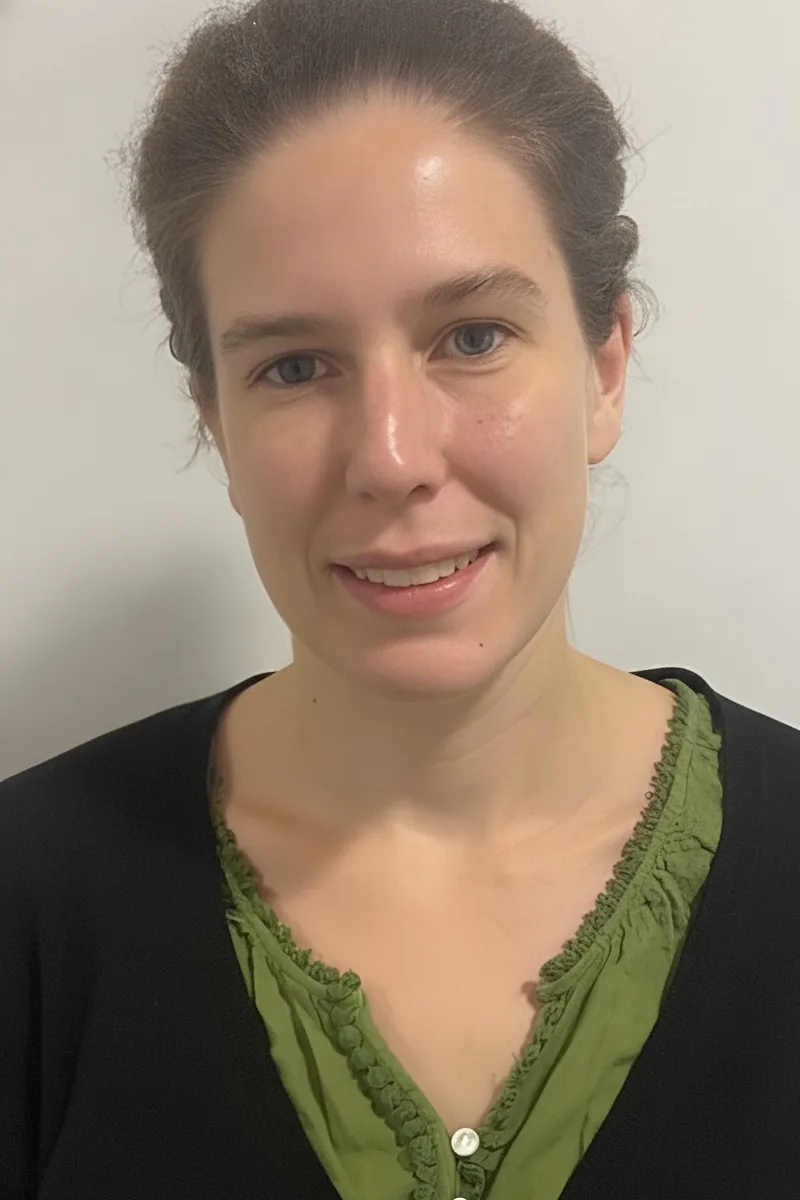
Conducting PhD research on West African music at Harvard, Sarah uses French as a working language for fieldwork, academic reading, and professional communication. She brings that real-world fluency to AP French prep, drilling students on the interpretive listening passages and persuasive essay prompts that carry the most weight on exam day.
Ben tutored beginning French classes in Dartmouth's French department and then spent a full year living in France, which means his AP French instruction is grounded in how the language actually sounds and functions — not just textbook conjugation tables. He zeroes in on the presentational writing and interpersonal speaking tasks that carry the most weight on exam day.
A semester-long language-immersion program in Toulouse gave Laura the kind of fluency that AP French graders actually reward — natural register, idiomatic phrasing, and the ability to argue a position without mentally translating from English first. French is one of her two majors at Washington University in St. Louis, and she channels that deep study into the cultural comparison and persuasive essay tasks where students need to go beyond correct grammar and demonstrate real command of the language. Rated 5.0 by students.
Samantha earned her B.A. in French Language from Duke, which means AP French students get a tutor who can dissect a Le Monde article, explain the subtleties of the subjonctif, and coach persuasive essay writing in French — all skills the exam demands. She knows exactly where the AP rubric rewards nuance and where students lose points on careless grammar.
Having earned her MA in French from Middlebury and studied at the Sorbonne, Margaret knows exactly what AP French graders look for in the persuasive essay and the cultural comparison. She drills the presentational and interpersonal communication tasks with an emphasis on register, idiomatic accuracy, and building arguments that go beyond surface-level observations.
Columbia's course catalog doesn't list AP French prep, but Adam's path through AP French Language & Culture and continued study across multiple levels of French gives him a clear read on where students lose points — particularly on the timed interpersonal tasks where hesitation and anglicisms creep in. His 34 ACT signals the kind of disciplined test-taking instinct that pairs well with drilling exam-specific strategies for the cultural comparison and presentational writing sections.
Working as a producer and writer for Afropop Worldwide means Jesse engages with francophone African culture daily — interviewing artists, researching musical traditions from Senegal to the Congo, and navigating French as a living professional language rather than a classroom exercise. That real-world immersion with the francophone world, combined with a French major from Wesleyan, gives him a natural feel for the cultural comparison and interpretive listening tasks where students need to go beyond textbook knowledge and engage with authentic francophone sources.
Amanda is pursuing a full degree in French Language, Literature, and Culture at Barnard College, Columbia University — meaning she doesn't just speak French, she analyzes its literary traditions and cultural contexts at a university level. For AP French, she breaks down the thematic units (like global challenges, beauty and aesthetics, and contemporary life) with the depth of someone who engages with these topics in French daily.
I am excited to be home and help fellow straphangers on their educational paths! My largest wealth of tutoring experience is in foreign languages--particularly French--but I also feel very comfortable editing essays of any kind and working through standardized test concepts. My availability is extremely flexible, and anywhere in New York City works for me. I look forward to working with you.
I am a graduate of the University of Chicago, with a bachelor's degree in psychology and linguistics. Currently, I am pursuing a master's degree in speech-language pathology at Teachers College, Columbia University. In the past, I have worked as a teacher's aide in a public school classroom, a mentor to middle school girls, an instructor and tutor at the literacy education organization 826, and a summer camp counselor. I tutor a diverse range of subjects, and I find that I especially enjoy tutoring language arts, reading, and writing at all levels, from elementary school all the way up to college/grad school test prep. As a tutor, I am committed to helping students reach their full potential as learners. Throughout my years as an educator, I have seen firsthand the remarkable academic growth that can occur when tutors provide students with the individualized support that they need. In my spare time, I enjoy reading, journaling, and learning about other languages and cultures.
I'm not around.
I'm an MIT student with a background in mathematics and computer science. I love working with data and making sense of numbers. I hope I can share my passion for these subjects!
I am a rising Senior currently studying neuroscience at the University of Pennsylvania. Science and particularly the inner workings of the brain have been a passion of mine from a very young age, where I remember candidly telling my mother that I would be a neurosurgeon one day.
I'm eager to help you in whatever way I can! I'm a graduate of Harvard (BA, Social Anthropology) and Columbia (MA, Human Rights) and have spent years tutoring students in a variety of subjects. I'm a firm believer that effective tutoring stems from developing a program that is tailored and highly customized to individual students. I look forward to working with you!
I am a recent graduate of the University of Pennsylvania where I majored in International Studies and Business. I have a strong background in math, critical reading, writing, and french. I have spent several years living abroad and am a native French speaker.
I'm reveling in this most recent stop on my long and exciting academic path.
I am a rising junior at Cornell University, majoring in Statistics and minoring in Computer Science. I can easily reach students on the North Shore or northern Chicago.
I am currently pursuing my Masters in Public Health at Columbia University's Mailman School of Public Health. I received my B.A. in Psychology and Environmental Studies at Wesleyan University. In high school, I was selected by my teachers to tutor classmates in Chemistry, Physics, and Geometry. I helped students with homework problems and with test preparation (both for in-class exams and for the SAT Subject Tests). As an undergraduate, I was a teaching assistant for introductory Russian, and worked with students both in group and in individual sessions.
I am an empathic and experienced online Arts and Music (Singing), Public Speaking, GRE and SAT (Standardized Testing for Higher Education), Writing, English, French and other advanced subject Tutor and Instructor and have a doctorate in Educational Theory and Practice from Binghamton University. I have extensively tutored and taught Writing to college and graduate level students as well as to high school, middle school and elementary school students. I have also received recognition for public speaking by colleagues and for my art and singing by the public. I am here to support you with your own achievement of rewarding results and self-discovery and actualization through your written and creative self-expression.
I am a Princeton University graduate, currently based in Brooklyn, NY. I first began tutoring during college, where I worked with students on reading and writing skills and Spanish language. With Varsity Tutors, I am available to tutor these subjects, including college application essay writing, essay editing, and study skills and organization, as well as French and music theory.
I am passionate about transmitting French language and French/Francophone cultures to students of the French language and my lessons often include music, films, and other cultural productions in order to highlight the diversity of French and Francophone cultures. I also have experience teaching French grammar and syntax at the beginner and advanced levels. The above prepares me to deliver excellent French lessons to students.
I'm a graduate of Washington University in St. Louis. I received my Bachelor of Arts in French, and minored in Film & Media Studies and Psychology. Since graduation, I have been working in Television while remaining passionate about French and helping others achieve their language learning goals. I'm a proponent of education in languages and cultures beyond one's own, as I find learning to understand and communicate with one another to be an particularly valuable and global skill. As I tutor in French Reading, Writing, Speaking, and Grammar, I strive to impart this acknowledgement and appreciation to my students.
I am excited to tutor because I know what it feels like to get stuck and I'm happy to help people who encounter challenges in their studies. Though frustrating, there's something really valuable about these moments when you're not quite getting it. It means that by proceeding slowly and practicing a new concept or strategy you'll learn a new skill that will stick with you even more because it took some work to master. My focus in teaching is in French and, more broadly, language arts. I studied French Literature at New York University because of my passion for literature, creativity, and expression. Learning a new language opens up more than just a new literary world but also lets you tap into another set of human experiences, expression, emotion, history. I think the greatest reward in teaching French and language arts is helping a student connect with a text and gain access to someone else's experience, what someone else thought important enough to write down, and then how this connection can help reframe the reader's thinking - deepening, challenging, or shifting the ways our own thought. Apart from the study and appreciation of literature, learning a language at a linguistic level is invaluable. It promotes human connection, openness of thought, and pushes one's own capacity and diversity of self-expression.
I am a graduate of Brown University, where I received a Bachelor of Public Policy with a focus on social and environmental policy and graded Magna Cum Laude. Since graduating, I have worked for three years as a legal services case manager and then most recently as an English teacher in a French middle school in the North of France. There, I also worked as a private tutor for learners of all levels, allowing me to perfect my French and English communication and teaching skills. In all of my work experiences I have prioritized building strong relationships with my clients and students founded on mutual respect and strong communication. In my own learning I have benefited so much from, one-on-one support and I want to share the power of that learning with students of all ages, particularly during a time when learning has developed new challenges. In my free time, I love to bake, practice yoga, and stroll through Central Park! I will be attending law school in the fall.
I am a musician, a writer, and a word lover, originally from rural Northern Michigan but currently enjoying city life in Manhattan. I love to help students improve, whether for the sake of a class, a standardized test, or just a desire to hone their skills.
I am also an avid, competitive ballroom dancer. I began teaching dance at my ballet studio in high school before going on to teach my college team, as well as wedding dances to private couples. I am also a freelance writer and am working on learning a fourth language, Spanish.
I am a dedicated and enthusiastic tutor who is eager to support students of all ages through subject-specific and test-prep tutoring. I have a strong background in literacy and languages specializing in French, English, writing, and the verbal and critical reading components of the SAT and GRE.
I am a sophomore at New York University majoring in Data Science and Biology. I am most passionate about learning through research and have been a part of multiple projects on stem cell research and machine learning. Teaching students of the many learning opportunities presented through real world applications has always been a focus of mine. I believe that students are able to obtain a more meaningful and gratifying education when they are able to apply their knowledge into their own lives, and I would like to share that appreciation with them.
French is the subject Riley lights up about — she studied it alongside English Writing at Saint Mary's College, received formal pedagogical training in the college's tutoring program, and then completed a Master's at Notre Dame. For AP French, she leans into the conversational and writing-intensive tasks, coaching students to stop mentally drafting in English and start producing natural French prose with the register and idiomatic precision graders reward. Rated 5.0 by students.
I am friendly, reliable, and most importantlycommitted to helping you learn! It is my top priority to create a positive learning experience that will help boost your test scores without boring you to tears. After all, shouldn't learning be fun?
I am a highly dedicated, creative, and passionate educator with a Master of Arts in Teaching Foreign Languages with a Major in French from the Lewis & Clark Graduate School of Education & Counseling, and a Bachelor of Arts in Music from Lewis & Clark College, with whom I had a full tuition undergraduate scholarship. I have over 15 years of experience in education, including over 10 years of experience teaching French. I earned my 5-year FL Professional Certificate for World Language - French, Grades K-12, the highest teaching certificate the state of FL has to offer.
I am a graduate of Grove City College. I received my Bachelor of Arts in French K-12 Education and I am certified to teach PreK-12 French in the states of Pennsylvania and Maryland. As an undergraduate and graduate, I have extensive teaching and tutoring experience. In college, I tutored college students as a member of the highly selective World Languages honorary Alpha Mu Gamma for one year. As a student teacher, I taught years 1-4 (AP) of French for a semester and as a professional teacher, I taught years 1-6 (AP) of French. During this time, I offered individual tutoring to students almost every day. On top of my qualifications, I am passionate about France's language and culture, as well as being an effective instructor. I make all of my lessons interactive and fun, but, more importantly, informative and with many opportunities to practice speaking, writing, reading, and listening. In addition, I make sure to include cultural tidbits that I learned from communicating with French speakers and from my own experiences studying in France. I am a firm proponent of learning foreign languages, believing it to be one of the most enriching subjects someone can learn, and I attempt to impart this belief to every student I teach. My hobbies include corresponding with my French friends, volleyball, running, and discussing music.
Pursuing a degree in French with plans to specialize in French-English translation, Sarah brings a translator's ear to AP French prep — she teaches students to stop converting English thoughts word by word and instead build sentences that sound naturally French, which is exactly what graders reward on the interpersonal and presentational tasks. Her English minor also sharpens her ability to pinpoint where interference between the two languages causes errors in register, syntax, and idiomatic phrasing.
I'm excited to be tutoring again for Varsity Tutors! I have many personal interests and hobbies, but I especially love to play sports (basketball and golf are my favorites!), travel and experience new cultures and languages (I have been to Canada, England, Scotland, Wales, France, Croatia and Bosnia, Jamaica, Cuba, and Ecuador!). I also love to teach!
Scoring well on AP French means doing more than conjugating verbs — it requires interpreting authentic texts, constructing persuasive arguments in writing, and speaking with cultural nuance. Evan earned his bachelor's in French Literature, so he brings native-level reading fluency and a deep understanding of Francophone culture to every element of the exam, from the interpersonal writing task to the cultural comparison presentation.
I am senior at Brigham Young University with a 4.0 GPA. I am majoring in Exercise Science and am going to go to Physical Therapy school. I am also getting a minor in Psychology. I lived in France for two years and became fluent in the French language. I continue to converse with natives in French. I was a college chemistry TA for three semesters and love teaching chemistry. I did very well on standardized tests. I love to teach and impart knowledge to others in a way that is compatible with individual learning styles.
I'm a recent graduate of Oberlin College and Conservatory, where I studied Jazz Trumpet and Environmental Studies. I tutor in a wide range of subjects, including math, French, English, environmental science, and standardized test prep. I have experience teaching academic subjects and music in both classroom and individual settings, and I have worked with middle school through college-aged students. As a teacher, I strive to be flexible and approachable, getting to know my students and constantly reassessing my approach based on the needs of the individual student I am working with.
I am a recent graduate of Bowdoin College with a BA in Biology, English, and Theater. I have been tutoring pretty steadily in one form or another since middle school and am quite comfortable tackling diverse subjects in both the arts and sciences. As a native Spanish speaker, reader, and writer I have years of experience tutoring students at all proficiency levels in the language. My bilingual background has also given me the opportunity to work with native Spanish speakers in other academic subjects. I bring a compassionate and collaborative approach to teaching. I strongly believe that a tutor must treat his or her student as a teammate and not as someone who merely needs instruction. The goal of any tutoring session should be to bring out and foster a student's own capacity to understand and excel in a given field, which begins with respect. I am currently pursuing a graduate study in biology- where my interests primarily lie in evolution and bioanthropology.
I am a PhD student at the University of Michigan, studying social psychology. Before this, I was at Duke University completing a BS in psychology as well as a MS in global health. My research combines the fields of global health and psychology by examining the effects of culture on self-related psychological processes. I hope to continue in academia to become a professor of psychology, as teaching is among my greatest passions.
Testimonials
Because the right AP French tutor makes all the difference.
Average Session Rating – Based on 3.4M Learner Ratings
Practice AP French
Free practice tests, flashcards, and AI tutoring for AP French
Nearby AP French Tutors
Other Buffalo Tutors
Related Languages Tutors in Buffalo
Frequently Asked Questions
AP French tests proficiency across three modes of communication: interpretive (reading and listening), interpersonal (speaking and writing), and presentational (speaking and writing). The exam includes multiple-choice sections for reading and listening comprehension, free-response writing tasks, and a speaking component where you'll respond to prompts and engage in simulated conversations. Success requires strong vocabulary, grammar accuracy, and cultural knowledge of French-speaking regions.
Score improvement depends on your starting point and commitment level. Students typically see the most significant gains—often 2-3 points on the 1-5 scale—when they identify weak areas early and focus on targeted practice. The most common challenge is the speaking section, where personalized feedback on pronunciation, fluency, and spontaneous responses makes a measurable difference. Consistent practice over several months, combined with strategic test preparation, yields the best results.
Many students struggle most with the free-response writing section, where they must write coherent essays under time pressure while maintaining grammatical accuracy and cultural relevance. The listening comprehension section also challenges students who haven't trained their ears to recognize natural speech patterns and regional accents. Additionally, time management during the exam—especially balancing the multiple-choice sections with the speaking component—trips up students who haven't practiced full-length exams under timed conditions.
For the multiple-choice sections, reading questions before listening passages helps you anticipate key details. On the writing tasks, spending 2-3 minutes planning your response before writing prevents rambling and improves coherence. For speaking, practicing with a timer builds confidence and helps you deliver complete thoughts within the allotted time. Working through released AP exams and getting feedback on your responses reveals which question types trip you up most, so you can focus your remaining study time strategically.
The speaking section feels intimidating because you're being recorded and can't edit your response, but practice with a tutor who simulates the exam format builds genuine confidence. Recording yourself and reviewing your responses helps you hear improvement over time, which reduces anxiety naturally. Tutors can also teach you phrases to buy thinking time (like "Voyons...") and strategies for recovering if you stumble, so you feel more in control during the actual exam.
Most students benefit from starting tutoring 3-4 months before the exam if they're aiming for a score of 4 or 5. If you're starting later or need to address significant gaps, intensive sessions over 8-12 weeks can still produce meaningful improvement. The key is consistency—regular sessions combined with independent practice between meetings yields better results than cramming. Your tutor can assess your current level and create a realistic timeline based on your starting point and target score.
Practice tests are essential because they reveal which sections drain your time and where your knowledge gaps are. Taking full-length, timed practice exams every 2-3 weeks lets you track your progress and adjust your study focus accordingly. Your tutor can review your practice test responses—especially the free-response sections—and provide targeted feedback on grammar, vocabulary choices, and argument structure that you won't get from an answer key alone.
Look for a tutor with demonstrated expertise in French language and culture, ideally with experience preparing students specifically for the AP exam. They should understand the exam format thoroughly and have a track record of helping students improve their scores. It's also valuable if they can provide practice materials, give feedback on your speaking and writing, and tailor their approach to your specific weak areas rather than teaching generic test prep strategies.
Let’s find your perfect tutor
Answer a few quick questions. We’ll recommend the right plan and match you with a top 5% tutor.