Award-Winning Physics Tutors
serving St. Louis, MO
Physics
Tutors in St. Louis
Private 1-on-1 tutoring, weekly live classes for academic support, test prep & enrichment, practice tests and diagnostics, and more to elevate grades and test scores.
Based on 3.4M Learner Ratings
UniversitiesSchools & Universities
DeliveredHours Delivered
ProficiencyGrowth in Proficiency
Who needs tutoring?
No obligation. Takes ~1 minute.
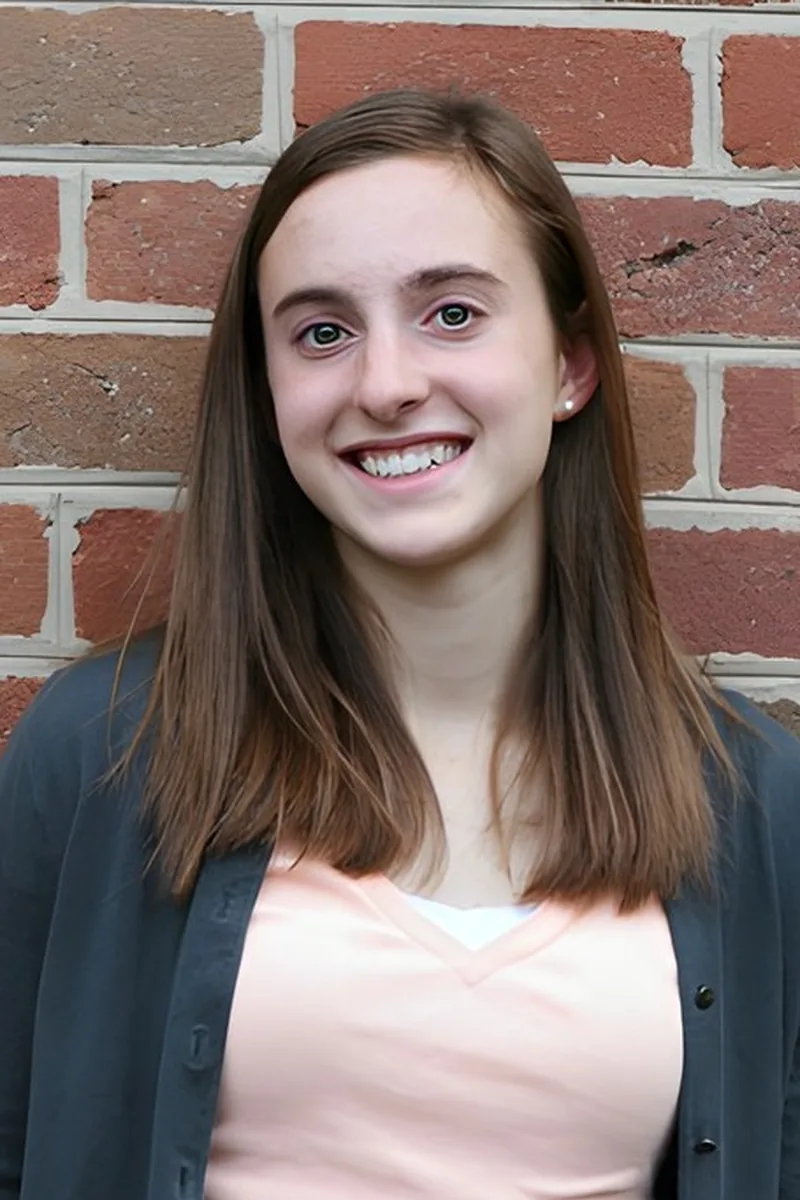
Kathleen's math background at Washington University gives her a natural advantage when teaching physics — she treats kinematics equations, force diagrams, and energy conservation as applied math problems rather than disconnected formulas. She digs into the specific step where a student gets stuck, whether that's setting up a free-body diagram or knowing when to apply Newton's second law versus conservation of momentum.
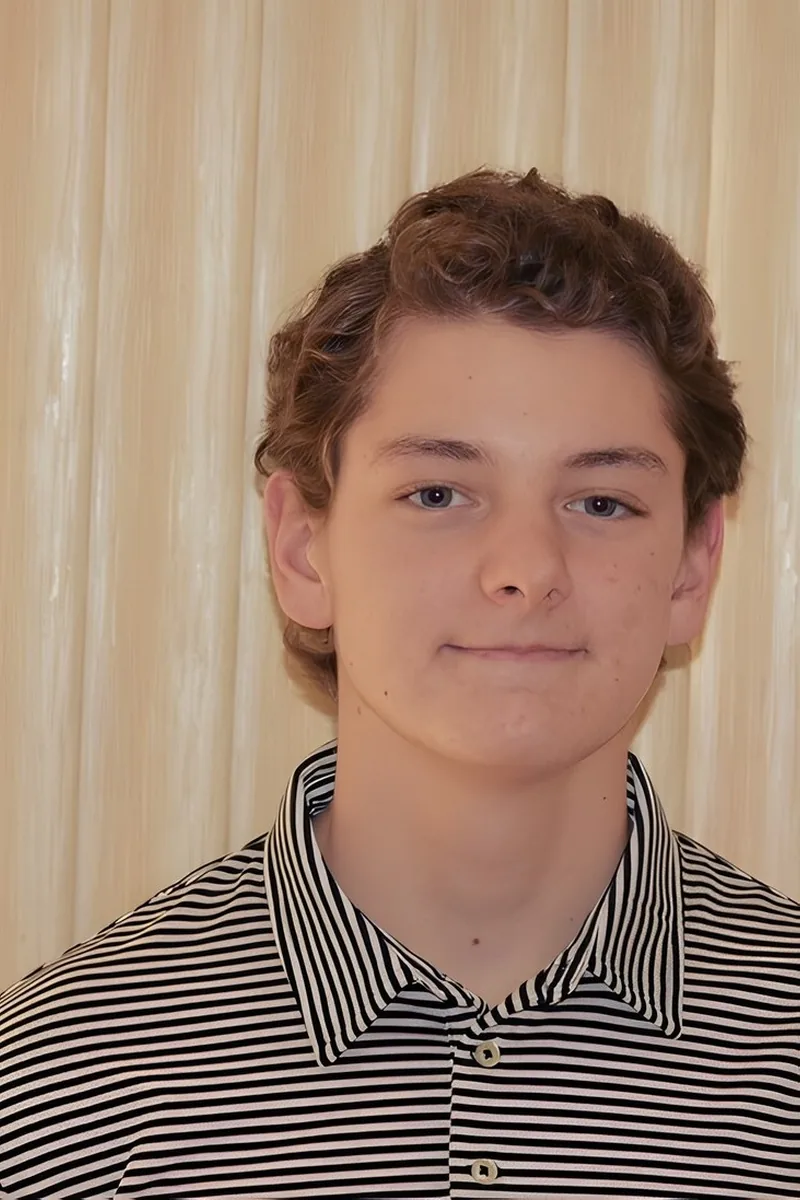
Sean's computational biology work at Columbia requires constant translation between physical systems and mathematical models — exactly the skill that separates students who understand physics from those who just memorize formulas. He tackles mechanics, electromagnetism, and thermodynamics by teaching students to diagram a problem and identify which principles apply before reaching for an equation.
Samuel teaches AP Physics 2 and high school physics alongside his chemistry courses, which means he's constantly bridging the gap between force diagrams and molecular behavior. He tackles kinematics, energy conservation, and wave mechanics by tying each concept back to observable phenomena students already encounter in lab settings.
I am interested in Physics and Mathematics and working out practical problems from plumbing to electronics. I will someday go back for my Ph.D. in Physics but until then I am looking to grow as an engineer or computer programmer.
Free-body diagrams, kinematics equations, energy conservation — Jacob uses all of these regularly in his chemistry and physical chemistry work, so he teaches physics with the fluency of someone who applies it, not just studies it. He's especially effective at walking students through multi-step problems where identifying the right principle matters more than plugging into a formula.
I am excited to help anyone who might need it!
Five years of tutoring undergraduate physics gave Mayuri a sharp sense of where conceptual misunderstandings hide — the student who can solve a momentum equation but can't explain why the ball bounces the way it does. She digs into mechanics, electromagnetism, thermodynamics, and waves with an emphasis on building physical intuition alongside mathematical rigor. Her PhD research deepened her ability to unpack even the trickiest derivations.
Medical school gave Anatoliy a reason to understand physics beyond the textbook — fluid dynamics matters when you're studying blood flow, and electrical circuits map directly onto nerve impulse propagation. He teaches mechanics, thermodynamics, and electromagnetism by tying each concept to real systems students can visualize. Rated 4.9 by students.
A biology degree and dental doctorate both demand serious physics fluency — from biomechanics and fluid dynamics to optics and electromagnetic radiation. Katherine breaks down force diagrams, energy conservation, and kinematics problems by tying each concept to something tangible, which makes the math feel purposeful instead of arbitrary.
Kinematics equations and free-body diagrams only make sense when a student understands what they're actually describing — and that translation from physical situation to mathematical model is where most physics students get stuck. Megan's dual strength in math and science instruction lets her tackle both the conceptual reasoning and the algebra simultaneously, so neither becomes a bottleneck.
Engineering school doesn't just teach physics — it demands that you use Newton's laws, energy conservation, and electromagnetism to design things that actually work. Austin brings that applied mindset to physics tutoring, turning free-body diagrams and kinematics problems into exercises in clear, systematic thinking. He emphasizes setting up problems correctly, because once the physics is translated into math, the solving becomes straightforward.
Kinematics, energy conservation, electromagnetism — physics covers enormous ground, and each topic builds on the last. Jordan's engineering training gave him years of applying these principles to real systems, so he explains not just how to solve a projectile motion problem but why the math describes what actually happens.
Kinematics equations and free-body diagrams are just the beginning — physics gets genuinely hard when students hit rotational dynamics, electromagnetism, or wave interference. Samantha's computer science PhD gave her deep fluency with the mathematical modeling that underpins these topics, and she teaches students to translate word problems into equations systematically rather than guessing which formula to grab.
Karl studied physics at Iowa State University, where he built deep familiarity with mechanics, electromagnetism, and thermodynamics — the core areas that trip up most physics students. He breaks complex problems into free-body diagrams and energy conservation arguments so the logic behind each solution becomes clear, not just the final answer.
Dylan's physics major at Vanderbilt means he's not recalling intro-level material from years ago — he's actively working through classical mechanics, electromagnetism, and modern physics right now, which keeps his explanations current and sharp. His instinct is to ground every abstract concept in a physical, graphical picture: showing what a free-body diagram actually represents, or why a velocity-time graph reveals more about acceleration than a formula ever could. That visual-first approach, backed by a 36 ACT and a math minor, makes the subject click for students who've been drowning in equations without understanding what they mean.
Growing up translating complex ideas for a brother with a learning disability taught Aditi to rebuild explanations from scratch — a skill that pays off when a student can't see why Newton's third law actually produces different accelerations for different masses, or why tension in a rope isn't always the same on both sides. Her CS training at Cornell keeps the math side tight, and she treats each problem like debugging code: isolate what you know, identify what's missing, and work systematically toward the answer.
Engineering students live in physics — Greg's chemical engineering program at Vanderbilt means he's constantly applying Newton's laws, energy conservation, and fluid mechanics to real design problems. He takes that applied perspective into tutoring, connecting force diagrams and kinematics equations to scenarios that make the math feel purposeful rather than abstract.
Benjamin's physics teaching goes beyond plugging values into kinematic equations. He digs into free-body diagrams, energy conservation, and vector decomposition by asking students to predict outcomes before calculating — a habit that builds the physical intuition textbooks often skip. His math fluency from studying economics at UChicago means the quantitative side never becomes a bottleneck.
Free-body diagrams, conservation laws, and circuit analysis all demand a specific way of thinking: translating a physical scenario into math and then interpreting what the math tells you. Zachary's biophysics training required exactly this skill set across mechanics, electromagnetism, and thermodynamics, and he breaks complex problems into clear, repeatable steps that build real problem-solving confidence.
Earning a BS in physics from Yale gave Anthony deep comfort with the subject's core challenge: translating a physical scenario into a mathematical model and then interpreting the result. He breaks down force diagrams, energy conservation, and wave behavior by tying each concept back to the underlying math rather than treating equations as formulas to memorize.
A PhD in biomedical engineering built on a bachelor's in physics means Andrew has spent years solving problems across mechanics, electromagnetism, and thermodynamics. He teaches physics by emphasizing free-body diagrams, unit analysis, and the habit of translating word problems into mathematical models before reaching for formulas. That systematic approach turns intimidating multi-step problems into manageable sequences.
As a Yale physics major who also teaches thermodynamics, special relativity, and statics and dynamics, Ian has worked through the full arc from introductory mechanics to upper-division theory — so he knows exactly where each concept builds on the last and where students tend to lose the thread. He's particularly sharp at finding the analogy or reframing that makes a stubborn idea finally click, whether that's torque, wave superposition, or conservation laws in multi-body systems. His 1550 SAT speaks to the quantitative precision he brings to every problem.
Nima's physics degree means the subject isn't something adjacent to his training — it's the core of it, from classical mechanics and electromagnetism through thermodynamics and wave theory. He teaches students to build the physical picture first, identifying which laws actually govern a scenario before any algebra starts, so that even multi-step problems feel like a clear sequence rather than guesswork. Rated 4.7 by students.
A mechanical engineering degree from WashU means Caroline didn't just study physics — she applied it daily, from fluid dynamics to stress analysis. She teaches students to set up free-body diagrams and energy conservation problems by connecting the math to physical intuition, making kinematics and Newton's laws click rather than feel like formula hunts.
Studying mechanical engineering at Harvard means Christopher doesn't just remember physics — he's actively building on it every semester, from Newtonian mechanics and thermodynamics to electromagnetism and wave behavior. He breaks down complex problems by teaching students to draw clean free-body diagrams, identify which conservation law applies, and translate word problems into solvable equations. That systematic approach turns intimidating multi-step problems into manageable sequences.
Engineering students use physics every day, and Ava's dual degree in mechanical and energy engineering means she didn't just learn kinematics, Newton's laws, and energy conservation — she applied them to real systems. She TAed physics-related engineering courses at WashU and tutored high school physics students for several years, so she's comfortable adjusting her explanations whether someone is solving their first free-body diagram or wrestling with rotational dynamics.
Testimonials
Because the right Physics tutor makes all the difference.
Average Session Rating – Based on 3.4M Learner Ratings
Practice Physics
Free practice tests, flashcards, and AI tutoring for Physics
Nearby Physics Tutors
Other St. Louis Tutors
Related Science Tutors in St. Louis
Frequently Asked Questions
Physics students often struggle with three main areas: translating word problems into equations, visualizing abstract concepts like forces and energy, and applying mathematical skills to real-world scenarios. Many students memorize formulas without understanding the underlying principles, which makes problem-solving difficult when questions don't match textbook examples. Personalized tutoring helps students build conceptual understanding alongside computational skills, so they can tackle unfamiliar problems with confidence.
Tutors help students understand the scientific method, design experiments thoughtfully, and interpret results meaningfully—not just complete lab reports. They can explain the physics concepts behind experiments before you conduct them, making observations more purposeful, and help you troubleshoot when results don't match predictions. This deeper engagement with lab work strengthens both your experimental skills and conceptual understanding of physics principles.
Physics isn't just abstract equations—it explains how things work in the world around you, from smartphone accelerometers to bridge design to how cars brake safely. When you see how concepts like friction, momentum, and energy apply to real situations, the material becomes more memorable and meaningful. Tutors can help you make these connections, transforming physics from a collection of formulas into a framework for understanding how the world actually works.
Your first session focuses on understanding where you are and where you want to go. A tutor will assess your current understanding of key concepts, identify specific areas causing frustration (whether it's kinematics, circuits, or something else), and learn your learning style. From there, you'll develop a personalized plan that addresses your gaps while building toward your goals, whether that's improving your grade, preparing for the AP Physics exam, or mastering a particular unit.
Unit conversions trip up many physics students because they require both mathematical skill and conceptual understanding of what you're actually converting. Tutors teach dimensional analysis as a problem-solving strategy rather than a mechanical process, helping you see why units matter and how they guide you toward correct answers. With guided practice and clear explanations, unit conversions shift from a frustrating stumbling block to a useful tool for checking your work.
Varsity Tutors connects you with tutors who have strong backgrounds in physics, whether through advanced degrees, teaching experience, or demonstrated expertise in the subject. Tutors understand both the content and how to explain complex concepts clearly to students at different levels. When you get matched with a tutor, you can review their qualifications and experience to ensure they're the right fit for your specific needs.
Many physics concepts—like electric fields, wave behavior, or quantum mechanics—are hard to visualize because they don't match everyday experience. Tutors use diagrams, analogies, demonstrations, and interactive tools to make abstract ideas concrete and memorable. By building strong mental models of how these concepts work, you'll find it easier to apply them to new problems and remember them long-term.
Yes, Varsity Tutors connects physics students from across St. Louis's 40 schools and 9 school districts with expert tutors. Whether you're in a large district school or smaller private institution, you can get personalized instruction tailored to your specific curriculum, teacher's expectations, and learning goals. Tutors are familiar with common physics programs and can adapt their approach to match what you're learning in class.
Let’s find your perfect tutor
Answer a few quick questions. We’ll recommend the right plan and match you with a top 5% tutor.