Award-Winning Writing Tutors
serving Kansas City, MO
Writing
Tutors in Kansas City
Private 1-on-1 tutoring, weekly live classes for academic support, test prep & enrichment, practice tests and diagnostics, and more to elevate grades and test scores.
Based on 3.4M Learner Ratings
UniversitiesSchools & Universities
DeliveredHours Delivered
ProficiencyGrowth in Proficiency
Who needs tutoring?
No obligation. Takes ~1 minute.
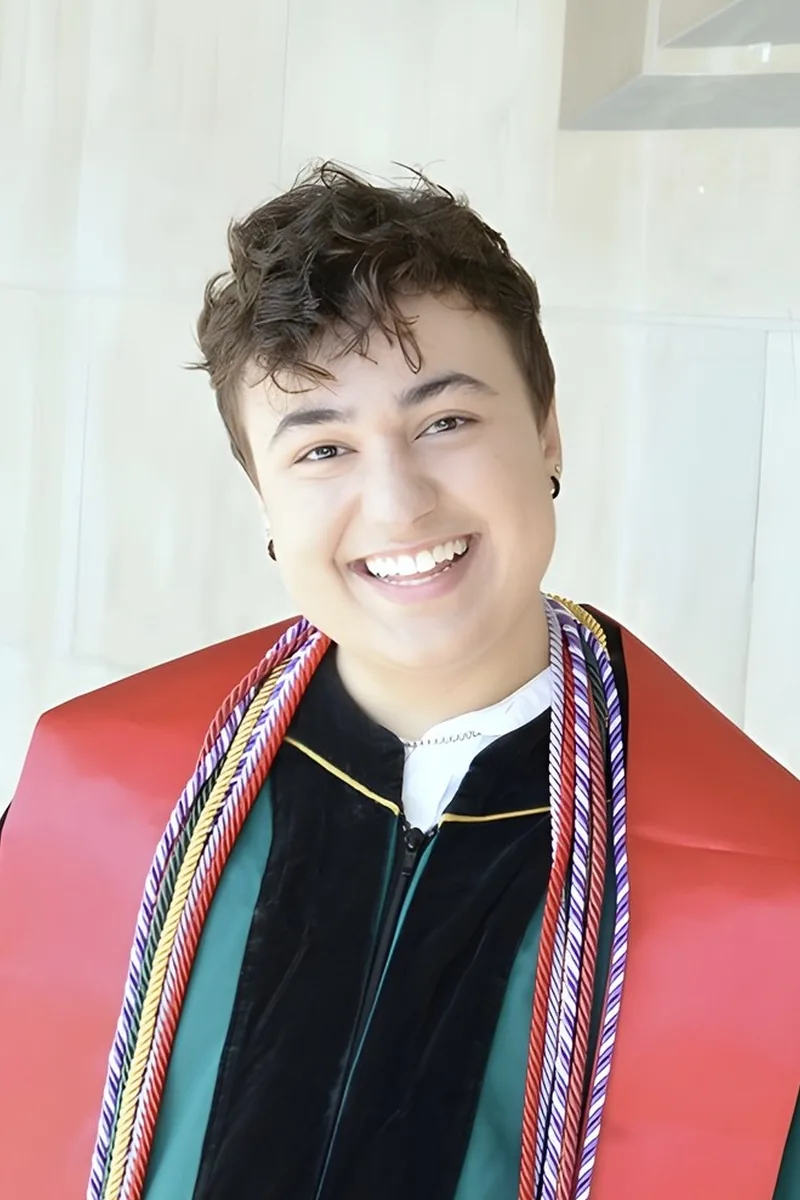
Strong writing clicks when a student understands that structure isn't a constraint — it's what makes an argument land. Nik digs into the mechanics of thesis development, paragraph organization, and how to integrate textual evidence without letting quotes do all the talking. His 4.9 rating speaks to an approach that builds real writing instincts students carry into every future assignment.
Strong writing starts with having something specific to say and knowing how to organize it — thesis clarity, paragraph cohesion, and purposeful transitions matter far more than fancy vocabulary. Mubariz developed these skills through competitive debate, where building a persuasive written case under deadline pressure was a weekly requirement for three years. He walks students through the full drafting process, from brainstorming a defensible argument to revising for concision and flow.
Tutoring writing throughout her undergraduate years at Rockhurst gave Ann a sharp eye for the revision process — from tightening thesis statements to restructuring body paragraphs that lose their thread. She breaks down each stage of drafting so students learn to self-edit for clarity, coherence, and voice rather than waiting for someone else to catch their mistakes.
Strong writing starts with understanding the assignment's purpose — whether it's a persuasive essay, a research paper, or a creative piece, each demands a different structure and voice. Anthony spent years teaching English before moving into school administration, and he brings that classroom-tested knowledge to every session, unpacking how to build a thesis, organize supporting paragraphs, and write conclusions that do more than restate the introduction.
Two years of teaching seventh-grade writing gave Kristen a front-row seat to every way a student can get stuck: blank-page paralysis, buried thesis statements, paragraphs that wander. She walks writers through the full process — brainstorming, outlining, drafting, revising — and treats each stage as a distinct skill rather than one blurry task.
Clear writing is something Katherine practiced relentlessly through scientific research papers and dental school coursework, where imprecise language can change the meaning of a finding entirely. She teaches students to build paragraphs around a single claim, choose words with intention, and revise ruthlessly — skills that transfer whether the assignment is a lab report or a persuasive essay. Rated 5.0 by students.
Strong writing starts with having something specific to say and knowing how to organize it before the first sentence hits the page. Jessica emphasizes outlining, thesis development, and paragraph-level structure so that students build arguments readers can actually follow. Her liberal arts training and years of academic writing — including medical school coursework — give her range across persuasive, expository, and research-based formats.
Strong writing starts before the first draft — with a clear thesis, a logical outline, and an understanding of who the audience is. Brianna's education training and hands-on work in a school setting mean she teaches the full writing process, from brainstorming through revision, rather than just correcting surface errors. She's especially effective at showing students how to develop a single paragraph with specific evidence and analysis before scaling up to longer essays.
Clear writing starts with clear thinking, which is why Austin treats every writing assignment as an exercise in organizing ideas before polishing prose. He walks through the full process — brainstorming, outlining, drafting, and revising — so students internalize a repeatable method they can use independently. Whether the task is a five-paragraph essay or a research paper, he emphasizes thesis development and evidence selection as the foundation of strong writing.
Staring at a blank page is the hardest part, and Bri tackles that head-on by teaching concrete pre-writing strategies like freewriting, outlining by claim, and reverse-engineering strong examples. Her English degree and personal writing practice mean she can coach everything from five-paragraph essays to creative nonfiction, always pushing students toward sharper arguments and more vivid language.
Good writing starts with having something to say and knowing how to organize it — thesis construction, paragraph flow, transitions that actually connect ideas. Meaghan brings a writer's ear from her music education training at UMKC, where crafting lesson plans and analytical essays sharpened her ability to teach structure and revision. Rated 5.0 by students.
Clear writing starts with clear thinking, and Laura's training in both liberal arts and medicine means she's had to master very different kinds of written communication — from analytical essays to precise clinical documentation. She teaches students how to organize an argument before drafting, use evidence effectively, and revise with purpose rather than just swapping out words. Rated 5.0 by her students.
Jessica makes her living as a freelance writer, so the craft of putting clear sentences together isn't theoretical for her — it's a daily practice. She breaks the writing process into concrete, repeatable steps: building a thesis, organizing evidence, drafting body paragraphs with purposeful transitions, and revising with fresh eyes. That structure turns even reluctant writers into students who can produce a solid essay on demand.
I am a High School Science Teacher for the Smithville School District. I have experience teaching AP Chemistry, Honors and General Chemistry, and Honors and General Biology, Forensic Science, Biomedical Science, and Anatomy & Physiology.
I am currently working on a Biotechnology degree after changing from an Aerospace Engineering degree after getting married. I have extensive experience in Mathematics and Science, and I am a very capable writer as well. I can tutor nearly any S.T.E.M course up through highschool (and some college), along with English and grammar - more specifically paper writing - up to an early college level.
I am a current undergraduate student at Iowa State University working to obtain my Bachelor's of Science degree. As a lover of learning, I fully believe that every student should be able to feel comfortable in their schooling and take pride in their academic achievements. That is why I am dedicated to helping students gain a better comprehension of certain subjects and foster effective studying skills. I tutor for the ACT exam as well as middle school math and science, biology and algebra.
I am a recent graduate of the University of Colorado at Boulder. I am a Colorado native who enjoys rock climbing and nature. I work currently for a large international engineering consulting company and specialize in water engineering.
I am not present. While I will provide help along the way, guiding a student to build up his/her own skills to be able to understand these questions on his/her own and feel confident while taking tests is my ultimate goal.
Strong writing isn't about flowery language — it's about knowing what you're arguing and proving it sentence by sentence. Parag's political science training at Northwestern means he lives in thesis-driven essays, and he teaches students how to outline a clear claim, select evidence that actually supports it, and write conclusions that do more than restate the introduction.
Clear writing starts with clear thinking, and Rachel treats the two as inseparable. She walks students through the architecture of an argument — claim, evidence, analysis, counterpoint — so that organizing ideas on the page becomes second nature rather than a source of dread. Her arts background means she's equally comfortable coaching personal narratives and analytical essays.
From facilitating creative writing workshops in Belfast to completing a master's thesis on conflict transformation, Madison has spent years inside the craft of putting ideas on a page clearly and compellingly. She teaches everything from narrative structure and descriptive detail to argumentative clarity — adapting her approach depending on whether a student is writing a personal essay, a research paper, or a short story.
Seven years of academic publishing in experimental psychology taught Anna how to build an argument that holds up under scrutiny — clear thesis, tight evidence, logical transitions. She applies that same structure whether a student is drafting a research paper, a personal narrative, or an argumentative essay, breaking each piece into manageable stages from outline to polished final draft.
Strong writing starts with a clear claim and a logical plan for proving it — everything else is refinement. Megan teaches the architecture of effective paragraphs, from crafting topic sentences that actually advance an argument to integrating evidence without letting quotes do all the talking. As a certified teacher with a 5.0 rating, she adapts her feedback to whether a student needs help generating ideas or tightening prose they've already drafted.
Crafting a compelling argument or a vivid personal narrative requires more than correct grammar — it demands structure, voice, and intentional word choice. Sarah, an English major at Columbia College, breaks down the writing process from brainstorming through revision, teaching students how to build paragraphs that actually move a reader from one idea to the next. Rated 5.0 by students.
I am here to help you improve your communication skills, as well as furthering along your ability to comprehend texts, in order for you to become the best student that you can possibly be.
I am a recent graduate of Missouri State University with a BS in Chemistry, emphasis in biochemistry. In my final semester of college, I tutored chemistry online, and I can honestly say it was the most enjoyable job I've ever had. I am a scientist, so I mainly tutor chemistry, but I am also an excellent essay writer, editor, and test taker. As a result I am well equipped to tutor chemistry, physics, biology, math, essay writing, report writing, editing, and ACT Prep. I love seeing students with a genuine interest in chemistry and giving them the guidance and tools to understand its toughest concepts. In my spare time, I am an avid video gamer, artist, cyclist, and a player of ultimate frisbee.
I am able to tutor many different areas of math, including Algebra, Geometry, Trigonometry, and Calculus. Of these, my favorite is definitely Calculus, because I think that there are many people with misconceptions about the subject, and I enjoy showing people that there is nothing to afraid of, and that it can actually be fun!
I am a graduate of Texas Christian University. I received my Bachelor of Science in Economics and Political Science. During this time, I was a tutor for the Departments of Economics and Mathematics, where I gained a passion for seeing the "click" of knowledge, where information becomes made personal. Since graduation, I have have been pursuing my Master of Public Administration at the University of Kansas. My career mission is to work in City Management, applying math, social sciences, communication, and other fields to serve the public in a multidisciplinary manner. I am a firm believer in being a well-around, global citizen, so that entails being moderately versed in many fields of study. While I tutor a broad range of subjects, I am most passionate about Economics, Math, and Standardized Testing. I believe that education is the path to an enlightened life, so I look forward to joining you on that journey. In my spare time, I enjoy hiking, film/television, stand-up comedy, and playing/watching all sports.
I am excited to help anyone who might need it!
I am a student at Columbia University in New York, studying Computer Science and Biochemistry. I offer person-centered learning approaches in the subjects of ACT prep, Biology, Chemistry, Physics, Computer Science, Spanish, English, Writing, Psychology and other areas.
I am a junior pre-med student studying health management at Saint Louis University. I began tutoring my peers in high school and continued my passion for teaching throughout college. I tutor high school students studying for the SAT and ACT. I also tutor math, science, and spanish. I recognize that every student has a different style of learning and I plan each lesson according to the student. My goal is to help my students achieve their goals and realize their potential.
I'm not taking care of my farm, I enjoy all crochet, embroidery, cross stitch and, quilting. I also enjoy building with Lego. My largest build so far is the Star Wars AT-AT!
Clear writing starts with clear thinking, and Tiffany treats every writing session as a chance to untangle what a student actually wants to say before worrying about how to say it. Her training in legal writing — where precision and structure aren't optional — gives her a practical framework for teaching everything from thesis development to paragraph-level organization. She's particularly effective with argumentative and analytical essays.
From poetry to policy briefs, Cynthia has taught writing across genres at Columbia University and Central European University in Budapest. She zeroes in on clarity and concision — teaching students to build arguments sentence by sentence, choose precise language over vague generalities, and develop a revision process that actually improves each draft.
Getting ideas onto the page is only half the challenge; organizing them into an argument that actually builds is where most writers stall. Talia teaches outlining techniques and paragraph architecture — topic sentences that do real work, evidence integration, transitions that aren't just "furthermore" — drawn from her own extensive writing across political science and history coursework.
Clear writing starts with knowing what you actually want to argue — something Scott drills into every draft session before touching a single sentence. His anthropology training at Washington University in St. Louis taught him to build layered arguments from evidence, and he applies that same structure to thesis development, paragraph organization, and revision strategy. Rated 4.8 by students.
Eric's approach to writing comes from years of philosophy coursework, where every paper demanded a precise thesis defended with airtight reasoning. He applies that same discipline to any genre — persuasive essays, research papers, creative nonfiction — by teaching students to outline their argument before they write a single sentence. The terrible jokes he cracks along the way make revision feel less like surgery.
Between her Johns Hopkins master's work and her aspirations as a freelance writer, Rachel has logged thousands of hours producing research papers, personal narratives, and professional communications. She breaks the writing process into concrete, repeatable steps — brainstorming, outlining, drafting, revising — so students build habits that transfer to any assignment they encounter.
Henry's senior thesis at Harvard on John Dewey's philosophy of education required building a sustained, evidence-based argument across dozens of pages — a process that sharpened his instinct for what makes writing persuasive versus merely correct. He teaches students to outline with a clear claim in mind, develop paragraphs around specific evidence, and revise with an ear for voice and rhythm.
Testimonials
Because the right Writing tutor makes all the difference.
Average Session Rating – Based on 3.4M Learner Ratings
Nearby Writing Tutors
Other Kansas City Tutors
Related English Tutors in Kansas City
Frequently Asked Questions
Your first session is about understanding your writing goals and challenges. A tutor will review samples of your work, discuss what you're working on (essays, creative writing, standardized test prep), and identify specific areas to focus on—whether that's thesis development, organization, grammar, or revision strategies. This helps create a personalized plan tailored to your needs.
Many students struggle with essay organization and argumentation. A tutor can help you develop a strong thesis, create logical paragraph structures, and build compelling arguments with supporting evidence. They'll work with you on outlining techniques and show you how to revise for clarity and flow, so your ideas connect smoothly from introduction to conclusion.
Revision focuses on big-picture issues like organization, argument strength, and clarity, while editing handles grammar, punctuation, and word choice. A tutor helps you understand this distinction so you can revise strategically first, then edit for polish. This two-step process prevents you from getting stuck on grammar details before your ideas are fully developed.
Both matter, but they serve different purposes. Grammar provides the foundation for clear communication, while voice makes your writing distinctive and engaging. A tutor helps you master grammar fundamentals, then shows you how to develop your unique style—choosing vivid words, varying sentence structure, and writing with confidence. Strong writing combines technical skill with authentic voice.
Yes. Citation formatting is a common challenge for students, and tutors can walk you through the rules for MLA, APA, and Chicago styles. They'll help you understand when to use each format, how to format in-text citations and works cited pages, and how to integrate sources smoothly into your writing without plagiarizing.
Strong literary analysis requires both close reading and clear writing. A tutor helps you develop analytical skills—identifying themes, understanding symbolism, and supporting interpretations with textual evidence—then teaches you how to articulate those insights in well-structured essays. This combination strengthens both your comprehension and your ability to write persuasively about literature.
Writer's block often stems from perfectionism, unclear ideas, or fear of starting. A tutor can help you break through by using brainstorming techniques, freewriting exercises, and outlining strategies to get your ideas flowing. They'll also help you recognize that first drafts don't need to be perfect—the goal is to get words on the page, then revise from there.
In a classroom with a 12.7:1 student-teacher ratio, teachers have limited time for individualized feedback on each student's writing. With personalized 1-on-1 instruction, a tutor focuses entirely on your writing, provides detailed comments on your specific strengths and weaknesses, and works at your pace. This targeted approach helps you improve faster and build confidence in your writing abilities.
Let’s find your perfect tutor
Answer a few quick questions. We’ll recommend the right plan and match you with a top 5% tutor.