Award-Winning Algebra 2 Tutors
serving Port St. Lucie, FL
Algebra 2
Tutors in Port St. Lucie
Private 1-on-1 tutoring, weekly live classes for academic support, test prep & enrichment, practice tests and diagnostics, and more to elevate grades and test scores.
Based on 3.4M Learner Ratings
UniversitiesSchools & Universities
DeliveredHours Delivered
ProficiencyGrowth in Proficiency
Who needs tutoring?
No obligation. Takes ~1 minute.
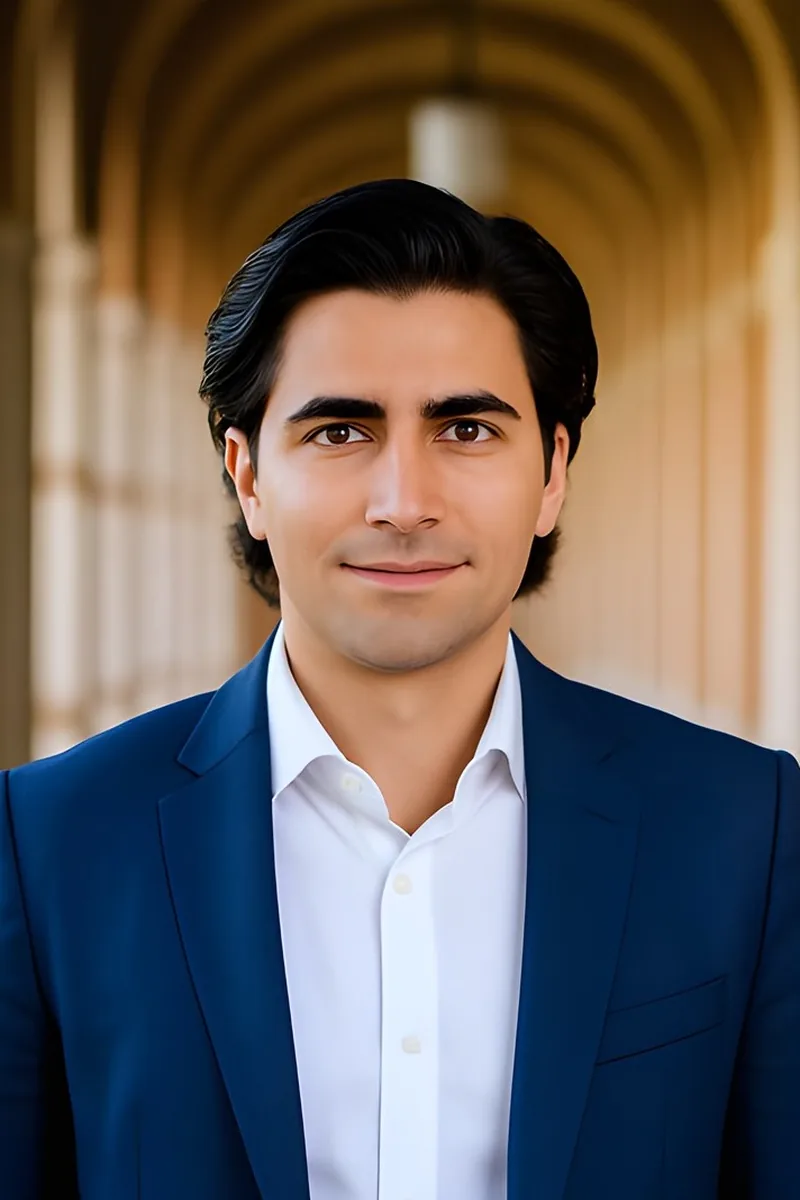
Having earned a 1570 SAT and dual science degrees from Rice, Perry brings serious mathematical fluency to the parts of Algebra 2 that trip students up most — particularly the shift from manipulating simple equations to reasoning about complex and rational expressions. He approaches each topic by grounding it in the kind of quantitative thinking his biology and biomedical coursework demanded daily, so students see algebraic tools as genuinely useful rather than pointless exercises. Holds a 5.0 rating.
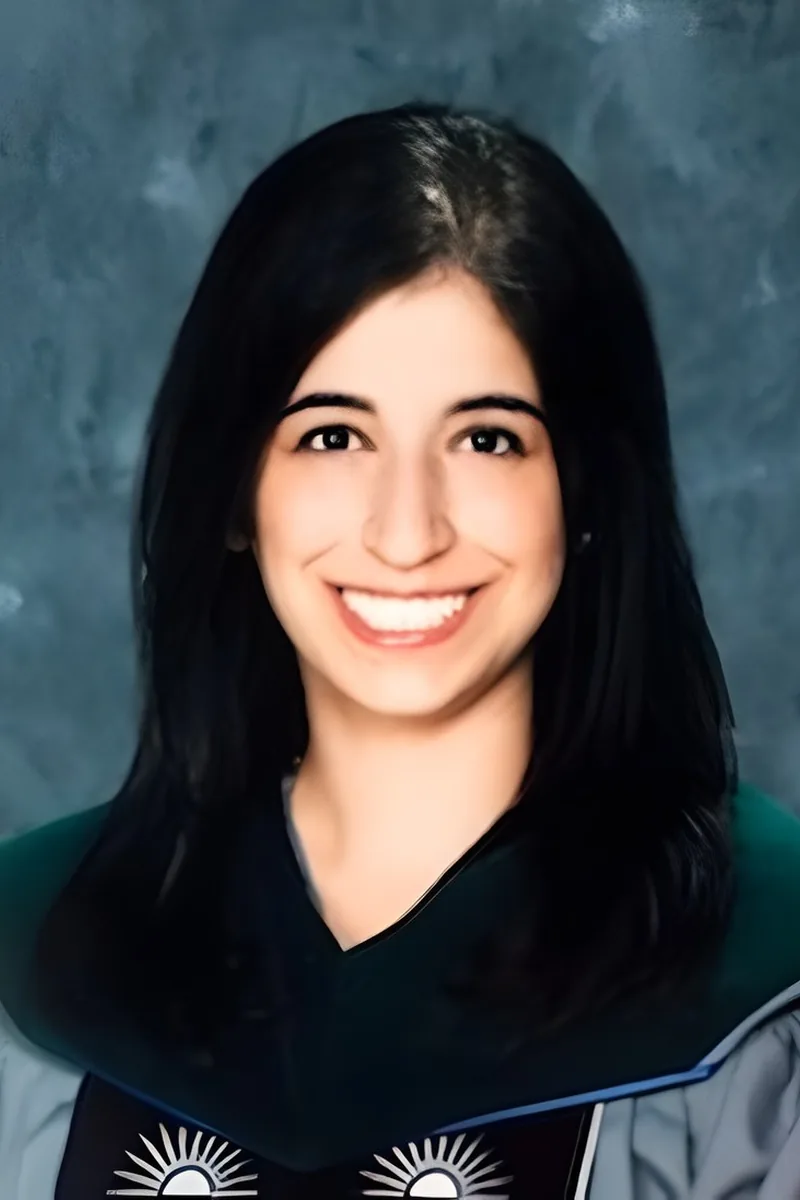
Logarithms, complex numbers, and polynomial functions tend to be the exact topics where Algebra 2 students lose their footing. Jessica's calculus background means she understands not just how to solve these problems but where each concept leads next, so she teaches techniques that build real algebraic intuition rather than isolated tricks.
Sixteen AP courses and a computer science degree from Harvard gave Derek an unusual vantage point on Algebra 2 — he's seen exactly how topics like systems of equations and polynomial behavior feed into algorithm design and applied math at the college level. That forward-looking perspective lets him teach each concept with its destination in mind, so students understand what they're building toward rather than just surviving the current chapter. Rated 4.9 by his students.
Logarithmic and exponential functions tend to be the point in Algebra 2 where students stop trusting their intuition — the rules feel arbitrary and the graphs seem disconnected from anything real. Hari ties these concepts back to finance applications like compound interest and growth models, giving students a concrete reason to understand why the math works the way it does.
Chemical engineering at Johns Hopkins means Joshitha is constantly solving systems with complex variables, manipulating exponential relationships, and modeling real processes — all skills rooted directly in Algebra 2. She's especially good at teaching the problem-solving intuition behind topics like logarithms and polynomial behavior, so students learn to reason through unfamiliar problems instead of freezing when a question looks different from the homework. Her 1580 SAT and 5.0 rating back that up.
Working in both a clinical neuroscience lab and a chemistry lab at Vanderbilt, Anabel regularly encounters the exponential and logarithmic relationships that trip up most Algebra 2 students — except she's seeing them drive real research data. Her Mathnasium background means she's already drilled hundreds of students through the procedural side of polynomial operations and function transformations, so she can quickly tell whether someone needs a conceptual reset or just more targeted practice.
Pre-med coursework at Duke has Caitlin constantly applying the exponential and logarithmic reasoning that trips up so many Algebra 2 students — from modeling drug half-lives to interpreting growth curves in biology. She scored a 32 ACT and a 1400 SAT, and she tutors the full algebra sequence through calculus, so she knows exactly which gaps from earlier courses cause the biggest problems when the abstraction ramps up. Rated 5.0 by her students.
I am graduated from Penn State University in Industrial Engineering in 2017. I've tutored ever since I was in high school, and I love helping people! I like to help my students understand math (and other topics) instead of just doing it blindly. My goal is to help my students improve their math (and other topics) and build skills that will help them find learning easier in the future! Fun fact, I used to work for Disney and I like to salsa dance!
After years teaching math across every grade level in NYC public schools, James knows exactly where Algebra 2 starts losing students — typically when functions go abstract and topics like systems of inequalities or exponential modeling demand reasoning that pure computation never required. His economics training at SUNY Albany leaned heavily on these same algebraic tools for statistical modeling and forecasting, so he teaches the material with a practical edge that makes the abstraction feel grounded. Rated 4.9 by students.
Two and a half years teaching middle and high school math means Jacob has watched hundreds of students make the leap from Algebra 1 into Algebra 2 — and he knows exactly where the common breakdowns happen, especially around logarithmic rules and rational expressions that don't behave like anything students have seen before. His math degree and 34 ACT give him the depth to teach the structure behind each topic, while his classroom experience means he already has multiple ways to explain it when the first one doesn't land. Rated 5.0 by his students.
Having scored a 35 ACT while studying Human Biology at Harvard, Destiny built her algebraic fluency through the kind of coursework where exponential models and logarithmic scales aren't optional — they're how you interpret drug dosing curves and population dynamics. She's especially effective at the transition point where Algebra 2 stops feeling like an extension of Algebra 1, teaching students to recognize when familiar rules need to stretch to handle new structures like rational functions or composite expressions. Rated 5.0 by her students.
Logarithms, rational functions, and conic sections all demand a level of abstraction that catches students off guard after Algebra 1. Paulkey, who holds a master's in computer science and has taught math across every grade level, unpacks each new concept by linking it back to algebra skills students already trust. Rated 4.7 by students, he's especially effective at making piecewise and polynomial functions feel approachable rather than overwhelming.
Dalila earned her math degree by working through every layer of algebra that Algebra 2 students are just beginning to encounter — complex numbers, polynomial division, rational inequalities — so she can pinpoint exactly where a concept breaks down and rebuild it in real time. Her 1520 SAT confirms the quantitative sharpness, and the fact that she also teaches physics and calculus means she's constantly showing students how today's Algebra 2 skill becomes tomorrow's essential tool.
A chemical engineering degree from Princeton means Shellee didn't just pass through Algebra 2 — she leaned on polynomial manipulation, exponential models, and systems of equations daily in reactor design and thermodynamics coursework. That engineering lens lets her show students how a topic like logarithmic equations actually functions as a practical tool, not just another abstract hurdle. Rated 5.0 by her students.
Growing up in Egypt and transitioning into the U.S. school system taught Mariam what it feels like when mathematical language doesn't click yet — an experience she draws on when students hit the abstraction wall in Algebra 2, especially around logarithmic and exponential relationships. Her neuroscience coursework at Vanderbilt requires fluency with exactly these kinds of functions, from modeling neural firing rates to analyzing decay curves, so she can unpack the logic behind each rule rather than just drilling procedures.
Engineering grad school at UC Berkeley means Apoorva encounters polynomial models, complex exponentials, and systems of equations daily — so she can point to exactly where each Algebra 2 concept resurfaces in real design problems. She's especially effective at the transition points that trip students up, like moving from basic exponent rules to logarithmic thinking, because her own path through biomedical engineering required mastering those shifts deliberately rather than skating past them.
Logarithms, polynomial functions, and conic sections tend to be the concepts where Algebra 2 students start feeling lost — Andrew tackles those head-on by finding the explanation style that clicks for each person rather than repeating the same textbook steps. His 33 ACT composite reflects the kind of mathematical fluency that lets him approach a single problem from multiple angles until one makes sense.
Having earned a 36 ACT and 1580 SAT, Ankit has the algebraic fluency to back up his teaching — but what makes him effective in Algebra 2 is his dual neuroscience and computer science training at Duke, where he routinely models complex systems using the same polynomial, exponential, and recursive reasoning students are learning for the first time. He approaches tricky topics like function composition and sequences as puzzles with internal logic rather than formulas to memorize, walking through each piece until students can rebuild the solution independently.
Benjamin wrote his master's dissertation on graph theory and group theory at the University of Essex — fields that run on the same algebraic structures Algebra 2 students are meeting for the first time in topics like systems of equations and complex number operations. That graduate-level perspective lets him show exactly how a concept like matrix representation or polynomial factoring extends into bigger mathematical ideas, turning what feels like busywork into something with real direction.
Civil engineering coursework gave Wanqi a daily reason to care about the algebra beneath the design — solving systems, manipulating polynomial expressions, and modeling real structural behavior with the exact tools Algebra 2 introduces. She scored a 1520 on the SAT and holds a 4.8 rating, but what stands out is her ability to unpack why a technique like completing the square or rewriting exponential equations actually produces correct answers, not just how to execute the steps.
A neuroscience specialization within biology means Emerson regularly encounters the exponential and logarithmic models that trip up most Algebra 2 students — neural firing rates, decay curves, dose-response relationships — so he can ground abstract topics in something tangible. He's particularly effective at untangling the leap from Algebra 1 thinking to Algebra 2 thinking, where suddenly a single problem might layer function composition on top of rational expressions. Holds a 5.0 rating and a 1560 SAT.
A software developer with a master's in computer science and an applied math degree, Daniel writes code every day that depends on the recursive thinking, sequence logic, and function behavior that Algebra 2 formalizes — so he can point to exactly how each concept works in practice. He's especially effective at untangling the shift from concrete arithmetic to symbolic reasoning, where students often lose their footing with things like logarithmic identities or rational expressions. Holds a 5.0 rating.
Graduate statistics teaching at USF gave Matthew a front-row seat to exactly where algebraic fluency breaks down — students who never fully internalized function behavior, logarithmic properties, or polynomial operations in Algebra 2 hit a wall the moment those tools get applied. He uses that diagnostic instinct to pinpoint the specific gap holding a student back and rebuild the concept from scratch. Rated 4.8 by his students.
Having earned her associate's degree in accounting and finance while still in high school, Marissa picked up Algebra 2 skills like systems of equations and exponential modeling early — and immediately put them to work in financial contexts where the numbers actually mean something. She's especially good at teaching students who can handle Algebra 1 mechanics but freeze when variables start appearing in exponents or denominators, because she remembers making that same leap herself. Rated 4.8 by her students.
During my Bachelor's studies at the University of Michigan-Dearborn, I was a mathematics and statistics tutor for a year, which I greatly enjoyed. I am currently a fourth-year Ph.D. student studying mathematics at the University of Florida. During my Ph.D. at the University of Florida, I was a teaching assistant for Calculus I, Calculus II, and Precalculus, and I was an instructor for a section of Calculus I. These experiences helped me develop my tutoring skills. Many students see math as a set of formulas that they can apply to the problems on their exams and homework. However, I feel that this way of thinking not only stifles true understanding, but also makes students' lives harder. My teaching philosophy is that if a strong conceptual understanding is built, then students will be well-equipped to answer any question that they can be asked. When I tutor, I make sure that students develop this foundation first and foremost.
The leap from Algebra 1 to Algebra 2 is where many students lose their footing — suddenly they're juggling complex numbers, polynomial division, and logarithmic functions all in the same semester. Anthony, who holds a master's in mathematics education and a 34 ACT, teaches the underlying reasoning behind each concept so students can adapt their problem-solving approach rather than memorize disconnected procedures.
Thirty years of teaching math and physics gave Michael a clear picture of where Algebra 2 students actually get stuck — usually at the transition from manipulating expressions mechanically to reasoning about functions as objects with their own behavior. His molecular biology graduate work reinforced that algebraic thinking from a different angle, since modeling biological systems demands comfort with exponential relationships and polynomial behavior that goes well beyond plugging into formulas. He tends to zero in on the specific earlier skill that's causing a new topic to fall apart, then rebuild from there.
Ten years of teaching middle school math means Sabrina has watched hundreds of students make the leap into Algebra 2 — and she knows exactly which gaps in earlier algebra tend to surface when logarithms, complex numbers, or polynomial division suddenly enter the picture. She breaks each new topic into small, concrete pieces, checking understanding at every step before layering on complexity. Holds a 5.0 rating from her students.
The jump from Algebra 1 to Algebra 2 is where many students lose their footing — logarithmic functions, complex numbers, and rational expressions all arrive at once with little breathing room. Yash's competition math background means he can show students the underlying logic tying these topics together rather than presenting them as disconnected chapters. His 5.0 rating speaks to how well that connective approach clicks with students.
Adam's linguistics training — parsing syntax trees, mapping morphological rules, spotting structural patterns — is surprisingly close to what Algebra 2 demands when students hit function composition or logarithmic identities. He treats each new algebraic structure the way a linguist treats an unfamiliar grammar: figure out the rules, find the exceptions, then build fluency through deliberate practice. His 1460 SAT and dual background in math and language give him a unique angle on making abstract notation feel readable.
I like helping students. I am very patient. I have experience teaching Calculus classes at the University of Miami. I have done private tutoring for all levels of math up to Calculus, as well as Statistics, Business Math, and Math Finance. I have worked in the actuarial field. I have an undergraduate degree in mathematics from Michigan State University and a Master's degree in mathematics from the University of Miami. I worked for The Princeton Review as a tutor for the SAT. I did very well on both the SAT and ACT, and like teaching students how to do better on those. I like history, too, and always find it fun to tutor history.
Hello! I'm a passionate educator with a Ph.D. in Electrical Engineering and a love for making learning both effective and enjoyable. Over the years, I've taught a wide range of subjects, always with the goal of making even the most complex topics simple and approachable. My teaching style focuses on breaking down challenging concepts into clear, manageable steps, working through problems together, and showing how lessons connect to real-world situations. I believe that a supportive, comfortable learning environment encourages curiosity and confidence, so students feel free to ask questions and explore ideas. Whether your child is building foundational skills or tackling advanced material, I'm committed to guiding them at their own pace, celebrating progress, and equipping them with tools that last far beyond our sessions. My mission is not only to help students succeed academically but also to help them enjoy the journey of learning
Engineering coursework drills one thing into you: if your algebra is shaky, nothing downstream works. Lou's mechanical engineering degree meant solving systems with complex variables, manipulating rational expressions under pressure, and treating logarithmic relationships as everyday tools — exactly the skills Algebra 2 is building toward. He brings that applied perspective to sessions, showing students how each new concept fits into a larger mathematical toolkit they'll actually use.
Logarithmic functions, polynomial division, and rational expressions tend to be the exact spots where Algebra 2 students lose their footing. Tara's approach — built from years of teaching science courses where these tools actually get used — connects each algebraic concept to a concrete application, so students understand the reasoning behind the steps instead of just memorizing procedures.
Civil engineering at UF means Cavan solves systems of equations and manipulates complex expressions daily — the same skills that trip up most Algebra 2 students when they first encounter them in the abstract. His IB diploma background gave him early exposure to the kind of rigorous mathematical thinking that makes topics like polynomial division and exponential modeling click, and he's good at retracing those steps for someone still building that intuition.
Engineering coursework at the University of Florida keeps Veronica actively using the polynomial, logarithmic, and rational function skills that Algebra 2 covers — she's solving these kinds of problems in her own classes right now, not recalling them from years ago. Her time at Mathnasium teaching students across every level of math sharpened her ability to spot exactly which earlier algebra habit is causing a new concept to break down, then rebuild the reasoning on the spot.
As a medical student who scored a 33 ACT and 1500 SAT, Kaitlyn has the algebraic fluency to tackle everything from polynomial long division to complex number operations — and the teaching instinct to know which earlier gaps are causing the confusion. Her biology background means she's genuinely used exponential and logarithmic models to describe real phenomena like population dynamics and drug half-lives, so she can ground Algebra 2's most abstract topics in something tangible. Rated 4.8 by her students.
Industrial engineering at UF has Juan solving optimization and modeling problems daily that lean on the exact algebraic toolkit Algebra 2 builds — systems of equations, exponential relationships, and polynomial behavior. He sets micro-goals within each session so that a topic like logarithmic equations doesn't feel like one massive hurdle but a series of small, manageable clicks. Rated 4.9 by his students.
The jump from Algebra 1 to Algebra 2 is where many students lose their footing, especially with logarithmic functions, complex numbers, and polynomial division. Krina, who earned multiple math awards throughout high school, teaches the reasoning behind each technique so that new topics feel like extensions of what students already know rather than disconnected formulas. She holds a 5.0 rating from past students.
After tutoring IB Mathematics at both SL and HL levels, Sidra knows exactly where Algebra 2 concepts like logarithmic equations and complex polynomials are heading — and she uses that forward view to explain why mastering them now matters. Her biology degree also means she's fluent in the applied side, having worked through exponential growth models and rate equations where these algebraic tools do real work.
Testimonials
Because the right Algebra 2 tutor makes all the difference.
Average Session Rating – Based on 3.4M Learner Ratings
Practice Algebra 2
Free practice tests, flashcards, and AI tutoring for Algebra 2
Nearby Algebra 2 Tutors
Other Port St. Lucie Tutors
Related Math Tutors in Port St. Lucie
Frequently Asked Questions
Algebra 2 marks a significant shift from procedural computation to conceptual understanding—students must now see the "why" behind equations, not just the steps. Common struggles include mastering multi-step equations, translating word problems into mathematical expressions, understanding function behavior and graphing, and connecting abstract concepts like exponents and logarithms to real applications. Many students also experience anxiety when proofs are introduced, since they require logical reasoning beyond plug-and-chug methods.
During an initial session, a tutor will assess your current understanding—reviewing recent assignments, quizzes, or tests to identify specific gaps and strengths. They'll ask diagnostic questions to understand how you approach problems and where your confidence breaks down, whether that's with graphing, word problems, or abstract reasoning. This foundation allows the tutor to design a personalized plan that targets your exact needs rather than generic review.
Showing work isn't just about writing steps—it's about communicating your thinking so others (and you) can follow your logic. Tutors help by modeling how to organize multi-step problems, label each transformation, and explain the reasoning behind each move. This practice builds habits that improve both your test performance and your own understanding, since writing out your process forces you to catch errors and recognize patterns you might otherwise miss.
Word problems require translating real-world language into mathematical symbols—a skill that's separate from solving equations themselves. Tutors teach a systematic approach: identifying what you're solving for, defining variables, extracting relationships from text, and checking answers against the original scenario. With guided practice, students begin to recognize common problem types and see the underlying mathematical structures, turning word problems from intimidating puzzles into manageable challenges.
Graphing becomes intuitive when you see the connection between equations, tables, and visual representations. Tutors help you understand how coefficients and constants affect a graph's shape, position, and behavior—not just memorize transformation rules. By working through multiple representations of the same function, you'll develop a deeper sense of how functions "behave" and be better equipped to predict and sketch graphs independently.
Yes. Varsity Tutors connects you with tutors experienced in various Algebra 2 approaches and textbooks used across Florida schools. Whether your class uses traditional sequences, integrated curricula, or specific publisher materials, tutors can align their instruction with your course and help you master the concepts your teacher emphasizes. This alignment ensures tutoring reinforces what you're learning in class rather than introducing conflicting methods.
One-on-one instruction removes the pressure of a classroom setting, allowing you to ask questions without judgment and work at your own pace. Tutors build confidence by breaking complex topics into manageable pieces, celebrating progress, and helping you see patterns and connections you've missed. As you experience success in smaller, supported steps, anxiety naturally decreases and your willingness to tackle harder problems grows.
Proofs shift focus from "getting the answer" to "justifying why the answer is correct"—a conceptual leap that many students find challenging. Tutors teach you to think like a mathematician: identifying what you know, what you need to prove, and which properties or theorems bridge the gap. With guided practice on progressively complex proofs, you'll develop the logical reasoning skills that make proofs feel like solving puzzles rather than mysterious rituals.
Let’s find your perfect tutor
Answer a few quick questions. We’ll recommend the right plan and match you with a top 5% tutor.