Award-Winning Middle School Math Tutors
serving Cape Coral, FL
Middle School Math
Tutors in Cape Coral
Private 1-on-1 tutoring, weekly live classes for academic support, test prep & enrichment, practice tests and diagnostics, and more to elevate grades and test scores.
Based on 3.4M Learner Ratings
UniversitiesSchools & Universities
DeliveredHours Delivered
ProficiencyGrowth in Proficiency
Who needs tutoring?
No obligation. Takes ~1 minute.
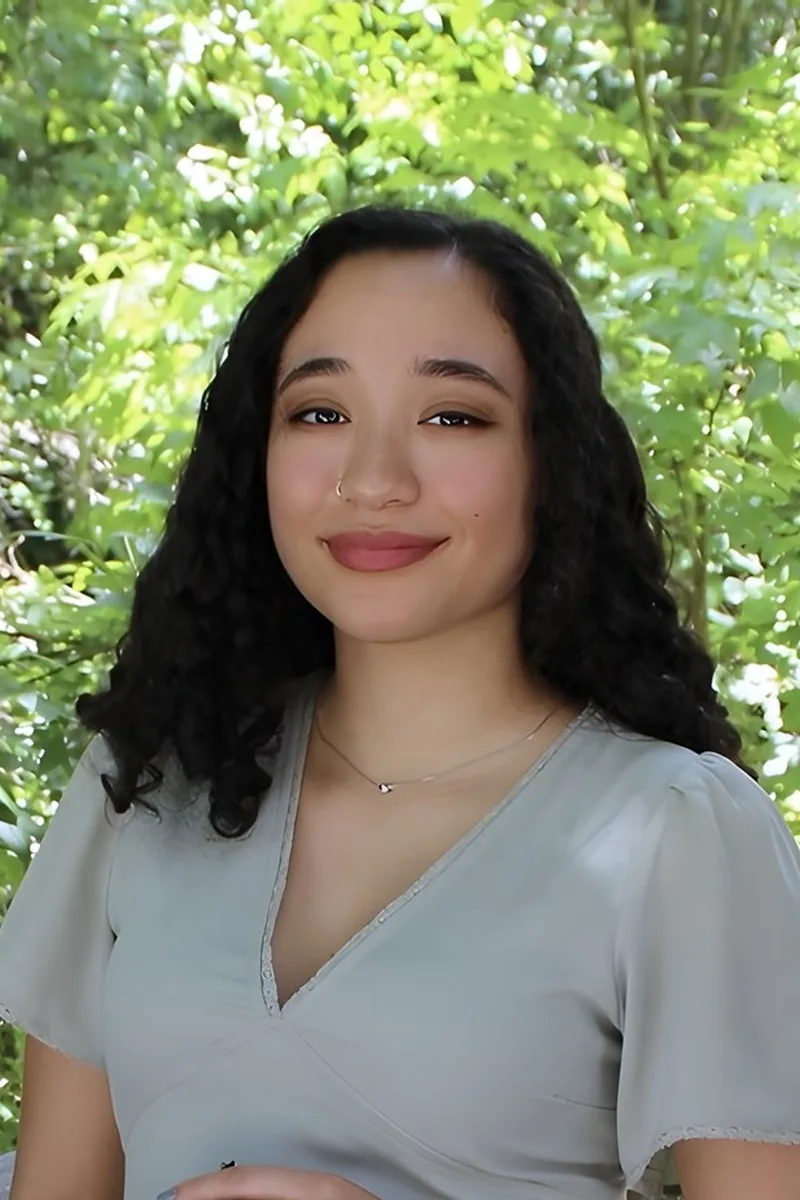
The jump from arithmetic to proportional reasoning, basic geometry, and introductory equations is where many students either build momentum or start to disengage. Kaylah's approach leans on making each concept visual and concrete — turning ratios into real comparisons, graphing relationships on a coordinate plane — before introducing abstract notation. Her statistics and math minors from the University of Florida give her deep fluency with the fundamentals.
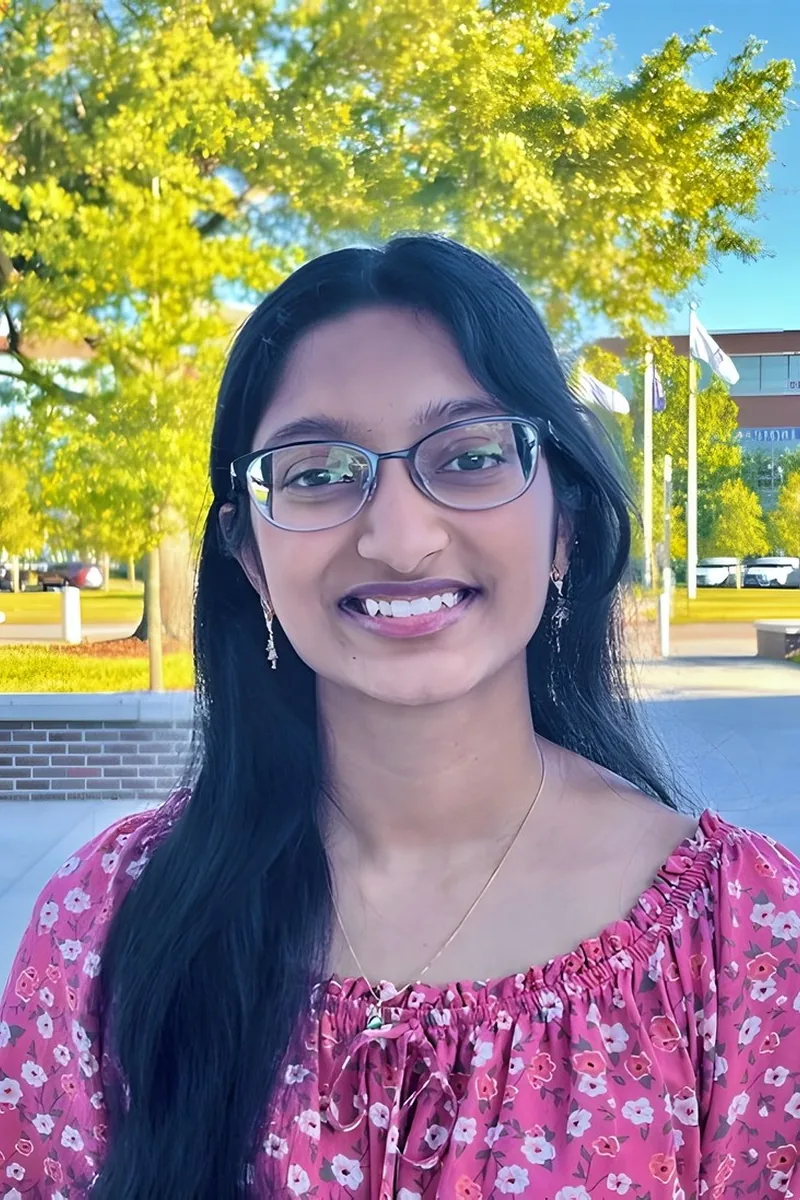
Fractions, ratios, and proportional reasoning are the concepts that quietly determine whether a student feels confident or lost for the rest of their math career. Joshitha uses visual models and real-world scenarios — scaling recipes, comparing speeds — to make these ideas click before introducing formal procedures. Her 5.0 rating speaks to how well that approach lands with younger learners.
Ratios, proportional reasoning, and early equation-solving are the skills that either launch a student toward confidence in high school math or leave them playing catch-up for years. Gabriel began taking enrichment math courses in middle school and went on to found his high school's math honor society, so he knows exactly which middle school concepts matter most down the road. He turns each topic into a stepping stone students can feel solid on before moving forward.
Working at Mathnasium gave Anabel a front-row seat to the exact spots where middle schoolers get tripped up — negative number operations, fraction division, and the first real taste of variables — and she learned to reteach those concepts multiple ways until one clicks. Her neuroscience studies at Vanderbilt reinforce that adaptability: understanding how the brain processes new information shapes how she sequences problems and builds on what a student already knows. She scored a 33 on the ACT, but it's the daily math-teaching reps that matter most at this level.
Having taught at M.S. 216 in Queens for years, James knows the middle school math curriculum inside and out — from operations with fractions and decimals to introductory algebraic thinking and data analysis. He's worked with students across every skill level and cultural background in that building, which means he's quick to spot where a student's understanding breaks down and adjust his explanations on the fly. Rated 4.9 by students.
Twenty-plus years of teaching at every level — from undergraduate tutoring at Duke to university courses in Colombia — means Miriam has seen the specific places where middle schoolers get stuck: fractions turning into decimals, ratios scaling into proportions, or the leap from numerical patterns to algebraic thinking. She connects these building blocks to real-world problems, including examples from space science, so the math feels purposeful rather than abstract.
Whether it's ratios, proportions, or early equation-solving, Nicolas connects each middle school math concept to something tangible — like how scaling works in rocket design or why unit conversion matters in his Princeton engineering coursework. That real-world anchor turns "when will I ever use this?" into genuine curiosity.
I am graduated from Penn State University in Industrial Engineering in 2017. I've tutored ever since I was in high school, and I love helping people! I like to help my students understand math (and other topics) instead of just doing it blindly. My goal is to help my students improve their math (and other topics) and build skills that will help them find learning easier in the future! Fun fact, I used to work for Disney and I like to salsa dance!
Having taught 6th through 8th grade math in the classroom, Jacob knows the specific moments where middle schoolers get tripped up — integer operations, proportional reasoning, and the leap into early algebraic thinking. He uses scaffolded practice and mathematical discourse to make sure students can explain their thinking, not just arrive at a correct answer.
At the middle school level, math shifts from arithmetic to reasoning — students start working with variables, negative numbers, and proportional relationships for the first time. Dalila makes that transition less intimidating by tying each new idea to something concrete, whether it's using ratios to scale a recipe or graphing a real pattern. Her full math background means she's always building toward the algebra and geometry skills students will need next.
Fractions, ratios, and integer operations trip up more middle schoolers than almost any other topics — and after a decade teaching in public schools, Paulkey has seen every version of where the confusion starts. He breaks multi-step problems into smaller pieces so students can track exactly where their reasoning went off course. His dual background in math and education means he knows how to make pre-algebra concepts click before high school arrives.
The jump from fifth-grade math to middle school topics like negative numbers, coordinate planes, and basic equation-solving trips up a lot of students who were previously confident. Shellee tackles each of these transitions with hands-on approaches — turning abstract rules into concrete problems students can visualize. Rated 5.0 by her students, she brings a chemical engineer's precision to breaking down multi-step problems.
The jump from elementary to middle school math piles on new ideas fast — ratios, proportions, negative numbers, coordinate graphing — and gaps from earlier years can suddenly become real problems. Mariam identifies exactly where a student's understanding breaks down and rebuilds from that point. She's studying neuroscience at Vanderbilt, which shapes how she thinks about the way kids learn and retain mathematical concepts.
A computer science master's student who uses math daily, Brandon brings a practical lens to middle school topics like ratios, proportional reasoning, and introductory geometry. He connects abstract concepts to concrete examples so students see why the math matters, not just how to get the answer.
Every topic in middle school math — from fractions and ratios to basic geometry and introductory equations — sets the stage for high school success. Ankit keeps sessions engaging by turning abstract problems into puzzles, using his natural teaching instinct to match explanations to how each student actually thinks. Rated 4.8 by students and families.
At the middle school level, math shifts from arithmetic to reasoning — fractions become ratios, numbers become variables, and word problems start requiring multi-step thinking. Benjamin believes this transition is where a student's long-term relationship with math gets shaped, so he takes time to make concepts like proportions, integer operations, and basic geometry feel intuitive. His enthusiasm for the subject (he studied it through two degrees and across two continents) tends to be contagious.
The jump from arithmetic to algebraic thinking — variables, proportional reasoning, interpreting word problems — is one of the biggest conceptual leaps in middle school. Andrew approaches it by translating each problem into everyday language before introducing any notation, making sure the logic lands before the symbols do. His writing background gives him a knack for finding the explanation that fits each student's way of thinking.
Building number sense in middle school — fractions, ratios, proportional reasoning, early equation-solving — sets the trajectory for every math class that follows. Wanqi approaches these topics with structured, step-by-step explanations that make abstract rules feel concrete, drawing on the same precision her engineering training demands.
Fractions, ratios, and proportional reasoning are the concepts middle schoolers use most in every math class going forward, yet they're often taught too quickly. Apoorva has tutored students at this level since she was in high school herself and knows how to slow down on the sticking points — like setting up equivalent fractions or translating word problems into expressions — without making students feel behind.
The jump from arithmetic to proportional reasoning, basic geometry, and introductory equations trips up a lot of middle schoolers who were previously confident in math. Adriana zeroes in on where a student's understanding starts to wobble — whether it's translating word problems into expressions or working with negative numbers — and rebuilds clarity from that exact point. Her 5.0 rating speaks to how well that targeted approach works with younger learners.
Fractions, ratios, and pre-algebra concepts click faster when a student understands the reasoning behind each step — not just the procedure. Danielle spent years as a classroom math teacher and breaks down topics like proportional relationships and integer operations using real-world examples that make abstract ideas tangible. Rated 4.9 by students.
Fractions, ratios, and proportions often trip students up when the problems shift from straightforward computation to multi-step reasoning. Muriel breaks these concepts down methodically, drawing on the same patient, structured approach she used while tutoring two students from elementary school all the way through high school. She makes sure each skill — whether it's integer operations or basic geometry — actually clicks before moving on.
Pre-med coursework in biology and neuroscience at the University of Chicago means Emerson lives in data — calculating concentrations, interpreting graphs, working with ratios — so the quantitative reasoning middle schoolers are developing feels like home turf. He's particularly effective at showing students how to translate a word problem into a clear mathematical setup, a skill that pays off long before high school. Rated 5.0 by students.
From fractions and ratios to introductory geometry and basic equation solving, middle school math covers a wide range of concepts in a short window. Benjamin has taught this age group extensively and knows that the real challenge is often confidence — one shaky concept from fifth grade can quietly derail sixth-grade work. He tracks down those gaps and rebuilds the logic behind each skill.
Earning her associate's degree in accounting and finance while still in high school means Marissa has been doing real math — budgets, percentages, financial modeling — at a college level since she was her students' age. That gives her a practical fluency with decimals, ratios, and equation-solving that she can explain in straightforward terms middle schoolers actually relate to. Rated 4.8 by students.
Fractions, ratios, and pre-algebra concepts click faster when a student can see how each idea connects to the next — and that's exactly how Raphael structures his sessions. He builds custom mini-study guides during each meeting that give students a clear reference for homework and test review. Rated 5.0 by students.
At the middle school level, math shifts from arithmetic to reasoning — proportional thinking, negative numbers, basic geometry, and the earliest encounters with algebraic expressions. Michael has guided students through that shift for over thirty years, and his teaching certification means he's trained in how to scaffold each concept so nothing feels like a random new rule. He's particularly effective at connecting abstract ideas to concrete examples students can visualize.
Hello! I'm a passionate educator with a Ph.D. in Electrical Engineering and a love for making learning both effective and enjoyable. Over the years, I've taught a wide range of subjects, always with the goal of making even the most complex topics simple and approachable. My teaching style focuses on breaking down challenging concepts into clear, manageable steps, working through problems together, and showing how lessons connect to real-world situations. I believe that a supportive, comfortable learning environment encourages curiosity and confidence, so students feel free to ask questions and explore ideas. Whether your child is building foundational skills or tackling advanced material, I'm committed to guiding them at their own pace, celebrating progress, and equipping them with tools that last far beyond our sessions. My mission is not only to help students succeed academically but also to help them enjoy the journey of learning
The jump from arithmetic to proportional reasoning, integer operations, and basic equation-solving is one of the biggest conceptual leaps in a student's math education. Yash has been tutoring middle schoolers since his own high school years and knows how to make ideas like negative numbers or fraction division intuitive instead of mechanical. He keeps sessions engaging by tying problems to real scenarios students actually care about.
Teaching middle school math daily means Sabrina knows exactly which concepts — like operations with integers, ratios, and the early jump into algebraic expressions — trip students up most often, and she's built lesson sequences specifically around those sticking points. Her elementary math certification plus her middle school math certification gives her a rare view of where gaps from earlier grades are quietly causing problems in sixth or seventh grade work. She holds a 5.0 rating from students.
Fractions, ratios, and proportional reasoning trip up a lot of middle schoolers because the concepts feel disconnected from anything real. Marina ties these ideas to practical scenarios — cooking measurements, map scales, sports statistics — so the logic clicks before the formulas get memorized. As a state-certified teacher, she knows how to pace lessons for this age group.
The jump from elementary arithmetic to middle school math can feel sudden — suddenly there are negative numbers, proportional reasoning, and introductory geometry mixed in with fractions and decimals. Adam breaks these topics down into their component rules and shows how each one connects to what a student already knows. His puzzle-solving mindset keeps sessions focused on understanding patterns rather than rote repetition.
At the middle school level, math shifts from arithmetic into proportional reasoning, basic equations, and early graphing — and that transition trips up a lot of students. Juan keeps sessions structured around small, achievable goals so that solving a two-step equation or plotting coordinates on a coordinate plane feels like a win, building genuine confidence for algebra ahead.
Working at Mathnasium with students ranging from elementary through high school gave Veronica a clear map of where middle schoolers tend to stumble — especially the jump from straightforward arithmetic into negative numbers and basic variable work. Her computer engineering coursework at the University of Florida means she uses algebra and problem-solving daily, so she can show a sixth or seventh grader exactly how today's fraction or equation practice feeds into the math that's coming next.
The jump from elementary arithmetic to middle school math catches many students off guard when ratios, proportions, and negative numbers enter the picture. Lou tackles these topics by connecting them to everyday situations — scaling a recipe, reading a temperature gauge — so the logic clicks before the procedures pile up.
St. John's College runs on seminar discussion and primary-source analysis, which means Kelsey has spent years learning to slow down, ask precise questions, and build understanding from scratch — habits that translate directly to teaching middle schoolers how to think through multi-step problems and early algebraic concepts. Her volunteer tutoring with middle school students in math gives her firsthand experience with the specific stumbling blocks this age group hits, from negative numbers to setting up equations. A 34 ACT composite confirms the quantitative chops behind that patient, inquiry-driven approach.
The jump from arithmetic to proportional reasoning, integer operations, and basic geometry catches a lot of middle schoolers off guard. As a certified Math 5-9 teacher who taught middle school in Florida, Lia knows this transition inside out. She connects each new concept back to something concrete so students actually understand why the rules work, not just what to do on a worksheet.
Between a 33 ACT, a 1500 SAT, and a biology degree that demands constant fluency with ratios, data, and quantitative reasoning, Kaitlyn brings genuine math comfort to the middle school topics — like fraction operations, percentages, and basic geometry — that trip students up most often before high school. She's spent five-plus years tutoring across age groups, so she knows how to adjust her explanations when a sixth grader needs something different from an eighth grader tackling the same concept. Rated 4.8 by families.
Ratios, proportions, and early equation-solving can feel like a sudden jump from elementary arithmetic, and that's usually where confidence wavers. Three years of tutoring middle schoolers gave Krina a sharp eye for the exact moment a concept stops making sense, so she can reteach it from a different angle on the spot. Rated 5.0 by students.
Engineering coursework at UVA means Navian solves problems with fractions, ratios, and variables every single day — so when a sixth or seventh grader hits a wall with those same concepts, he can explain them from the perspective of someone who actually uses them constantly. He's particularly effective at teaching students how to organize their scratch work and check their reasoning on multi-step problems, habits that pay off long before high school. Rated 5.0 by students.
Testimonials
Because the right Middle School Math tutor makes all the difference.
Average Session Rating – Based on 3.4M Learner Ratings
Nearby Middle School Math Tutors
Other Cape Coral Tutors
Related Math Tutors in Cape Coral
Frequently Asked Questions
Tutors work directly with your student to understand their specific curriculum, textbook, and teacher's approach—whether that's focusing on procedural fluency, conceptual understanding, or both. They'll review your child's classwork and assignments to match their instruction style and pacing, ensuring tutoring reinforces what's happening in the classroom rather than creating confusion with different methods.
Word problems require students to translate language into mathematical operations—a skill that takes practice and strategy. Tutors help students break down multi-step problems into manageable parts, identify what information matters, and choose appropriate solution strategies. With personalized instruction, your child can build confidence by working through problems at their own pace and understanding the 'why' behind each step.
Showing work helps teachers and tutors understand your child's thinking process, not just whether they got the right answer. It builds mathematical communication skills and reveals where misconceptions might be happening—a tutor can then address the root issue rather than just the final answer. This habit also helps students catch their own errors and prepares them for more complex problem-solving in high school.
Absolutely. Math anxiety often stems from feeling lost or rushed, which personalized tutoring directly addresses. Working 1-on-1 with a tutor creates a low-pressure environment where your child can ask questions without embarrassment, work at their own pace, and celebrate small wins. As students experience success and understand concepts more deeply, confidence naturally grows.
Procedural understanding means knowing the steps to solve a problem (like the algorithm for long division), while conceptual understanding means knowing *why* those steps work and when to use them. Middle school is where this shift happens—students need both, but conceptual understanding is what allows them to tackle unfamiliar problems and advance to algebra and beyond. Tutors help students build this deeper understanding so math makes sense, not just feels like following rules.
Yes—graphing and linear equations are a major transition point in middle school math where abstract thinking becomes essential. Students need to connect multiple representations (equations, graphs, tables, real-world situations) which can feel overwhelming at first. Personalized tutoring breaks this down visually and conceptually, helping students see the patterns and connections that make graphing click.
The first session is about understanding where your child is—what they've mastered, where they're stuck, and how they learn best. A tutor will ask diagnostic questions, review recent assignments or tests, and identify specific gaps or misconceptions. This foundation helps the tutor create a personalized plan that targets your child's actual needs rather than generic review.
That depends on your child's needs and goals. Some students benefit from weekly sessions to stay on track with their class, while others might need intensive support before a test or during a particularly challenging unit. A tutor can recommend a frequency that fits your child's situation—and it can always be adjusted as they progress.
Let’s find your perfect tutor
Answer a few quick questions. We’ll recommend the right plan and match you with a top 5% tutor.