Award-Winning 10th Grade AP Geography
Tutors
Who needs tutoring?
FEATURED BY


TUTORS FROM
- YaleUniversity
- PrincetonUniversity
- StanfordUniversity
- CornellUniversity
Award-Winning 10th Grade AP Geography Tutors

Certified Tutor
6+ years
Ritu
Scoring well on the AP Human Geography exam means mastering both the multiple-choice vocabulary and the structured free-response format before most students feel ready. Ritu tackles this by teaching students to diagram each FRQ prompt, identify exactly what the rubric rewards, and connect geographic...
UNC Chapel Hill
Bachelor in Arts, Biology, General
Certified Tutor
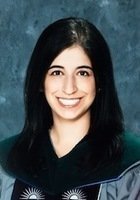
I am a licensed physician from Florida who is currently changing careers. I graduated from the University of Pennsylvania in 2009 and have extensive tutoring and editing experience. While a student, I became a certified writing tutor through the Critical Writing Department. Since I completed my writ...
Nova Southeastern University
PHD, Medicine
University of Pennsylvania
Bachelors, History
University of Pennsylvania
undergraduate
Certified Tutor
Kate
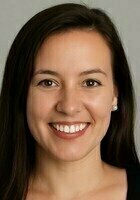
I'm available to tutor biology, chemistry, physics, math from Algebra up through AP Calculus, SAT test prep, and French. I've been tutoring students in science and math for 7 years. I also spent 8 months working and studying in France, and have tutored high school and adult students in French. When ...
Massachusetts Institute of Technology
Masters, Environmental Engineering
Massachusetts Institute of Technology
Bachelors
Certified Tutor
9+ years
Jai
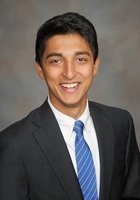
I'm a recent Stanford graduate (Electrical Engineering and Computer Science), and have been working at a major Management Consulting firm for a few years now. I personally scored a 2360 (out of 2400) on the SAT and 35 on the ACT and was successful in gaining admission to several top universities. I'...
Stanford University
Bachelors in Electrical Engineering and Computer Science

Certified Tutor
Erika
I am available to tutor middle and high school math, history and test prep. I have tutored math and history in the past and I previously taught a test prep course at a school in Hanoi, Vietnam. I have a lot of experience teaching all the need-to-know tricks to doing great on the SATS/ACTS! When I am...
Harvard University
Master of Public Policy, Public Policy
Certified Tutor
6+ years
Rhea
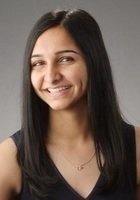
I am a current student at the University of Chicago. I am working towards a Bachelor of Science in Biological Sciences, and I am on the pre-medical track. I am extremely passionate about tutoring, and I have several years of experience tutoring students in my high school's learning center in various...
University of Chicago
Bachelor of Science, Biology, General

Certified Tutor
6+ years
Jeffrey
I am enrolled in the Mechanical Engineering PhD program at Rice University which will begin Fall 2020, and I am hoping to return to academia as a professor after earning my PhD. In the meantime, I am looking to share my passion for gaining knowledge, specifically in STEM, by educating the up and com...
University of Notre Dame
Bachelor of Science
Rice University
Doctor of Philosophy, Mechanical Engineering

Certified Tutor
13+ years
MaryAnn
I am a published author who has enjoyed “coaching” our daughter, as she navigated through high school, college and graduate school. I mentor college juniors who are seeking careers in financial services, and I serve as a peer resource to professionals who are transitioning from private industry to t...
University of Pittsburgh
Bachelor of Science, English, Psychology

Certified Tutor
9+ years
Sharon
I am a graduate of the University of Chicago, and I will be starting a graduate program at Columbia in August. I am about to complete a year of service with City Year, an education non-profit that places young adults into under-served schools. As a City Year member, I worked full-time in the classro...
Columbia University in the City of New York
Master of Science, Journalism
University of Chicago
Bachelor in Arts
Certified Tutor
10+ years
Earnest
I am comfortable with either setting. I'm confident that I can help you (or your student) achieve to the best of their ability, so please don't hesitate to get in touch!
University of Pennsylvania
Masters, Chemical and Biomolecular Engineering
University of Pennsylvania
Bachelors, Chemical and Biomolecular Engineering
Top 20 Social Studies Subjects


Meet Our Expert Tutors
Connect with highly-rated educators ready to help you succeed.
Annie
Pre-Algebra Tutor • +28 Subjects
I am currently a second year medical student. I was a Physiological Sciences major at UCLA (class of 2015), and pursued research during my gap year between undergrad and medical school.
Quinn
Calculus Tutor • +17 Subjects
I am willing to address any issue with an open mind and I try to develop strategies that play to a student's strengths. I would like to think I am very approachable and personable, and I have had very positive experiences with many students in the past using this philosophy. Outside of academics, I love playing basketball and watching sports, as well as chilling with friends, listening to music, and keeping up with politics and current affairs.
Matthew
Pre-Algebra Tutor • +39 Subjects
I'm a highly creative person who works best with visual thinkers. Very recently graduated from Stanford University, I majored in Human Biology with a concentration in Bioinformatics and Stem Cell Science. Technical though my background may be, I am currently gigging as a singer/songwriter/composer in NYC and tackle even the most hard-science of problems with a top-down, big-picture, holistic approach. If you have a propensity to look at problems in a cross- or inter-disciplinary manner (or want to learn how to do so), I'm the tutor for you!
Sami
Pre-Algebra Tutor • +19 Subjects
I am a Duke University graduate in Economics and Computer Science. I am currently pursuing an MBA degree at the Yale School of Management. I have worked in the financial field, both at a management consulting firm and a fortune 500 company. My hobbies include playing and coaching soccer. Hobbies: reading, writing, art, books, music
Samuel
AP Calculus AB Tutor • +29 Subjects
I am a freshman at Caltech majoring in Applied and Computational Mathematics. My favorite subject to tutor is math because I find it very rewarding to simplify complex topics to aid in understanding. I have lots of tutoring experience. In high school, I ran and taught an SAT prep class and was vice president of my school's NHS chapter where I ran our tutoring program, and I, myself, tutored. I also was a teaching assistant in the summer of 2020 for a class in discrete mathematics through a program called PACT (Program in Algorithmic and Combinatorial Thinking). I love learning and hope to make the process enjoyable for you!
Samantha
Pre-Algebra Tutor • +38 Subjects
I'm a first-year medical student and recent graduate from Duke University, where I studied Global Health Determinants, Behaviors, and Interventions. From running a piano program at a nonprofit children's theatre to private tutoring in math, science, and standardized test prep, I enjoy helping my students become confident and self-sufficient learners! Hobbies: photography, travel, reading, music, writing, running, art, books, traveling
Tiffany
Pre-Algebra Tutor • +56 Subjects
I am available to tutor a broad range of subjects, I am passionate about test preparation, Accountancy, and Algebra.
Zachary
Trigonometry Tutor • +35 Subjects
I am passionate about teaching and tutoring and I thoroughly enjoy helping students gain an understanding and a drive for their studies. I have a long history of working with students of all grade levels and abilities (elementary school through college), and I have a good understanding of strategies to excel in both general academics and standardized tests.
Pinelopi
Pre-Algebra Tutor • +25 Subjects
I am a Duke University graduate with a Bachelors degree in Psychology. I have experience tutoring all levels of Spanish language, all sections of the SAT, as well as algebra, pre algebra, geometry, and pre-calculus! I love kids & I have a very flexible schedule and a lot of patience! Let me help you :)
Charles
AP Calculus AB Tutor • +25 Subjects
I am a junior Mechanical Engineering major at Yale, and I hope to become a Naval Aviator after college. I am also a varsity sailor, and enjoy playing music with friends when I can get some free time. I have been tutoring my fellow students throughout my entire academic career, and I would best describe my tutoring style as one that adapts to each students' needs. For example, I have always tried to frame questions in a different way so that the student can better understand the question. Some students need visual representations of numbers and systems to understand them, and others benefit more by understanding the concepts behind each formula. I prefer to tutor in math and physics, and especially with real world application problems. I hope to help students improve their standardized test scores and their understanding of the math and sciences so that they can achieve their academic goals! Hobbies: art, books, running, reading, music, writing
Top 20 Subjects
Frequently Asked Questions
Students typically find the most difficulty with unit-level concepts like cultural diffusion patterns, geopolitical boundary disputes, and the interconnections between human and physical systems. Many struggle with scale—understanding how local phenomena connect to global patterns—and with synthesizing information across multiple geographic perspectives. Map interpretation, especially when analyzing thematic maps with overlapping data layers, is another common challenge. Tutors can help break down these complex spatial relationships and provide targeted practice with the specific question formats that appear on AP exams.
AP Geography FRQs require you to analyze geographic concepts and apply them to real-world scenarios—not just list facts. The key is learning to structure responses around the rubric: clearly identifying geographic concepts, providing specific examples with place names and coordinates when relevant, and explaining the "why" behind patterns. A tutor can help you practice identifying what each question is actually asking, develop a consistent approach to organizing your response, and learn how to use geographic vocabulary precisely. Working through past FRQs with feedback on your reasoning process, not just your final answer, builds the analytical skills these questions demand.
You need to read multiple types of maps—choropleth, dot density, proportional symbol, and flow maps—and extract meaningful patterns from them. Beyond basic map reading, AP Geography requires you to analyze spatial distributions, identify anomalies, and explain why patterns exist where they do. Understanding map projections and their distortions is also tested. Tutors can provide targeted practice with the specific map types that appear on the exam, teach you systematic strategies for analyzing spatial data, and help you develop the habit of asking "Why is this pattern here?" rather than just describing what you see.
Case studies are essential—the exam expects you to support geographic concepts with specific, named examples from different world regions. Rather than memorizing isolated facts, effective preparation involves understanding a few detailed case studies deeply and being able to apply them flexibly across different units and question types. A tutor can help you build a strategic set of examples organized by geographic concept (urbanization, resource management, political conflict, etc.) so you can quickly identify which case study best supports your argument. This approach is far more efficient than trying to memorize dozens of disconnected examples.
AP Geography is designed around interconnected units, and higher-scoring responses demonstrate how concepts from one unit influence another—for example, how climate patterns affect agricultural systems, which then shape cultural practices and economic development. Many students struggle because they study each unit in isolation. A tutor can help you build a mental framework showing these connections, teach you to recognize when a question is asking you to synthesize across units, and practice identifying the most relevant concepts to combine for a given prompt. This systems-thinking approach is what separates solid responses from excellent ones.
The exam structure requires balancing speed with accuracy: you have about 70 minutes for 60 multiple-choice questions and 75 minutes for three FRQs. Many students either rush through multiple-choice and leave no time for thoughtful FRQ responses, or spend too long on FRQs and guess on the latter MC questions. A tutor can help you develop a realistic practice schedule, teach you to identify which questions to tackle first, and build stamina through full-length practice exams under timed conditions. Learning to recognize when you're spending too much time on a single question—and developing the discipline to move on—is a critical skill that significantly impacts your score.
Start by analyzing your performance on practice tests question-by-question, not just by overall score. Look for patterns: Are you missing questions about a specific unit? Do you struggle more with certain question types (like map analysis vs. conceptual questions)? Are there geographic regions where your knowledge is thin? A tutor can help you diagnose these gaps systematically, prioritize which topics will give you the biggest score improvement, and create a focused study plan rather than trying to re-study everything. They can also help you understand whether you're missing questions due to knowledge gaps or test-taking strategy issues—the solution is very different for each.
An effective AP Geography tutor should understand the exam's structure and rubric deeply, be able to explain spatial relationships and geographic concepts clearly, and have experience helping students move from understanding individual topics to synthesizing across units. They should be comfortable with map analysis, able to provide meaningful feedback on FRQ responses (not just corrections), and skilled at identifying whether a student's errors stem from conceptual misunderstanding or test-taking strategy. Look for someone who emphasizes geographic thinking—asking "why" questions and building mental models of how systems interact—rather than just drilling facts. Varsity Tutors connects you with tutors who have demonstrated expertise in AP Geography and proven success helping students improve their scores.
Connect with 10th Grade AP Geography Tutors
Get matched with expert tutors in your subject