Award-Winning College Algebra Tutors
serving Fresno, CA
College Algebra
Tutors in Fresno
Private 1-on-1 tutoring, weekly live classes for academic support, test prep & enrichment, practice tests and diagnostics, and more to elevate grades and test scores.
Based on 3.4M Learner Ratings
UniversitiesSchools & Universities
DeliveredHours Delivered
ProficiencyGrowth in Proficiency
Who needs tutoring?
No obligation. Takes ~1 minute.
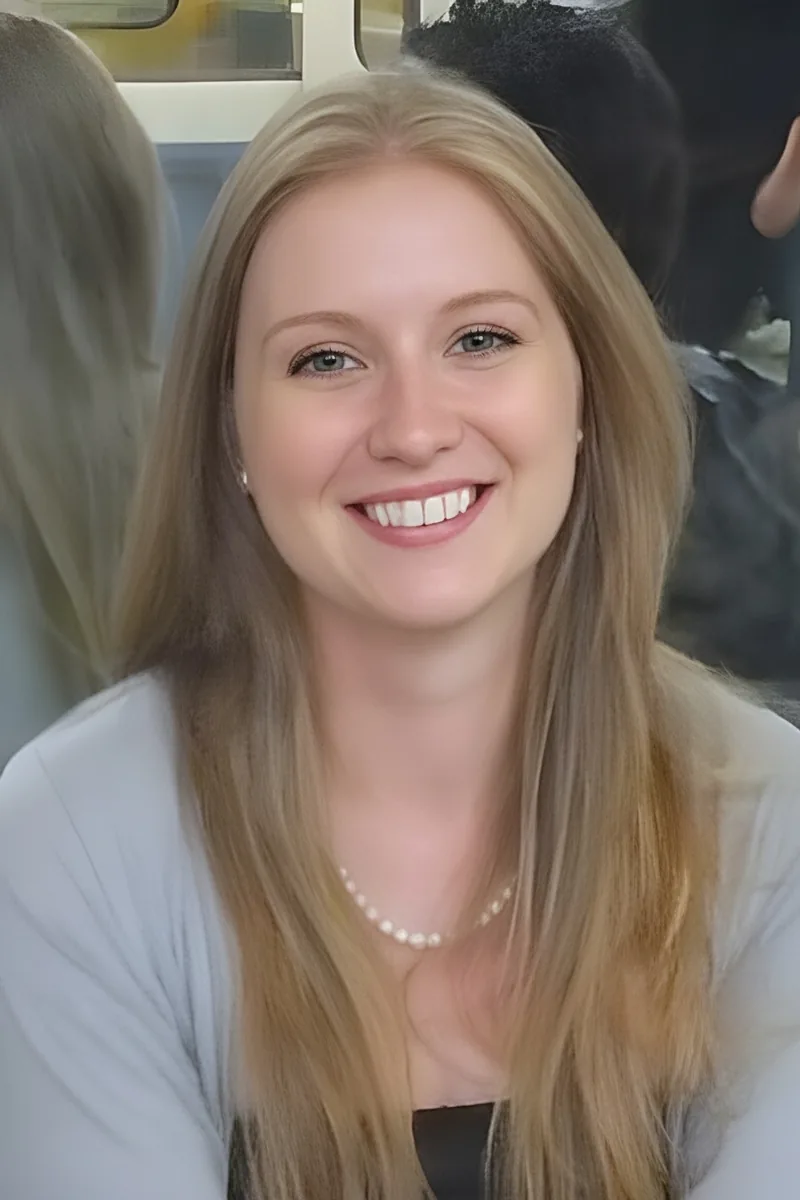
Christina's computer science training means she thinks about algebra the way a programmer does — every function, variable, and expression follows a logic you can trace and test systematically. She applies that structured debugging mindset to college algebra topics like solving logarithmic equations and analyzing rational expressions, walking through each step so students see exactly where their reasoning went off track. Her 34 ACT confirms the quantitative instincts behind the approach.
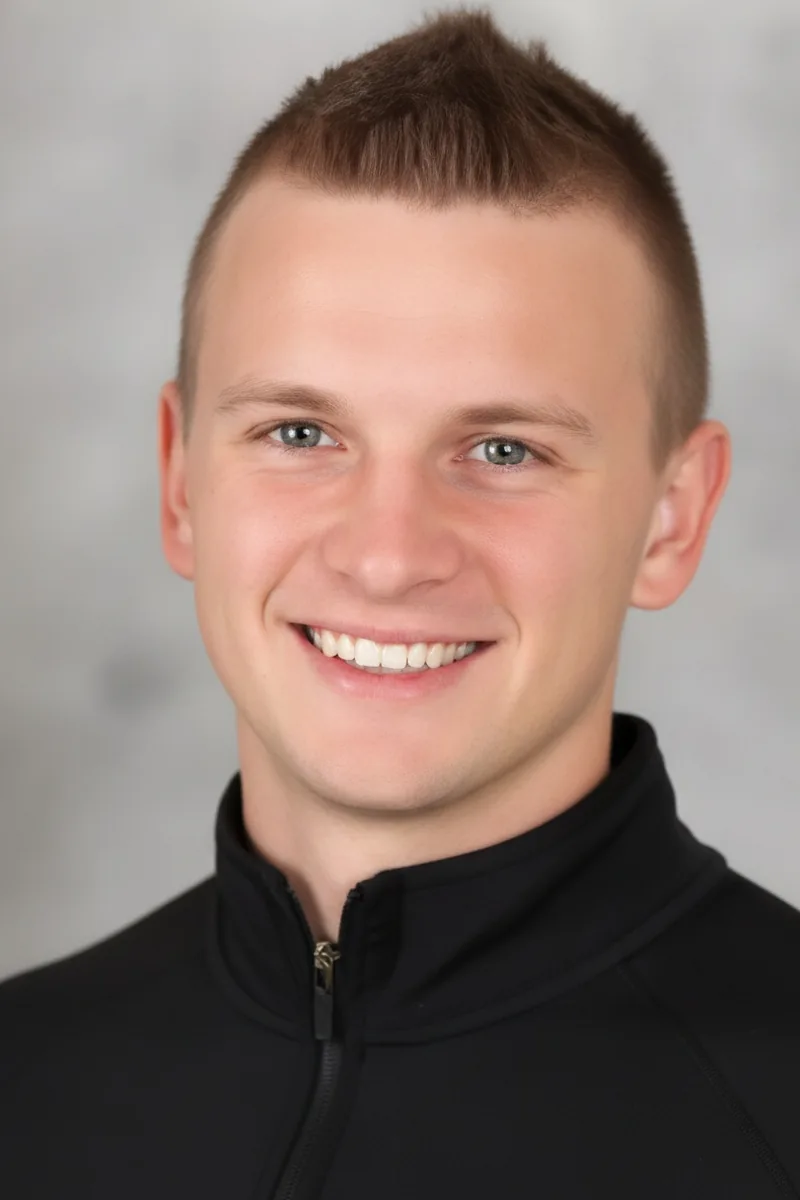
The pre-med track in bio-psychology at UCSB keeps Aaron actively working through the algebraic modeling that underpins science coursework — exponential functions in pharmacokinetics, logarithmic scales in sensory research, and polynomial relationships in statistical analysis. His approach is conversational: he walks through a problem like a rational equation or system of inequalities step by step, then asks the student to teach it back, which quickly exposes any gaps before they compound. Rated 5.0 by students.
Medical school demands constant algebraic fluency — dosage calculations, pharmacokinetic models, and interpreting exponential decay curves all trace back to the same college algebra skills Timothy now teaches. His political science background also means he's comfortable translating quantitative concepts into clear, structured arguments, which is exactly what clicking with a topic like logarithmic properties or systems of equations often requires. Rated 4.9 by students.
A neurobiology degree means Daniel spent years wrestling with quantitative models — dose-response curves, exponential decay in pharmacokinetics, logarithmic scales for sensory data — all built on the same algebraic machinery that college algebra courses test. Now pursuing his MD at Loma Linda, he still leans on that toolkit daily, which lets him unpack topics like rational expressions and function behavior by connecting them to problems he's actually worked through rather than treating them as abstract exercises.
Shant's psychobiology degree from UCLA required constant algebraic problem-solving — modeling dose-response curves, interpreting exponential decay in pharmacokinetics, and crunching data sets that depend on fluency with functions and logarithmic relationships. That science-rooted algebra practice means he can unpack topics like rational expressions or systems of equations by connecting them to the quantitative reasoning he actually used in coursework, not just abstract textbook procedures. Rated 5.0 by students.
A section editor for the Los Angeles Review of Books might seem like an unlikely college algebra tutor, but John's analytical instincts cut across disciplines. He breaks down polynomial operations, rational functions, and logarithmic equations into logical sequences that mirror the structured thinking he applies to everything he teaches.
I am a graduate of Duke University with a degree in Health Policy and Education Policy. While at Duke University I was a student athlete, participated in the leadership of several clubs and service groups; as well as, working as a Math and Reading tutor. After graduation I spent a year pursing a business venture allotted to me through the Elevator Pitch Competition, my senior year of college, which I won in my category - Non-Profits. After that year, I joined the Teach for America Fellowship, where I fell in love with teaching. The Teach for America Fellowship is 2 years; however, after my first year due to the recognition and growth in my classroom I was invited to start a school. I spent 2 years at that school prior to getting married and moving to California, a few months ago, with my amazing, aerospace loving, husband.
Mitch's general engineering degree means he didn't just pass college algebra — he pressure-tested every piece of it in statics, circuits, and thermodynamics courses where a shaky grasp of logarithmic properties or rational expressions would sink an entire problem set. That real-world repetition gives him a clear sense of which algebraic moves actually matter and how to make them stick, especially for students who need the "why" behind each step before the procedure clicks. Rated 5.0 by students.
Linguistics training at NYU sharpens a very specific skill — breaking complex rule systems into logical patterns — and that's exactly what Naama applies to college algebra topics like function composition, logarithmic properties, and solving rational equations. She treats algebraic rules the way a linguist treats grammar: as interconnected structures where understanding one pattern unlocks the next, rather than isolated procedures to memorize. Her 1570 SAT score speaks to the quantitative chops backing that approach.
Mechanical engineering at UC Irvine means Alok doesn't just remember college algebra — he's been building on it every semester through thermodynamics, dynamics, and materials science courses where manipulating polynomial expressions and solving systems of equations is routine. That constant reinforcement gives him a practical grip on topics like rational functions and inequalities that stays grounded in how the math actually gets used beyond the classroom.
Neuroscience at Pomona College meant Whitney was constantly translating biological systems into algebraic language — modeling neurotransmitter decay with exponential functions, linearizing dose-response curves with logarithms, and solving systems of equations to interpret experimental data. That science-to-math pipeline gives her a concrete way to explain why techniques like function transformations or logarithmic properties actually work, not just how to execute them on a homework set.
Having taken Differential Equations and multiple statistics courses as electives beyond her Rice degree, Judy brings genuine mathematical depth to college-level algebra topics like polynomial functions, logarithmic equations, and systems of inequalities. She treats College Algebra not as an isolated requirement but as the gateway to modeling and quantitative reasoning students will need in upper-division coursework.
A biology degree might not scream 'algebra tutor,' but Nicholas's coursework was steeped in the quantitative side — modeling population growth with exponential functions, linearizing enzyme kinetics data with logarithmic transformations, and solving systems of equations for equilibrium concentrations. That science-lab context gives him a concrete answer when a college algebra student asks 'when would I ever use this?' His 33 ACT confirms the math fundamentals are solid underneath.
As a state-certified teacher with a physics degree, Gerardo has spent years watching students struggle with the same algebraic sticking points — graphing transformations that seem arbitrary, or logarithmic properties that feel like random rules — and he's built clear, structured explanations for each one. Physics gave him a habit of grounding every algebraic technique in something concrete, so a topic like exponential equations becomes a real scenario instead of symbol shuffling.
Polynomial division, rational expressions, and logarithmic equations tend to be the sticking points in college algebra — places where students lose track of why each manipulation is valid. Alexander earned his bachelor's in mathematics with honors and teaches these topics by grounding every rule in the algebraic reasoning underneath it. That means fewer memorized shortcuts and more actual understanding when problems get unfamiliar.
The jump from high school algebra to college algebra trips up a lot of students, especially when rational functions, logarithmic equations, and polynomial behavior all accelerate at once. Nathan tackles these topics by slowing down and unpacking the underlying mechanics of each problem type before moving to harder applications. His dual science background at UCLA and Concordia gave him years of practice using algebraic tools in real coursework.
An NYU drama degree might not scream 'math tutor,' but Michael's 35 ACT and deep comfort with competition math reveal someone who genuinely thinks in numbers — he just happens to also perform on stage. He tackles college algebra topics like logarithmic equations and rational expressions by building each solution as a logical narrative, making sure students follow the reasoning at every step rather than losing the thread halfway through a problem. Rated 4.8 by students.
Molecular biology research on cancer cells at Cal State Northridge keeps Siavash actively solving algebraic problems — modeling growth curves, linearizing data with logarithmic transformations, and rearranging rate equations — so the college algebra toolkit is something he uses weekly, not something he left behind. His UCLA training in both molecular biology and ecology gave him a double dose of quantitative coursework, which means he can ground abstract topics like exponential functions or systems of equations in scientific scenarios that make the math feel purposeful.
Polynomial functions, rational expressions, and logarithmic equations all click faster when you understand the chemistry behind them — and as a Chemistry major at Occidental College, Chandler uses those algebraic tools daily. He breaks down complex college algebra problems by connecting abstract notation to real applications, making concepts like systems of equations and function transformations feel purposeful.
Neuroscience and physiology coursework is full of algebraic heavy lifting — modeling membrane potentials with logarithmic equations, fitting exponential decay curves to neural response data, solving systems that describe physiological feedback loops — so Justin's B.S. training keeps these skills sharp and grounded in real applications. He's particularly good at unpacking the logic behind function transformations and logarithmic properties, two areas where college algebra students tend to hit a wall. Rated 4.8 by students.
Integrative biology at UC Berkeley throws a lot of algebra at you disguised as science — growth models, dosage calculations, statistical transformations — so Jack has been actively using the college algebra toolkit in contexts that go well beyond the textbook problem sets. His 1590 SAT score backs up the quantitative instincts, and his approach to topics like logarithmic equations and rational expressions leans on showing students the underlying structure so they can adapt when a problem changes shape.
Kellie's chemistry background gives her an edge when teaching college algebra — she's used to applying logarithmic and exponential relationships in real contexts like pH calculations and reaction kinetics, so she can show students why those functions behave the way they do, not just how to solve them. Her 1520 SAT and 33 ACT back up serious quantitative fluency, and her emphasis on practice over memorization means students build the problem-solving reflexes that carry through rational expressions, systems of equations, and beyond.
Studying physics and mathematics simultaneously at Occidental means Drew doesn't just solve algebraic problems — he depends on them, using polynomial manipulation, systems of equations, and function analysis as the scaffolding for everything from mechanics to wave theory. That daily reliance on the college algebra toolkit gives him a clear sense of which techniques matter most and how to break them down into steps that actually build understanding.
Alex earned his B.S. in Mathematics from UCLA, which means topics like rational expressions, logarithmic equations, and function transformations aren't abstract hurdles — they're the foundation he built the rest of his degree on. He's especially effective at walking through multi-step problems by connecting each algebraic move to a clear reason, so students internalize the logic instead of just copying procedures.
Most college algebra students don't struggle because the math is impossibly hard — they struggle because nobody explained the *why* behind techniques like solving logarithmic equations or graphing rational functions. Thomas, with his English background, brings a writer's instinct for clear explanation to algebraic concepts, breaking down each step in plain language until the logic clicks. He teaches across the full algebra spectrum from elementary through college level, so he's practiced at meeting the exact gap a student walks in with.
Gabriel's deep science background means he's spent years working with the algebraic machinery that college algebra courses actually test — manipulating functions, solving exponential and logarithmic equations, and modeling real-world relationships. He breaks down abstract procedures by connecting them to the quantitative reasoning he uses across biology and math, making techniques like polynomial division or rational equation solving feel purposeful rather than mechanical. Holds a 5.0 rating from students.
Joanne's math degree means she didn't just pass through college algebra — she built everything from calculus through multivariable calculus on top of it, so she knows exactly which skills in polynomial manipulation, factoring strategies, and function behavior need to be rock-solid before the next course hits. She's especially good at adjusting her explanations on the fly, trying a graphical approach when the algebraic one isn't clicking or grounding an abstract rule in a concrete numerical example. Rated 5.0 by students.
Lizzy's International Development coursework leaned heavily on statistical modeling and data interpretation — skills built on the same algebraic backbone that college algebra courses test, from manipulating functions to solving systems of equations. She's especially effective at walking through word problems and applied scenarios, translating real-world setups into algebraic expressions that students can actually parse and solve step by step.
Alain's math minor at UCLA went well beyond college algebra into differential equations and multivariable calculus, which means he can teach topics like logarithmic equations and rational expressions with a clear view of why those tools are built the way they are. His plan to pursue graduate work in mathematical game theory keeps him actively working with algebraic structures — so when he breaks down a tricky system of inequalities or a composite function, he's drawing on skills he uses daily, not vaguely remembered coursework.
Most college algebra students struggle not with individual steps but with knowing which tool to reach for — is this a logarithmic property question or a rational expression in disguise? Nathan, midway through his mathematics degree, teaches the pattern recognition that turns a wall of notation into a clear sequence of decisions. His 1540 SAT and 4.5 rating back up the instinct he brings to untangling those moments where students freeze.
Pre-med coursework in biology, chemistry, and physics gave Fady constant practice with the algebraic machinery that college algebra courses formalize — solving systems of equations for equilibrium problems, using logarithmic and exponential functions in pharmacokinetics, and manipulating rational expressions in dilution calculations. He breaks down each technique by connecting it to the scientific context where he actually learned to rely on it, which makes abstract procedures feel purposeful.
Biology coursework gave Joseph a practical handle on the algebraic tools that show up constantly in college algebra — he's used exponential and logarithmic functions to model population growth, decay rates, and dose-response curves rather than just solving them on a worksheet. That science-lab context makes him especially effective at unpacking why a technique like solving a system of equations or simplifying a rational expression actually works, not just what buttons to press on a calculator.
An aerospace engineering background means Hugo has spent years relying on algebraic tools like systems of equations, polynomial manipulation, and rational expressions in real technical work. He brings that applied perspective into college algebra sessions, showing students not just how to solve problems but why certain techniques matter beyond the classroom.
Ten years of teaching algebra at the middle and high school level means Mariapaz has diagnosed nearly every misconception students bring into a college algebra course — the sign errors in rational expressions, the confusion between exponential and polynomial growth, the shaky grasp of function notation that quietly derails everything downstream. She zeroes in on those gaps early and rebuilds the reasoning behind each technique so problems stop feeling like guesswork. Rated 5.0 by students.
Polynomial functions, rational expressions, and logarithmic equations all click faster when you can see how they connect to each other instead of treating each chapter as a separate silo. Jonathan's integrative biology background required heavy quantitative coursework, and he brings that same habit of linking concepts together to college algebra. Rated 4.9 by students.
Growing up between Los Angeles and Paris gave Sarah an unusual comfort with switching between symbol systems — a skill that translates directly to reading and manipulating the algebraic notation that trips up so many college algebra students. Her physics and math degree from Clark means she's spent years solving problems where getting a polynomial factorization or a logarithmic identity wrong has real consequences in the next step of a derivation. That practical fluency lets her zero in on exactly where a student's algebraic reasoning breaks down and rebuild it from that point.
I am a UCLA Bioengineer. I am a well qualified tutor and have had many years of experience in both paid and unpaid roles from 6th grade to 12 grade to present. I have always excelled in academics, math, writing, and english and have scored well on all standardized tests and state tests. I have scored 800/800 in SAT 1 math, SAT 2 math. I have scored 760/800 in SAT writing. I received scores of 5/5 in AP Calculus AB and BC and have taken numerous other APs, passing the APs in Physics, Biology, Literature, Language and Composition, Environmental Science, Economics, US history, and Chemistry. I was the President of my high school's only tutoring club and only math club, Infinity Math Club, where I dedicated my time tutoring struggling students in all math levels. I was a tutor in my high school's RAMS program for all academic subjects. I love working with students and love to see them succeed in subjects that they once struggled in.
Studying applied mathematics at Stanford means Alex doesn't just remember college algebra — he's actively building on it every week in courses that treat functions, polynomial manipulation, and logarithmic reasoning as foundational vocabulary. That ongoing fluency lets him pinpoint exactly why a student's approach to, say, solving a system of equations or simplifying a rational expression went sideways, and reroute them quickly. Rated 4.8 by students.
Studying biology at WashU means Laura constantly translates real phenomena into algebraic language — modeling enzyme kinetics with rational functions, fitting growth data to exponential curves, and solving systems that describe metabolic pathways. She brings that applied fluency to college algebra, breaking down topics like logarithmic properties and function transformations by connecting them to problems she's actually worked through in her coursework. Rated 5.0 by students.
Tutoring Algebra I and II in under-resourced schools taught Vy something most tutors learn the hard way: the students who struggle with college algebra topics like logarithmic equations or rational expressions usually aren't missing ability — they're missing one or two conceptual links that nobody bothered to trace back. Her cognitive studies program at Vanderbilt gives her a framework for diagnosing exactly where those gaps live and rebuilding from there. A 35 ACT and 5.0 student rating back up the approach.
Testimonials
Because the right College Algebra tutor makes all the difference.
Average Session Rating – Based on 3.4M Learner Ratings
Practice College Algebra
Free practice tests, flashcards, and AI tutoring for College Algebra
Nearby College Algebra Tutors
Other Fresno Tutors
Related Math Tutors in Fresno
Frequently Asked Questions
College Algebra typically covers functions and their properties, polynomial and rational equations, exponential and logarithmic functions, systems of equations, matrices, and sequences and series. The course emphasizes both procedural skills and conceptual understanding—meaning you'll not only learn how to solve equations, but understand why those methods work and how to apply them to real-world situations. For students in Fresno preparing for STEM majors or standardized tests, a strong foundation in these topics is essential.
Word problems require you to translate real-world scenarios into mathematical language, identify which concepts apply, and then execute the solution—that's three separate skills working together. Many students struggle because they focus only on the math mechanics and miss the problem-solving strategy. Personalized tutoring helps you develop a systematic approach: reading carefully, defining variables, setting up equations correctly, and checking your answer in context. With practice and guidance, word problems become much more manageable.
Graphing is where College Algebra shifts from pure computation to visual reasoning—and that transition trips up many students. The key is connecting the algebraic form of a function to what you see on the graph: how does changing a coefficient affect the shape? Where are the intercepts and asymptotes? Tutors help you build this connection by working through multiple representations (equations, tables, and graphs) together, so you develop intuition rather than just memorizing rules. Once you see the patterns, graphing becomes a powerful tool for understanding behavior and solving problems.
Showing work isn't just about getting credit—it reveals your thinking process and helps you catch mistakes before they compound. In College Algebra, a small error early (like a sign mistake) can lead to a completely wrong answer, and instructors need to see where that happened. More importantly, clear work helps you understand what you actually know versus what you're guessing at. Tutors can review your work step-by-step, identify gaps in your reasoning, and help you build stronger problem-solving habits that will serve you in higher-level math courses.
Absolutely. Math anxiety often stems from feeling lost or making mistakes under pressure, and it creates a cycle where stress makes it harder to think clearly. Personalized tutoring breaks that cycle by working at your pace, celebrating small wins, and building genuine understanding rather than just drilling procedures. When you can see patterns, understand why methods work, and solve problems confidently, anxiety naturally decreases. Many students in Fresno find that one-on-one support transforms not just their grades, but their relationship with math itself.
Yes—different textbooks and instructors emphasize different approaches, pacing, and applications. Some focus heavily on graphing and transformations, others on algebraic manipulation, and some blend conceptual and procedural work differently. Varsity Tutors connects you with tutors who can adapt to your specific curriculum and teaching style, whether you're using OpenStax, Pearson, Cengage, or another resource. This alignment means you get support that directly matches what your instructor expects, rather than learning a different approach that might confuse things.
The key is working systematically and checking your logic at each step. A strong strategy is: simplify each side separately, collect variable terms on one side and constants on the other, isolate the variable, and always verify your solution by substituting back into the original equation. Many students rush and lose track of what they're doing, leading to careless errors. Tutors help you develop a consistent process, understand why each step is necessary, and build the habit of checking your work—skills that transfer directly to more complex equations and problem-solving.
Your first session is about building a foundation for success. The tutor will assess your current understanding of key concepts, identify specific areas where you're struggling (word problems, graphing, equations, etc.), and learn about your learning style and goals. Together, you'll work through a problem or two to see how the tutor explains concepts and what approach resonates with you. By the end, you'll have a clear picture of where to focus and a personalized plan moving forward. Most students feel more confident and less isolated after that first conversation.
Let’s find your perfect tutor
Answer a few quick questions. We’ll recommend the right plan and match you with a top 5% tutor.