Award-Winning Latin Tutors
serving Denton, TX
Latin
Tutors in Denton
Private 1-on-1 tutoring, weekly live classes for academic support, test prep & enrichment, practice tests and diagnostics, and more to elevate grades and test scores.
Based on 3.4M Learner Ratings
UniversitiesSchools & Universities
DeliveredHours Delivered
ProficiencyGrowth in Proficiency
Who needs tutoring?
No obligation. Takes ~1 minute.
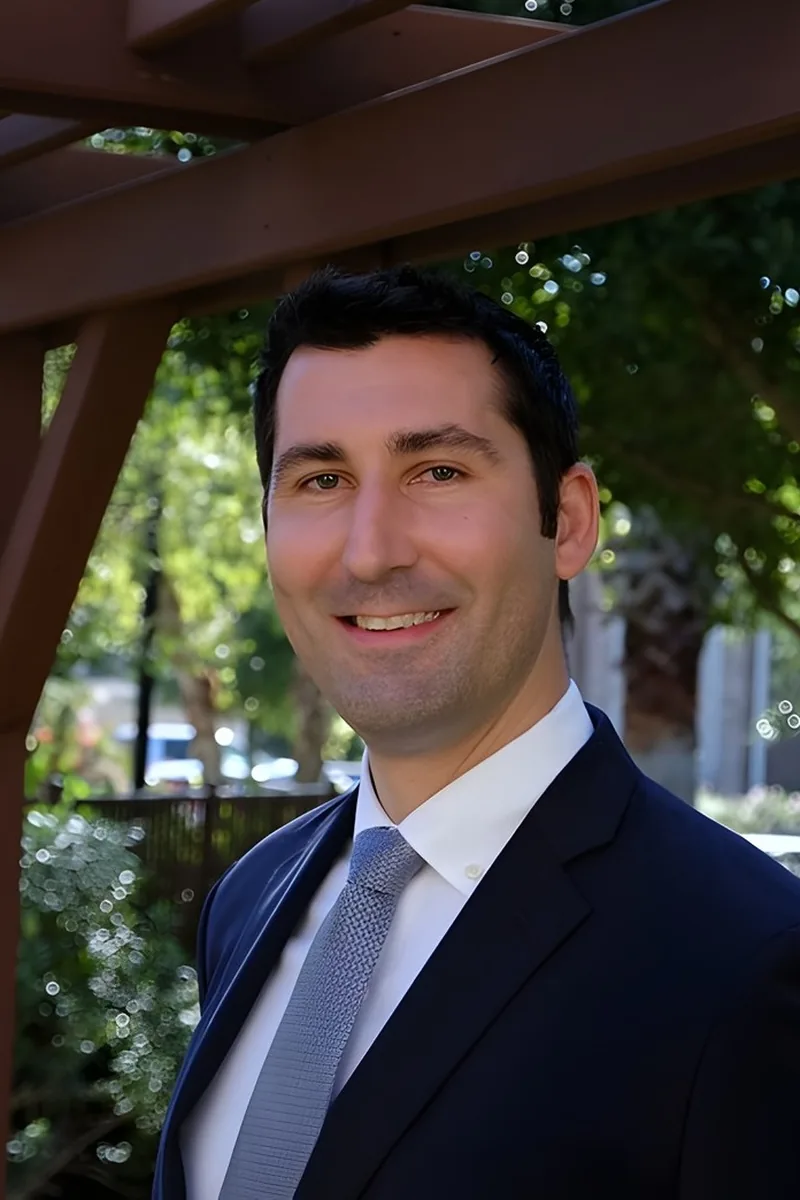
Holding a PhD in English, Craig has spent years tracing how Latin's grammatical architecture — its case system, subjunctive moods, and participial constructions — shaped the literary traditions he studies professionally. He teaches Latin 2 and 3 with particular attention to how reading fluency develops, walking students through the process of holding a complex periodic sentence in their head long enough to render it into natural English. Rated 5.0 by students.

A college English professor with dual degrees in the field, Toni knows how deeply Latin roots and grammatical structures run through the English language — every lesson on cases, conjugations, or syntax doubles as a window into why English works the way it does. She teaches Latin as a discovery process, encouraging students to piece together translations by recognizing patterns rather than relying on word-for-word lookup. Her 4.9 rating speaks to how well that active, student-driven approach lands.
Trained in Latin and Italian philology at Palacký University in the Czech Republic, Petra brings a European classical education to a language most American students encounter only through textbooks — she learned Latin as a living system intertwined with Italian, tracing how derivatives and grammatical structures migrated from one language into the other. That dual-language fluency is especially useful for teaching vocabulary roots, verb conjugations, and the way Latin's case system laid the groundwork for Romance language grammar. Rated 4.9 by students.
Studying through all four levels of Latin while majoring in psychology and minoring in neuroscience at Texas A&M, Paris knows the language from both the humanities and the scientific side — Latin roots show up constantly in her neuroscience coursework, which keeps the vocabulary alive and practical. She teaches grammar by building systematic habits around case identification and verb parsing, so students develop the kind of methodical reading process that holds up when sentences get long and layered. Rated 5.0 by students.
Cristiana earned her BA in Classics from Tor Vergata University in Rome, where Latin wasn't just an academic exercise but part of the scholarly air she breathed daily. She tackles declensions, conjugations, and prose composition by connecting grammar to the literature students actually want to read — Caesar, Cicero, Virgil — so syntax rules stick because they're attached to real sentences.
Learning Latin is really learning how to decode a language where word order barely matters and endings carry all the meaning. Emma teaches students to parse sentences systematically — identifying verb forms, matching noun cases to their functions, and reconstructing meaning clause by clause. Her enthusiasm for Latin runs through four levels of study, so whether a student is conjugating sum for the first time or tackling a subjunctive-heavy passage, she brings genuine energy to the table.
Graduate work in Classics and Archaeology at UT Austin means Brandi doesn't just teach Latin grammar — she reads it on ancient inscriptions, in archaeological field reports, and across the primary sources that fuel her research. She covers all four levels and brings reading fluency in Greek and several other languages, which sharpens her ability to explain how Latin's case system and syntax actually function rather than just handing students paradigm charts to memorize. Rated 4.8 by students.
Learning Latin is largely about recognizing patterns — how noun declensions interact with verb conjugations to build meaning without relying on word order. Wyatt earned his degree in Classics, so Latin isn't a side subject for him; it's the language he built his academic career around. He walks students through everything from first-declension basics to subjunctive mood usage with the kind of fluency that only comes from years of close reading.
I am more than happy to share my knowledge with others who are struggling! Tutoring is a great way for me to spend my time helping others excel.
I'm a state certified teacher with many years of experience teaching and tutoring both in and out of the classroom, and I look forward to meeting you and helping you achieve your goals. I hope to get to know you in person soon, but until then, here are my qualifications and interests. See you soon! Qualifications: -Graduated magna cum laude from Texas A&M University with a BA in Classics, Greek focus, and a minor in Japanese. -Graduated with Merit (UK equivalent of a 3.0 GPA) from The University of Nottingham in England, Master's in Ancient History. -Texas state certified to teach English both level and advanced for grades 9-12. -More than a decade of tutoring experience in English language arts, foreign language, and study skills; five years of classroom teaching experience: one year at a private academy of students with learning differences and disabilities and four years in public school. -Have taught students as young as 8 years old and as old as 63 -Coached and ran academic clubs and extracurricular clubs such as state spelling and writing competitions and creative writing clubs. -My proudest accomplishments to date include teaching an elementary student to love classical literature and one of my Latin students going on to join and excel in college translation courses as only a junior in high school. Interests: -Reading and creative writing such as short stories, poetry, and even fanfiction! -Singing: I hope to resume voice lessons soon! -Jogging -Watching foreign television such as anime or BBC programs -And of course studying languages!
I'm a huge Red Sox fan and love watching detective shows when I have free time.
I'm tutor for the north Houston, Woodlands and Conroe area. I have a Master's degree from the University of Notre Dame where I also completed enough training sessions and coursework to get a certificate in education methods. I have quite a bit of experience tutoring Spanish, French, and Latin, but am happy to help in areas of history, English reading/writing, and some math as well. I have also been a math tutor in the north Houston area for high school students who need help understanding concepts.
I'm a UH senior right now (majoring in political science), and I'm planning to go to law school next fall. I enjoy reading, puzzles, and musicals about Treasury Secretary Alexander Hamilton.
I am in my final semester at the University of North Texas, majoring in political science, minoring in criminal justice and social science, and recieving certificates in legal studies and Latine/Mexican American studies. I also work tutoring and caring for elementary school students in an extended school day program. I look forward to assisting students learn the subjects that once intimidated me, such as government, politics and history. There is always so much going on in the school day and its beneficial to get more indepth help with subjects when you can. I am willing to provide this assistance so students feel comfortable and confident with the material they are learning. In my free time, I enjoy painting and watching TV or movies.
I enjoy helping others realize their potential and making the impossible possible. Everyone can reach their goals, and it is my goal to help you reach yours! Math is my favorite subject, and I have even participated in competitions for it. I hope to help others fall in love with math as well.
Holding a Master's degree in Latin, Catherine doesn't just teach the language — she lives in its literature, grammar, and history at a level most tutors can't match. She covers every level from Latin 1 through AP, with particular strength in guiding students from early declension patterns into reading authentic prose and poetry with real confidence. Rated 5.0 by students, she also teaches Greek, giving her the kind of cross-classical perspective that illuminates how Latin syntax and vocabulary function within the broader ancient world.
Claudia's classical studies degree means she didn't just take Latin — she lived inside the language across all four levels, reading original texts alongside the art historical sources that rely on Latin inscriptions, dedications, and catalog terminology. Her library science training adds a researcher's instinct for tracking down how words shift meaning across centuries, which makes vocabulary and grammar lessons feel less like rote memorization and more like detective work. Rated 5.0 by students.
Philosophy and Latin are deeply entangled — Adam's degree means he's spent years encountering Latin terminology, logical structures, and the classical texts where Western philosophical traditions actually originated. He teaches Latin 1 through 3 with a focus on how grammatical concepts like subjunctive mood and indirect discourse carry philosophical nuance, so students learn to read with precision rather than just decode words. His background in Greek reinforces that classical-languages fluency.
Latin's case system and verb conjugations can feel overwhelming until someone maps out the patterns clearly. Zora teaches declensions and syntax by showing how each grammatical structure signals meaning in a sentence, turning translation from a guessing game into a systematic process of decoding.
Dennis's Latin studies through AP level sit alongside his physics and math work at Princeton — an unusual combination that means he treats Latin grammar the way he treats a physics problem, breaking complex sentence structures into their component parts and solving them systematically. He's especially effective with the kind of precise syntactic parsing that AP Latin demands, where identifying an ablative absolute or untangling a periodic sentence requires the same logical rigor as modeling turbulent plasmas.
Studying political science at Penn means Alessia regularly encounters Latin in its natural habitat — legal maxims, constitutional terminology, and the Roman political vocabulary that still shapes how we talk about governance today. She teaches Latin 1 through 4 and uses that real-world context to anchor grammar lessons, so students learning subjunctive mood or indirect statement constructions can see exactly where those forms show up outside a textbook. Rated 5.0 by students.
Sarah's liberal arts training across music, theology, and world religions means she's spent years reading texts where Latin isn't just a classroom subject — it's the language sacred music, liturgical history, and philosophical ethics were written in. That lived context makes teaching declensions and conjugations stick, because every grammar concept connects to real hymns, prayers, and historical documents students can actually engage with. Rated 4.8 by students.
Having studied all four levels of Latin alongside a rigorous applied mathematics curriculum at Notre Dame, Hyun brings a problem-solver's instinct to the language — treating each sentence like an equation where case endings, tense markers, and syntactic relationships all have to balance. He's particularly good at walking students through the transition from memorizing paradigm charts to actually applying them in translation, where recognizing an ablative or subjunctive in context matters far more than reciting forms from memory.
Paul teaches Latin 1, Latin 2, and AP Latin, and his background across French and multiple classical languages gives him a sharp eye for the comparative grammar patterns that make Latin's inflection system easier to internalize. His 1570 SAT reflects the kind of close, precise reading that Latin translation demands — picking apart how word order, case endings, and subordinate clauses signal meaning in ways English never has to. He grounds each lesson in building fluency with specific constructions rather than rote memorization of paradigm charts.
Grace's AP Latin coursework and political science studies at Vanderbilt mean she's read Roman oratory and governance texts in their original language — the kind of dense, clause-heavy prose where getting ablative absolutes and indirect statements right actually matters. She brings that firsthand experience with politically charged Latin passages to her teaching, walking students through how to decode complex syntax by anchoring each grammatical choice in what the author was trying to argue.
Psychology's technical vocabulary is packed with Latin — terms like "affect," "stimulus," "ego," and "corpus callosum" all come straight from the language, and Aneri's neuroscience coursework at Cornell means she hits these roots constantly. She teaches Latin 1 and 2 with a knack for turning conjugation and declension patterns into something systematic, drawing on the same analytical rigor that earned her a 1520 SAT. Her SAT Subject Test preparation in Latin adds direct experience with the kind of grammar and reading comprehension the language demands.
Forgetting about right and wrong answers is where Latin actually starts — William treats translation as an act of interpretation, encouraging students to play with how a sentence's meaning shifts depending on how they read a subjunctive or resolve an ambiguous ablative. His BA in Classical Languages and Literature means he's spent years inside the original texts, not just parsing grammar exercises, and he also reads Ancient Greek, which sharpens his eye for the cross-linguistic patterns that make Latin's structures click. He covers all four levels plus the SAT Subject Test in Latin.
Testimonials
Because the right Latin tutor makes all the difference.
Average Session Rating – Based on 3.4M Learner Ratings
Nearby Latin Tutors
Other Denton Tutors
Related Languages Tutors in Denton
Frequently Asked Questions
Latin provides a foundation for understanding English vocabulary, grammar, and the Romance languages like Spanish and French. Beyond academics, studying Latin connects you to ancient history, literature, and culture—and many students find it intellectually rewarding. For students in Denton preparing for standardized tests or college, Latin strengthens analytical thinking and linguistic skills that transfer across subjects.
Verb conjugations are one of the biggest challenges in Latin because the system is complex and requires pattern recognition. Personalized 1-on-1 instruction breaks conjugations into manageable chunks, lets you practice repeatedly with immediate feedback, and helps you understand the logic behind patterns rather than just memorizing. A tutor can also tailor explanations to your learning style—whether you're a visual learner, someone who benefits from comparison to English grammar, or someone who learns best through repetition and application.
Research on learning shows that spaced repetition and active recall—testing yourself rather than just re-reading—are far more effective than cramming. A tutor can help you build a personalized vocabulary strategy using techniques like flashcard systems, contextual learning (learning words through passages), and connecting Latin roots to English words you already know. This approach builds long-term retention rather than short-term memorization.
Reading Latin requires combining vocabulary knowledge, grammar understanding, and the ability to parse sentence structure—all skills that develop through guided practice. Personalized tutoring lets you work through authentic texts at your level, learn strategies for tackling unfamiliar passages, and build confidence in translation. A tutor can also help you understand cultural and historical context, which deepens comprehension and makes reading more meaningful.
Your first session is focused on understanding your goals, current level, and learning style. Varsity Tutors connects you with a tutor who will assess where you stand in reading, grammar, and vocabulary, identify your biggest challenges, and create a personalized plan. This might include focusing on verb conjugations, building vocabulary, preparing for exams, or deepening your understanding of specific texts—whatever matters most to you.
Yes. AP Latin requires mastery of grammar, vocabulary, translation, and cultural knowledge—and personalized tutoring is ideal for exam prep. A tutor can help you build a study timeline, focus on your weaker areas, practice timed translations, review key texts, and develop test-taking strategies. With one-on-one instruction, you get targeted support tailored to what will make the biggest difference on exam day.
Absolutely. Whether you're studying Latin I, II, III, or AP Latin, tutors connect with you can align with your specific coursework and textbook. They'll support whatever your school is teaching—whether that's foundational grammar, specific texts like Caesar or Cicero, or exam preparation. This personalized approach means tutoring reinforces what you're learning in class while filling gaps and deepening understanding.
Varsity Tutors connects you with tutors who have strong expertise in Latin—many hold degrees in Classics, Latin, or related fields, and many have teaching experience. Each tutor is vetted for subject knowledge and ability to teach effectively. When you connect with a tutor, you can review their background and experience to ensure they're a good fit for your goals.
Let’s find your perfect tutor
Answer a few quick questions. We’ll recommend the right plan and match you with a top 5% tutor.