Award-Winning Math Tutors
serving Jacksonville, FL
Award-Winning
Math
Tutors in Jacksonville
Private 1-on-1 tutoring, weekly live classes for academic support, test prep & enrichment, practice tests and diagnostics, and more to elevate grades and test scores.
Based on 3.4M Learner Ratings
UniversitiesSchools & Universities
DeliveredHours Delivered
ProficiencyGrowth in Proficiency
Who needs tutoring?
No obligation. Takes ~1 minute.
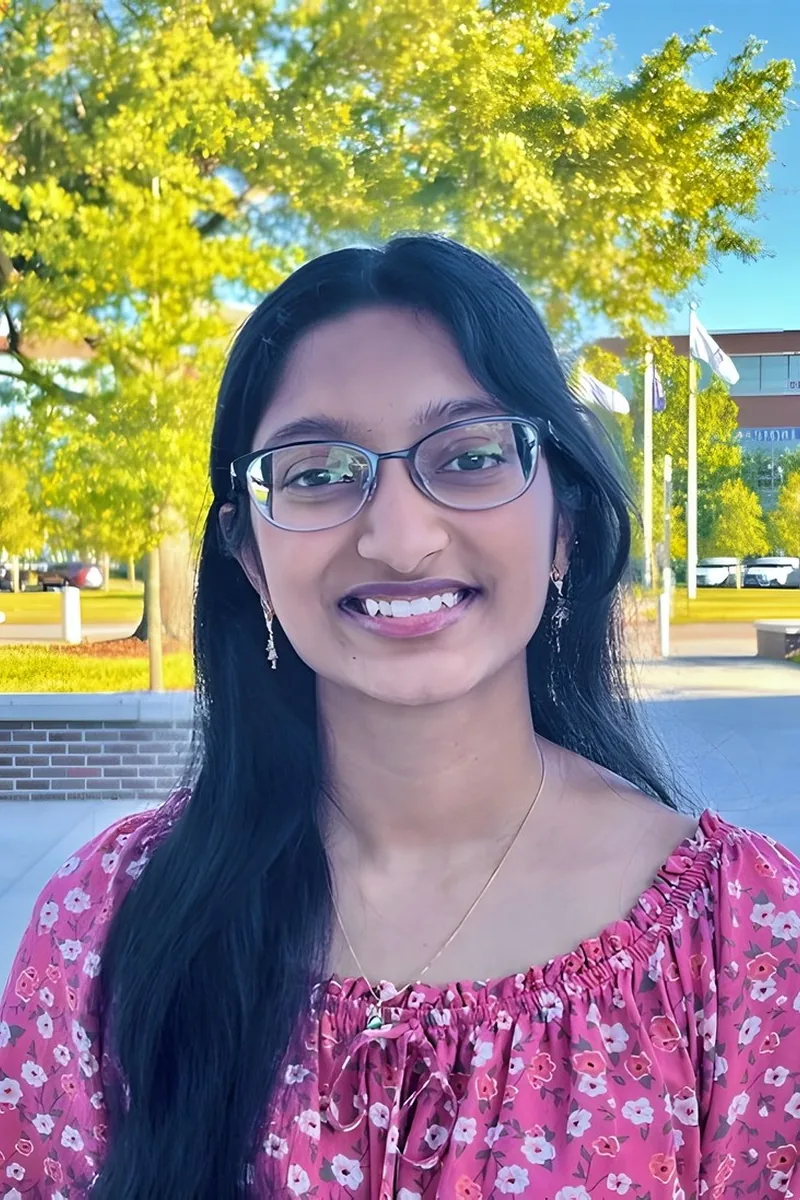
Chemical and Biomolecular Engineering at Johns Hopkins means Joshitha uses math daily as a working language — calculus, linear algebra, differential equations, statistical analysis — not as an abstract exercise. That fluency lets her teach problem-solving techniques alongside the content itself, so a student learning to set up an equation also learns how to check whether the answer makes sense. She scored a 1580 on the SAT and is rated 5.0 by students.
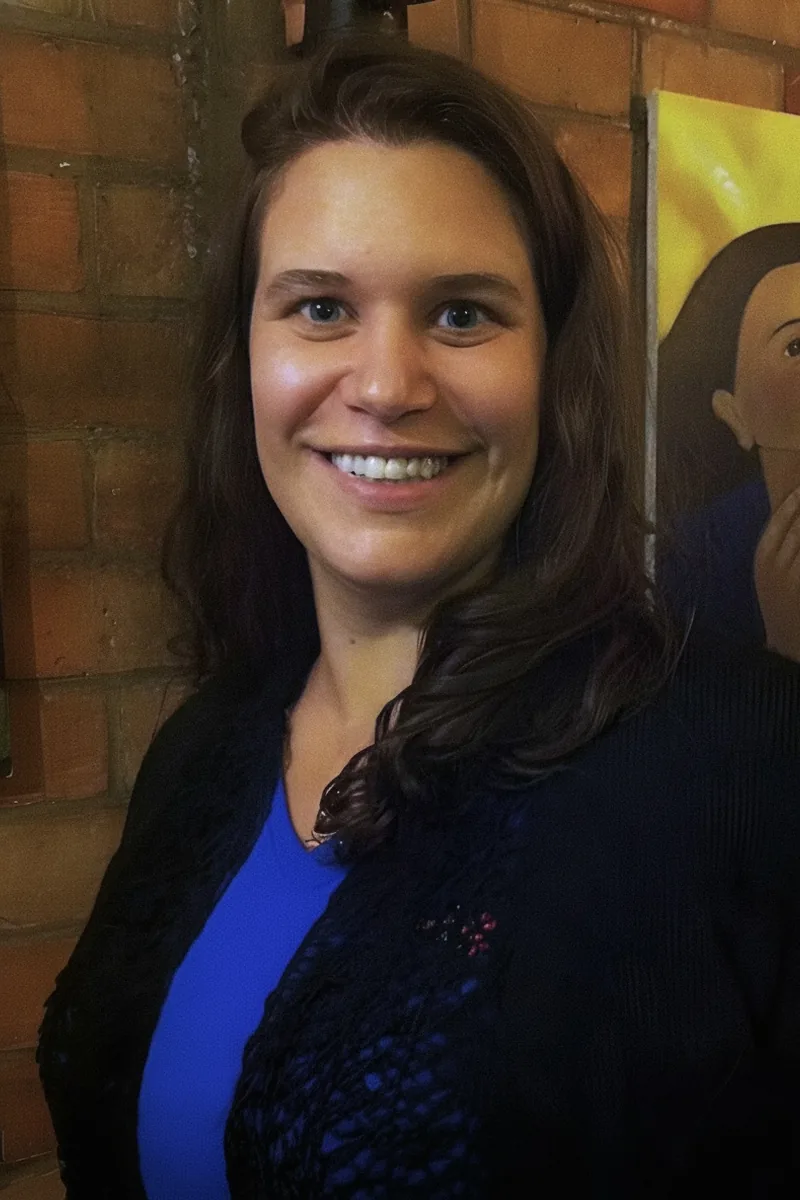
From pre-algebra fundamentals through calculus, Miriam connects math concepts to the physical problems they were invented to solve — rates of change describe how planets move, systems of equations model real circuits. Her dual engineering degrees and PhD research give her a deep bench of examples that make abstract procedures feel purposeful and concrete. Rated 5.0 by students.
From elementary arithmetic through calculus, Emerson covers the full math pipeline and knows exactly where conceptual gaps tend to hide — especially at the transitions between fractions and ratios, or arithmetic and algebraic thinking. His 1560 SAT and University of Chicago science background mean he can show students not just how to solve a problem but why a method works, which makes the next topic easier to learn.
From fractions and proportions to algebraic reasoning, Tanisha connects math concepts to practical applications so the "why" behind a formula becomes as clear as the "how." Her nursing career demanded constant mental math — unit conversions, dosage calculations, IV drip rates — and she uses those concrete examples to make abstract problems feel tangible. She's especially effective with students who've been told they're "not math people."
Whether a student is wrestling with fraction operations in pre-algebra or tackling limits in early calculus, Michael connects each new concept to the reasoning behind it rather than handing over a shortcut to memorize. His teaching spans the full math sequence — arithmetic through calculus — which means he spots exactly where a gap in earlier understanding is causing trouble in the current course.
Most students who struggle in math aren't missing talent — they're missing one or two foundational ideas that make everything downstream confusing. Daniel identifies those gaps quickly, whether the topic is fraction operations, linear equations, or introductory functions, and rebuilds understanding from the exact point where things went sideways. He holds a 4.9 rating across his subjects.
Multiple math awards throughout high school gave Krina a deep toolkit of shortcuts and problem-solving strategies that she now passes along to her students. Whether the topic is fractions, proportions, or order of operations, she pinpoints exactly where a student's reasoning breaks down and rebuilds that specific link. She holds a 5.0 rating across her tutoring subjects.
Some students need someone who can explain the same concept three different ways until one clicks. Emily teaches across the full math spectrum — from arithmetic and pre-algebra through calculus — and leans heavily on visual models and real-world examples that make abstract ideas tangible. Her 5.0 rating speaks to how well that approach lands.
Anushree scored a 1540 on the SAT, which demanded fluency across arithmetic, algebra, and data interpretation — the same core skills that K-8 math curricula build toward. She's especially experienced with elementary and middle school students who need to solidify fundamentals like fractions, ratios, and order of operations before moving on. Her approach emphasizes understanding the "why" behind each step so students aren't just memorizing procedures.
From elementary arithmetic through calculus, Priya covers the full math pipeline and knows exactly where common gaps hide — a shaky grasp of fractions that derails algebra, or weak function notation that makes precalculus feel impossible. Her 1500 SAT and 35 ACT reflect the kind of quantitative fluency that lets her diagnose a student's sticking point quickly and address the underlying concept, not just the surface-level mistake.
Because Daniel's chemistry degree required math through calculus and differential equations, he's comfortable across the full spread — from fraction operations and proportional reasoning up through derivatives and integrals. He tends to anchor abstract concepts in real-world calculations, like unit conversions or rate problems, so the math feels purposeful rather than arbitrary.
Accounting at the partner level requires constant quantitative reasoning — budgets, forecasts, variance analysis, and ratio calculations all depend on solid math fundamentals. Stephen applies that same precision to topics like algebra, fractions, percentages, and word problems, making abstract math feel purposeful by tying it to scenarios where numbers actually matter.
Samantha's biology background means she's comfortable with the quantitative side of math — ratios, data interpretation, graphing relationships — and she brings that applied perspective into tutoring. Whether a student is stuck on fractions or working through pre-algebra word problems, she connects the math to scenarios that actually make sense to a middle schooler.
From basic arithmetic through calculus and discrete math, Leo's mathematical engineering degree and master's in math education give him an unusually complete picture of how each concept feeds into the next. He pinpoints exactly where a gap in understanding started — whether that's fractions, variable manipulation, or function behavior — and rebuilds from there.
From fraction operations in pre-algebra through derivatives in calculus, Jason has tutored across the full math sequence and knows exactly where conceptual gaps tend to hide. He's particularly good at diagnosing why a student keeps getting a problem type wrong — whether it's a sign error habit, a shaky grasp of order of operations, or a misunderstanding of what the question is actually asking.
Covering everything from pre-algebra fundamentals through calculus, Danielle identifies exactly where a student's understanding gaps begin and addresses those first. She walks through word problems and abstract concepts by connecting them to concrete, step-by-step reasoning — building the kind of number sense that makes future topics easier to absorb.
From fraction operations in middle school to function analysis in precalculus, Jenna covers a wide math range and adjusts her explanations to match what each student actually needs. Her science-heavy coursework at the University of Alabama keeps her applying math daily, so she can show students where these skills matter beyond the textbook.
Between running statistical models for his genetics research and tutoring subjects from pre-algebra through graduate-level statistics, Nicholas covers an unusually wide band of math. He's especially sharp at showing students why a technique works — not just the steps — which makes each new concept easier to absorb because it connects to something they already understand.
Peyton's strength in math comes from an unexpected place — her marketing coursework required more quantitative reasoning than most people assume, from analyzing campaign metrics to interpreting consumer data models built on algebraic and statistical foundations. She's especially effective at translating word-heavy math problems into clear, solvable steps, drawing on the same close-reading instincts that make her a strong writing tutor.
From fraction operations in middle school to limits in calculus, Harrison covers a wide range of math and knows where students typically get tripped up at each level. He zeroes in on the conceptual gaps — like why dividing by a fraction means multiplying by its reciprocal, or what a negative exponent actually represents — that cause confusion to snowball in later courses. His SAT Math background also means he can connect classroom skills to test-day strategy when needed.
Ayomide's biology degree from the University of Florida meant years of quantitative coursework — biostatistics, data analysis, lab calculations — but algebra remains her favorite corner of math, the one she gravitates toward when tutoring. She's especially good at catching the specific moment a student's arithmetic confidence stops translating into algebraic thinking and rebuilding that bridge with concrete examples. Her experience tutoring middle school math gives her a sharp sense of where foundational gaps tend to hide.
A Classics background might seem unrelated to math, but Leslie also teaches algebra and calculus and understands how to break down multi-step problems into logical sequences. She's particularly effective at translating word problems into equations, a skill that draws on the same close-reading instincts she uses across all her subjects.
While math isn't Hannah's primary academic field, her English and history background means she's especially effective at demystifying word problems and application-based questions where students struggle to translate language into equations. She approaches foundational concepts in arithmetic, fractions, and pre-algebra with clear, step-by-step explanations that build genuine understanding.
I graduated from University of North Florida with a Bachelor's Degree in English and a minor in Creative Writing. My tutoring strengths are English/Writing, Math through Algebra 2, chemistry, and SAT/ACT Test Prep. I believe that students need one-on-one attention in order to succeed and would love to provide that for students to help them learn in the way that works best for them. I have been tutoring algebra/geometry, English, and chemistry for 8 years now. I pride myself in helping students to improve their grades in classes they are struggling with.
An economics degree requires living inside mathematical models — regression, optimization, probability — which means George sees math not as isolated procedures but as tools that actually explain things. Whether a student is working through fraction operations or tackling quadratic applications, he connects each concept to a concrete reason it exists. His 4.9 rating speaks to how well that approach lands.
Nutritional science at the University of Florida is math-heavy — statistics, unit conversions, metabolic calculations — so Harshadha tackles math problems with a practical mindset that connects abstract operations to real-world applications. She's especially effective at breaking down multi-step problems where students lose track of what they're solving for and why.
Testimonials
Because the right Math tutor makes all the difference.
Average Session Rating – Based on 3.4M Learner Ratings
Practice Math
Free practice tests, flashcards, and AI tutoring for Math
Nearby Math Tutors
Other Jacksonville Tutors
Related Math Tutors in Jacksonville
Frequently Asked Questions
Getting started is simple—tell us about your student's current math level, specific challenges, and learning goals. Varsity Tutors will match them with a tutor who understands their needs and learning style. Your first session is a great opportunity to discuss what's working and what isn't, so the tutor can tailor their approach from day one.
Absolutely—this is one of the most common challenges, and personalized tutoring excels at building conceptual understanding. Rather than just drilling procedures, tutors help students see the patterns and connections behind the math. By working through problems together and asking guiding questions, students develop deeper comprehension that makes new topics easier to learn.
Word problems require both reading comprehension and mathematical reasoning, and many students need support breaking them down. Tutors teach strategies like identifying key information, translating words into equations, and checking answers for reasonableness. With practice and feedback tailored to your student's approach, they build confidence and develop a systematic problem-solving process.
Yes—Varsity Tutors connects students with tutors who understand different math curricula and textbook approaches used across Jacksonville's schools. Whether your student is working with traditional textbooks, standards-based programs, or other materials, tutors can align their instruction to match what's being taught in class while reinforcing core concepts.
Math anxiety is real, and personalized tutoring can make a significant difference. Working one-on-one with a patient tutor in a low-pressure environment helps students feel safe asking questions and making mistakes—which is essential for learning. As students experience success with problems they previously found intimidating, their confidence and comfort with math naturally grow.
Showing work and explaining reasoning are critical skills, especially as math becomes more conceptual. Tutors model how to organize solutions clearly, ask students to explain their steps aloud, and provide feedback on communication. This practice helps students develop habits that improve grades on tests and assessments while deepening their own understanding.
Many students notice improvement within a few sessions, especially in confidence and understanding specific topics. Consistent progress typically becomes visible within 4-6 weeks of regular tutoring, particularly when students practice between sessions. The timeline depends on the student's starting point, the complexity of the material, and how frequently they meet with their tutor.
Pricing depends on factors like the tutor's experience level, the complexity of the material, and how frequently your student meets with their tutor. Varsity Tutors offers flexible options to fit different budgets and schedules. Contact us to discuss your needs and get a personalized quote.
Let’s find your perfect tutor
Answer a few quick questions. We’ll recommend the right plan and match you with a top 5% tutor.