Award-Winning Geometry Tutors
serving Richmond, VA
Geometry
Tutors in Richmond
Private 1-on-1 tutoring, weekly live classes for academic support, test prep & enrichment, practice tests and diagnostics, and more to elevate grades and test scores.
Based on 3.4M Learner Ratings
UniversitiesSchools & Universities
DeliveredHours Delivered
ProficiencyGrowth in Proficiency
Who needs tutoring?
No obligation. Takes ~1 minute.
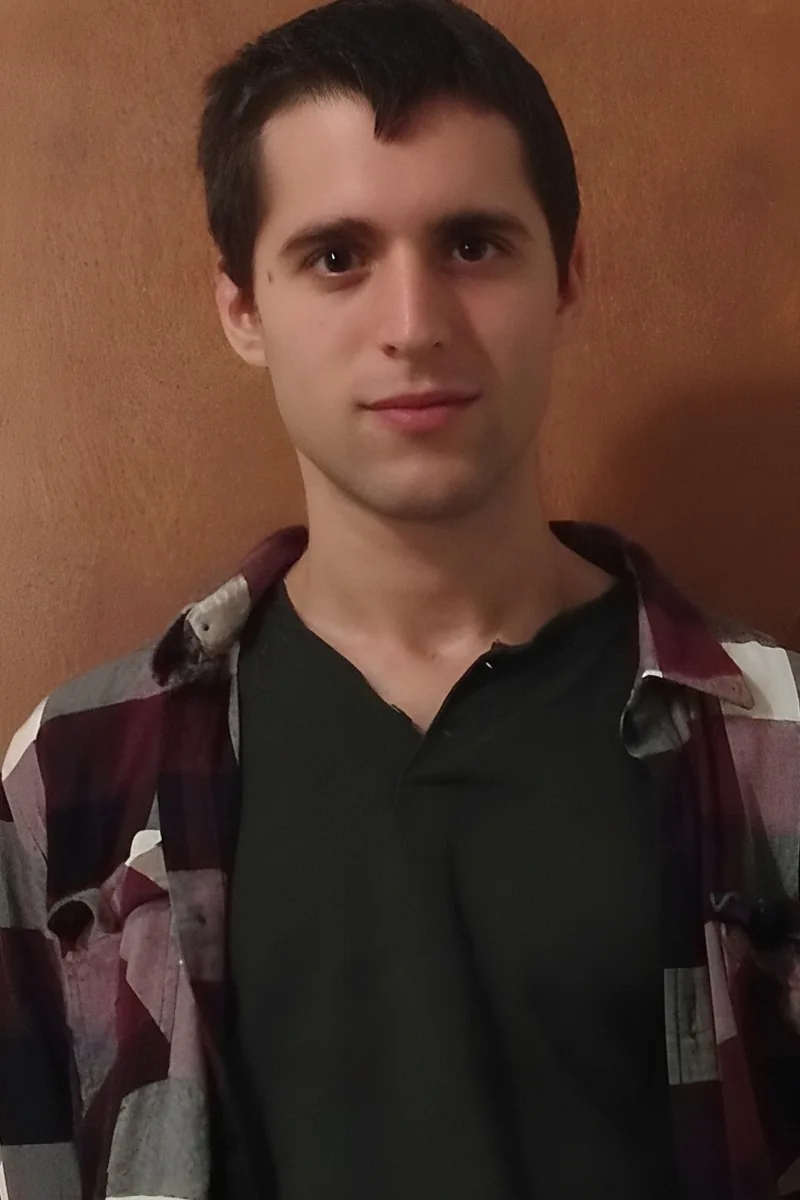
Proofs are usually the first place Geometry students hit a wall — suddenly math requires logical argumentation, not just computation. Austin's mathematics training built exactly that kind of structured reasoning, and he walks students through how to construct an argument from given information to a conclusion, step by step. He also digs into the spatial intuition behind area, similarity, and circle theorems so students aren't just memorizing postulates.
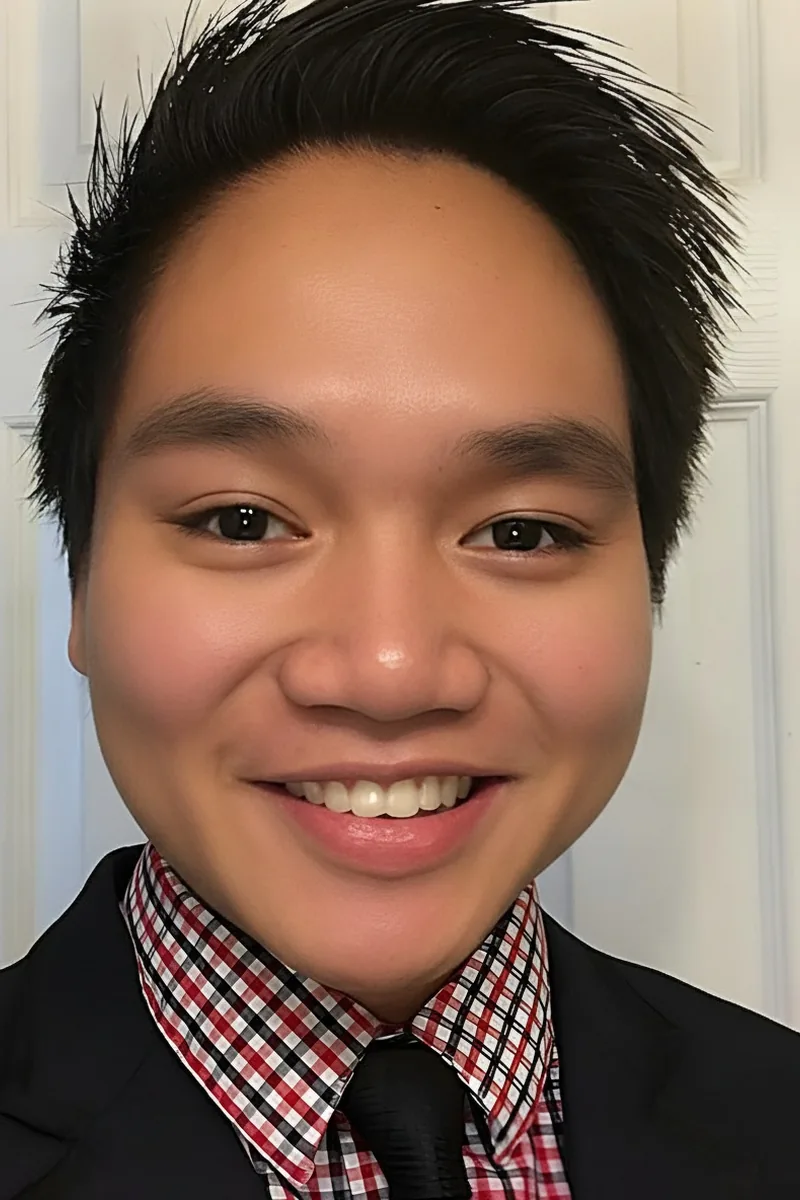
Proofs are usually the first place geometry students get stuck, because suddenly math requires constructing logical arguments instead of just computing answers. Joel's experience as adjunct faculty at VCU means he's comfortable breaking down two-column and paragraph proofs step by step, connecting each theorem back to a visual intuition that makes the logic click.
Three years as a Cell Biology and Genetics preceptor at VCU taught Anurag how to break down visual, diagram-heavy material — a skill that maps directly onto geometry, where students need to extract angle relationships and triangle properties from increasingly complex figures. He approaches proofs as mini scientific arguments, teaching students to chain together postulates and theorems the same way they'd build a logical case in a lab report.
Philosophy trains you to build airtight arguments from premises to conclusions — which is exactly what a two-column proof demands. Kyle's MA in philosophy means he approaches geometric reasoning as a logic exercise, teaching students to identify which postulates and theorems justify each step in proofs involving congruence, angle relationships, and parallel lines. Rated 4.7 by students.
Cognitive science trains you to think about how people actually process visual and spatial information — which is exactly what Megan draws on when teaching geometry concepts like transformations, symmetry, and properties of circles. She adapts her explanations to match how each student thinks, sometimes sketching unconventional diagrams or reframing a proof as a story with a beginning, middle, and end. Rated 5.0 by students.
Proofs are where most geometry students stall — the jump from calculating angles to constructing logical arguments feels like a different subject entirely. Michael breaks each proof into a chain of small, justifiable steps, drawing on the same structured reasoning his engineering training demanded for every design problem.
International Studies might seem far from geometry, but Jessica's economics minor means she's comfortable with the kind of precise, step-by-step reasoning that geometric proofs and problem-solving demand. She tackles the subject from a practical angle — helping students see how properties of circles, quadrilaterals, and geometric transformations connect rather than treating each chapter as isolated rules to memorize.
Andrea's literature background — where every essay is a structured argument built from evidence — translates surprisingly well to geometric proofs, which demand the same step-by-step logical reasoning with theorems standing in for textual evidence. She teaches students to approach two-column proofs and angle relationship problems the way they'd outline a persuasive essay: identify what you know, state what you need to show, and connect the dots. Rated 4.7 by students.
A philosophy master's degree is essentially an extended exercise in proof construction — building airtight arguments from premises to conclusions — which is exactly the skill geometry's two-column and paragraph proofs demand. Calin pairs that logical training with a math degree, so he can unpack why a particular postulate applies and how to chain it with other theorems without losing the thread of the argument. Rated 5.0 by students.
Proofs tend to be the moment geometry stops feeling intuitive for most students. Devan tackles them by teaching the logical structure underneath — how to identify given information, choose the right theorem, and build an argument step by step — so that congruence, similarity, and circle theorems start to feel like puzzles rather than obstacles.
Proofs are usually where geometry stops feeling like straightforward math and starts feeling like a logic puzzle, and that transition frustrates a lot of students. Brittany uses a question-driven approach — walking through each proof step by asking what the student already knows and what they can deduce next, rather than just demonstrating the answer. It's an effective way to build the deductive reasoning that geometry is really teaching.
Proofs are usually the part of geometry that trips students up most, because suddenly math requires written logical arguments instead of just calculations. Palak approaches geometric proofs as a skill closer to essay writing than number-crunching — each step needs a clear reason, and the whole argument needs structure. She also covers triangle congruence, circle theorems, and coordinate geometry with an emphasis on visualizing why formulas work.
Proofs are usually the first place geometry students get stuck, because they require a completely different kind of thinking than solving equations. Raksha approaches them as logical arguments — teaching students to identify given information, map relationships between angles and segments, and build each step with a clear reason attached. Her background in both math and psychology gives her a sharp sense of how to make that shift in reasoning click.
Proofs are usually the sticking point in Geometry — students can calculate an angle but freeze when asked to justify why it's congruent. Jason approaches proof-writing as a logical argument rather than a memorization exercise, drawing on the rigorous reasoning skills he built through years of math competitions and his Applied Math coursework at Stony Brook.
Architecture students don't just study geometry — they live inside it, designing structures where every angle, proportion, and spatial relationship has to hold up literally. Liza's architecture degree from Virginia Tech means she teaches concepts like similarity, transformations, and properties of polygons by connecting them to how shapes actually function in built space. That design intuition makes abstract diagrams feel concrete, especially for students who learn better when they can see the point of what they're doing.
I am a student at the University of Virginia pursuing a degree in computer science through the college of engineering. I have been tutoring since my 10th grade of high school through volunteering as well self employed tutoring. I mainly tutor in math, specifically subjects from algebra to calculus. I am passionate about helping students grasp concepts in mathematics and excel in their courses. In my free time I enjoy playing sports, reading, and spending time with friends.
Hello, I am a math and science assistant teacher for middle school special education students. I am a graduate student at George Mason University in the process of attaining my teaching license. I became a tutor because I believe it is important for students to build a strong foundation at a young age and for some students, that is done best outside of a traditional classroom. Prior to working for Varsity Tutors, I worked as an instructor at Mathnasium, and as a freelance tutor for a few years. I have experience working with students from elementary through high school, and primarily focus on math. My goal as a tutor is to give the student the understanding and confidence to be able to solve problems without assistance so I try to allow them to think through solutions on their own and provide assistance when necessary rather than simply giving answers.
Hello, I currently work in an experimental quantum optics lab and will be enrolled in a quantum computing Ph.D. program at Rice University Fall 2026. I have been an employed tutor at my college (William and Mary) and during my high school career at the Governor's School at Innovation Park for 4 years. I struggled in my first physics class at George Mason University through my Governor's school as a junior in high school, but spent hours restructuring how I learned and approached problems to reach success! Physics and math are my true passions and I cannot wait to use the valuable lessons and strategies I learned to help and support you in your academic journey. William and Mary GPA - 3.95 B.S. in Physics (honors) - 4.0 770 on math SAT 5 on AP Calculus BC exam Experience with Pearson Physics textbook and Griffiths
I have been coaching students to their best performance in math for seven years. I am fluent in all levels of math, primary, secondary, and freshman/sophomore university level. I am also fluent with the mathematics which one may find on the ACT, SAT, GRE, ASVAB, CLEP test and most standardized test. My background in Engineering also gives me a level of confidence with computer science and general sciences such as physics and chemistry. I have over a year of study in each myself. Overall, I have had much success working with students in various languages and levels of computer programming.
Proofs are usually the moment geometry stops feeling like math class and starts feeling like a logic puzzle — and that's exactly where Katie leans in. She teaches students to build arguments step by step, connecting angle relationships, triangle congruence, and parallel line properties to a chain of reasoning they can actually follow. Her hands-on tutoring style makes spatial concepts more concrete through diagrams and physical models.
Proofs are usually where geometry students panic — the logic feels nothing like the computation they're used to. Rachel spent her Dartmouth engineering program constructing logical arguments from axioms and constraints, so she's comfortable walking students through how to set up two-column and paragraph proofs while also tackling area, volume, and triangle congruence.
A biology major from Rice with a 1570 SAT, Perry approaches geometry problems the way he approaches lab work — by breaking complex diagrams into discrete, manageable pieces and reasoning through each relationship step by step. He's especially effective at teaching circle theorems and polygon properties, where students often know the individual rules but freeze when a problem layers several together. Rated 5.0 by students.
Proofs are usually where geometry goes from manageable to frustrating — suddenly students need to justify every step with logic instead of just calculating angles. Maggie approaches proof-writing as a skill closer to constructing an argument than solving an equation, a perspective sharpened by her dual background in science and the liberal arts. She also covers coordinate geometry, triangle congruence, and circle theorems with the same emphasis on reasoning over rote steps.
Proofs are usually where geometry students start to struggle, because the logic feels completely different from arithmetic. Judah approaches each proof as a puzzle, teaching students to identify the given information, spot congruence or similarity relationships, and build an argument step by step. He's patient enough to let the reasoning click on its own.
A chemistry major at Harvard, James is used to thinking in three dimensions — molecular geometries, orbital shapes, bond angles — which gives him a natural fluency with the spatial reasoning geometry requires. He tackles circle theorems and polygon properties by encouraging students to sketch, label, and reason through diagrams before jumping to formulas, building the kind of geometric intuition that makes even multi-step problems feel manageable. Rated 4.9 by students.
Three years of tutoring math across elementary through high school gave Talia a clear picture of where geometry trips students up — and it's almost always the transition from calculating answers to constructing logical arguments in proofs. Her approach leans on breaking down each proof into plain-language reasoning first, then translating that thinking into formal geometric statements about congruence, angle relationships, or parallel lines. Rated 5.0 by students.
Proofs are usually where geometry stops feeling intuitive and starts feeling arbitrary. Anthony approaches them as logical arguments rather than rote templates, drawing on his background in math and philosophy to teach students how to construct reasoning step by step. His 5.0 rating speaks to how well that approach clicks.
Dennis's research into quasicrystals and aperiodic tilings — like Penrose tilings of rhombuses — is geometry at its most fascinating, exploring how shapes fit together under unusual symmetry rules. That deep spatial intuition carries directly into high school Geometry, where he teaches proofs, congruence, and circle theorems by encouraging students to reason visually before writing anything formal.
An MIT math major doing research in Spectral Graph Theory, Enrico brings a deep comfort with spatial structures and relationships that makes geometry's core ideas — congruence, similarity, transformations — feel like natural extensions of logical thinking rather than a pile of disconnected rules. He emphasizes building intuition around definitions so that when a problem asks students to prove two triangles congruent or reason about angle bisectors, the right approach surfaces on its own. Rated 5.0 by students.
Proofs are usually the make-or-break moment in geometry, and Brian teaches students to construct them by thinking like a detective — identifying what's given, what's needed, and which theorems bridge the gap. His Caltech training in analytical reasoning sharpens how he explains congruence, similarity, and circle theorems, turning proof-writing from intimidating to methodical.
Every proof in geometry is really an exercise in building a logical argument from a set of given constraints — a skill Jeffrey sharpened through years of engineering coursework at Notre Dame and his PhD work at Rice. He teaches students to approach triangle congruence, parallel line theorems, and circle properties as puzzles with clear reasoning chains rather than formulas to memorize.
Neurobiology at Harvard meant Emma spent years interpreting complex diagrams of neural pathways and brain structures — skills that translate directly to reading the dense, multi-layered figures in geometry where you have to pull out the right angle relationship or identify similar triangles buried inside a larger shape. She tackles the subject from the logic side, treating each proof like a scientific hypothesis that needs step-by-step evidence. Rated 5.0 by students.
Testimonials
Because the right Geometry tutor makes all the difference.
Average Session Rating – Based on 3.4M Learner Ratings
Practice Geometry
Free practice tests, flashcards, and AI tutoring for Geometry
Other Richmond Tutors
Related Math Tutors in Richmond
Frequently Asked Questions
Many students struggle with the transition from algebra's computational focus to geometry's emphasis on logical reasoning and proofs. Common pain points include visualizing spatial relationships, writing formal proofs, applying theorems to word problems, and understanding why geometric properties work—not just memorizing them. Personalized tutoring helps students move beyond memorization to see the underlying patterns and connections that make geometry click.
Proofs require a different kind of thinking than most math students have practiced before, and many find them intimidating at first. Expert tutors work with students to break down the logical structure of proofs, teach strategies for identifying what information to use and in what order, and build confidence through guided practice. Over time, students develop the reasoning skills to approach unfamiliar proofs with clarity rather than anxiety.
Absolutely. Many geometry students find it hard to picture 3D shapes, understand angle relationships, or see how transformations work. Tutors use multiple strategies—drawing diagrams, using manipulatives, working through step-by-step visualizations, and connecting abstract concepts to real-world examples—to help students build spatial reasoning. With consistent practice and personalized explanation, students develop stronger visual intuition and confidence tackling geometry problems.
Word problems require students to translate language into geometric diagrams and equations—a skill that takes deliberate practice. Tutors teach students to break problems into steps: identify what's given, sketch the situation, recognize which theorems or properties apply, and solve systematically. By working through problems together and discussing problem-solving strategies, students learn to approach unfamiliar scenarios with a clear method rather than guessing.
Yes. Richmond's 8 school districts may use different geometry programs, and expert tutors are familiar with various approaches and textbooks. When you connect with a tutor, you can share your student's specific curriculum, textbook, and current topics—tutors adapt their explanations and examples to match what's being taught in class, making tutoring more relevant and reinforcing classroom learning.
Math anxiety often stems from past struggles or feeling lost in a fast-paced classroom. Personalized tutoring creates a low-pressure environment where students can ask questions, work at their own pace, and experience success on manageable problems before tackling harder ones. As students see themselves solving problems they once found impossible, their confidence grows—and that confidence carries into the classroom and onto assessments.
The first session is a chance for the tutor to understand your student's current level, learning style, and specific challenges—whether that's proofs, word problems, visualization, or something else. The tutor will likely review recent classwork or assessments, ask about areas of struggle, and work through a problem or two to see how your student approaches geometry. This foundation helps the tutor create a personalized plan for the sessions ahead.
Showing work is essential in geometry—it demonstrates reasoning and helps teachers (and tutors) understand where misunderstandings happen. Tutors model clear, organized problem-solving: labeling diagrams, stating which theorems are being used, writing out each logical step, and explaining the reasoning. By practicing this structured approach consistently, students develop the habit of clear communication, which improves both their understanding and their grades on tests and homework.
Let’s find your perfect tutor
Answer a few quick questions. We’ll recommend the right plan and match you with a top 5% tutor.