Award-Winning Discrete Math Tutors
serving San Jose, CA
Who needs tutoring?
FEATURED BY


TUTORS FROM
- YaleUniversity
- PrincetonUniversity
- StanfordUniversity
- CornellUniversity
Award-Winning Discrete Math Tutors serving San Jose, CA

Certified Tutor
9+ years
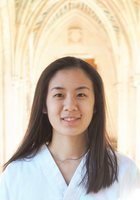
Isabella
Operations research at the PhD level is essentially applied discrete math — combinatorial optimization, graph algorithms, and logical modeling are Isabella's daily tools at Georgia Tech. Having TA'd college-level math courses at MIT before that, she knows exactly where students stumble on proof by i...
Massachusetts Institute of Technology
Bachelor of Science in Mathematics (minors in Management Science and Ancient and Medieval Studies)
Georgia Institute of Technology-Main Campus
Current Grad Student, Operations Research
Certified Tutor
5+ years
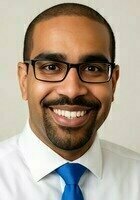
Florence
As a computer science major at Duke who has TA'd courses in databases and network architecture, Florence uses discrete math every day — from graph theory and combinatorics to logic and set operations. She unpacks topics like recurrence relations and proof techniques by tying them to the CS applicati...
Duke University
Bachelor of Science, Computer Science
Certified Tutor
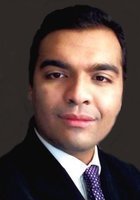
Taariq
Winning Duke's DT Stallings Award for sustained tutoring service meant Taariq spent years translating tough mathematical ideas for students who weren't yet comfortable with abstraction — exactly the skill discrete math demands when proof techniques like induction and contradiction replace the equati...
Duke University
Bachelor of Science in Mathematics
Certified Tutor
10+ years
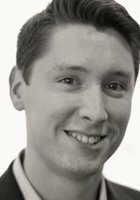
Shoaib
Combinatorics, graph theory, and logical proofs each require a different mode of thinking than the continuous math most students are used to. Shoaib's quantitative economics background gave him extensive practice with set theory, probability counting methods, and formal proof structures — exactly th...
Rutgers University-Newark
Masters, Economics
Universiti Malaya
Bachelors, Economics
Certified Tutor
10+ years
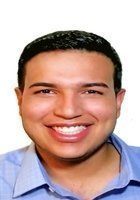
Michael
Graph theory, combinatorics, and proof techniques like induction require a different kind of thinking than the calculus track most math students are used to. Michael digs into the logic-heavy side of discrete math — truth tables, set operations, recurrence relations — with a structured approach shap...
Boston College
Bachelors, Mathematics/ Finance
Certified Tutor
9+ years
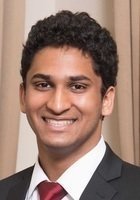
Derek
As a computer science major at Harvard, Derek uses discrete math constantly — combinatorics, graph theory, proof techniques, and recurrence relations are woven into nearly every CS course he takes. That daily exposure means he can explain concepts like mathematical induction or the pigeonhole princi...
Harvard University
Bachelor in Arts, Computer Science
Certified Tutor
8+ years
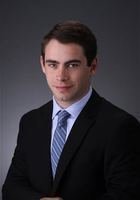
Pratik
Pre-med students often underestimate how much logical reasoning their science coursework demands — Pratik's biology degree at Cornell, paired with heavy chemistry and physics training, means he's been constructing and evaluating formal arguments across disciplines for years. He applies that same str...
Cornell University
Bachelor in Arts, Biology, General
Certified Tutor
6+ years
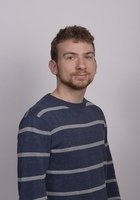
Michael
Robotics and control systems at Northwestern mean Michael lives in the world of Boolean logic, state machines, and algorithm design — discrete math concepts that show up in his engineering coursework almost daily. He grounds topics like truth tables and recurrence relations in the signal-processing ...
Northwestern University
Current Undergrad Student, Electrical Engineering
Certified Tutor
6+ years
Eamonn
Physics at the theoretical level is essentially applied discrete reasoning — Eamonn's degree in theoretical and mathematical physics means he's spent years constructing the kinds of rigorous logical arguments and combinatorial proofs that discrete math courses demand. He unpacks topics like graph th...
Trinity College Dublin
Bachelor of Science, Theoretical and Mathematical Physics
Certified Tutor
7+ years
Three engineering degrees plus a specialization in applied mathematics mean Rahi has logged serious time with the combinatorial and logical structures that underpin discrete math — particularly counting techniques and recurrence relations that show up repeatedly in applied settings. He approaches pr...
Princeton University
Engineer
Nearby Discrete Math Tutors
Other San Jose Tutors
Related Math Tutors in San Jose
Frequently Asked Questions
Discrete math studies mathematical structures that are distinct and separate—like logic, sets, graphs, and combinatorics—rather than continuous values. It's foundational for computer science, programming, cryptography, and algorithm design. Many students in San Jose's tech-focused schools encounter discrete math in high school or early college coursework, and it requires a different way of thinking than algebra or calculus, focusing on logical reasoning and pattern recognition rather than computation.
Students often struggle with the shift from procedural math (following steps) to conceptual understanding (understanding why logic works). Common pain points include proof-writing, understanding graph theory concepts, combinatorics word problems, and seeing how abstract ideas connect to real-world applications. Many students also find it challenging to organize their thinking when problems don't have a single "right method"—discrete math rewards flexibility and creative problem-solving.
Personalized 1-on-1 instruction allows tutors to slow down on conceptual foundations—like understanding why a proof works, not just memorizing steps—and help you see patterns and connections between topics. Tutors can also tailor their approach to your learning style, whether you need visual explanations of graphs, step-by-step proof strategies, or real-world applications to make abstract concepts stick. This individualized attention is especially valuable in discrete math, where students often need to "think differently" than in other math courses.
Proof-writing is a skill that develops through guided practice and feedback. Tutors help you understand proof structure (what you're given, what you need to show, and logical steps in between), recognize common proof strategies (direct proof, proof by contradiction, induction), and learn how to write clearly so your logic is easy to follow. Working through proofs with a tutor also builds confidence—you'll see patterns emerge and develop intuition for which approach works best in different situations.
Your first session is about understanding where you are and what you need. Tutors will ask about your current coursework, specific topics that feel confusing, and your learning goals—whether you're preparing for an exam, catching up on fundamentals, or diving deeper into a particular area like graph theory or combinatorics. You'll likely work through a problem or two together so the tutor can see your thinking process and identify where conceptual gaps might be, then create a personalized plan moving forward.
In discrete math, the reasoning matters as much as the answer. Showing your work demonstrates your logical thinking, helps you catch mistakes, and makes it easier for tutors and teachers to give targeted feedback. Many discrete math courses—especially in college—grade heavily on clear explanations and proofs, not just final answers. Tutors help you develop the habit of explaining your reasoning step-by-step, which also strengthens your own understanding of why concepts work.
Look for tutors with strong backgrounds in discrete math, computer science, or advanced mathematics, and ideally experience teaching the specific curriculum or textbook your course uses. It's also valuable to find someone who can explain abstract concepts clearly and help you develop problem-solving strategies, not just work through practice problems. Varsity Tutors connects you with expert tutors who have proven experience in discrete math and can adapt their teaching to your learning style and goals.
Yes. Discrete math courses vary by school and textbook—some emphasize logic and set theory, others focus on graph theory or combinatorics, and many blend multiple topics. Experienced tutors are familiar with different approaches and can work with your specific curriculum, whether your course uses Rosen, Susanna Epp, or another standard text. If you share your syllabus or textbook with a tutor, they can align their instruction to match your course's structure and pacing.
Connect with Discrete Math Tutors in San Jose
Get matched with local expert tutors