Award-Winning IB Chemistry Tutors
serving San Diego, CA
Who needs tutoring?
FEATURED BY


TUTORS FROM
- YaleUniversity
- PrincetonUniversity
- StanfordUniversity
- CornellUniversity
Award-Winning IB Chemistry Tutors serving San Diego, CA

Certified Tutor
James
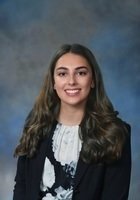
The IB Chemistry curriculum weaves together quantitative problem-solving and theoretical explanation in a way that rewards deep understanding over rote memorization — especially on Paper 2's extended-response questions. James brings a Harvard chemistry degree and real lab experience to his tutoring,...
Harvard University
Bachelor in Arts, Chemistry
Certified Tutor
8+ years
Amanda
IB Chemistry's internal assessment alone can make or break a student's score, and that's before tackling the breadth of topics from atomic structure to organic chemistry to energetics. Amanda's background in biology and medicine means she naturally connects chemical concepts to their applications — ...
The University of Alabama
Bachelor of Science, Biology, General
Baylor College of Medicine
Doctor of Medicine, Public Health
Certified Tutor
Shawn
Shawn's M.S. in Chemistry means he's worked through the advanced theory behind every IB topic — from bonding models and redox processes to the organic mechanisms that HL students find most demanding — at a level well beyond what the syllabus requires. That depth lets him explain *why* a concept work...
University of California Los Angeles
Master of Science, Chemistry
Certified Tutor
Emerson
Periodic trends, VSEPR theory, redox reactions — IB Chemistry covers an enormous range, and Emerson treats each topic as a building block for the next rather than an isolated unit to memorize. He completed IB coursework himself and understands how the program's internal assessments and exam papers r...
University of Chicago
Bachelor of Science, Biology and Psychology

Certified Tutor
Matthew
Lab work at Columbia has Matthew performing titrations, analyzing reaction yields, and troubleshooting chemical protocols on a regular basis — exactly the kind of applied chemistry knowledge that strengthens IB exam performance. He digs into stoichiometry, periodicity, and organic chemistry with an ...
Washington University in St. Louis
Bachelor in Arts

Certified Tutor
Eric
Eric holds a master's in inorganic chemistry, which means topics like periodicity, bonding models, and transition metal chemistry — areas that trip up many IB students — are squarely in his wheelhouse. He teaches the underlying "why" behind trends and reactions so that when an IB Paper 2 question as...
University of Delaware
Master of Science, Inorganic Chemistry
University of Notre Dame
Bachelor of Science

Certified Tutor
9+ years
Brian
IB Chemistry's higher-level topics — energetics, equilibrium, redox — demand the kind of quantitative reasoning Brian sharpened through his Caltech science and engineering training. He approaches the IB curriculum by connecting chemical concepts to their underlying math, so students can tackle both ...
University of California-Santa Cruz
PHD, Technology & Information Mgmt (Indef. deferred)
California Institute of Technology
Bachelors in Economics and Computer Science

Certified Tutor
3+ years
Yu
Growing up in Malaysia's education system before studying at Penn and Harvard gave Yu a firsthand understanding of the international rigor IB programs demand — especially the way IB Chemistry blends quantitative problem-solving with structured scientific communication. She unpacks tricky areas like ...
Harvard University
Masters in Education, Education Policy Analysis
Bloomsburg University of Pennsylvania
Bachelor of Science, Political Science and Government
University of Pennsylvania
Undergraduate studies (attended)

Certified Tutor
6+ years
William
The IB Chemistry curriculum layers conceptual depth with data analysis and extended-response questions that trip up students who only studied the content. William's familiarity with IB assessment structures means he can coach students on how to earn marks on Paper 2 explanations and link topics like...
Brown University
Bachelor in Arts

Certified Tutor
10+ years
Ben
Between redox balancing, enthalpy cycles, and equilibrium calculations, IB Chemistry demands more mathematical confidence than most students expect from a science course. Ben pairs his Penn math training with IB Chemistry experience to tackle the quantitative problem types that tend to cost students...
University of Pennsylvania
Bachelors, Mathematics
Nearby IB Chemistry Tutors
Other San Diego Tutors
Related Science Tutors in San Diego
Frequently Asked Questions
IB Chemistry follows a rigorous, globally standardized curriculum that emphasizes deeper conceptual understanding over memorization. While standard chemistry courses focus on core concepts, IB Chemistry requires students to master the scientific method, conduct hands-on lab work, and apply theoretical knowledge to real-world problems. The course also expects students to understand the "why" behind chemical reactions and develop critical thinking skills that go beyond plugging numbers into formulas.
Many San Diego students find the transition to IB Chemistry challenging because it demands more independent thinking and requires connecting abstract concepts like atomic structure and bonding to observable phenomena. This is where personalized tutoring can help bridge that gap, especially during the first semester when many students are adjusting to the IB's higher expectations.
Abstract chemistry concepts are difficult because they can't be seen or touched directly. Expert tutors use multiple visualization strategies—molecular models, animations, diagrams, and real-world analogies—to make these concepts tangible. For example, bonding can be explained through energy diagrams and electron configuration models, while equilibrium can be understood through concrete examples like a seesaw or a bathtub with water flowing in and out at equal rates.
Personalized tutoring allows tutors to identify which visualization methods work best for your learning style. Rather than a one-size-fits-all explanation, a tutor can spend time exploring your misconceptions and rebuilding your understanding from the ground up, which is especially valuable for IB Chemistry's emphasis on deep conceptual mastery.
IB Chemistry's internal assessment and practical exams test both your lab skills and your ability to analyze experimental data scientifically. Success requires understanding not just how to perform an experiment, but why each step matters, how to control variables, and how to interpret results critically. Many students struggle with the formal write-up requirements—communicating their methodology, results, and analysis in the precise way IB examiners expect.
Tutors experienced with IB Chemistry can guide you through designing experiments, identifying sources of error, and presenting data analysis that demonstrates scientific reasoning. They can also help you practice timed practicals and review past papers to understand what examiners are looking for, which significantly improves both your confidence and your scores on these crucial components.
IB Chemistry typically requires 5-7 hours of study per week for most students, though this varies depending on your background and the pace of your course. Many San Diego students benefit from connecting with a tutor early in the course—ideally during the first semester—because early intervention prevents misconceptions from building up. However, tutoring is valuable at any point: at the beginning to establish a strong foundation, in the middle to clarify challenging topics like thermodynamics or kinetics, or near the end to prepare for final exams and the internal assessment.
If you're finding yourself confused during lessons, struggling to keep up with problem sets, or unsure how to approach the lab work, those are all signs that personalized instruction could help you save time and improve your understanding more efficiently than solo studying.
Most IB Chemistry students find thermodynamics, equilibrium, kinetics, and organic chemistry most challenging because they require both mathematical problem-solving and conceptual understanding. Thermodynamics and equilibrium are abstract—you can't "see" entropy or a reaction at equilibrium—which makes them difficult to visualize. Kinetics involves rate laws and reaction mechanisms that require careful interpretation of experimental data. Organic chemistry demands memorization of reaction pathways alongside understanding the underlying mechanisms.
Rather than memorizing formulas and reactions, effective tutoring focuses on building intuition around these topics. Tutors help you understand how temperature affects reaction rates, why some reactions reach equilibrium while others go to completion, and how molecular structure determines reactivity in organic compounds. With personalized guidance tailored to your learning gaps, these challenging topics become manageable and even interesting.
Finding a tutor with genuine IB Chemistry expertise is crucial because the curriculum and exam format are different from regular AP or honors chemistry. You want someone who understands the IB's emphasis on experimental design, data analysis, and scientific communication, not just content knowledge. Varsity Tutors connects you with expert tutors who specialize in IB Chemistry and understand exactly what San Diego schools require.
When selecting a tutor, look for experience with the IB curriculum specifically, familiarity with the command terms used in IB exams ("explain," "deduce," "evaluate"), and ideally someone who has experience helping students with the internal assessment and practical components. The right tutor will tailor their teaching to your school's specific IB Chemistry course and your individual learning needs.
IB Chemistry tests your ability to apply knowledge rather than simply recall facts, which means pure memorization isn't enough. You need to understand electron configurations, bonding theories, and reaction mechanisms well enough to predict how unknown substances will behave. However, some foundational knowledge—like the periodic table trends, common functional groups, and key equations—does require memorization to be efficient on exams.
The best approach is to memorize strategically while building deep understanding of the principles behind those facts. A tutor can help you identify what truly needs to be memorized versus what you should understand conceptually. By explaining the "why" behind each concept and showing you how to derive formulas or predict patterns from first principles, tutoring transforms rote memorization into meaningful learning that actually helps you solve problems faster on the exam.
Connect with IB Chemistry Tutors in San Diego
Get matched with local expert tutors