Award-Winning GED Math Tutors
serving San Diego, CA
Award-Winning
GED Math
Tutors in San Diego
Private 1-on-1 tutoring, weekly live classes for academic support, test prep & enrichment, practice tests and diagnostics, and more to elevate grades and test scores.
Based on 3.4M Learner Ratings
UniversitiesSchools & Universities
DeliveredHours Delivered
ProficiencyGrowth in Proficiency
Who needs tutoring?
No obligation. Takes ~1 minute.
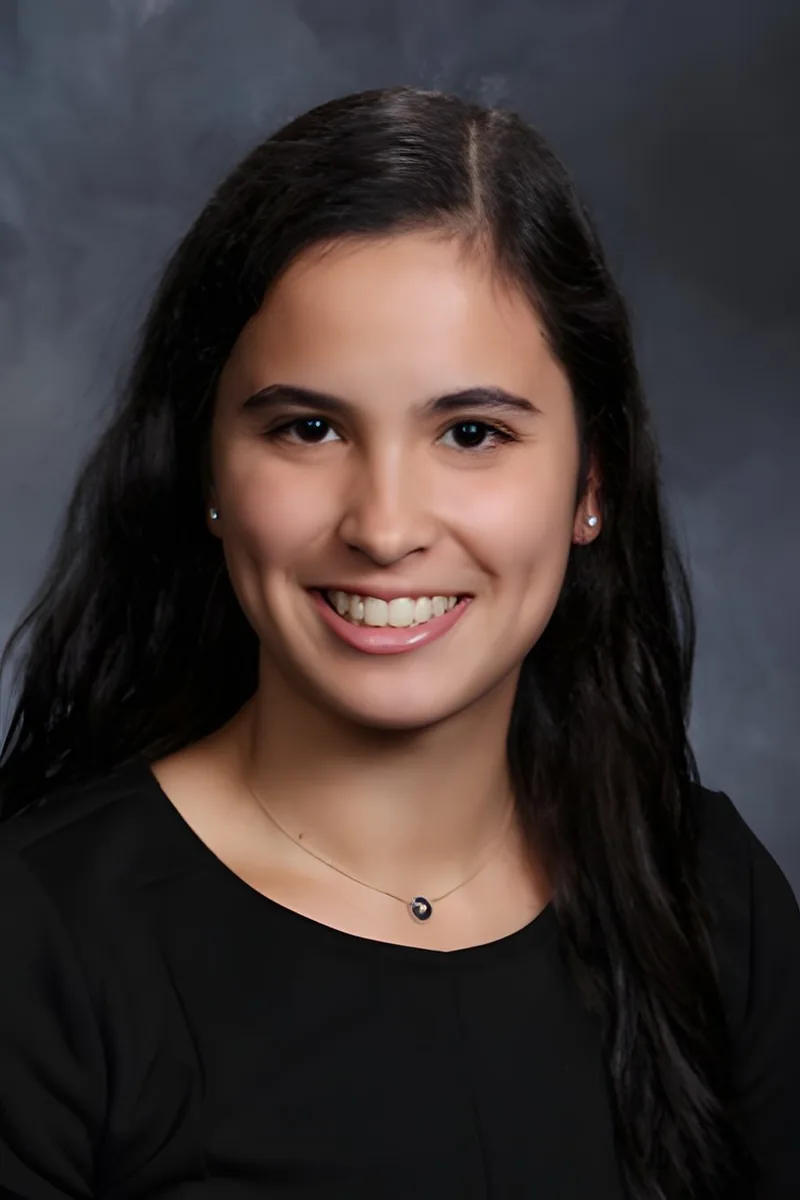
An MIT math degree and current PhD work in Operations Research at Georgia Tech mean Isabella has spent years breaking complex quantitative problems into structured, solvable steps — exactly the skill that turns the GED's mix of arithmetic, algebra, and geometry from overwhelming to manageable. She zeroes in on the specific gaps holding a test-taker back, whether that's setting up equations from word problems or working confidently with fractions and percentages under time pressure. Rated 5.0 by students.

Earning a 35 ACT as a magna cum laude Duke graduate means Frances has the quantitative chops to cover every GED Math topic, but her psychology training is what sets her apart — she recognizes when test anxiety or a shaky self-concept is doing more damage than any actual skills gap. She tackles the fundamentals like percentages, basic algebra, and graph reading with clear, low-pressure explanations designed for adults who haven't touched math in years.
Chemical engineering coursework at Georgia Tech drills exactly the kind of math the GED covers — algebra, proportional reasoning, interpreting graphs — except at a much higher intensity, so Aimee can break those concepts down to their simplest moving parts without losing accuracy. She's spent three years tutoring students at different levels, which means she's used to spotting whether a wrong answer traces back to a misread word problem or a shaky grasp of fractions. Rated 4.9 by students.
Earning a GED math score requires solid command of topics like proportional reasoning, basic algebra, and graph interpretation — areas Wamweni covered extensively as both a math teacher and tutorial program manager. She structures sessions around the specific question types the GED uses, including drag-and-drop and fill-in-the-blank formats that trip up students used to multiple choice. Her teaching background means she's skilled at rebuilding confidence alongside content knowledge.
Passing the GED Math section often comes down to comfort with a handful of core skills: proportional reasoning, basic algebra, and reading graphs. Alex teaches each of these by tying them to real-world scenarios — splitting a bill, calculating a discount, reading a pay stub — so the math feels practical rather than abstract. His 4.8 rating speaks to how well this approach lands with students at every starting level.
Scoring a 35 on the ACT means Mackenzie has already proven she can handle timed, high-stakes math — and the GED covers much of the same territory at a more accessible level, from basic algebra and proportions to geometry and data graphs. Her economics coursework at Northwestern keeps her fluent in the applied, real-world math that GED questions tend to emphasize, and she breaks each problem into a clear sequence so test-takers know exactly which operation to reach for and when.
Preparing for GED Math means locking down core skills — operations with fractions and decimals, basic algebra, proportional reasoning, and reading data from tables and graphs. Emily builds each concept step by step, making sure the underlying logic is solid before moving to practice problems. Her science background at Penn required heavy quantitative coursework, so she's comfortable translating math into real-world contexts that make the material easier to retain.
Every GED Math question Christine tackles with a student ties back to a concrete skill — whether that's solving linear equations, interpreting coordinate plane graphs, or working through word problems involving ratios and percentages. Her biomedical engineering training at Johns Hopkins means she's fluent in math from basic arithmetic through algebra and geometry, and she rated 5.0 across her tutoring sessions.
Teaching middle school math in Chicago Public Schools, Elizabeth sees every day which foundational skills — integer operations, fractions, proportional reasoning — adults need to rebuild when they've been away from math for years. She uses that classroom instinct to zero in on the specific gaps that cost the most points on the GED, then walks through each problem type until the process feels automatic rather than intimidating. Her 34 ACT and 5.0 tutoring rating back up what her students already know: she makes the math stick.
From basic operations and fractions through algebraic reasoning and geometry, the GED Math section covers a wide band of concepts that many students haven't touched in years. Badeel identifies which specific skill gaps are costing the most points and targets those first, building confidence with real GED-style word problems. His 5.0 rating speaks to an approach that makes returning to math feel manageable rather than overwhelming.
Research at NASA Ames and graduate work at Stanford demanded constant quantitative reasoning — statistical analysis, unit conversions, modeling biological data — skills that map cleanly onto the arithmetic, algebra, and graph interpretation the GED covers. Ryan uses that scientific problem-solving instinct to teach test-takers how to break multi-step questions into smaller, manageable pieces, especially when word problems disguise straightforward math behind unfamiliar phrasing. Rated 5.0 by students.
The GED Math test covers everything from basic operations and fractions through linear equations, quadratic functions, and geometric reasoning — a huge range that can feel overwhelming. Elliot narrows the prep by identifying which concept clusters a student already handles and which need targeted work, then builds fluency in the specific areas where points are most available.
Peter's journalism degree and Masters in English Education might not scream 'math tutor,' but years of teaching across subjects from pre-algebra through calculus mean he knows exactly where adult learners get tripped up — especially on the kind of reading-heavy word problems the GED loves to throw in. He treats those questions like editing a messy draft: strip out the extra information, find the core equation hiding underneath, and solve what's actually being asked.
Covering everything from basic arithmetic and fractions to linear equations and data interpretation, the GED Math test rewards comfort with fundamentals more than advanced techniques. Rithi has taught math at every level from elementary through college, so she can pinpoint exactly where a concept broke down — whether it's setting up proportions, reading coordinate graphs, or translating word problems into equations — and rebuild from there.
From algebraic equations to data interpretation to geometry, the GED Math test covers ground that Dillon navigates every day as a high school math teacher with an engineering background. He unpacks word problems by teaching students to translate real-world scenarios into mathematical expressions — a skill his engineering training made second nature. Each session targets the specific question types a student finds most challenging rather than reviewing material they've already mastered.
Medical school entrance exams and a pre-med curriculum at Notre Dame kept Caroline drilling the same quantitative skills the GED covers — proportions, algebraic setups, data interpretation — long after most people stop thinking about them. She breaks each problem into a clear sequence of smaller steps, especially when test-takers freeze on word problems that bury straightforward math behind unfamiliar language. Rated 5.0 by students.
Tutoring Duke athletes through calculus and engineering coursework taught Miriam how to rebuild rusty math skills quickly — the same challenge most GED test-takers face when returning to fractions, proportions, and basic algebra after years away. Her PhD in planetary science means she's spent decades translating raw numbers into meaning, and she applies that same instinct to demystify the GED's graph-interpretation and multi-step word problems. Rated 5.0 by students.
I am graduated from Penn State University in Industrial Engineering in 2017. I've tutored ever since I was in high school, and I love helping people! I like to help my students understand math (and other topics) instead of just doing it blindly. My goal is to help my students improve their math (and other topics) and build skills that will help them find learning easier in the future! Fun fact, I used to work for Disney and I like to salsa dance!
Cornell's computer science program keeps Ryan immersed in the kind of logical, step-by-step problem solving that translates directly to GED Math — especially the algebra and data interpretation questions where knowing how to structure your approach matters more than raw calculation speed. He breaks each problem into a clear sequence of operations, teaching test-takers to spot what a question is actually asking before getting lost in the numbers. Rated 4.8 by students.
From basic operations and fractions through algebraic reasoning and geometry, GED Math covers a wide range — but the questions follow predictable patterns. Theresa isolates the specific problem types that appear most often and drills the underlying concepts so students build real number sense instead of memorizing steps they'll forget under pressure. She holds a 5.0 rating from past students.
Between a biomedical engineering degree and a mechanical engineering PhD, Jared has spent years doing the kind of applied math — algebra, proportions, geometry, unit conversions — that the GED packages into everyday scenarios. He breaks each problem down to its underlying operation so test-takers learn to recognize what a question is really asking, even when the wording tries to make simple arithmetic look complicated.
Currently pursuing a graduate degree in Statistics while holding a 35 ACT and 1590 SAT, Evan has the quantitative fluency to make GED Math topics click — but his sociology background is what shapes how he teaches them. He approaches each concept, from proportion setups to basic algebraic manipulation, through real-world contexts that give adult learners a reason to care about the numbers instead of just crunching them. Rated 5.0 by students.
Puja's biological sciences degree from Carnegie Mellon kept her deep in quantitative work — data analysis, proportional reasoning, statistical modeling — so the arithmetic and algebra the GED tests are second nature to her. She's especially sharp at catching the small computational habits, like mishandling negative signs or rushing through fraction operations, that quietly tank scores before a test-taker even reaches the harder questions. Rated 4.7 by students.
Covering algebra, geometry, data analysis, and basic quantitative reasoning, the GED Math exam rewards students who understand underlying concepts rather than those who've memorized isolated procedures. Shawn tackles each domain by connecting it to practical scenarios — unit conversions, percentage calculations, slope as a rate of change — so the math feels less abstract. His experience ranges from 6th grade fundamentals through college-level coursework, which means he can meet the wide skill range GED candidates often bring.
Most adults sitting for the GED haven't seen a math classroom in years, and Sarah's Master's in Secondary Education gave her specific training in meeting that challenge — rebuilding comfort with operations, proportions, and basic algebra in a sequence that actually sticks. She's taught math at every level from first grade through college, so when a test-taker stumbles on something like signed numbers or setting up an equation, she can trace the confusion back to its root and clear it up fast. Rated 5.0 by students.
Years of actuarial work gave David a daily habit of translating real-world scenarios into arithmetic, algebra, and percentage calculations — which is essentially what the GED Math section asks test-takers to do under a time limit. His Vanderbilt math degree means he can trace every GED topic back to its fundamentals, but his real edge is showing adults how the math they already use (budgeting, estimating, comparing prices) connects directly to the problems on the test. Rated 5.0 by students.
Before pivoting to social sciences, Tesa went through a gifted math and science curriculum and was published nationally in neurosurgery research — so the quantitative reasoning behind GED Math topics like basic algebra, proportions, and data interpretation is deeply familiar ground. Her doctoral work in public policy at Saint Louis University keeps her fluent in statistical thinking, and she applies that analytical clarity to help adult learners rebuild confidence with the specific arithmetic and algebra skills the test actually targets. Holds a 5.0 rating.
Most GED test-takers haven't seen algebra or geometry in years, so Drisana starts by pinpointing exactly which foundational skills — whether it's operations with negative numbers, setting up ratios, or reading coordinate planes — need rebuilding before layering on test strategy. Her applied mathematics degree and a perfect 1600 SAT mean the content itself is second nature, freeing her to focus entirely on making each concept click. Rated 5.0 by students.
Scoring a 1580 SAT means Varun has the arithmetic, algebra, and data reasoning skills the GED tests cold — but his Government and Film Studies background is what makes him effective at unpacking the reading-heavy word problems that trip up most test-takers. He treats those questions like close readings, teaching people to isolate the actual math buried under extra context before solving anything. Rated 4.8 by students.
Passing the GED Math section often comes down to comfort with a handful of core skills: operations with fractions and decimals, basic algebraic equations, and interpreting graphs. Gabriela zeroes in on whichever of these areas is weakest and builds fluency through repetition and clear explanations, keeping the focus practical and confidence-building.
Pursuing a physics PhD at Carnegie Mellon means Madeline solves algebra, geometry, and proportional reasoning problems daily — the same toolkit the GED Math section tests, just without the physics jargon wrapped around it. She's especially effective at walking through multi-step problems involving formulas and basic graphing, since her teaching assistant experience taught her to spot exactly where a calculation goes sideways. Rated 4.8 by students.
Eight years of tutoring students from elementary through high school means Emily has traced the full arc of how math skills build — and where the gaps form that later trip up GED test-takers on questions involving fractions, percentages, and basic algebraic reasoning. Her anthropology and social work training gives her a knack for reading people, so she picks up quickly on whether someone needs a conceptual explanation or just a cleaner method for setting up the problem. Rated 4.9 by students.
Passing the GED Math section comes down to confidence with core skills: fractions, percentages, basic algebra, and reading graphs accurately. Alexandra approaches each of these building blocks methodically, connecting the math to concrete situations so the reasoning sticks. Her 4.9 rating speaks to how well that structured, patient approach works.
The GED math section covers a wide spread, from basic algebra and graphing to geometry and data analysis, and Gabriela has taught every one of those topics in a classroom setting. Her Master's in Math Education gives her a structured approach to identifying which skill gaps are holding a student back and closing them efficiently. She holds a 5.0 rating from the students she's tutored.
Passing the GED Math section requires solid command of arithmetic, basic algebra, graphs, and geometry — topics that Nicholas can break down clearly without overcomplicating them. His approach zeroes in on the specific gaps holding a student back, whether that's working with fractions, interpreting data tables, or setting up word problems correctly.
Having studied physics at the undergraduate level, Nupur built the kind of hands-on comfort with arithmetic, algebra, and geometry that the GED Math section demands — and she knows how to unpack those skills without the physics jargon. She's especially effective at teaching adults how to pull the math out of wordy, real-world-style questions, breaking each one into a clear sequence of operations before solving. Rated 5.0 by students.
Theodora's biology and biotechnology training at Johns Hopkins and Emory meant constant work with quantitative reasoning — dilution calculations, statistical analysis, interpreting experimental data — all built on the same arithmetic and algebra foundations the GED tests. She uses that science-grounded fluency to walk test-takers through the logic behind formulas and word problems so the steps make sense rather than feel like guesswork. Rated 5.0 by students.
Having earned a PhD in Inorganic Chemistry, Andrew spent years working through the exact quantitative reasoning the GED tests — algebra, proportions, basic geometry — as daily tools rather than abstract exercises. He breaks multi-step problems into their underlying arithmetic so test-takers can spot what's actually being asked, even when a question buries a simple calculation inside unfamiliar context.
The GED Math section leans heavily on practical arithmetic and algebra — exactly the areas Sr has taught across levels from pre-algebra through college math. A psychology background also sharpens her read on what's really tripping someone up, whether it's a genuine gap in fraction operations or just the panic that hits when a word problem looks longer than expected. Rated 4.8 by students.
Twenty years of teaching math at Massachusetts colleges means Louis has watched adults at every skill level wrestle with the same sticking points the GED exploits — sign errors in algebra, shaky fraction arithmetic, freezing on word problems that require two or three steps. He ties each concept to a real-world scenario so the reasoning behind a formula is as clear as the formula itself, which makes the difference between memorizing a procedure and actually trusting your answer on test day. Rated 4.8 by students.
Testimonials
Because the right GED Math tutor makes all the difference.
Average Session Rating – Based on 3.4M Learner Ratings
Practice GED Math
Free practice tests, flashcards, and AI tutoring for GED Math
Nearby GED Math Tutors
Other San Diego Tutors
Related Test Prep Tutors in San Diego
Frequently Asked Questions
The GED Math test focuses on four main content areas: quantitative reasoning (operations with whole numbers, fractions, decimals, and percents), algebraic problem solving (expressions, equations, and inequalities), geometric and spatial reasoning (shapes, volume, area, and the Pythagorean theorem), and data analysis and probability (graphs, tables, and statistical concepts). The test emphasizes applying these skills to real-world scenarios rather than just memorizing formulas. For students in San Diego preparing for the GED, understanding how these concepts connect and when to apply them is just as important as computational accuracy.
Word problems require breaking down the scenario, identifying what you're solving for, and selecting the right mathematical approach—skills that improve significantly with guided practice. Tutors help you develop a consistent strategy: read carefully for key numbers and relationships, translate words into mathematical expressions, solve systematically, and check if your answer makes sense in context. Many students find that working through dozens of problems with feedback on their reasoning—not just their final answers—builds the confidence and pattern recognition needed to tackle unfamiliar problems on test day.
The GED Math test is split into two parts: Part 1 allows a calculator (typically the TI-30XS MultiView), while Part 2 is non-calculator. This means you need to be comfortable with both mental math strategies and calculator efficiency. For students in San Diego preparing for the GED, tutoring can help you know which approach is fastest for different problem types—when estimation works, when you need precision, and how to use your calculator effectively without over-relying on it. Practice with the actual calculator model approved for the test is especially valuable.
Math anxiety often stems from past struggles, negative experiences, or feeling rushed—all things that personalized tutoring directly addresses. Working 1-on-1 with a tutor creates a judgment-free space to ask questions, slow down, and rebuild confidence at your own pace. Tutors can show you that making mistakes is part of learning, help you understand concepts you previously found confusing, and celebrate your progress along the way. Many students discover that once they understand the 'why' behind math concepts—not just the steps—their anxiety decreases and their performance improves.
Multi-step equations require a systematic approach: isolate the variable by performing inverse operations in the correct order, keeping the equation balanced on both sides. The key is showing your work clearly at each step so you can catch errors and understand where you went wrong if needed. Tutors help you develop organizational strategies—like writing out each operation, circling what you're solving for, and checking your solution—that make complex equations manageable. Many students benefit from practicing 15-20 equations with feedback, which builds the fluency and confidence to handle any equation variation on test day.
Graphing and coordinate plane skills appear throughout the GED Math test, particularly in the algebraic problem-solving section. You'll need to interpret graphs, plot points, understand slope and linear equations, and sometimes solve problems using graphical representations. For students in San Diego preparing for the GED, tutoring can help you move beyond memorizing formulas to truly understanding what a graph shows and why certain relationships appear the way they do. Visual learners especially benefit from working with tutors who use multiple representations—equations, tables, graphs, and real-world contexts—to build deeper understanding.
Preparation time varies widely depending on your starting point, math background, and how frequently you meet with a tutor. Some students benefit from 8-12 weeks of consistent tutoring, while others need longer. A realistic approach involves meeting with a tutor 2-3 times per week and practicing independently between sessions. During your initial sessions, a tutor can assess your strengths and gaps to create a personalized study plan with a realistic timeline. Consistent, focused practice—combining tutoring with self-study—tends to yield the best results for GED Math success.
Let’s find your perfect tutor
Answer a few quick questions. We’ll recommend the right plan and match you with a top 5% tutor.