Award-Winning Physics Tutors
serving Denver, CO
Physics
Tutors in Denver
Private 1-on-1 tutoring, weekly live classes for academic support, test prep & enrichment, practice tests and diagnostics, and more to elevate grades and test scores.
Based on 3.4M Learner Ratings
UniversitiesSchools & Universities
DeliveredHours Delivered
ProficiencyGrowth in Proficiency
Who needs tutoring?
No obligation. Takes ~1 minute.
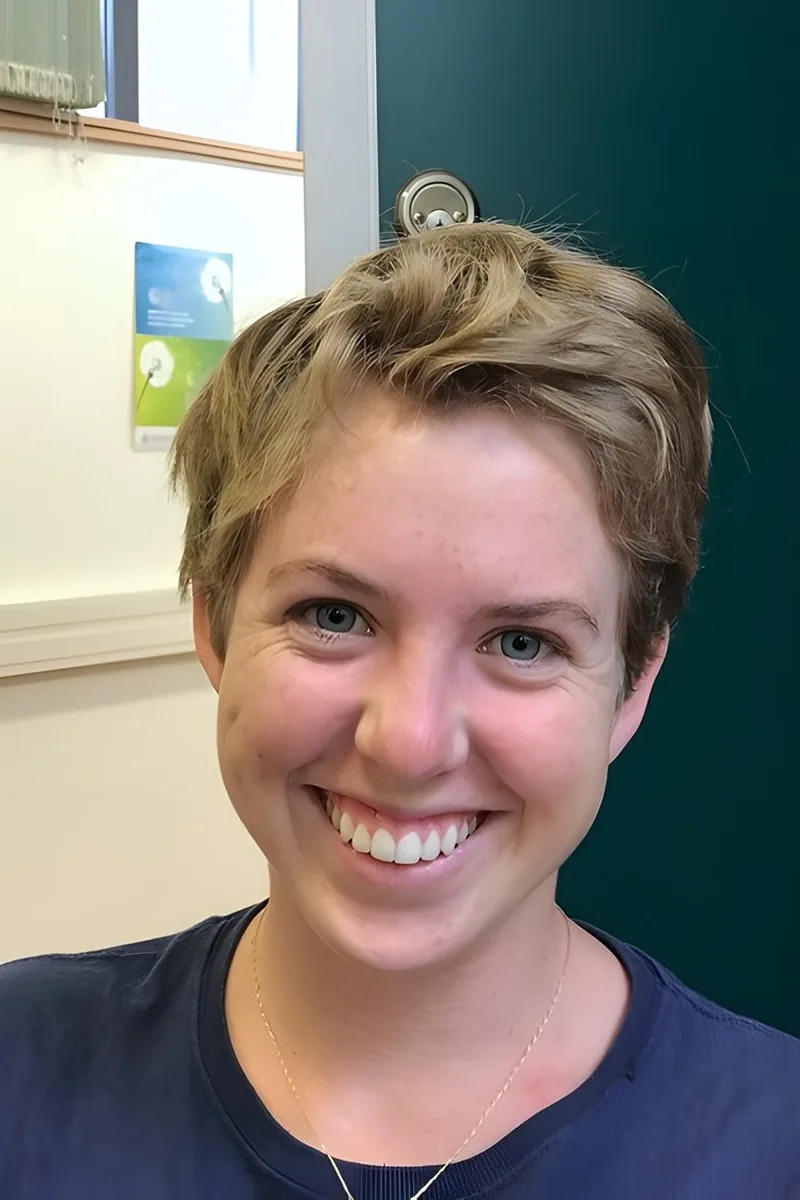
Free-body diagrams and energy bar charts are where Lena starts every mechanics problem — getting the physical picture right before any equation shows up on the page. Her sociology degree trained her to break complex systems into interacting parts, a habit that transfers surprisingly well to analyzing forces, momentum, and multi-object scenarios. Rated 5.0 by students.
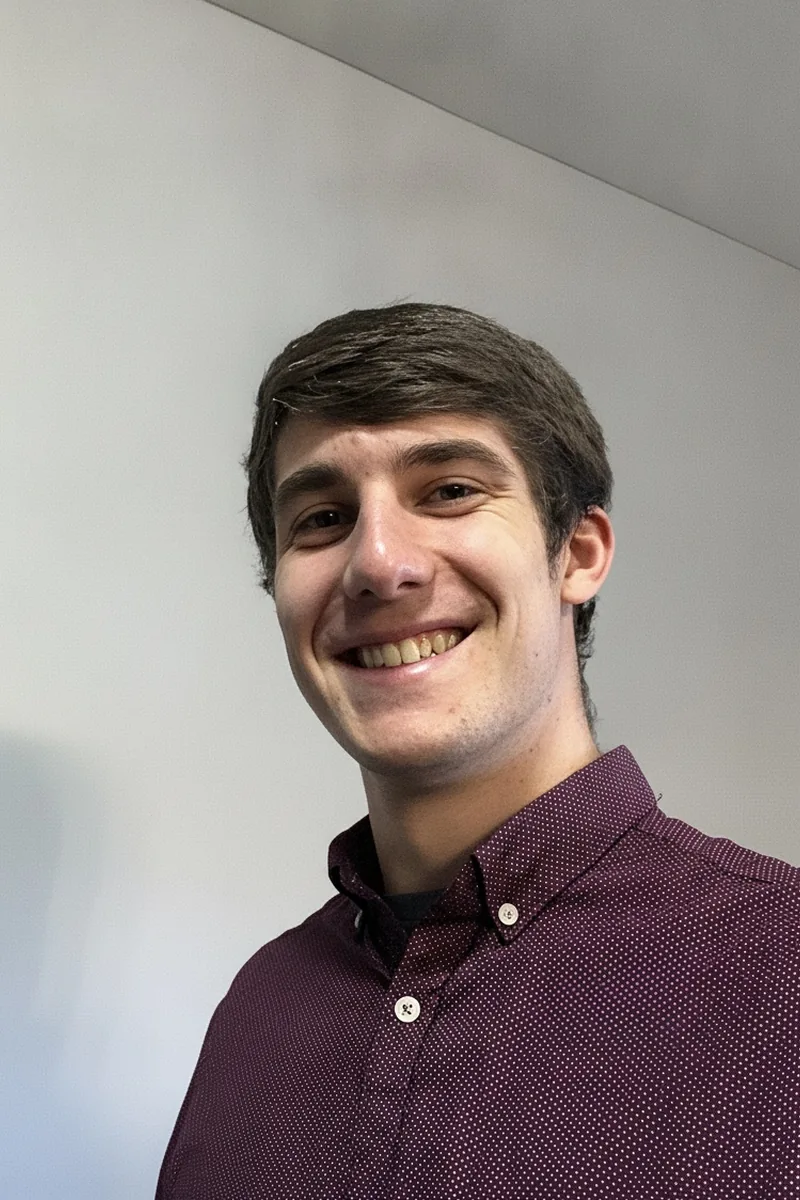
Studying mechanical engineering means Christian solves physics problems daily — force diagrams, energy conservation, rotational dynamics, thermodynamics — at a level well beyond introductory courses. He teaches students to start every problem by identifying what physical principle applies before touching a single equation, which eliminates the guesswork that trips most people up. That structured approach transfers across mechanics, electricity, and waves.
Engineering students live in physics — Colton spent four years at UVA applying Newton's laws, conservation of energy, and circuit analysis to real biomedical problems. He explains kinematics and free-body diagrams by building each solution from a clear diagram forward, so students learn to set up problems correctly instead of hunting for the right equation to plug numbers into.
Studying engineering physics at Colorado School of Mines, Jude lives in the world of force diagrams, energy conservation, and wave mechanics every day. He approaches physics tutoring like a lab partner — asking questions, sketching diagrams together, and walking through the reasoning behind each equation rather than just handing students a formula sheet. That interactive method turns intimidating multi-step problems into manageable chains of logic.
An astronomy major lives inside physics — from Newtonian mechanics governing planetary orbits to electromagnetism explaining how stars radiate energy. Rohith uses that deep, applied understanding to unpack force diagrams, conservation laws, and wave behavior in ways that go well beyond formula sheets.
Kinematics, Newton's laws, energy conservation, wave behavior — Graham doesn't just teach these topics, he uses them every day in his astrophysics program at CU Boulder. That daily fluency means he can explain a concept multiple ways until one clicks, whether a student needs a mathematical derivation or a real-world analogy involving orbits and collisions. His 5.0 rating speaks to how well that flexibility works.
Understanding physics means learning to translate a word problem into a diagram, then into an equation — and that translation step is exactly where most students get stuck. Michelle breaks down that process explicitly, teaching students to identify forces, draw free-body diagrams, and choose the right kinematic or energy equation before touching a calculator. Her current graduate studies in physical therapy keep her fluent in biomechanics and applied physics concepts.
An engineering physics degree from the Colorado School of Mines means Cody didn't just study physics — he solved real engineering problems using Newtonian mechanics, electromagnetism, thermodynamics, and quantum theory across four years of intensive coursework. He teaches the subject by connecting equations to physical intuition, so students understand why F=ma produces a specific trajectory rather than just plugging numbers into formulas. His SAT score of 1440 hints at the broad analytical skills he brings, but it's the depth of his physics training that sets his tutoring apart.
A physics degree doesn't just mean Evan studied the subject — it means he spent years wrestling with free-body diagrams, conservation laws, circuit analysis, and wave mechanics at a level well beyond the introductory course. He unpacks each problem by identifying which principles apply and why, so students learn to think like physicists rather than hunt for the right equation. Rated 5.0 by his students.
Most physics struggles come down to one thing: not knowing how to start a problem. Phillip teaches a systematic approach — draw the diagram, identify the forces, pick the right coordinate system — that turns intimidating multi-step problems into a sequence of smaller, solvable ones. He's taken physics through the college level as part of his biomedical engineering degree at Brown and knows exactly where conceptual gaps tend to hide.
Emily approaches physics problems the way her science training taught her: sketch the situation, identify the forces, then translate the diagram into math. That structured method is especially useful for kinematics and Newton's laws, where students often know the equations but struggle to set problems up correctly. Her background in neurobiology also means she's comfortable with the biophysics applications that make the subject feel more relevant.
From Newton's laws to wave behavior to electric fields, physics is ultimately about translating real situations into mathematical models. Aimee's engineering training at Georgia Tech means she's spent years doing exactly that — and she teaches students to sketch free-body diagrams and set up equations with the same systematic approach she uses in her own work.
Understanding physics means learning to translate a word problem into a free-body diagram or energy equation — and then trusting the math to get you to the answer. Dennis developed that skill set through years of quantitative research at Vanderbilt, where physical principles underpinned his graduate work in Chemical and Physical Biology. He's patient enough to let students wrestle with a concept before stepping in to clarify.
Studying physics alongside computer science at Duke, Bryce tackles mechanics, electromagnetism, and thermodynamics from both the theoretical and computational sides. He unpacks the math behind physical laws — showing why F=ma isn't just a formula but a relationship you can reason through to solve problems you've never seen before.
Cornell's chemical engineering program put Rahul through four years of mechanics, fluid dynamics, and thermodynamics problems that demand real physical intuition — not just plugging into formulas. He pushes students to understand why a conservation law applies before setting up the math, building the kind of conceptual reasoning that makes multi-step problems feel manageable rather than chaotic. Rated 4.9 by students.
Majoring in both Physics and Biochemistry at Rice, Aadith tackles the subject from two directions — the pure mechanics and electromagnetism side alongside the biophysical applications where those principles govern everything from membrane potentials to protein folding dynamics. That dual lens is especially useful for students who need more than abstract derivations to make Newton's laws or conservation of energy feel real. His 1590 SAT underscores the quantitative precision he brings to problem setup and calculation.
Engineering students solve physics problems differently than most — they diagram forces, track units obsessively, and translate word problems into equations almost automatically. Annie brings that engineering instinct from her Cornell coursework to topics like kinematics, Newton's laws, energy conservation, and circuits, showing students a systematic approach that works across problem types.
Three physics degrees' worth of coursework gave Avram deep fluency with everything from Newtonian mechanics to electromagnetism and thermodynamics. He walks through free-body diagrams, conservation laws, and wave behavior by building each problem from first principles, so the math serves the physics instead of overwhelming it. His 1520 SAT speaks to the analytical rigor he brings to every session.
Medical school at the Medical College of Wisconsin demands a command of mechanics, fluid dynamics, and thermodynamics that goes well beyond intro-level physics — Abrahim applies those principles daily in contexts like blood pressure dynamics and respiratory mechanics. His biology degree from UCLA (cum laude) and a 34 ACT underscore the quantitative chops he brings to breaking down force diagrams, energy conservation setups, and multi-step kinematics problems. Rated 5.0 by students.
Engineering students see physics differently than most tutors do — every force diagram, energy conservation problem, and wave equation is a tool they actually use. Ellie's biomedical engineering program at Yale means she tackles mechanics, electricity, and thermodynamics regularly in applied contexts. She unpacks the math behind each physics concept so students understand the equations instead of just memorizing them.
Bidyut's dual focus in biomedical engineering and computer science at Johns Hopkins means physics isn't something he studied once — it's embedded in his daily coursework, from mechanics to electromagnetism to fluid dynamics. He teaches students to translate word problems into free-body diagrams and equations systematically, rather than guessing which formula to use. That structured approach, combined with his 5.0 client rating, makes him especially effective for students who feel lost in problem-solving.
Testimonials
Because the right Physics tutor makes all the difference.
Average Session Rating – Based on 3.4M Learner Ratings
Practice Physics
Free practice tests, flashcards, and AI tutoring for Physics
Nearby Physics Tutors
Other Denver Tutors
Related Science Tutors in Denver
Frequently Asked Questions
Denver schools follow Colorado state standards that include mechanics, energy, waves, electricity, magnetism, and modern physics. The specific sequence and depth depend on whether students are in introductory physics, honors physics, or AP Physics courses. Many Denver high schools offer both algebra-based and calculus-based physics pathways, with AP Physics 1, AP Physics 2, and AP Physics C available at larger schools. If you're unsure which topics your student is struggling with, connecting with a tutor who knows the Denver curriculum can help identify exactly where additional support would be most valuable.
Physics requires visualizing things we can't see directly—from forces and motion to electromagnetic fields and atomic structure. Expert tutors break down abstract concepts using diagrams, physical models, and real-world analogies that make them concrete. For example, a tutor might use springs and masses to explain oscillation, or draw force diagrams to show why an object moves the way it does. By connecting theory to observable phenomena and working through problems step-by-step, students build intuition rather than just memorizing formulas, which leads to deeper understanding and better performance on exams.
Physics combines conceptual understanding with math skills—students need to not only know the physics but also manipulate equations, convert units, and interpret graphs. Many struggle because they haven't mastered the underlying math, or they don't know when to apply which formula. The student-teacher ratio in Denver schools (14.4:1 on average) means teachers can't always slow down to address individual gaps. A tutor can identify whether a student's difficulty stems from weak algebra skills, confusion about concepts, or poor problem-solving strategies, then target instruction accordingly to build both confidence and competence.
Yes. Tutoring for students in Denver can address the full physics experience, including lab reports, experimental design, and data analysis. Many students understand concepts in theory but struggle to design experiments, control variables, or interpret their results. A tutor can help you understand what your lab is testing, guide you through proper procedure, explain how to analyze your data, and show you how to connect your findings back to the physics concepts you're studying. This is especially valuable if you feel rushed during lab time or uncertain about what you're supposed to be learning from an experiment.
Absolutely. AP Physics 1, AP Physics 2, and AP Physics C are offered at several Denver schools, and these courses demand both conceptual mastery and strong problem-solving skills under time pressure. Expert tutors familiar with AP Physics curricula can help you work through challenging topics, practice free-response questions, review past exam patterns, and build stamina for the actual test. Whether you're looking to strengthen weak areas early in the course or intensify preparation in the final weeks before the exam, connecting with a tutor who knows what the AP graders are looking for can make a real difference in your score.
Varsity Tutors connects you with expert tutors who know the physics standards and courses taught across Denver schools. When you reach out, you can share which specific topics, units, or exams your student needs help with, and you'll get matched with someone experienced in that area. Whether you need support with kinematics and forces, electromagnetism, thermodynamics, or exam prep, the right tutor match matters. Because tutors understand both the subject deeply and how it's taught locally, they can target instruction to fill gaps and accelerate progress.
The earlier, the better. If your student is struggling after the first few units, getting support right away prevents gaps from compounding—physics is cumulative, and weak foundations in mechanics make it much harder to understand waves and electricity later. Even strong students benefit from tutoring to deepen their understanding or prepare for competitive exams like AP Physics. If your student is anxious about physics, confused about how to approach problems, or not seeing the connection between theory and applications, that's a sign personalized 1-on-1 instruction could help rebuild confidence and clarify concepts in ways that fit their learning style.
Let’s find your perfect tutor
Answer a few quick questions. We’ll recommend the right plan and match you with a top 5% tutor.