Award-Winning AP Music Theory Tutors
serving Concord, CA
Who needs tutoring?
FEATURED BY


TUTORS FROM
- YaleUniversity
- PrincetonUniversity
- StanfordUniversity
- CornellUniversity
Award-Winning AP Music Theory Tutors serving Concord, CA
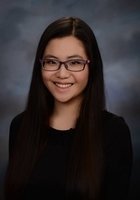
Certified Tutor
8+ years
Cynthia
As both a violinist and pianist, Cynthia brings hands-on musicianship to AP Music Theory concepts like four-part voice leading, sight-singing, and harmonic dictation. Playing multiple instruments means she can demonstrate how chord progressions and intervals actually sound in practice, not just on p...
Vanderbilt University
Current Undergrad Student, Public Policy Analysis

Certified Tutor
6+ years
Sarah
Sacred Music at the graduate level means Sarah spent years dissecting chorale harmonizations, counterpoint, and liturgical composition — skills that map directly onto AP Music Theory's part-writing and harmonic analysis questions. Her organ and piano training grounds abstract concepts like voice lea...
Yale University
Master of Arts, Sacred Music
Vassar College
Bachelor in Arts, Music
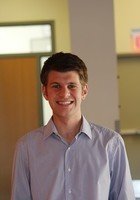
Certified Tutor
9+ years
Playing bass guitar and upright bass gave Kevin a musician's ear for harmony, voice leading, and chord function — exactly the skills AP Music Theory tests through its aural and written sections. He approaches topics like figured bass realization, part-writing rules, and sight-singing with the practi...
University of Pennsylvania
Bachelor in Arts
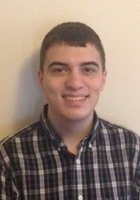
Certified Tutor
Tom's PhD in American Studies might not scream music theory, but his academic training in American History & Literature includes deep engagement with cultural production — and music sits right at the center of that. He's strongest as an analytical thinker who can break down the logic of Roman numera...
Boston University
PHD, American Studies
Harvard University
Bachelors
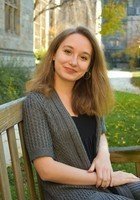
Certified Tutor
5+ years
Vivian
Training as a violinist at Juilliard means Vivian lives inside music theory every day — part-writing, harmonic analysis, sight-singing, and aural dictation are part of her daily practice, not just exam topics. She unpacks concepts like secondary dominants, modulation, and species counterpoint with t...
Yale University
Bachelor in Arts

Certified Tutor
6+ years
Naomi
As a violinist with a background in both music theory and composition, Naomi understands AP Music Theory from the performer's side — hearing intervals, recognizing chord progressions, and internalizing rhythm before translating them onto paper. She digs into the exam's trickiest areas, like part-wri...
Princeton University
Bachelor in Arts, Sociology
Certified Tutor
6+ years
Hailey
Hailey's double major in mathematics and psychology gives her an unusual angle on AP Music Theory — she's wired to see the structural patterns in chord progressions and voice leading rules the way a mathematician spots proofs, and she understands how memory and perception shape aural dictation perfo...
University of Georgia
Bachelor of Science, Psychology

Certified Tutor
Martha
Psychology research is essentially pattern recognition — identifying structures beneath surface-level noise — and Martha applies that same analytical lens to AP Music Theory concepts like harmonic progressions, non-chord tones, and Roman numeral analysis. Her 5.0 rating suggests she's effective at m...
Duke University
Bachelors, Psychology
Duke University
Current Grad Student, Global Health
Duke University
BS in psychology
Certified Tutor
6+ years
Charles
Charles holds a degree in Music Theory and Composition — meaning the harmonic analysis, part-writing, and compositional techniques on the AP exam aren't abstract concepts he learned secondhand but the core of his formal training. He also teaches drum, piano, conducting, and arrangement, giving him t...
Yale University
Bachelor in Arts, Music Theory and Composition
Certified Tutor
10+ years
Max
Max's years at the piano give him the kind of intuitive ear that AP Music Theory rewards — he doesn't just identify intervals and chord progressions on paper, he hears them. He tackles Roman numeral analysis and part-writing by grounding each rule in how it sounds at the keyboard, which makes the ex...
Yale University
Current Undergrad, Economics
Nearby AP Music Theory Tutors
Other Concord Tutors
Related Music Tutors in Concord
Frequently Asked Questions
The AP Music Theory exam tests your understanding of music fundamentals, including melody, harmony, voice leading, and form analysis. The exam consists of a multiple-choice section (covering listening and analysis skills) and a free-response section where you'll complete musical tasks like part-writing, figured bass realization, and harmonic analysis. Success requires both theoretical knowledge and practical application skills developed through consistent practice.
Many students struggle with voice leading rules, particularly in four-part writing and figured bass, which require both theoretical knowledge and practical application. Others find the listening component challenging, as it demands careful ear training and the ability to identify harmonic progressions and modulations quickly. Time management during the exam is another common issue—the free-response section requires precision and speed. Personalized tutoring helps identify your specific weak areas and builds confidence through targeted practice.
AP Music Theory scores range from 1 to 5, with a 3 considered passing. Most students who score 4 or 5 have mastered both the theoretical concepts and the practical skills tested on the exam. With focused tutoring, students typically see significant improvement in their weakest areas—whether that's harmonic analysis, ear training, or free-response writing—which directly translates to higher exam scores. The key is starting early enough to build solid fundamentals and practice consistently.
Varsity Tutors connects you with expert tutors who specialize in AP Music Theory and understand the specific demands of the exam. Your tutor will assess your current level, identify gaps in your understanding, and create a personalized study plan that covers theory, ear training, and practice with released exam questions. Sessions typically include focused instruction on challenging topics, guided practice with real exam problems, and feedback on your free-response work.
Ideally, you should begin preparing at the start of the school year if you're taking the exam in May. This gives you time to build a strong foundation in theory fundamentals, develop ear training skills, and practice extensively with full-length exams. If you're starting later in the year, intensive tutoring can still help you make meaningful progress, but starting early allows for a more measured, comprehensive approach to mastering both the conceptual and practical elements of the course.
Practice tests are essential for AP Music Theory preparation because they help you become familiar with the exam format, timing constraints, and question types you'll encounter on test day. They also reveal which topics need more work—whether it's harmonic analysis, voice leading, or ear training. Tutors typically use released AP exams and other high-quality practice materials to simulate real exam conditions, helping you build speed and confidence while identifying areas for targeted review.
The AP Music Theory exam includes a significant listening component where you must identify intervals, chords, cadences, and harmonic progressions by ear—skills that can't be developed through theory study alone. Consistent ear training practice, ideally several times per week, is crucial for building this skill. Expert tutors can guide your ear training with targeted exercises and feedback, helping you recognize patterns and progressions quickly enough to handle the timed listening sections on the exam.
Voice leading mastery comes from understanding the rules (parallel fifths, voice ranges, smooth voice leading) and practicing them repeatedly until they become second nature. The free-response section requires you to apply these rules quickly and accurately under time pressure. Personalized tutoring helps you understand not just the "what" but the "why" behind voice leading rules, then provides guided practice with increasingly complex problems so you can develop both accuracy and speed before test day.
Connect with AP Music Theory Tutors in Concord
Get matched with local expert tutors