Award-Winning Anatomy Tutors
serving Mission Viejo, CA
Who needs tutoring?
FEATURED BY


TUTORS FROM
- YaleUniversity
- PrincetonUniversity
- StanfordUniversity
- CornellUniversity
Award-Winning Anatomy Tutors serving Mission Viejo, CA

Certified Tutor
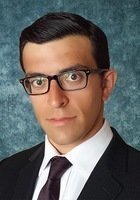
Memorizing every bone, muscle, and organ system in anatomy can feel overwhelming without a strategy. Karishma's psychology background gives her insight into how memory actually works, and she teaches students to use spatial relationships and functional groupings — like linking muscle attachments to ...
Northwestern University
Bachelor in Arts
Certified Tutor
Michael
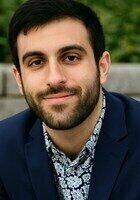
Fourth-year medical students don't just memorize anatomy — they use it daily in clinical rotations, which is exactly where Michael is right now at Albert Einstein College of Medicine. He teaches structures like nerve plexuses and organ relationships by grounding them in the clinical cases he's activ...
Yeshiva University
Bachelors, Biology, General
Albert Einstein College of Medicine
Current Grad Student, Medical Doctor
Certified Tutor
Shayan
Memorizing every bone, muscle, and nerve pathway in anatomy can feel overwhelming without a framework. Shayan teaches structural relationships rather than isolated labels — once a student understands why the brachial plexus is organized the way it is, the individual nerve branches become far easier ...
University at Buffalo
Bachelors, Biology, General
University of Pennsylvania
Current Grad Student, Pre-Health
Certified Tutor
14+ years
Jason
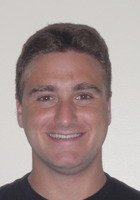
Studying anatomy in medical school means dissecting cadavers, mapping nerve pathways, and learning every bony landmark on the skeleton — Jason did all of that at Penn and still remembers which structures trip students up the most. He teaches spatial relationships (like the brachial plexus or the lay...
University of Pennsylvania
PHD, Medicine and Education
University of Pennsylvania
Master's degree in Education
Yale University
Bachelor's degree in History

Certified Tutor
Jean
Four years of medical school at Harvard meant Jean didn't just study anatomy from a textbook — she learned it through cadaver dissection, clinical rotations, and diagnostic reasoning. She teaches students to think spatially about structures like the brachial plexus or the abdominal vasculature, buil...
Harvard College
Bachelor in Arts, Sociology
Harvard Medical School
Doctor of Medicine, Medicine
Certified Tutor
Timothy
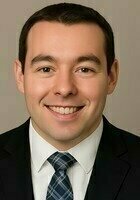
Medical school means Timothy is learning anatomy at the most rigorous level right now, which keeps every muscle origin, nerve pathway, and organ system fresh in his mind. He tackles the memorization challenge head-on with spatial reasoning tricks and mnemonic strategies that make structures like the...
Drexel University College of Medicine
Current Grad Student, M.D.
University of California Los Angeles
Bachelors, Political Science and Government
Certified Tutor
14+ years
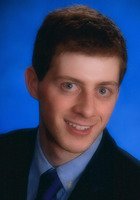
Learning anatomy often feels like brute-force memorization of Latin terms, but Garrett reframes it around functional relationships — why the brachial plexus is organized the way it is, or how the arrangement of cardiac valves relates to blood flow direction. He uses spatial reasoning and system-leve...
University of Pennsylvania
Bachelor in Arts
Certified Tutor
Ken
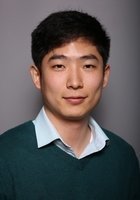
Physical therapy graduate students live in anatomy — Ken's current PT program means he's working with musculoskeletal structures, nerve pathways, and organ systems on a daily basis. That clinical context makes it easier to teach concepts like brachial plexus innervation or joint articulation because...
Wake Forest University
Bachelors, Psychology
Stony Brook University
Current Grad, Physical Therapy
Certified Tutor
14+ years
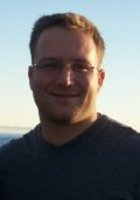
Medical school at the doctoral level means learning anatomy twice — once from textbooks and once from the body itself, where the relationship between a nerve's path and the tissue it innervates becomes tangible. Daniel's training gave him that layered understanding, and he teaches structures like or...
Cornell University
Bachelor in Arts
Tel Aviv University
Doctor of Medicine, Medicine
Certified Tutor
13+ years
Daniel
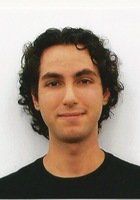
Dental school demands a level of anatomical knowledge most undergrads never encounter — Daniel spent years learning cranial nerves, musculoskeletal structures, and histological tissue types in clinical detail. He breaks down complex systems like the brachial plexus or cardiac anatomy into logical re...
Arizona State University
Bachelor of Science, Microbiology
University of California Los Angeles
Doctor of Dental Science, Dentistry
Practice Anatomy
Free practice tests, flashcards, and AI tutoring for Anatomy
Nearby Anatomy Tutors
Other Mission Viejo Tutors
Related Science Tutors in Mission Viejo
Frequently Asked Questions
Anatomy courses typically explore human body systems—including skeletal, muscular, nervous, cardiovascular, respiratory, and digestive systems—along with cellular and tissue organization. Students learn both structure and function, often combining lecture material with lab work where they study models, diagrams, and sometimes cadaver specimens. The course emphasizes understanding how different systems work together, which requires both memorization of terminology and deeper comprehension of physiological relationships.
While terminology is important, successful Anatomy study is really about understanding relationships and functions. You need to know not just that a muscle exists, but how it connects to bones, what movements it enables, and how it coordinates with other muscles. Tutors help students build mental models of body systems so concepts stick long-term, rather than cramming facts that fade after a test. This approach also prepares you better for advanced coursework like Physiology or medical school prerequisites.
Many students struggle with translating 2D textbook diagrams into 3D mental images. Effective strategies include using interactive anatomy software, building physical models, drawing structures from memory, and studying from multiple angles. Tutors can guide you through these visualization techniques and help you develop spatial reasoning skills specific to anatomy. They can also explain cross-sections and relationships in ways that make abstract structures feel concrete and memorable.
Absolutely. Lab practicals require both identifying structures on models or slides and explaining their functions—skills that benefit greatly from personalized guidance. Tutors can help you develop systematic approaches to practical exams, practice identifying structures under realistic conditions, and connect lab observations to lecture concepts. They can also help you understand the scientific reasoning behind lab procedures, not just how to perform them.
Students often struggle with the sheer volume of terminology, connecting isolated facts into coherent system understanding, and translating 2D images into 3D spatial relationships. Many also find it challenging to balance memorization with conceptual understanding—knowing that the biceps flexes the arm is different from understanding why and how. With an average student-teacher ratio of 20.8:1 in Mission Viejo schools, personalized tutoring provides the focused attention needed to address these specific gaps and build confidence.
Your first session typically involves assessing your current understanding, identifying specific challenges (whether it's terminology, visualization, lab skills, or exam preparation), and understanding your learning style. The tutor will ask about your course material, upcoming assessments, and goals so they can create a personalized plan. This foundation helps ensure subsequent sessions target exactly what you need, whether that's building foundational concepts or fine-tuning exam strategy.
Ideally, starting tutoring several weeks before a major exam gives you time to build understanding progressively rather than cramming. For midterms or finals covering multiple systems, 2-4 weeks of regular sessions allows you to work through challenging concepts systematically and practice application problems. If you're preparing for a lab practical, even a few focused sessions can significantly improve your identification speed and conceptual accuracy on exam day.
Look for tutors with strong backgrounds in human anatomy, biology, or health sciences—ideally with experience teaching or tutoring the specific course level you're taking. Tutors who have completed advanced coursework (like pre-med or nursing prerequisites) often understand both the content depth and the exam expectations. Varsity Tutors connects you with expert tutors who can explain complex systems clearly and help you develop the visualization and reasoning skills that make Anatomy click.
Connect with Anatomy Tutors in Mission Viejo
Get matched with local expert tutors