Award-Winning Calculus Tutors
serving Cleveland, OH
Calculus
Tutors in Cleveland
Private 1-on-1 tutoring, weekly live classes for academic support, test prep & enrichment, practice tests and diagnostics, and more to elevate grades and test scores.
Based on 3.4M Learner Ratings
UniversitiesSchools & Universities
DeliveredHours Delivered
ProficiencyGrowth in Proficiency
Who needs tutoring?
No obligation. Takes ~1 minute.
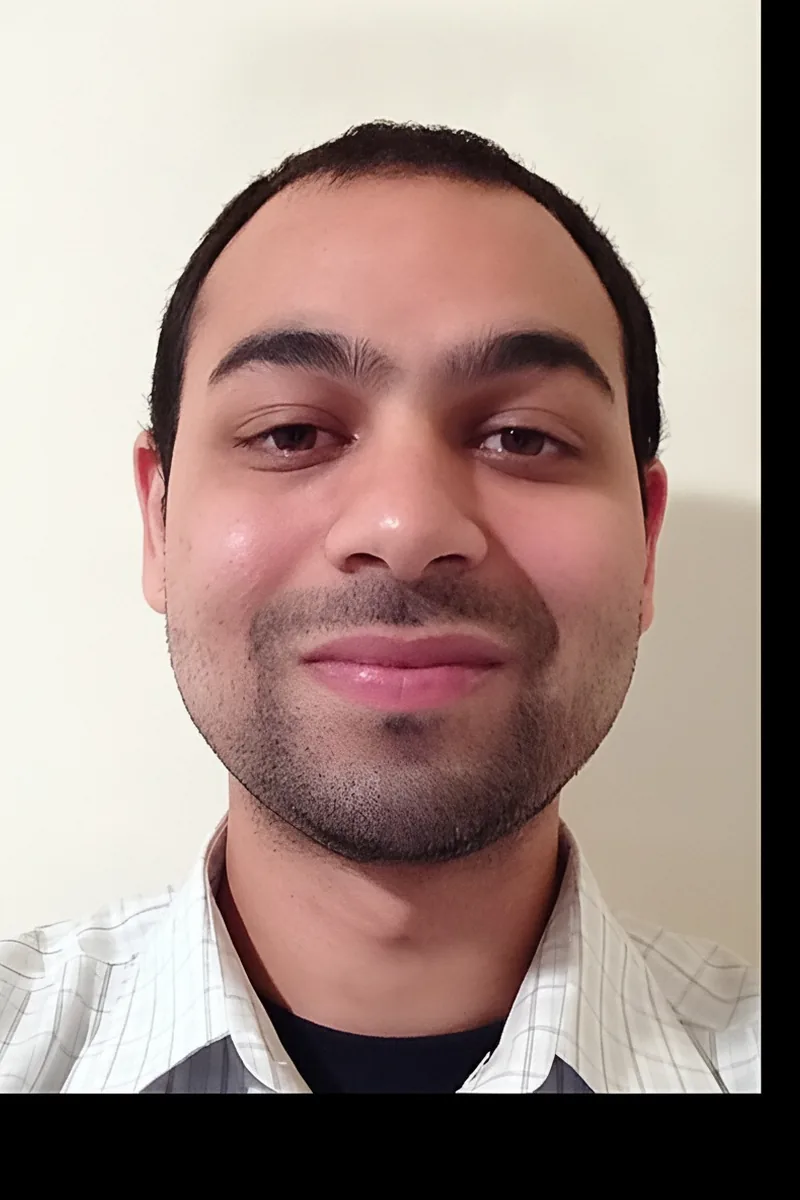
Between a math-economics degree from UCLA and medical school coursework modeling drug absorption rates and physiological decay curves, Vinay has used calculus from both the pure and applied sides — integration techniques in a problem set one semester, differential equations describing pharmacokinetics the next. That dual fluency means he can teach the mechanics of derivatives and integrals while also showing where they actually matter in quantitative modeling. Rated 5.0 by students.

An English major at Penn with a 1560 SAT, Amy brings strong quantitative reasoning to a subject outside her primary field — she's honest that calculus isn't her deepest expertise, but she can support students navigating the early conceptual hurdles like limits and continuity. Her approach treats mathematical definitions the way she'd treat a dense passage: slow down, parse each piece of the language, and make sure the meaning is clear before moving forward.
History and Child Development at Yale aren't the typical path to calculus, and Arielle is straightforward that this isn't her deepest subject — but her 1380 SAT shows solid quantitative ability, and her early childhood education training has sharpened her instinct for breaking complex ideas into developmentally appropriate steps. That scaffolding skill applies surprisingly well to unpacking limits and introductory derivatives, where the gap between intuition and formal notation is exactly what trips most students up.
Human Development coursework at Cornell involves more statistics and data analysis than most people expect — Emma has worked with SPSS and quantitative modeling to study developmental trends, which means she's comfortable with the mathematical reasoning that underpins early calculus. Her approach to derivatives and rate-of-change problems leans on making the logic visible step by step, the same way she'd walk through a research design. Rated 5.0 by students.
Biology at Duke meant Emma's calculus wasn't theoretical — it showed up in population dynamics models, enzyme kinetics curves, and the rate equations behind ecological change. That background lets her teach derivatives and integrals as tools that describe how living systems grow, decay, and interact, grounding each concept in problems she's actually solved. Rated 4.9 by students.
Julie's Philosophy-Neuroscience-Psychology degree at WashU required serious quantitative coursework — cognitive neuroscience leans heavily on modeling neural firing rates, signal decay functions, and statistical curves that all trace back to derivatives and integrals. Two years of post-graduation immunology research added even more applied math, from analyzing antibody response curves to interpreting rate-dependent experimental data. That combination means she teaches calculus as something with a purpose, not just a set of rules to memorize.
Limits, derivatives, and integrals become far less intimidating when a student can see the chemistry and physics problems they were invented to solve. Rosalyn earned her M.S. in Chemistry, where calculus was a daily tool for modeling reaction rates and thermodynamic changes, so she teaches the subject with concrete applications baked in. That real-world grounding makes the epsilon-delta definitions and integration techniques feel purposeful rather than arbitrary.
I'm entering my senior year at Case Western Reserve University. I'm happy to provide tutoring services for those interested in improving their academic performance or exam preparation. The subjects which I am most proficient include SAT Math, Algebra 1 , Algebra 2, Middle School Math, Pre-Algebra, Pre-Calculus, and Trigonometry.
Between a BS in biosystems engineering and a PhD in chemical engineering, Alexander has used calculus as a daily working tool — solving heat transfer equations, modeling fluid flow, and optimizing reaction systems where a misapplied integral has real consequences. That depth means he can teach not just the mechanics of differentiation and integration but the intuition behind them, showing students why a particular technique applies and what the answer physically represents. Rated 4.9 by students.
After working through AP Calculus AB himself and tutoring peers at Emory, Sunay knows exactly where students tend to stall: related rates, integration by substitution, and the conceptual leap from accumulation to the Fundamental Theorem. He explains these topics by building from concrete examples — velocity, area, growth — before moving into abstraction.
Problem-solving is what drew Ruth to math in the first place — she tutors algebra and pre-calculus as her core math subjects, which means she knows the exact foundation students need when limits and derivatives start building on prior skills. Her approach to early calculus leans on making sure the algebraic machinery underneath actually makes sense, so new concepts like the difference quotient or basic differentiation rules don't feel like a sudden leap.
Practice problems are the backbone of every calculus session with Brian — not as busywork, but because each derivative rule and integration technique only becomes reliable through repetition. He walks students through chain rule applications, related rates setups, and area-between-curves problems until the problem-solving process feels automatic. Studying computer science at Case Western Reserve keeps him sharp on the mathematical rigor behind each concept.
Three degrees in mathematics — BS, MA, and a PhD in applied math — mean Dr has spent years inside the theory and application of calculus, from epsilon-delta proofs to the differential equations that model real-world systems. That depth lets him teach not just how to evaluate an integral or apply L'Hôpital's rule, but why each technique works and when it breaks down. Rated 4.9 by students.
Engineering coursework in transportation management gave Karen direct experience with the calculus behind traffic flow modeling, signal timing optimization, and rate-of-change problems that govern how vehicles move through networks. She teaches derivatives and integrals by connecting them to those real-world systems, making concepts like related rates and area-under-the-curve calculations feel purposeful rather than abstract.
Amos's degrees are in music performance, not mathematics, so he's transparent that calculus isn't his primary territory — but twenty-plus years of teaching music theory means he's deeply comfortable with the pattern recognition and structured reasoning that underpin early calculus concepts like limits and derivatives. His 5.0 rating speaks to an ability to break down intimidating material patiently, meeting each problem on its own terms.
Beth's history degree from Allegheny College might not scream calculus, but the discipline of building logical arguments translates directly to working through multi-step problems involving limits and derivatives. She zeroes in on the reasoning behind each step — why you set up a related rates problem a certain way, or what the Fundamental Theorem actually says — so the process makes sense rather than feeling like a recipe to follow. Rated 4.8 by students.
Biochemistry at Case Western Reserve means Timothy isn't just taking calculus — he's using it, whether that's modeling reaction rates in kinetics problems or analyzing concentration gradients across membranes. That hands-on context lets him teach derivatives and integrals as tools that describe real chemical behavior, not just abstract rules to memorize. Rated 5.0 by students.
An English major with a 33 ACT composite, Lauren brings strong analytical reasoning to subjects outside her primary wheelhouse — and she's honest that calculus is one of those. Her approach leans on the study strategy and organizational skills she builds into every session, breaking intimidating notation into manageable steps and making sure students understand the logic behind limits and slope before moving forward.
I am a seasoned educator with over 14 years of teaching experience. I currently am a middle school principal but have taught grades 3-college. I am no stranger to Common Core and can help students master material with tried and true strategies!
Working as a research associate at a biotech company, Brittany uses calculus concepts like rates of change and area-under-the-curve analysis in real scientific contexts — not just on paper. She brings that applied perspective to derivatives, integrals, and limit problems, showing students why the math matters beyond the exam.
As a biology major at Case Western Reserve, Anna has worked through calculus in the context of modeling cell growth rates, enzyme kinetics, and the quantitative backbone of courses like Cells and Proteins. That means she teaches derivatives and integrals with an eye toward what the math actually describes — how a population changes over time, how a reaction rate accelerates — rather than treating each rule as an isolated procedure. Her ACT score of 31 confirms solid quantitative chops to back up that applied perspective.
Derivatives and integrals become far less intimidating when a student understands what they physically represent — rates of change in a moving system, areas accumulating under a curve. Anish applies calculus daily in his physics and economics studies at Case Western Reserve, which means he can walk through chain rule or integration by parts with concrete examples from kinematics or marginal cost analysis. That real-world grounding tends to make abstract procedures stick.
Because Christopher also teaches physics, physical chemistry, and quantum mechanics, he sees calculus as a language rather than a standalone subject. He unpacks concepts like the chain rule or improper integrals by tying them to real problems in motion, energy, and rates of change. Students come away understanding not just how to differentiate and integrate, but when and why those tools matter.
Curriculum development — Elena's day job — is essentially about sequencing ideas so each one builds logically on the last, which is exactly what early calculus demands when students move from limits to derivatives to integration. Her McGill and Edinburgh training is in the humanities, not math, so she's transparent about the boundaries of her calculus expertise, but her knack for making abstract concepts click through analogy and structured explanation (she was named Scotland's International Young Thinker of the Year for that skill) carries over well to unpacking the reasoning behind rules like the chain rule or the fundamental theorem.
Lauren's degrees are in social sciences and French, so she's straightforward that calculus isn't her primary area — but her tutoring roster includes algebra and math broadly, meaning she's built a working fluency with the foundational reasoning that calculus demands. She takes a deliberate, concept-first approach to topics like continuity and rate of change, leaning on the same structured study methods that earned her a 5.0 rating across subjects.
Between a biology degree heavy on quantitative coursework and a perfect 36 ACT, Emily has the mathematical chops to teach calculus with real depth — not just procedure but the reasoning behind integration techniques and derivative applications. Her epidemiology training at Yale's School of Public Health meant working with rate-of-change models constantly, from disease transmission curves to survival analysis, so she can ground abstract calculus concepts in problems where the math actually drives decisions. Rated 5.0 by students.
Biomedical engineering at Johns Hopkins is essentially calculus in disguise — Christine's coursework runs on differential equations, signal processing, and modeling how biological systems change over time, so derivatives and integrals are tools she uses constantly, not abstract exercises. That engineering fluency means she can unpack concepts like the chain rule or integration by parts by connecting them to problems where the math actually drives real results. Rated 5.0 by students.
Chemical engineering at Cornell meant Rahul didn't just take calculus — he used it daily, from modeling heat transfer rates to solving mass balance differential equations in reactor design. That engineering fluency lets him teach derivatives and integrals as tools with a job to do, connecting each technique to the physical problem it was built to solve. Rated 4.9 by students.
Between a biology undergraduate degree and a Master's in Biomedical Sciences, Sarah has worked through calculus repeatedly — modeling growth rates, interpreting concentration curves, and applying integration to systems where change is continuous. That scientific fluency means she teaches concepts like the chain rule or area under a curve by connecting them to problems she's actually solved in lab and coursework. Rated 5.0 by students.
Neuroscience coursework at Vanderbilt put Benjamin through the full calculus sequence in a context where it mattered — modeling action potentials, analyzing decay rates, working with the differential equations that describe how neurons communicate. That background means he teaches derivatives and integrals as tools with a purpose, connecting each rule to the quantitative reasoning he used daily in his science courses. His 34 ACT composite confirms the math fundamentals are sharp.
Neuroscience coursework at Vanderbilt put Nathan through the calculus gauntlet — modeling action potential propagation, analyzing rate-dependent synaptic changes, and working with the integrals behind signal processing in neural circuits. That hands-on quantitative training, backed by a 1520 SAT, means he teaches derivatives and integration techniques as tools with real scientific payoff rather than abstract exercises.
Biomedical engineering at Vanderbilt means Christian uses calculus daily — from modeling fluid dynamics in biological systems to applying differential equations in circuit analysis. He breaks down concepts like integration techniques, series convergence, and related rates by connecting them to tangible engineering problems that make abstract ideas click.
Gates Cambridge Scholars don't typically list calculus on their résumé, and Yusef's degrees are in political science and development studies — but his 32 ACT and analytical training mean he can break down the logic of limits and early derivatives with the same rigor he brings to policy analysis. He treats each calculus rule as an argument to be understood step by step, not a formula to accept on faith.
As a math major at Vanderbilt, Priya doesn't just use calculus in passing — she's immersed in the theory behind it, from rigorous limit definitions to the proofs that make integration techniques work. That depth means she can unpack why the chain rule or the fundamental theorem operates the way it does, not just demonstrate the steps. Her 1570 SAT underscores the quantitative precision she brings to every problem.
Environmental toxicology is built on calculus — modeling how contaminant concentrations decay over time, calculating exposure rates through integration, and using differential equations to predict how pollutants move through ecosystems. Amy's master's work in that field means she teaches derivatives and integrals with real scientific context behind them, not just abstract symbol manipulation. Rated 5.0 by students.
Peter's degrees are in Education and Journalism rather than mathematics, so calculus isn't his deepest subject — but his Master's in Education means he knows how to sequence difficult material so each concept builds cleanly on the last. He treats early calculus topics like limits and derivative rules the way he'd teach a complex writing structure: layering one logical step at a time until the full picture makes sense.
Engineering degrees — both undergrad and master's — mean Dillon didn't just take calculus; he used it daily to solve structural load problems, model material stress curves, and optimize designs where a misunderstood integral has real consequences. Now a high school math teacher, he brings that applied engineering intuition into how he teaches differentiation and integration, connecting each rule back to physical systems students can visualize. His 32 ACT composite backs up the quantitative fluency his classroom students already see.
Public policy analysis at Vanderbilt requires serious quantitative coursework — regression models, optimization problems, and the derivative-based logic behind cost-benefit analysis all depend on calculus fluency. Cynthia brings that applied perspective to teaching concepts like rates of change and integration, connecting the mechanics to questions about how systems actually shift in response to policy decisions. Rated 5.0 by students.
An economics degree requires working through optimization problems, marginal analysis, and the derivative-driven logic that underpins supply and demand modeling — all core calculus territory Jera has navigated firsthand. That quantitative training, paired with a law degree's emphasis on building arguments step by step, gives her a structured way to unpack how and why a function behaves at a particular point before jumping to any formulas.
Data Analytics coursework at Ohio State put Vishank through the full calculus sequence — derivatives, integrals, and series — with the added pressure of applying each concept to real statistical modeling and data analysis problems. That means he teaches calculus as something with a destination, connecting topics like the chain rule or integration by parts to the quantitative work they actually power. Rated 4.9 by students.
Testimonials
Because the right Calculus tutor makes all the difference.
Average Session Rating – Based on 3.4M Learner Ratings
Other Cleveland Tutors
Related Math Tutors in Cleveland
Frequently Asked Questions
Many students struggle with the transition from algebra and precalculus to Calculus's conceptual focus on rates of change and limits. Common pain points include understanding why derivatives and integrals work the way they do (not just memorizing formulas), tackling word problems that require translating real-world situations into mathematical models, and connecting multiple steps in multi-step problems. Calculus also requires strong foundational skills—if gaps exist in algebra or trigonometry, they often surface when solving Calculus problems.
During an initial session, a tutor will assess your current understanding of key prerequisite concepts like functions, limits, and algebraic manipulation. They'll identify specific areas where you need support—whether that's grasping the conceptual meaning of derivatives, mastering integration techniques, or building confidence with word problems. This foundation helps create a personalized learning plan that targets your unique needs rather than a one-size-fits-all approach.
Showing work in Calculus isn't just about writing steps—it's about demonstrating your reasoning and understanding. A tutor can teach you how to organize multi-step problems clearly, explain your approach at each stage, and justify why you're using specific techniques (like the chain rule or integration by parts). This skill is especially valuable for exams and homework where partial credit depends on showing logical thinking, not just getting the right answer.
Word problems require you to translate English into mathematical notation, set up equations correctly, and then solve them—which involves multiple layers of thinking. Many students can solve equations but struggle with the translation step. Tutoring helps you develop a systematic approach: identifying what you're looking for, recognizing which Calculus concept applies (derivative for rates, integral for accumulation), and building confidence through repeated practice with different problem types.
Procedural understanding—knowing how to take a derivative—is different from conceptual understanding, which means knowing *why* derivatives measure instantaneous rates of change. Personalized tutoring allows a tutor to ask questions that reveal gaps in your thinking, use visual explanations and real-world examples tailored to your learning style, and help you see connections between topics (like how differentiation and integration are inverse operations). This deeper understanding makes Calculus less about memorizing rules and more about seeing patterns.
Math anxiety is common, especially in Calculus, and personalized tutoring creates a low-pressure environment where you can ask questions without judgment and work at your own pace. A tutor can break complex topics into smaller, manageable pieces, celebrate progress, and help you develop problem-solving strategies that feel less overwhelming. Building confidence comes from understanding concepts deeply rather than rushing through material, and from experiencing success on problems you previously found intimidating.
Yes. Calculus is taught using various textbooks and curricula across Cleveland's 55 school districts, and tutors work with students using their specific course materials and approaches. Whether your class emphasizes graphical, numerical, analytical, or applied perspectives on Calculus, a tutor can support your particular curriculum and help you understand how concepts connect across different representations.
Both approaches work, but starting tutoring early—even before Calculus begins—can be powerful if you want to shore up prerequisites like functions, trigonometry, or algebraic skills. However, if you're already in the course and finding it challenging, tutoring can quickly help you catch up and build momentum. The key is addressing gaps as soon as you notice them, rather than letting confusion compound over several units.
Let’s find your perfect tutor
Answer a few quick questions. We’ll recommend the right plan and match you with a top 5% tutor.