Award-Winning AP Art History Prep in Boston
Award-Winning AP Art History Prep in Boston
Everything you need to crush the AP Art History in Boston, MA. Live prep classes, practice tests, 1-on-1 expert tutoring, and AI-powered diagnostics.
Who needs prep?
No obligation. Takes ~1 minute.
Instructors from
- YaleUniversity
- PrincetonUniversity
- StanfordUniversity
- CornellUniversity
Featured by


AP Art History Prep Classes
 Short-term classLive
Making Paper Puppets
Using only paper, scissors, and glue stick or tape, learners will make paper puppets and bring characters to life! Paper puppets are a fun way to combine art and storytelling - after we make puppets, kids can create different voices or props to go along with them. In this class, we'll create a different kind of simple paper puppet each week: some will go on their hands like a hand puppet, some may be finger puppets, others will be operated with two hands. Students are encouraged to get creative with their designs and branch off into their own ideas! By the end of class, students will have a collection of paper puppets they can use to put on shows, tell stories, or give as gifts. **Materials needed**: paper (construction paper works great, though printer paper works fine too), scissors, glue stick and/or scotch tape, pencil, markers or colored pencils
 Short-term classLive
Drawing Animals and Nature
Artists can find inspiration all around them, from landscapes out the window to furry friends sitting nearby. In these weekly draw-alongs, young artists will learn and practice techniques for realistically drawing animals and natural images, varying lines and using shadows to create depth, demonstrate motion, and make the page in front of them look as alive as the world around them. Each week is a new exploration: drop in to see which inspiration we’re drawing on this week.
 Short-term classLive
Learn to Draw Optical Illusions
Optical illusions challenge the way we see the world, turning simple drawings into 3D designs that make us look twice! In this class, learners will draw different illusions each week. Projects may include drawings like a 3D hand illusion, op art patterns that seem to move, undulating patterns, and impossible shapes that couldn't exist in real life. By the end of class, students will have a collection of amazing optical illusions they've created themselves—guaranteed to impress friends and family. **Materials needed**: drawing paper, pencil, a black marker, something to add color, and a ruler or straightedge (optional)
 Short-term classLive
Sketchmasters Drawing Camp
Pencil your young artist in for a drawing adventure they'll never forget. Students will explore creative drawing techniques while creating fun landscapes, character designs, and imaginative scenes. They'll learn about different types of lines, basic shapes, and simple shading to bring their ideas to life on paper. Each daily session will focus on a different theme while introducing age-appropriate drawing skills that build confidence and creativity. Students will finish the week with a collection of artwork they're proud to display!
 Short-term classLive
Jump Start to AP & Honors Chemistry
Chemistry is the study of the properties, structures, and reactions of matter—and how substances transform through interactions at the atomic and molecular level. From the periodic table to chemical equations, each concept builds on the last—so the foundations you begin the school year with tend to shape the reactions, outcomes, and confidence you carry through every lab and lesson. In this live, interactive summer class you will learn and review the key building blocks for success in advanced high school chemistry classes, including AP, IB, and honors classes. From scientific principles to essential math concepts, you’ll cover everything you need to confidently conquer your most challenging fall class.
 Short-term classLive
Adventures in Art Camp
Art is all about making fun things and exploring our imaginations! In our 4-day virtual camp, each day brings a brand new art project for your little creator, using simple art supplies and things you already have at home. We'll draw, create simple puppets, do some simple collage and think about all the fun ways to be an artist! Join us for 4 days of art fun!
Short-term classLiveRealistic Drawing Camp
Drawing is an art, but in many ways it's also a science - and anyone can learn to draw what they see! In this 5-day virtual camp, middle schoolers will explore and build the skills they need to create impressive, realistic drawings. They'll practice exercises to learn about contour, negative space, proportion, and shading, and then apply those skills to more in-depth drawings during class. Whether they dream of drawing portraits, objects, or anything else, the techniques they learn in this class will help them develop confidence in their artistic abilities and create their own realistic images from photos or from life!
 Short-term classLive
Jump Start to AP & Honors Physics
Physics is the study of the fundamental forces and principles that govern how matter and energy interact in the universe. From motion and momentum to waves and electricity, each concept builds on the last—so the foundations you begin the school year with tend to govern your trajectory and velocity throughout the school year. In this live, interactive summer class you will learn and review the key building blocks for success in advanced high school physics classes, including AP, IB, and honors classes. From scientific principles to essential math concepts, you’ll cover everything you need to start your most challenging fall class with energy and momentum.
 Short-term classLive
Jump Start to AP Computer Science A
Computer Science is the study of how we use logic and code to solve problems and build the digital world around us. From variables and conditionals to classes and objects, each concept builds logically on the last—so the foundations you start with often determine how efficiently and confidently you can program throughout the year. In this live, interactive summer class, you’ll learn and review the key building blocks for success in advanced high school computer science courses, including AP Computer Science A. From core Java syntax to problem-solving strategies, you’ll cover everything you need to start this rigorous coding class with structure and logic.
 Short-term classLive
Playful Paper Creation Camp: Puppets, Toys, and More
It's amazing what kids can create with a few sheets of paper, a little bit of imagination, and the skills and projects they'll learn in this camp. With a different project each day, campers will create paper puppets, toys, pop-up cards, and their own imaginative creations. Best of all, they'll develop the skill set to turn any ordinary afternoon and basic school supplies into a fun-filled art-and-inventor extravaganza as they discover the techniques to turn plain sheets of paper into 3-D, interactive toys and masterpieces. **About the instructor:** Stephanie Krause is a lifelong art educator whose art classes have been featured by the Metropolitan Museum of Art, New York Public Library, and many other renowned institutions. **Materials needed:** paper (construction paper works great, though printer paper works fine too), scissors, glue stick and/or scotch tape, pencil, markers or colored pencils
Short-term classLiveSketchmasters Drawing Camp
We've sketched out a great week! Middle school students will create detailed drawings each day of subjects like animals, portraits, still life, and landscapes, learning drawing techniques to capture the essence of those subjects. We'll discuss and practice drawing skills such as gesture, line weight, shading, and more, using pencils and/or colored pencils. Students will finish the week with improved skills and a portfolio of work showing their progress!
 Short-term classLive
Jump Start to AP & Honors Biology
Biology is the study of the building blocks of life, how cells, systems, and processes interact to enable complex organisms to adapt and thrive. And just like living systems build from their foundations, your own biology knowledge builds concept by concept toward the complex skills you need for your labs and exams throughout the year. In this live, interactive summer class you will learn and review the key building blocks for success in advanced high school biology classes, including AP, IB, and honors classes. Armed with sound fundamentals you’ll be ready to hit the ground running in the new school year and thrive in your most challenging fall class.
Top-Rated AP Art History Prep Instructors in Boston
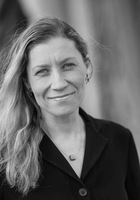
Christianna's Master of Architecture from MIT trained her to read built environments the way AP Art History's free-response rubric demands: not as aesthetic objects, but as spatial arguments shaped by...
Education & Certificates
Massachusetts Institute of Technology
Masters, Architecture
Rice University
Bachelors

Sarah's Yale Political Science training sharpens a skill most AP Art History students overlook: reading works as arguments about power — who commissioned them, what ideological purpose they served, an...
Education & Certificates
Yale University
Current Undergrad, Political Science and Government
SAT Scores
Emma's Classics degree at Carleton College — built around Latin, Ancient Greek, and the cultural histories threading through both languages — gives her an unusually sharp command of the ancient Medite...
Education & Certificates
Carleton College
Bachelor in Arts, Classical, Ancient Mediterranean, and Near Eastern Studies
ACT Scores
David's Johns Hopkins liberal arts training sharpened a skill AP Art History's free-response rubric depends on: building a written argument around evidence rather than reciting it. He coaches students...
Education & Certificates
University
Bachelor's

Moses's Yale Art History degree didn't just teach him what to say about a work — it trained him to build arguments from visual evidence, which is exactly the skill the AP Art History rubric rewards on...
Education & Certificates
Yale University
Bachelor in Arts, Art History, Criticism, and Conservation

Andrew's architecture training at Columbia sharpened a visual reading skill most AP Art History students never develop: the ability to analyze a built structure — its proportion, materiality, and spat...
Education & Certificates
Columbia University in the City of New York
Master of Architecture, Architecture
Vanderbilt University
Bachelor in Arts
SAT Scores

Justin's dual degrees in History and Religious Studies — from Duke and Yale — give him an unusually deep command of the iconographic and patronage contexts that run through AP Art History's required c...
Education & Certificates
Yale University
Master of Arts in Religious Studies (focus on ancient history)
Duke University
Bachelor of Arts in History and Religious Studies (minor in Economics)
Erica's dual degree in English and Latin Language and Literature from Oberlin College trained her to read texts — and images — as arguments shaped by language, culture, and historical purpose, the exa...
Education & Certificates
Oberlin College
Bachelor in Arts, English; Latin Language and Literature
SAT Scores
I'm a current student at Johns Hopkins University pursuing a bachelor's in both Neuroscience and Molecular & Cellular Biology. My favorite subjects to tutor are biology, chemistry, psychology, art his...
Education & Certificates
Johns Hopkins University
Bachelor of Science, Cellular and Molecular Biology
ACT Scores

Isaiah's 1590 SAT reflects the kind of close reading and analytical precision that AP Art History's free-response rubric directly rewards — and he coaches students to apply that same rigor to image an...
Education & Certificates
Harvard University
Bachelor in Arts
SAT Scores
Frequently Asked Questions
Students often find the sheer breadth of art history challenging—covering everything from prehistoric cave paintings to contemporary art across multiple cultures and centuries. The most common struggle areas are distinguishing stylistic periods (especially Renaissance vs. Baroque vs. Rococo), understanding non-Western art traditions on equal footing with Western European art, and connecting formal analysis skills with historical context. Many students also struggle with the chronological organization of movements and identifying lesser-known works that appear on the exam, which requires familiarity with primary sources beyond the most famous masterpieces.
The exam consists of 80 multiple-choice questions (50% of score) and 3 free-response essays (50% of score), with a focus on image identification and analysis rather than memorization of dates. Students commonly lose points on the multiple-choice section by confusing similar artworks or misidentifying cultural origins, and on the essays by providing description without deeper analysis of historical significance, artistic intent, or cultural context. Time management is also critical—students need to balance spending enough time on image analysis without getting bogged down, and structuring essays that address all three required components: identification, analysis, and contextualization.
Effective image recognition relies on developing a systematic approach: first identify the medium and basic formal elements (color, composition, perspective), then look for stylistic markers that suggest a period or culture, and finally connect those observations to historical movements or artists you've studied. Practice with the College Board's official image set regularly, but also train yourself by studying lesser-known works alongside famous ones from the same period—this builds pattern recognition rather than rote memorization. Tutors can help you develop a personal visual vocabulary and teach you how to make educated guesses when you encounter completely new images by recognizing broader stylistic trends across cultures and time periods.
The strongest essays follow a clear framework: open with a direct identification of the artwork (artist, title, date, culture), then move into formal analysis of specific visual elements that support your argument, and conclude by explaining the historical or cultural significance of those formal choices. Students often make the mistake of writing pure description without analysis, or jumping to historical context without grounding it in what they actually see in the image. A tutor can help you practice the skill of connecting visual evidence to broader themes—for example, explaining how a painting's use of perspective reflects Renaissance humanism, or how an artwork's composition relates to its cultural or religious function.
Non-Western art—including African, Asian, Islamic, and Indigenous American traditions—now represents a significant portion of the AP Art History exam, yet many students approach it with less familiarity than European art. The challenge is that these traditions often operate under different aesthetic principles, materials, and purposes than Western art, so students need to learn the cultural context first before analyzing formal elements. Effective study means learning about the specific religious, social, or ceremonial functions of artworks from these cultures, understanding how materials and geography shaped artistic traditions, and recognizing that 'non-Western' encompasses vastly different regions and time periods. Tutors experienced with AP Art History can help you build this contextual knowledge systematically rather than treating non-Western art as an afterthought.
Most students benefit from beginning serious AP Art History preparation 3-4 months before the exam, dedicating 5-7 hours per week to studying. A strong schedule includes weekly image recognition drills (30-45 minutes), reading and note-taking on assigned periods (2-3 hours), and timed practice essays (1-2 hours). In the final 4-6 weeks before the exam, shift toward full-length practice tests under timed conditions and targeted review of your weakest periods or cultures. Working with a tutor can help you identify which time periods and regions need the most attention based on your performance, allowing you to use study time more efficiently rather than reviewing material you've already mastered.
Score improvement depends heavily on your starting point and how consistently you apply feedback. Students who begin tutoring with strong foundational knowledge but weak essay skills often see 2-4 point improvements (on the 1-5 scale) within 8-12 weeks of focused work. Those starting with significant gaps in image recognition or historical knowledge may need longer to build the necessary skills, but consistent tutoring combined with independent practice can yield meaningful gains. The most important factor is identifying your specific weaknesses—whether that's confusing similar artworks, struggling with formal analysis, or failing to connect visual evidence to historical context—and addressing those directly rather than reviewing material you already know well.
An effective AP Art History tutor needs deep familiarity with the full breadth of the AP curriculum across all cultures and time periods, not just Western art history. They should excel at teaching visual analysis skills—helping you see what's actually in an image and connect formal elements to historical meaning—and be able to explain complex historical contexts clearly without overwhelming you with unnecessary details. Strong tutors also understand the specific demands of the AP exam format, can identify which of your weaknesses will have the biggest impact on your score, and know how to structure essay feedback so you improve incrementally rather than feeling paralyzed by criticism. Look for tutors who can teach you a systematic approach to unfamiliar images and help you build confidence analyzing works you've never seen before.
Other Boston test prep
Let's find your perfect prep plan
Answer a few quick questions. We'll recommend the right plan and match you with a top 5% instructor.