Award-Winning AP Calculus BC Prep in Seattle
Award-Winning AP Calculus BC Prep in Seattle
Everything you need to crush the AP Calculus BC in Seattle, WA. Live prep classes, practice tests, 1-on-1 expert tutoring, and AI-powered diagnostics.
Who needs prep?
No obligation. Takes ~1 minute.
Instructors from
- YaleUniversity
- PrincetonUniversity
- StanfordUniversity
- CornellUniversity
Featured by


AP Calculus BC Prep Classes
 Short-term classLive
High School Calculus Fundamentals
Just like integration in calculus is a summation operation, your ability to pick up new calculus skills requires the sum of the skill that came before it. Every new skill builds atop a piece of math knowledge you’ve learned before, which is why Precalculus came before Calculus, and why High School Calculus Fundamentals can play such a key role in your math performance this year. Each week an expert instructor will guide you through the key concepts that your current and upcoming lessons depend on, helping you solidify things that didn’t quite click, get practice and repetition with the most important skills for what’s next, and building your skill set for the rest of the school year and the math subjects that lie beyond it!
 Short-term classLive
Precalculus Fundamentals
Math is a building block subject. Just like you needed Algebra 1 to be ready for Algebra 2, so now you’re taking Precalculus because you will need these skills for Calculus. And within each subject the same is true, too: the skills you learn next month will require you to be comfortable with the skills you learned last month; for every lesson you encounter in school, you’ll need to bring some foundational knowledge to build on. That’s why Precalculus Fundamentals can play such a key role in your math performance. Each week an expert instructor will guide you through the key concepts that your current and upcoming lessons depend on, helping you solidify things that didn’t quite click, get practice and repetition with the most important skills for what’s next, and building your skill set for the rest of the school year and the math subjects that lie beyond it–like calculus!
 Short-term classLive
Jump Start to Precalculus
Beat the summer slide and give your student a running start into the school year with Jump Start math classes over the summer. In live, expert-led sessions, students will review key building block skills from Algebra 2 and get a sneak preview of the new skills they’ll encounter toward the beginning of Pre-Calculus this fall. Jump Start to Pre-Calculus will emphasize working with polynomials, manipulating trigonometric functions, and graphing functions, preparing students to deepen and apply these skills to understanding continuity, finding limits, and taking derivatives in the coming school year.
 Short-term classLive
Jump Start to AP Calculus
Start your AP Calculus journey with clarity and confidence. This live, interactive course is designed to give students entering AP Calculus AB a solid head start on core topics like limits, derivatives, and continuity. With expert instruction and real AP-style practice, you’ll feel prepared, not panicked—before the school year even begins.
 Short-term classLive
Jump Start to AP & Honors Chemistry
Chemistry is the study of the properties, structures, and reactions of matter—and how substances transform through interactions at the atomic and molecular level. From the periodic table to chemical equations, each concept builds on the last—so the foundations you begin the school year with tend to shape the reactions, outcomes, and confidence you carry through every lab and lesson. In this live, interactive summer class you will learn and review the key building blocks for success in advanced high school chemistry classes, including AP, IB, and honors classes. From scientific principles to essential math concepts, you’ll cover everything you need to confidently conquer your most challenging fall class.
 Short-term classLive
Jump Start to AP & Honors Physics
Physics is the study of the fundamental forces and principles that govern how matter and energy interact in the universe. From motion and momentum to waves and electricity, each concept builds on the last—so the foundations you begin the school year with tend to govern your trajectory and velocity throughout the school year. In this live, interactive summer class you will learn and review the key building blocks for success in advanced high school physics classes, including AP, IB, and honors classes. From scientific principles to essential math concepts, you’ll cover everything you need to start your most challenging fall class with energy and momentum.
 Short-term classLive
Jump Start to AP Computer Science A
Computer Science is the study of how we use logic and code to solve problems and build the digital world around us. From variables and conditionals to classes and objects, each concept builds logically on the last—so the foundations you start with often determine how efficiently and confidently you can program throughout the year. In this live, interactive summer class, you’ll learn and review the key building blocks for success in advanced high school computer science courses, including AP Computer Science A. From core Java syntax to problem-solving strategies, you’ll cover everything you need to start this rigorous coding class with structure and logic.
 Short-term classLive
Jump Start to AP & Honors Biology
Biology is the study of the building blocks of life, how cells, systems, and processes interact to enable complex organisms to adapt and thrive. And just like living systems build from their foundations, your own biology knowledge builds concept by concept toward the complex skills you need for your labs and exams throughout the year. In this live, interactive summer class you will learn and review the key building blocks for success in advanced high school biology classes, including AP, IB, and honors classes. Armed with sound fundamentals you’ll be ready to hit the ground running in the new school year and thrive in your most challenging fall class.
Top-Rated AP Calculus BC Prep Instructors in Seattle

Stanford math degrees train students to see calculus as a language for describing change — and Najja uses that fluency to coach AP Calculus BC students past the point where formula memorization breaks...
Education & Certificates
University of Washington (Seattle Campus)
Master of Arts, History
Stanford University
Bachelor of Science (math)
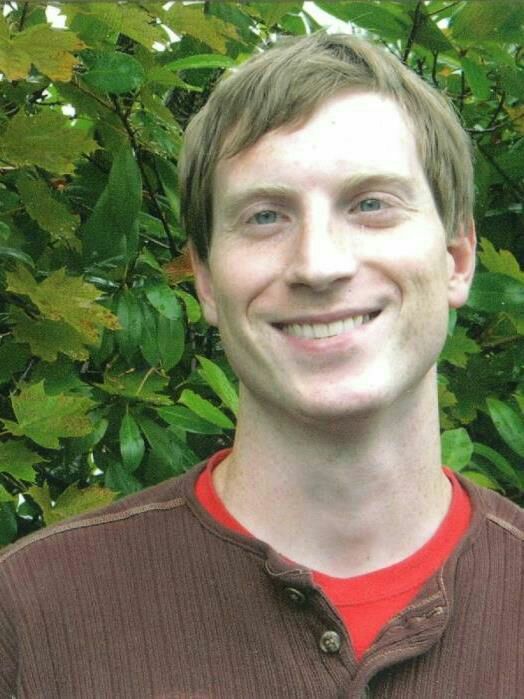
The BC free-response section separates high scorers not by who knows the most calculus, but by who can move fluently between series, parametric, and polar questions without losing momentum. Chris — wh...
Education & Certificates
University of Washington
MS
Rose-Hulman Institute of Technology
MS

Applied Mathematics at Seattle University means Amanda builds calculus understanding from structure up — and that foundation shapes how she coaches students through the AP Calculus BC exam's free-resp...
Education & Certificates
Seattle University
Current Undergrad Student, Applied Mathematics
ACT Scores
I am a licensed physician from Florida who is currently changing careers. I graduated from the University of Pennsylvania in 2009 and have extensive tutoring and editing experience. While a student, I...
Education & Certificates
Nova Southeastern University
PHD, Medicine
University of Pennsylvania
Bachelors, History
SAT Scores

I'm a recent Stanford graduate (Electrical Engineering and Computer Science), and have been working at a major Management Consulting firm for a few years now. I personally scored a 2360 (out of 2400) ...
Education & Certificates
Stanford University
Bachelors in Electrical Engineering and Computer Science
ACT Scores
Kate's Masters in Environmental Engineering from MIT means she spent years applying calculus to real systems — fluid dynamics, contaminant transport, rate modeling — and that applied fluency is what s...
Education & Certificates
Massachusetts Institute of Technology
Masters, Environmental Engineering
Massachusetts Institute of Technology
Bachelors
SAT Scores
The BC-only topics — parametric equations, polar curves, and series convergence tests — trip up students who prepped primarily for AB and assume the extra material is just more of the same. Rhea diagn...
Education & Certificates
University of Chicago
Bachelor of Science, Biology, General
ACT Scores

I am enrolled in the Mechanical Engineering PhD program at Rice University which will begin Fall 2020, and I am hoping to return to academia as a professor after earning my PhD. In the meantime, I am ...
Education & Certificates
University of Notre Dame
Bachelor of Science
Rice University
Doctor of Philosophy, Mechanical Engineering
ACT Scores
I am available to tutor middle and high school math, history and test prep. I have tutored math and history in the past and I previously taught a test prep course at a school in Hanoi, Vietnam. I have...
Education & Certificates
Harvard University
Master of Public Policy, Public Policy
ACT Scores
I am a published author who has enjoyed “coaching” our daughter, as she navigated through high school, college and graduate school. I mentor college juniors who are seeking careers in financial servic...
Education & Certificates
University of Pittsburgh
Bachelor of Science, English, Psychology
SAT Scores
Frequently Asked Questions
AP Calculus BC covers everything in AB plus additional topics: parametric equations, polar coordinates, vector-valued functions, and series (including Taylor and Maclaurin series). BC also moves faster through AB content. A tutor experienced with BC understands how to build connections between these advanced topics and the foundational calculus concepts, and can help you see why series matter for understanding function behavior—not just memorize formulas.
Students typically struggle most with series convergence tests (knowing when to use ratio test vs. comparison test), understanding parametric and polar derivatives, and connecting L'Hôpital's Rule to limit problems. Many also find the conceptual leap to Taylor series difficult—it's easy to plug into a formula but harder to understand why the approximation works. A tutor can break these topics into smaller pieces and use visual explanations (graphing parametric curves, animating series convergence) to build genuine understanding rather than just procedure.
The exam is 3 hours 15 minutes for 45 questions, split between multiple-choice (no calculator, then calculator-allowed) and free response. A strong strategy is to spend roughly 1.5 minutes per multiple-choice question and save harder ones for later, then allocate 10-15 minutes per free-response question. A tutor can help you practice this pacing with full-length practice tests, identify which question types slow you down (series problems often take longer), and develop shortcuts for calculations so you're not racing the clock on computational steps.
Common errors include: forgetting to check endpoints when finding absolute extrema, misidentifying which convergence test applies to a series, making sign errors with polar derivatives (the formula is r²dθ/dr, not r dθ/dr), and losing points on free response by not showing sufficient work or justifying answers. Many students also second-guess correct answers on the no-calculator section when they should trust their algebra. Tutoring helps you recognize and avoid these patterns through targeted practice on past exams and error analysis.
Yes—a tutor can identify exactly which AB concepts are holding you back (often implicit differentiation, related rates, or integration by parts) and rebuild those foundations while keeping you moving forward in BC content. This is more efficient than starting over; a skilled tutor will show you how AB gaps directly impact BC topics like parametric derivatives or improper integrals, so you see why filling the gap matters right now.
Series convergence is conceptual: the ratio test works because it compares growth rates of consecutive terms, the integral test works because it connects series to areas under curves, and alternating series converge when terms shrink to zero. A tutor can help you visualize these ideas (drawing the integral test, animating how ratios behave), work through why each test answers a specific question about the series, and practice choosing tests by recognizing patterns in the series structure—not by flowchart. This approach makes the tests stick and helps you apply them to unfamiliar series on the exam.
Free response requires clear justification and communication—you can't just write an answer. A tutor helps you practice writing explanations for each step (e.g., 'By the Intermediate Value Theorem, since f is continuous and changes sign, a zero exists'), showing all work even when you use a calculator, and correctly interpreting what the question is asking (does it want a derivative or an antiderivative?). Working through released exam free responses with feedback is the best preparation; a tutor can grade your work like the AP graders do and show you exactly where you're losing points.
You'll need to find zeros, compute definite integrals, and solve equations numerically on the calculator section. But many students waste time fumbling with calculator syntax or don't know their calculator can compute derivatives numerically. A tutor familiar with BC exams knows which calculator skills actually save time (and which are traps) and can show you efficient techniques—like using your calculator's solver feature for related rates problems or computing Taylor polynomial remainders quickly. The goal is using your calculator as a tool, not a crutch.
Other Seattle test prep
Let's find your perfect prep plan
Answer a few quick questions. We'll recommend the right plan and match you with a top 5% instructor.