Award-Winning AP Computer Science Principles Prep in Boston
Award-Winning AP Computer Science Principles Prep in Boston
Everything you need to crush the AP Computer Science Principles in Boston, MA. Live prep classes, practice tests, 1-on-1 expert tutoring, and AI-powered diagnostics.
Who needs prep?
No obligation. Takes ~1 minute.
Instructors from
- YaleUniversity
- PrincetonUniversity
- StanfordUniversity
- CornellUniversity
Featured by


AP Computer Science Principles Prep Classes
 Short-term classLive
AP Language & Composition: 4-Week Exam Review
The AP English Language & Composition exam covers a year’s worth of content in a single morning. So it pays to spend 4 weeks brushing up on concepts and getting the most important skills, formulas, and strategies top of mind to be ready for test day. That’s why this 4-week exam review class provides expert-led review of critical concepts along with strategic guidance on how to handle the question formats and time limits you’ll face on the exam. By the end of the course, you’ll be ready for multiple choice and free response questions on everything from the argument structure through rhetorical analysis.
 Short-term classLive
Medical Mysteries & Rare Conditions
Being a doctor involves a lot of detective work: symptoms make for good clues, but people often don't do a great job of describing them and even when they are, the clues don't always point to one clear suspect or diagnosis. That's why students love Medical Mysteries & Rare Conditions, a chance to learn a bit of biology through the lens of a doctor detective. Over four weekly sessions, you'll join Dr. Tabitha Michaud to learn to think like a doctor as you learn about types of symptoms, causes, and cures, and put your symptom sleuthing skills to the test to diagose, treat, and understand rare illnesses.
 Short-term classLive
High School Chemistry Fundamentals
Much like chemistry itself is the study of how the building blocks of matter–particles, atoms, molecules–combine, your chemistry knowledge builds from basic elements toward complex concepts, lab reports, and exams. That’s why High School Chemistry Fundamentals can be an integral force in your chemistry studies. Each week, an expert instructor will break down the key concepts that your current and upcoming chemistry lessons depend on, helping ensure that you’re ready for the challenges you encounter in your coursework and your foundations remain strong for midterm and final exams, cumulative assignments, and even future science classes.
 Short-term classLive
High School Biology Fundamentals
High School Biology is the study of the building blocks of life, how cells, systems, and processes interact to enable complex organisms to adapt and thrive. And just like living systems build from their foundations, your own biology knowledge builds concept by concept toward the complex skills you need for your labs and exams throughout the year. That’s why High School Biology Fundamentals is an integral component of your biology studies. Each week, an expert instructor will break down the key concepts that your current and upcoming biology lessons depend on, helping ensure that you’re ready for the challenges you encounter in your coursework and your foundations remain strong for midterm and final exams, cumulative assignments, and even future science classes.
 Short-term classLive
High School Physics Fundamentals
Is your Physics grade a little too low? Want to improve your understanding of the most challenging concepts? Fundamentals of High School Physics is a live, interactive class designed for students wanting to improve their knowledge of formulas, definitions, and equations. In weekly sessions, guided by an expert instructor, you’ll gain a better understanding of the laws and applications of motion, forces, gravity, work, and energy, as well as light and sound waves.
 Short-term classLive
Ocean Adventures
Over 70 percent of the earth’s surface is covered in oceans, so there’s always plenty to explore in Ocean Adventures class. Here students will learn about the waves and tides, amazing aquatic animals, shipwrecks, and more as each session covers a different oceanic theme. Students can join a single session to get their feet wet or come weekly to really exercise their sea legs.
 One-time classLive
Crustacean Exploration
What do crabs, lobsters, shrimp, and even tiny “sea monkeys” all have in common? They’re part of the fascinating world of crustaceans! Join the South Carolina Aquarium as we explore the unique features that make these animals stand out, from hard exoskeletons to impressive claws and surprising survival skills. Take a closer look at where crustaceans live, whether it’s the deep ocean, sandy shores, or a tank at your local aquarium, and how they’ve adapted to thrive in so many environments. We’ll also uncover the life cycle of brine shrimp and why these miniature creatures have captured the curiosity of generations. Along the way, discover the important roles crustaceans play in ecosystems and how they interact with other marine life. Let's dive in and discover just how amazing these shelled sea creatures can be!
 One-time classLive
Celebrating World Bird Migratory Day
What drives birds to travel thousands of miles across the globe each year? Join Wonders of Wildlife as we explore the amazing world of migratory birds and the incredible journeys they make. We’ll learn about different types of birds that migrate, where they travel, and the seasonal changes that guide their movements. Discover how these birds navigate vast distances using instincts, environmental cues, and remarkable adaptations. We’ll also take a look at the challenges migratory birds face along the way and the important conservation efforts working to protect them. Get ready to spread your wings and uncover the science behind one of nature’s most impressive phenomena!
 Short-term classLive
Introduction to Genetics
Dive into the fascinating world of genetics! In this four-week course, middle school students will explore the basics of DNA, how traits are inherited, and the science behind genetic variation. Through fun examples and engaging discussions, students will uncover how genetics shapes all living things.
 Short-term classLive
Jump Start to AP & Honors Chemistry
Chemistry is the study of the properties, structures, and reactions of matter—and how substances transform through interactions at the atomic and molecular level. From the periodic table to chemical equations, each concept builds on the last—so the foundations you begin the school year with tend to shape the reactions, outcomes, and confidence you carry through every lab and lesson. In this live, interactive summer class you will learn and review the key building blocks for success in advanced high school chemistry classes, including AP, IB, and honors classes. From scientific principles to essential math concepts, you’ll cover everything you need to confidently conquer your most challenging fall class.
 Short-term classLive
Animal Adventure Camp
Embark on a wild adventure with "Animal Adventure Camp," where Ms. Amalia brings the animal kingdom right to your screen! In this immersive five-day experience, young explorers will come face-to-face with fascinating creatures from across the globe through exciting live animal presentations. Students will journey from the slithering world of reptiles to the soaring heights of birds, track magnificent mammals, dive into mysterious ocean depths, and discover the tiny but mighty invertebrates that shape our world. Each day offers new animal friends to meet, amazing facts to learn, and unforgettable encounters that will spark curiosity and foster a deeper appreciation for wildlife in all its remarkable forms—whether ferocious or cuddly, massive or microscopic, from land, sea, or sky. Ms. Amalia, from Nature Explorers International, is an environmental educator and world explorer who makes classes come alive with stories from her real-life adventures, props from her science shelf, and live program animals. She’ll be joined by Scaly the corn snake, Slimy the tiger salamander, and Lizzie the leopard gecko, as well as coloring pages, art projects, and outdoor after-camp activities to supplement daily learning. Each day will include three interactive sections full of fun facts, guessing games, and investigating natural specimens. A short break in between each section will include movement game options such as animal yoga and freeze dance.
 Short-term classLive
Mini Med School Camp
Step into the exciting world of medicine as a student physician at our Mini Med School summer camp! Under the expert guidance of Dr. Tabitha Michaud, MD, young "medical students" will uncover the fascinating science behind how our bodies work, heal, and protect us. Young doctors-in-training will explore what's actually happening during common symptoms like coughing, fever, and pain; learn what doctors look for during examinations; and understand how the body's intricate defense systems operate. From understanding the healing process of a simple scrape to exploring the events in an allergic reaction, campers will develop a new appreciation for the remarkable machine that is the human body. No prior medical knowledge required—just bring your curiosity for an unforgettable experience of medical discovery!
Top-Rated AP Computer Science Principles Prep Instructors in Boston

Running an SAT prep class in high school taught Samuel something that transfers directly to AP CSP coaching: students earn more points when they understand the scoring logic behind a test, not just th...
Education & Certificates
California Institute of Technology
Bachelor of Science, Applied Mathematics
SAT Scores

Finance and economics training at Notre Dame built Benjamin's strongest prep skill: spotting how systems fit together — exactly the reasoning AP CSP's algorithm and data abstraction questions reward m...
Education & Certificates
University of Notre Dame
Bachelor of Science in Finance and Economics (minor: Innovation and Entrepreneurship)
ACT Scores
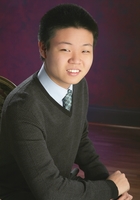
Biomedical engineering at Rice sits at the intersection of computation and biology — and that cross-disciplinary thinking is exactly what Daniel brings to AP CSP prep, where students who understand ho...
Education & Certificates
Rice University
Current Undergrad Student, Biomedical Engineering
SAT Scores
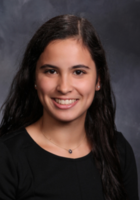
Operations Research PhD training at Georgia Tech is built on a simple premise: complex systems behave predictably when you understand their underlying logic — and that's exactly the mindset Isabella b...
Education & Certificates
Massachusetts Institute of Technology
Bachelor of Science in Mathematics (minors in Management Science and Ancient and Medieval Studies)
Georgia Institute of Technology-Main Campus
Current Grad Student, Operations Research
SAT Scores
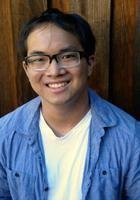
Cognitive science at Stanford trains a specific skill set — understanding how humans process information and make decisions — that maps directly onto the AP Computer Science Principles exam's emphasis...
Education & Certificates
Stanford University
Master of Science, Computer Science
Stanford University
Bachelor of Science, Cognitive Science
SAT Scores
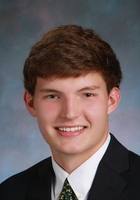
Daniel's electrical engineering curriculum at Vanderbilt — built on logic circuits, signal processing, and computational systems — gives him an unusually precise lens for the algorithm and data repres...
Education & Certificates
Vanderbilt University
Bachelor of Engineering, Electrical Engineering
ACT Scores

Cornell's biology curriculum demands the same kind of systems reasoning that AP CSP rewards on its algorithm and data abstraction questions — and Pratik uses that scientific framing to make computatio...
Education & Certificates
Cornell University
Bachelor in Arts, Biology, General
ACT Scores
Julia's Stanford economics training sharpens exactly the analytical skill AP CSP's multiple-choice section rewards most: reasoning about how systems behave under different inputs, not just recognizing...
Education & Certificates
Stanford University
Bachelor of Science, Economics
SAT Scores
AP Computer Science Principles trips up students on the Create Performance Task more than any multiple-choice section — and knowing how to document code decisions for a non-technical reader is a skill...
Education & Certificates
Yale University
Bachelor of Science, Computer Science
SAT Scores

Derek's Harvard Computer Science curriculum — the same environment that produced his 800 on the SAT Math Level 2 Subject Test and a 5 on AP Computer Science A — gives him a precise read on the gap bet...
Education & Certificates
Harvard University
Bachelor in Arts, Computer Science
SAT Scores
Frequently Asked Questions
Students typically struggle most with the Create Performance Task (CPT), which requires designing and implementing an original program while documenting the development process—many find the balance between coding complexity and clear documentation difficult. Algorithm design and abstraction also challenge students, particularly understanding how to break down problems into manageable pieces and recognize patterns across different coding contexts. Additionally, the Explore Performance Task's data analysis component requires students to interpret real-world datasets and draw meaningful conclusions, which demands both technical skills and critical thinking that don't always come naturally together.
A tutor can guide you through the entire performance task lifecycle—helping you select a meaningful project idea, plan your program's architecture, and implement it with clean, efficient code. They can also help you develop strong documentation practices by reviewing your written explanations of your code's purpose, design decisions, and how you tested it. For the Explore task, tutors can teach you how to formulate compelling research questions, select appropriate data analysis techniques, and communicate your findings clearly, which are often the weakest areas for students who focus only on the technical side.
AP Computer Science Principles is language-agnostic, so you can use Python, JavaScript, Java, C++, or any other language—the exam focuses on computational thinking and problem-solving, not syntax. That said, Python and JavaScript are popular choices because they have simpler syntax that lets you focus on algorithms and logic rather than wrestling with language details. A tutor can help you choose a language that matches your learning style and ensure you're using it effectively to demonstrate your understanding of core CSP concepts like loops, conditionals, functions, and data structures.
The multiple-choice section (2 hours) requires careful reading of code snippets and tracing through logic—practice identifying what variables store at each step and predicting output without running code. Time management is critical since you'll see 50-70 questions; flagging difficult ones and returning to them helps. For performance tasks, starting early in the school year and treating them like real projects (not last-minute submissions) makes a huge difference. A tutor can help you develop a practice testing schedule that simulates exam conditions and teaches you to recognize common question patterns, like identifying bugs in code or understanding how different algorithms compare in efficiency.
Abstraction—hiding complexity behind simpler interfaces—is easier to grasp when you build it yourself rather than just reading about it. A tutor can have you write functions that encapsulate specific tasks, then use those functions without worrying about their internal details, which builds intuition for why abstraction matters. For algorithms, working through trace-throughs on paper (following code line-by-line) and comparing different approaches to the same problem (like bubble sort vs. merge sort) helps you see why algorithm choice matters. Practice problems that ask you to predict what code does, modify it, or write similar code from scratch reinforce these concepts far better than passive reading.
You'll need to understand how to clean datasets, identify relevant variables, and use basic statistical measures (mean, median, standard deviation) or visualization techniques to uncover patterns and trends. The key is connecting your analysis back to a meaningful question—students often get caught up in the technical side and forget to explain *why* their findings matter. A tutor can teach you how to select appropriate analysis methods for different data types, interpret results correctly (avoiding common mistakes like confusing correlation with causation), and write clear explanations that show you understand what your data actually reveals about the real world.
Score improvement depends heavily on where you're starting and how much time you invest. Students who struggle with specific topics like algorithm design or performance task documentation often see significant gains (2-3 score points) within 4-6 weeks of focused tutoring, while students aiming for a 5 typically need to address subtle conceptual gaps that take longer to identify and fix. Consistent practice with performance tasks and timed practice exams, combined with targeted instruction on weak areas, tends to produce the most reliable improvements. A tutor can help you diagnose exactly where your understanding breaks down and create a realistic timeline based on your current level and target score.
Look for someone with strong programming experience across multiple languages and a clear understanding of computational thinking concepts—they should be able to explain *why* an algorithm works, not just show you the code. Experience with AP Computer Science Principles specifically (ideally having taught it or tutored it before) is valuable since they'll know which topics trip up students and how the exam actually tests your knowledge. They should also be comfortable with both the technical coding side and the communication skills needed for performance tasks, since many strong programmers struggle to document their thinking clearly—a good tutor bridges that gap.
Other Boston test prep
Let's find your perfect prep plan
Answer a few quick questions. We'll recommend the right plan and match you with a top 5% instructor.