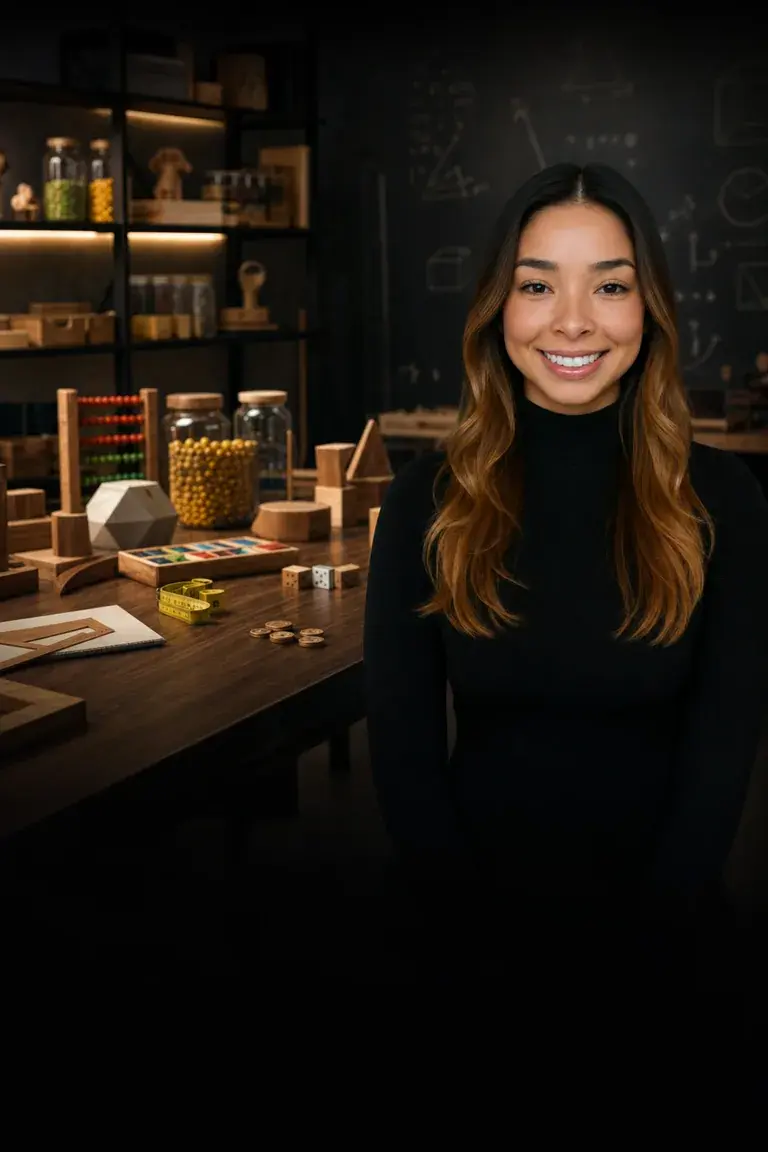
Hands-On Math Lab
Hands-On Math Lab is a dynamic, activity-driven course that turns abstract math concepts into real, touchable experiences.
Starts Tue, Nov 10
10:00 PM UTC · 45m
4 sessions
Evelyn
Outcomes, not lecture notes.
Count, represent, and compare numbers using physical manipulatives like coins, cards, and 10-frames
Identify, extend, and create repeating patterns using colors, shapes, and movement
Measure objects using non-standard units (string, measuring tape) and compare sizes using precise vocabulary
Build and identify 2D and 3D shapes, including constructing structures with Play-Doh and toothpicks
Calculate profit by subtracting costs from income in real-world scenarios like running a lemonade stand
Apply strategic thinking to combinatorics problems — figuring out how many different meal combinations are possible from a menu
Develop mental math and problem-solving skills through puzzles, games, and "Would You Rather" decision-making scenarios
Use mathematical reasoning to collect simple data, recognize quantities instantly (subitizing), and justify choices
Meet Evelyn.
Evelyn
Varsity Tutors live class instructor.
Hands-On Math Lab is a dynamic, activity-driven course that turns abstract math concepts into real, touchable experiences. Students work with everyday materials — coins, Play-Doh, string, cards, and more — to build genuine understanding of number sense, patterns, measurement, geometry, and financial literacy. Because this course runs across multiple cohorts, the specific topics covered are tailored to each group's level, ranging from foundational counting and shape-building to real-world money math and combinatorics. Whether your student is just getting comfortable with numbers or ready to think strategically about profits and combinations, Hands-On Math Lab delivers math that sticks by making it fun, physical, and immediately relevant. If your child learns best by doing, this is the class for them.
Counting With Coins and Cards Students count, compare, and show numbers with coins, cards, and 10-frames, and learn to recognize small amounts at a glance, sometimes while jumping or dancing.
Patterns in Colors and Moves Kids spot, extend, and make their own repeating patterns using colors, shapes, and body movements, an early step toward algebra.
Measuring and Building Shapes With string and measuring tape, students compare things using words like longer, shorter, heavier, and lighter, then build 2D and 3D shapes out of Play-Doh and toothpicks.
Lemonade Stands and Menu Puzzles Some groups use money words like cost and profit to see if a lemonade stand makes money, count the meal combinations on a menu, and explain their picks in Would You Rather games.
Live Q&A
Cameras / mics optional
Recordings
Available within 1 hour, kept 90 days
Materials
No special materials required
Similar classes


free with a Varsity Tutors membership
21
DAYS01
HRS35
MINTue, Nov 10 • 10:00pm UTC
4 classes, starts in 21 days
Sun, Nov 29 • 9:30pm UTC
4 classes, starts in 40 days
Thu, Jan 14 • 9:30pm UTC
4 classes, starts in 86 days
Sat, Feb 13 • 6:00pm UTC
4 classes, starts in 116 days
Wed, Mar 10 • 11:00pm UTC
4 classes, starts in 141 days
Hands-On Math Lab