Award-Winning AP World History Prep in Seattle
Award-Winning AP World History Prep in Seattle
Everything you need to crush the AP World History in Seattle, WA. Live prep classes, practice tests, 1-on-1 expert tutoring, and AI-powered diagnostics.
Who needs prep?
No obligation. Takes ~1 minute.
Instructors from
- YaleUniversity
- PrincetonUniversity
- StanfordUniversity
- CornellUniversity
Featured by


AP World History Prep Classes
 Short-term classLive
AP Physics 1: 4-Week Exam Review
The AP Physics 1 exam covers a year’s worth of content in a single morning. So it pays to spend 4 weeks brushing up on concepts and getting the most important skills, formulas, and strategies top of mind to be ready for test day. That’s why this 4-week exam review class provides expert-led review of critical concepts along with strategic guidance on how to handle the question formats and time limits you’ll face on the exam. From position, velocity, and acceleration through torque and rotational motion, including study and pacing strategies, you’ll cover everything you need to conquer the test.
 Short-term classLive
AP Calculus AB: 4-Week Exam Review
The AP Calculus AB exam covers a year’s worth of content in a single morning. So it pays to spend 4 weeks brushing up on concepts and getting the most important skills, formulas, and strategies top of mind to be ready for test day. That’s why this 4-week exam review class provides expert-led review of critical concepts along with strategic guidance on how to handle the test day question formats, time limits, and calculator restrictions. By the end of the course, you’ll have the most critical knowledge, skills, and strategies top of mind and ready to apply on the AP Calculus AB exam. From limits and integrals through differential equations and test-day pacing strategies, you’ll cover everything you need to conquer the test.
 Short-term classLive
AP Calculus BC: 4-Week Exam Review
The AP Calculus BC exam covers a year’s worth of content in a single morning. So it pays to spend 4 weeks brushing up on concepts and getting the most important skills, formulas, and strategies top of mind to be ready for test day. That’s why this 4-week exam review class provides expert-led review of critical concepts along with strategic guidance on how to handle the test day question formats, time limits, and calculator restrictions. By the end of the course, you’ll have the most critical knowledge, skills, and strategies top of mind and ready to apply on the AP Calculus BC exam. From limits and integrals through parametric equations and test-day pacing strategies, you’ll cover everything you need to conquer the test.
 Short-term classLive
AP Physics 2: 4-Week Exam Review
The AP Physics 2 exam covers a year’s worth of content in a single afternoon. So it pays to spend 4 weeks brushing up on concepts and getting the most important skills, formulas, and strategies top of mind to be ready for test day. That’s why this 4-week exam review class provides expert-led review of critical concepts along with strategic guidance on how to handle the question formats and time limits you’ll face on the exam. From fluids and forces through principles of quantum and nuclear physics, including study and pacing strategies, you’ll cover everything you need to conquer the test.
Semester classLiveAP Physics 1: 8-Week Exam Review
The AP Physics 1 exam is coming up quickly, and this comprehensive, 8-session review course will make sure you’re fully prepared to succeed on test day. These expert-led sessions will provide comprehensive concept review along with strategic guidance on how to handle the test day question formats and time limits. By the end of the course, you’ll have the most critical knowledge, skills, and strategies top of mind and ready to apply on the AP Physics exam. From position, velocity, and acceleration through torque and rotational motion, including study and pacing strategies, you’ll cover everything you need to conquer the test.
 Short-term classLive
AP Language & Composition: 4-Week Exam Review
The AP English Language & Composition exam covers a year’s worth of content in a single morning. So it pays to spend 4 weeks brushing up on concepts and getting the most important skills, formulas, and strategies top of mind to be ready for test day. That’s why this 4-week exam review class provides expert-led review of critical concepts along with strategic guidance on how to handle the question formats and time limits you’ll face on the exam. By the end of the course, you’ll be ready for multiple choice and free response questions on everything from the argument structure through rhetorical analysis.
 Semester classLive
AP Chemistry: 8-Week Exam Review
The AP Chemistry exam is coming up quickly, and this comprehensive, 8-session review course will make sure you’re fully prepared to succeed on test day. These expert-led sessions will provide comprehensive concept review along with strategic guidance on how to handle the test day question formats and time limits. By the end of the course, you’ll have the most critical knowledge, skills, and strategies top of mind and ready to apply on the AP Chemistry exam. From atomic structure through thermodynamics and experimental design to test-day pacing strategies, you’ll cover everything you need to conquer the test.
 Short-term classLive
AP Psychology: 4-Week Exam Review
The AP Psychology exam covers a year’s worth of content in a single afternoon. So it pays to spend 4 weeks reviewing key concepts from across the year and focusing on the concepts and strategies necessary to succeed on test day. That’s why this 4-week exam review class provides expert-led review of critical content and preparation for the question types you’ll face on the exam. From foundations of the discipline through clinical and social psychology, and including study and pacing strategies, you’ll cover everything you need to conquer the test.
 Semester classLive
AP Calculus AB: 8-Week Exam Review
The AP Calculus AB exam is coming up quickly, and this comprehensive, 8-session review course will make sure you’re fully prepared to succeed on test day. These expert-led sessions will provide comprehensive concept review along with strategic guidance on how to handle the test day question formats, time limits, and calculator restrictions. By the end of the course, you’ll have the most critical knowledge, skills, and strategies top of mind and ready to apply on the AP Calculus AB exam. From limits and integrals through differential equations and test-day pacing strategies, you’ll cover everything you need to conquer the test.
 Short-term classLive
AP Precalculus 4-Week Exam Review
The AP Precalculus exam covers a year’s worth of content in a single morning. So it pays to spend 4 weeks brushing up on concepts and getting the most important skills, formulas, and strategies top of mind to be ready for test day. That’s why this 4-week exam review class provides expert-led review of critical concepts along with strategic guidance on how to handle the test day question formats, time limits, and calculator restrictions. By the end of the course, you’ll have the most critical knowledge, skills, and strategies top of mind and ready to apply on the AP Precalculus exam. From polynomials and complex numbers to logarithmic and trigonometric functions, you’ll cover everything you need to conquer the test.
 Short-term classLive
AP Literature & Composition: 4-Week Exam Review
The AP Literature & Composition exam covers a year’s worth of content in a single morning. So it pays to spend 4 weeks reviewing key skills and concepts from across the year and focusing on the concepts and strategies necessary to succeed on test day. That’s why this 4-week exam review class provides expert-led review of critical content and preparation for the question types you’ll face on the exam. From fiction to poetry and multiple choice to free response questions, you’ll cover everything you need to conquer the test.
 One-time classLive
AP Calculus AB Monthly Review
Ace your AP Calculus AB class _and_ the AP exam — without cramming or falling behind. Our AP Calculus AB Monthly Review sessions are designed to help you stay one step ahead. Each month, an expert instructor will guide you through a focused review of the unit you’ve just covered in class, helping you reinforce key concepts, connect ideas across the curriculum, and build your personal study toolkit for May.
Top-Rated AP World History Prep Instructors in Seattle
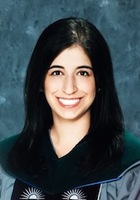
AP World History's scope — from 1200 CE to the present, across every major civilization — makes content coverage feel impossible, which is why students who try to memorize everything almost always und...
Education & Certificates
Nova Southeastern University
PHD, Medicine
University of Pennsylvania
Bachelors, History
SAT Scores

Nathan's Rice University history training taught him to read across centuries and regions for the patterns of cause, continuity, and change that the AP World History rubric rewards — and he coaches st...
Education & Certificates
Rice University
Bachelor in Arts, History
SAT Scores
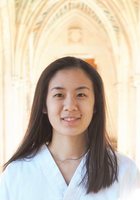
Florence's Computer Science training at Duke built an instinct for breaking complex systems into clean, logical structures — and she applies that same precision to the AP World History DBQ, where stud...
Education & Certificates
Duke University
Bachelor of Science, Computer Science
ACT Scores

Bethany's Master's work in Religious Studies at Duke trained her to read across cultural traditions and identify the belief systems, exchange networks, and ideological shifts that recur throughout AP ...
Education & Certificates
Duke University
Master of Arts, Religious Studies
University of California-Berkeley
Bachelor in Arts, History
SAT Scores
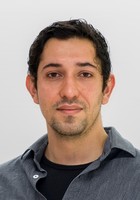
Five years of teaching history and social sciences across Colombia, Mexico, Germany, and Canada gave Esteban a firsthand understanding of how the same trade routes, colonial systems, and cultural exch...
Education & Certificates
National University of Colombia
Bachelor in Arts, Anthropology
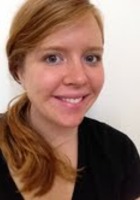
AP World History's comparative and continuity-and-change essays trip up students who treat the exam as a content recall test rather than an analytical writing challenge. Kirstie coaches students to re...
Education & Certificates
Harvard University
Masters in Education, Education
St Johns College
Bachelors, Liberal Arts
SAT Scores

Jonathan's University of Chicago political science training built one skill above all others: constructing tight, evidence-based arguments from incomplete information under pressure — exactly what AP ...
Education & Certificates
The University of Chicago
Bachelor in Arts, Political Science and Government
SAT Scores
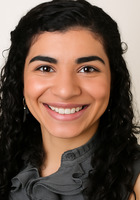
AP World History's essay prompts are designed to reward students who can argue across time periods and regions — not just recall events — and that skill is almost entirely trainable. Paula drills the ...
Education & Certificates
Vanderbilt University
Bachelor in Arts
ACT Scores
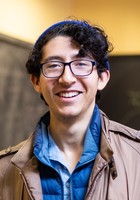
Tim's MIT training in computational science built a habit of finding structural patterns in complex systems — and that same instinct transfers directly to coaching students through AP World History's ...
Education & Certificates
Massachusetts Institute of Technology
Bachelor of Science, Computational Science
ACT Scores
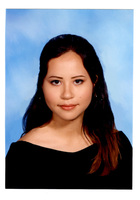
English training at Trinity College Dublin sharpened Ayako's instinct for what makes a written argument succeed or fail at the sentence level — and she applies that precision directly to the AP World ...
Education & Certificates
Trinity College Dublin
Bachelor in Arts, English
SAT Scores
Frequently Asked Questions
Students typically find the sheer breadth of content overwhelming—covering roughly 10,000 years across all continents requires synthesizing massive amounts of information. Specific trouble spots include understanding complex trade networks (Silk Road, Indian Ocean trade), distinguishing between similar empires and dynasties across regions, and grasping cause-and-effect relationships in global events like the Industrial Revolution or decolonization. Many students also struggle with comparative analysis, which the exam heavily emphasizes—the ability to identify patterns and differences across time periods and regions doesn't come naturally without targeted practice.
The AP exam tests five major themes: Developments and Processes, Sourcing and Situation, Claims and Evidence from Sources, Contextualization, and Continuity and Change. Rather than memorizing events year-by-year, effective students group content by these themes—for example, studying how technology (printing press, steam engine, internet) transformed societies across different time periods, or analyzing how power structures evolved globally. A tutor can help you create thematic study guides and practice identifying which theme each exam question targets, so you're not just recalling facts but understanding the deeper historical patterns the College Board is testing.
The Document-Based Question (DBQ) provides 7 sources and asks you to analyze them while incorporating outside knowledge—it tests your ability to evaluate evidence and construct arguments from primary sources. The Long Essay Question (LEQ) gives you a prompt with no sources and requires you to build an argument entirely from your knowledge, testing synthesis and periodization skills. DBQ success depends on close reading, source analysis, and understanding historical context, while LEQ success requires strong thesis development and the ability to select the most relevant evidence from your knowledge. Tutors can help you practice both formats separately, teaching you time management (45 minutes for DBQ, 40 for LEQ) and how to structure responses that earn maximum points on the rubric.
AP World History divides into four periods: Period 1 (1200 BCE–500 CE), Period 2 (500–1450 CE), Period 3 (1450–1750 CE), and Period 4 (1750–present). The challenge isn't memorizing dates—it's understanding why these divisions matter and recognizing how different regions experienced transitions at different times. For example, the Renaissance happened in Europe around 1300–1600, but that same period saw the Ming Dynasty in China and the Songhai Empire in Africa with completely different developments. Strong students learn to explain what changed during each period globally, what caused those changes, and what continuities persisted. A tutor can help you build a flexible periodization framework that accounts for regional variations rather than forcing all of world history into a Eurocentric timeline.
The DBQ deliberately includes sources you haven't studied before, so the skill being tested is your ability to extract meaning from unfamiliar documents. Start by identifying the source's basic information: who created it, when, where, and for what purpose (SOAPS—Source, Occasion, Audience, Purpose, Subject). Then read for both explicit claims and implicit biases—a wealthy merchant's letter about trade routes reveals different information than a peasant's account of the same period. Finally, connect the source to the historical context you know, explaining how it supports or complicates your argument. Tutors can give you practice with a wide range of source types (letters, maps, artwork, government documents) so you develop confidence analyzing anything the exam throws at you.
Comparative questions require you to identify both similarities and differences, then explain why those patterns matter historically. Rather than listing facts about Region A then Region B, effective responses weave comparisons throughout—for example, explaining how both the Ottoman and Mughal empires used gunpowder to expand, but the Ottomans faced different geographic and political constraints that shaped their strategies differently. The key is moving beyond surface-level observations ("both had armies") to analytical insights ("both empires centralized power through military technology, but their different relationships with trade networks affected their long-term stability"). Tutors help you practice identifying the right comparison framework for each question and developing the analytical language to articulate meaningful historical patterns.
The exam gives you 3 hours 15 minutes for 45 multiple-choice questions (55 minutes), a DBQ (60 minutes including reading time), and an LEQ (40 minutes). Many students lose points by spending too much time on the DBQ, leaving insufficient time for the LEQ. A strong strategy: spend 10–15 minutes reading DBQ sources and planning, 30–35 minutes writing, then move to the LEQ with at least 35–40 minutes remaining. For multiple-choice, aim for roughly 1 minute per question, flagging difficult ones to revisit if time allows. Tutors can help you practice full-length timed sections, identify which question types slow you down, and develop pacing strategies so you're not rushing through the LEQ—where strong writing and analysis earn significant points.
Score improvement depends on your starting point and effort level. Students who begin with inconsistent understanding of major periods and weak source analysis skills often see 2–4 point jumps (on the 1–5 scale) within 8–12 weeks of focused tutoring, particularly when they practice full-length exams and receive feedback on their essays. Students already scoring 3–4 typically improve by 1 point, as they're refining higher-level skills like nuanced comparative analysis and sophisticated argumentation. The most significant gains come from students who combine tutoring with consistent independent practice—working through past exam questions, writing timed essays, and reviewing feedback. A tutor can diagnose exactly which skills are holding you back (weak thesis statements, missed contextualization, poor time management) and create a targeted improvement plan.
Other Seattle test prep
Let's find your perfect prep plan
Answer a few quick questions. We'll recommend the right plan and match you with a top 5% instructor.