Award-Winning AP Physics C: Electricity and Magnetism Prep in Seattle
Award-Winning AP Physics C: Electricity and Magnetism Prep in Seattle
Everything you need to crush the AP Physics C: Electricity and Magnetism in Seattle, WA. Live prep classes, practice tests, 1-on-1 expert tutoring, and AI-powered diagnostics.
Who needs prep?
No obligation. Takes ~1 minute.
Instructors from
- YaleUniversity
- PrincetonUniversity
- StanfordUniversity
- CornellUniversity
Featured by


AP Physics C: Electricity and Magnetism Prep Classes
 Short-term classLive
Jump Start to AP & Honors Chemistry
Chemistry is the study of the properties, structures, and reactions of matter—and how substances transform through interactions at the atomic and molecular level. From the periodic table to chemical equations, each concept builds on the last—so the foundations you begin the school year with tend to shape the reactions, outcomes, and confidence you carry through every lab and lesson. In this live, interactive summer class you will learn and review the key building blocks for success in advanced high school chemistry classes, including AP, IB, and honors classes. From scientific principles to essential math concepts, you’ll cover everything you need to confidently conquer your most challenging fall class.
 Short-term classLive
Jump Start to AP & Honors Physics
Physics is the study of the fundamental forces and principles that govern how matter and energy interact in the universe. From motion and momentum to waves and electricity, each concept builds on the last—so the foundations you begin the school year with tend to govern your trajectory and velocity throughout the school year. In this live, interactive summer class you will learn and review the key building blocks for success in advanced high school physics classes, including AP, IB, and honors classes. From scientific principles to essential math concepts, you’ll cover everything you need to start your most challenging fall class with energy and momentum.
 Short-term classLive
Jump Start to AP Computer Science A
Computer Science is the study of how we use logic and code to solve problems and build the digital world around us. From variables and conditionals to classes and objects, each concept builds logically on the last—so the foundations you start with often determine how efficiently and confidently you can program throughout the year. In this live, interactive summer class, you’ll learn and review the key building blocks for success in advanced high school computer science courses, including AP Computer Science A. From core Java syntax to problem-solving strategies, you’ll cover everything you need to start this rigorous coding class with structure and logic.
 Short-term classLive
Jump Start to AP & Honors Biology
Biology is the study of the building blocks of life, how cells, systems, and processes interact to enable complex organisms to adapt and thrive. And just like living systems build from their foundations, your own biology knowledge builds concept by concept toward the complex skills you need for your labs and exams throughout the year. In this live, interactive summer class you will learn and review the key building blocks for success in advanced high school biology classes, including AP, IB, and honors classes. Armed with sound fundamentals you’ll be ready to hit the ground running in the new school year and thrive in your most challenging fall class.
 Short-term classLive
High School Physics Fundamentals
Is your Physics grade a little too low? Want to improve your understanding of the most challenging concepts? Fundamentals of High School Physics is a live, interactive class designed for students wanting to improve their knowledge of formulas, definitions, and equations. In weekly sessions, guided by an expert instructor, you’ll gain a better understanding of the laws and applications of motion, forces, gravity, work, and energy, as well as light and sound waves.
Top-Rated AP Physics C: Electricity and Magnetism Prep Instructors in Seattle
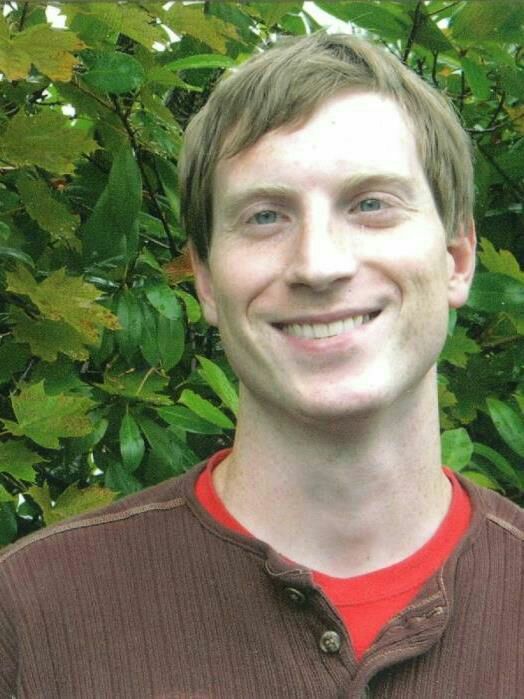
Ten years of physics and math instruction — spanning AP courses, private school classrooms, and graduate-level work at the University of Washington — gives Chris an unusually detailed map of where stu...
Education & Certificates
University of Washington
MS
Rose-Hulman Institute of Technology
MS

I am a licensed physician from Florida who is currently changing careers. I graduated from the University of Pennsylvania in 2009 and have extensive tutoring and editing experience. While a student, I...
Education & Certificates
Nova Southeastern University
PHD, Medicine
University of Pennsylvania
Bachelors, History
SAT Scores

I'm available to tutor biology, chemistry, physics, math from Algebra up through AP Calculus, SAT test prep, and French. I've been tutoring students in science and math for 7 years. I also spent 8 mon...
Education & Certificates
Massachusetts Institute of Technology
Masters, Environmental Engineering
Massachusetts Institute of Technology
Bachelors
SAT Scores

I'm a recent Stanford graduate (Electrical Engineering and Computer Science), and have been working at a major Management Consulting firm for a few years now. I personally scored a 2360 (out of 2400) ...
Education & Certificates
Stanford University
Bachelors in Electrical Engineering and Computer Science
ACT Scores

I am enrolled in the Mechanical Engineering PhD program at Rice University which will begin Fall 2020, and I am hoping to return to academia as a professor after earning my PhD. In the meantime, I am ...
Education & Certificates
University of Notre Dame
Bachelor of Science
Rice University
Doctor of Philosophy, Mechanical Engineering
ACT Scores

I am available to tutor middle and high school math, history and test prep. I have tutored math and history in the past and I previously taught a test prep course at a school in Hanoi, Vietnam. I have...
Education & Certificates
Harvard University
Master of Public Policy, Public Policy
ACT Scores

I am a current student at the University of Chicago. I am working towards a Bachelor of Science in Biological Sciences, and I am on the pre-medical track. I am extremely passionate about tutoring, and...
Education & Certificates
University of Chicago
Bachelor of Science, Biology, General
ACT Scores

I am currently a second year medical student. I was a Physiological Sciences major at UCLA (class of 2015), and pursued research during my gap year between undergrad and medical school.
Education & Certificates
University of California Los Angeles
Bachelors, Physiological Sciences
Drexel University College of Medicine
Current Grad Student, MD
SAT Scores

I am willing to address any issue with an open mind and I try to develop strategies that play to a student's strengths. I would like to think I am very approachable and personable, and I have had very...
Education & Certificates
University of Notre Dame
Bachelor in Arts
ACT Scores
I am comfortable with either setting. I'm confident that I can help you (or your student) achieve to the best of their ability, so please don't hesitate to get in touch!
Education & Certificates
University of Pennsylvania
Masters, Chemical and Biomolecular Engineering
University of Pennsylvania
Bachelors, Chemical and Biomolecular Engineering
SAT Scores
Frequently Asked Questions
Students typically struggle most with Gauss's Law applications, especially recognizing which symmetries allow for simplified solutions, and with electromagnetic induction concepts like Faraday's Law and Lenz's Law. Many also find the transition from electrostatics to magnetism conceptually difficult, particularly understanding magnetic force on moving charges and the relationship between electric and magnetic fields. Additionally, Maxwell's equations and their physical interpretations often require targeted practice to master.
The free-response section requires showing all work and explaining your reasoning, not just final answers. Start by identifying which physics principles apply (Coulomb's Law, Gauss's Law, Ampere's Law, etc.), set up equations clearly, and work through the algebra methodically. Many students lose points by skipping steps or failing to justify their approach—even if your final answer is wrong, partial credit rewards correct reasoning. Practice problems with detailed solutions help you internalize the expected format and develop a systematic problem-solving routine.
Yes, AP Physics C: Electricity and Magnetism requires comfort with calculus, including derivatives, integrals, and basic vector operations. You'll use calculus to understand how electric and magnetic fields change, work with line and surface integrals in Gauss's Law and Ampere's Law, and solve differential equations related to electromagnetic phenomena. If your calculus foundation is shaky, strengthening that skill first makes the physics concepts much more accessible and less intimidating.
The exam is 90 minutes total with 35 minutes for multiple choice (25 questions) and 55 minutes for free response (3 questions). Aim to spend roughly 1.5 minutes per multiple-choice question, leaving time to review. For free response, allocate about 18 minutes per question, but start with whichever question you feel most confident about to build momentum. Taking full-length practice tests under timed conditions is essential—it reveals which topics you can solve quickly versus those requiring more thought, helping you identify where to focus your study efforts.
Conceptual questions in AP Physics C: Electricity and Magnetism test whether you understand *why* equations work, not just how to plug in numbers. Spend time drawing field diagrams, predicting how fields change when charges or currents move, and explaining the physical meaning behind each equation. Practice questions that ask "What happens if...?" or require ranking scenarios without calculation. Working with a tutor who can ask probing questions about your reasoning helps expose gaps in understanding that pure calculation practice won't catch.
Score improvement depends on where you're starting and how much time you invest. Students with solid fundamentals who struggle with specific topics (like induction or field applications) often see 2-3 score points of improvement with 4-6 weeks of focused tutoring. Those building from weaker foundations may need longer, but consistent work on weak areas, regular practice tests, and targeted review of mistakes typically yields measurable gains. The key is identifying exactly which concepts or problem types are holding you back, then drilling those systematically.
Gauss's Law is powerful but abstract—start by understanding the physical idea: the total electric flux through a closed surface relates to the enclosed charge. Then practice identifying symmetries (spherical, cylindrical, planar) that let you simplify the math. Work through problems in stages: sketch the geometry and field lines, choose your Gaussian surface, apply the law algebraically, then interpret your result. Many students skip the visualization step and get lost in equations. Building intuition through diagrams and conceptual questions before diving into calculations makes the topic much more manageable.
Anxiety often stems from feeling unprepared or encountering an unfamiliar problem type. Combat this by taking multiple full-length practice tests so the exam format feels familiar, and by reviewing your mistakes thoroughly to build confidence in your problem-solving process. During the exam, if you encounter a difficult question, skip it and return later—staying calm and maintaining momentum on easier problems prevents panic. Deep breathing, positive self-talk, and remembering that you don't need a perfect score to earn a 5 can help you stay focused and perform at your best.
Other Seattle test prep
Let's find your perfect prep plan
Answer a few quick questions. We'll recommend the right plan and match you with a top 5% instructor.