Award-Winning AP Statistics Prep in Houston
Award-Winning AP Statistics Prep in Houston
Everything you need to crush the AP Statistics in Houston, TX. Live prep classes, practice tests, 1-on-1 expert tutoring, and AI-powered diagnostics.
Who needs prep?
No obligation. Takes ~1 minute.
Instructors from
- YaleUniversity
- PrincetonUniversity
- StanfordUniversity
- CornellUniversity
Featured by


AP Statistics Prep Classes
 Short-term classLive
Jump Start to AP & Honors Chemistry
Chemistry is the study of the properties, structures, and reactions of matter—and how substances transform through interactions at the atomic and molecular level. From the periodic table to chemical equations, each concept builds on the last—so the foundations you begin the school year with tend to shape the reactions, outcomes, and confidence you carry through every lab and lesson. In this live, interactive summer class you will learn and review the key building blocks for success in advanced high school chemistry classes, including AP, IB, and honors classes. From scientific principles to essential math concepts, you’ll cover everything you need to confidently conquer your most challenging fall class.
 Short-term classLive
Jump Start to AP & Honors Biology
Biology is the study of the building blocks of life, how cells, systems, and processes interact to enable complex organisms to adapt and thrive. And just like living systems build from their foundations, your own biology knowledge builds concept by concept toward the complex skills you need for your labs and exams throughout the year. In this live, interactive summer class you will learn and review the key building blocks for success in advanced high school biology classes, including AP, IB, and honors classes. Armed with sound fundamentals you’ll be ready to hit the ground running in the new school year and thrive in your most challenging fall class.
 Short-term classLive
Jump Start to AP & Honors Physics
Physics is the study of the fundamental forces and principles that govern how matter and energy interact in the universe. From motion and momentum to waves and electricity, each concept builds on the last—so the foundations you begin the school year with tend to govern your trajectory and velocity throughout the school year. In this live, interactive summer class you will learn and review the key building blocks for success in advanced high school physics classes, including AP, IB, and honors classes. From scientific principles to essential math concepts, you’ll cover everything you need to start your most challenging fall class with energy and momentum.
 Short-term classLive
Jump Start to AP Computer Science A
Computer Science is the study of how we use logic and code to solve problems and build the digital world around us. From variables and conditionals to classes and objects, each concept builds logically on the last—so the foundations you start with often determine how efficiently and confidently you can program throughout the year. In this live, interactive summer class, you’ll learn and review the key building blocks for success in advanced high school computer science courses, including AP Computer Science A. From core Java syntax to problem-solving strategies, you’ll cover everything you need to start this rigorous coding class with structure and logic.
Top-Rated AP Statistics Prep Instructors in Houston

Adam's Cognitive Sciences degree from Rice is grounded in the same probabilistic reasoning AP Statistics tests — understanding how the brain processes uncertainty maps directly onto why sampling distr...
Education & Certificates
Rice University
Bachelor of Arts in Cognitive Sciences (minor in Spanish)
ACT Scores

Vinson's Computational Mathematics training at Rice is built around the same probability and inference logic that AP Statistics rewards — not as a collection of procedures to recall, but as a connecte...
Education & Certificates
Rice University
Bachelor in Arts, Computational Mathematics
ACT Scores

Electrical engineering at The Chinese University of Hong Kong is a discipline built on signal processing and probabilistic modeling — the same quantitative reasoning that underpins every sampling dist...
Education & Certificates
The Chinese University of Hong Kong
Bachelor of Engineering, Electrical Engineering

Sage's Economics degree from Rice runs on the same statistical reasoning AP Statistics tests — regression, inference, and probability aren't abstract procedures to her but tools for answering real que...
Education & Certificates
Rice University
Bachelor in Arts, Economics
SAT Scores

Taking over ten AP courses in high school gave Crystal a firsthand map of exactly where students lose points under exam pressure — and AP Statistics is a course where the gap between knowing the mater...
Education & Certificates
Houston Baptist University
Bachelor of Science, Chemistry

I am an interdisciplinary educator with an Ed.M. from the Harvard Graduate School of Education and a B.A. from Dartmouth College. My background is primarily in integrated arts learning and museum educ...
Education & Certificates
Harvard University
Masters in Education, Education
Dartmouth College
B.A.
SAT Scores
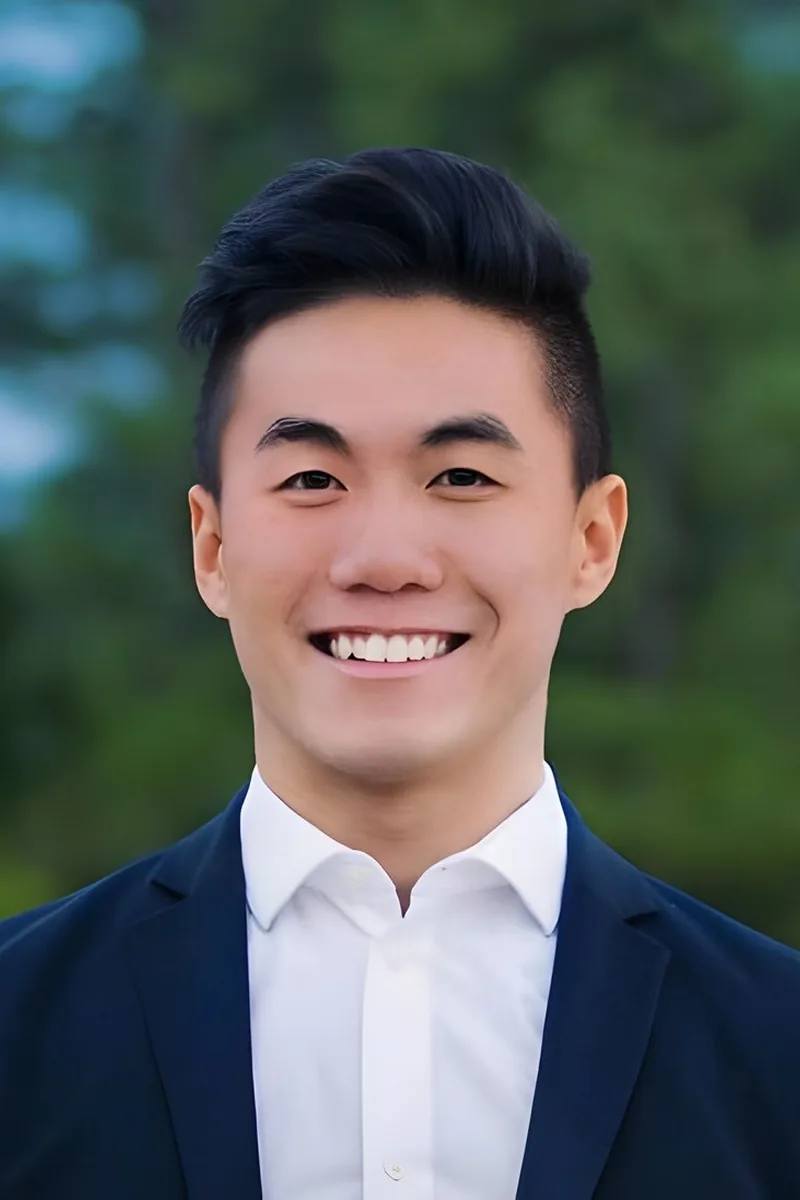
I'm not tutoring or buried in my textbooks, you will either find me rock climbing at the Triangle Rock Club, playing Ultimate Frisbee, working on my car, or enjoying the great outdoors (beaches, mount...
Education & Certificates
The University of Texas at Dallas
Bachelors, Mechanical Engineering
Duke University
Current Grad Student, Mechanical Engineering
SAT Scores

I am a recent graduate from a masters program in biostatistics at Columbia University. I received my Bachelor of Arts in biological sciences, with a focus in neurobiology at Northwestern University. I...
Education & Certificates
Columbia University
Masters in biostatistics
Northwestern University
Bachelor of Arts in biological sciences (focus in neurobiology)
SAT Scores

I am a graduate of Wesleyan University, where I received my Bachelor of Arts in Sociology with High Honors. With eight years of experience working in education, I've tutored students in math, science,...
Education & Certificates
Harvard University
PHD, Education
Wesleyan University
Bachelor in Arts, Sociology
ACT Scores

I am a rising sophomore at Harvard College and am about to declare as a Mechanical Engineering concentrator, working towards a Bachelor of Science degree. I've always enjoyed sharing my knowledge with...
Education & Certificates
Harvard College
Bachelor of Science, Mechanical Engineering
ACT Scores
Frequently Asked Questions
Students typically find probability distributions, hypothesis testing, and inference the most challenging units. Many struggle with understanding when to use z-tests versus t-tests, interpreting p-values correctly, and distinguishing between Type I and Type II errors. Additionally, the transition from descriptive statistics to inferential statistics trips up many students because it requires a conceptual shift—moving from describing data you have to making conclusions about populations you don't have complete information about. Tutors with AP Statistics expertise focus heavily on these concepts with targeted practice and clear conceptual explanations rather than just formula memorization.
The AP Statistics exam has 40 multiple-choice questions (90 minutes) and 6 free-response questions including one investigative task (90 minutes), requiring different strategies for each section. On the multiple-choice portion, time management is critical—you have roughly 2 minutes per question, so identifying when to skip and return to harder problems is essential. Free-response questions require you to show your reasoning, define variables, and justify conclusions, which means partial credit is possible even if your final answer isn't perfect. A tutor can help you practice both sections under timed conditions and teach you how to structure responses that earn maximum points, particularly for the investigative task which tests your ability to design and critique studies.
Calculator proficiency is crucial since the AP Statistics exam allows graphing calculators for the entire test, and many calculations (normal probabilities, t-tests, confidence intervals, regression) are much faster with a calculator's statistical functions. However, you must understand what the calculator is computing—blindly plugging numbers in without knowing whether to use 1-PropZTest or 2-PropZTest will lead to wrong answers. Tutors emphasize learning your calculator's specific functions (TI-84 is most common), practicing calculations under timed conditions, and always being able to explain the logic behind which test or procedure you're using, not just which button you pressed.
Score improvement depends on your starting point and consistency. Students who begin tutoring with weak conceptual foundations typically see larger gains (5-7 points on the 1-5 scale) when they work through systematic review of units like probability and inference. Students already scoring 3-4 often improve to 4-5 by refining their free-response writing, avoiding careless errors on multiple choice, and mastering the nuances of hypothesis testing interpretation. Realistic improvement requires regular practice with released AP exams, targeted review of weak topics, and time between sessions for independent problem-solving—tutors guide the strategy, but you do the work.
Starting 3-4 months before the exam allows time to work through all major units systematically and build conceptual understanding rather than cramming formulas. If you're starting closer to the exam (6-8 weeks out), tutoring should focus on your weakest topics and full-length practice test review. Some students benefit from ongoing tutoring throughout the year to stay current with coursework, while others use tutoring strategically during the units they find hardest. A tutor can assess your current level and help you create a realistic study plan based on when you're taking the exam and which topics need the most attention.
The inference unit is abstract—students must understand that a 95% confidence interval doesn't mean there's a 95% probability the true parameter is in that interval (a common misconception), and that p-values measure evidence against the null hypothesis, not the probability the null is true. These conceptual errors persist because students memorize procedures without grasping the underlying logic. Expert tutors use simulations, visual explanations, and repeated practice with varied contexts to build genuine understanding, then help you interpret confidence intervals and p-values correctly on both multiple-choice and free-response questions where interpretation is explicitly tested.
Graders award points for: clearly defining variables and parameters, stating the correct procedure or test by name, showing calculations or reasoning, and providing conclusions in context of the problem. Many students lose points by stating conclusions like "reject the null hypothesis" without explaining what that means in the actual scenario—graders want to see that you understand the practical significance, not just the statistical result. The investigative task also rewards you for critiquing study design and identifying limitations. Tutors teach you to structure free-response answers using a consistent format (like State-Plan-Do-Conclude) that ensures you hit all the points graders are looking for.
Full-length, timed practice tests should be a regular part of your study plan starting 6-8 weeks before the exam—they reveal which topics you need to review and help you build stamina and pacing strategy. After completing a practice test, spend time analyzing every wrong answer to understand whether you made a conceptual error, misread the question, or ran out of time. A tutor can review your practice tests with you, identify patterns in your mistakes (e.g., consistently misinterpreting confidence interval language, or rushing through free-response), and target tutoring sessions to address those specific weaknesses rather than re-teaching topics you already understand.
Other Houston test prep
Let's find your perfect prep plan
Answer a few quick questions. We'll recommend the right plan and match you with a top 5% instructor.