Award-Winning AP Environmental Science Prep in Houston
Award-Winning AP Environmental Science Prep in Houston
Everything you need to crush the AP Environmental Science in Houston, TX. Live prep classes, practice tests, 1-on-1 expert tutoring, and AI-powered diagnostics.
Who needs prep?
No obligation. Takes ~1 minute.
Instructors from
- YaleUniversity
- PrincetonUniversity
- StanfordUniversity
- CornellUniversity
Featured by


AP Environmental Science Prep Classes
 Short-term classLive
It's Not Magic, It's Science
Learning can be magical! In this class, students will learn magic tricks and solutions to seemingly-impossible challenges, plus learn the scientific explanations that make them work. In each class, learners will participate in several tricks and challenges that use the principles of science to do something amazing, break down the scientific principles that made each trick possible, and learn how those principles apply to practical purposes in our daily lives. By the end of each session, students will have new magic tricks to wow their friends and family, and new scientific knowledge to impress their teachers, too. Most tricks will simply use household items and school supplies, making it easy for students to learn, practice, and perform their new tricks.
 Short-term classLive
High School Biology Fundamentals
High School Biology is the study of the building blocks of life, how cells, systems, and processes interact to enable complex organisms to adapt and thrive. And just like living systems build from their foundations, your own biology knowledge builds concept by concept toward the complex skills you need for your labs and exams throughout the year. That’s why High School Biology Fundamentals is an integral component of your biology studies. Each week, an expert instructor will break down the key concepts that your current and upcoming biology lessons depend on, helping ensure that you’re ready for the challenges you encounter in your coursework and your foundations remain strong for midterm and final exams, cumulative assignments, and even future science classes.
 Short-term classLive
Organic Chemistry Fundamentals
Few college classes are so universally intimidating as to be known nationwide by a single nickname. That's why Orgo students love having weekly, expert-led livestream sessions to make sure they stay ahead of the curve. Expert instructors are here to break down the most difficult concepts in organic chemistry in a way that is easy to understand and even enjoyable. From understanding reaction mechanisms to mastering stereochemistry, we've got you covered. Whether you're a regular attendee looking to stay ahead of the curve or a last-minute cram sessioner before exams, our flexible attendance options make it easy to fit our livestream sessions into your schedule. So why stress over organic chemistry when you can have fun learning it instead? Join us for our livestream course and let's make organic chemistry a breeze!
 Short-term classLive
High School Chemistry Fundamentals
Much like chemistry itself is the study of how the building blocks of matter–particles, atoms, molecules–combine, your chemistry knowledge builds from basic elements toward complex concepts, lab reports, and exams. That’s why High School Chemistry Fundamentals can be an integral force in your chemistry studies. Each week, an expert instructor will break down the key concepts that your current and upcoming chemistry lessons depend on, helping ensure that you’re ready for the challenges you encounter in your coursework and your foundations remain strong for midterm and final exams, cumulative assignments, and even future science classes.
 One-time classLive
AP Physics 1 Unit Review
Ace your AP Physics 1 class _and_ the AP exam — without cramming or falling behind. Our AP Physics 1 Monthly Review sessions are designed to help you stay one step ahead. Each month, an expert instructor will guide you through a focused review of the unit you’ve just covered in class, helping you reinforce key concepts, connect ideas across the curriculum, and build your personal study toolkit for May.
 Short-term classLive
General Chemistry Fundamentals
The path to many of the most sought-after majors, from pre-med to engineering, generally leads right through General Chemistry--and for many students, this challenging "weeder" class can be where that path stops, too. Turn Gen Chem from a gatekeeper to a gateway with weekly, expert-led classes as you review and preview concepts pertinent to your place in the semester. Each week, an expert instructor will guide you through key concepts and problem-solving strategies, giving you the tools you need to excel in your chemistry courses. From balancing equations to understanding reaction mechanisms, we've got you covered.
 Short-term classLive
Symptom Science: Sneezes, Scabs & More
Ever wonder what's really happening when you sneeze, bruise, or feel a fever coming on? Your body is a remarkable machine, performing countless protective actions every day – most of which are far more fascinating than you realize. In this engaging four-week series, Dr. Tabitha Michaud, MD takes students behind the scenes of common symptoms and sensations, revealing the intricate science that keeps us safe and healthy. From exploring why a paper cut heals to understanding the complex cascade of events in an allergic reaction, students will gain a deep appreciation for the body's defensive systems. Through live, interactive demonstrations and real-world medical examples, Dr. Michaud brings her clinical expertise to the classroom, helping students understand common sicknesses from a scientific perspective.
 Short-term classLive
Ocean Adventures
Over 70 percent of the earth’s surface is covered in oceans, so there’s always plenty to explore in Ocean Adventures class. Here students will learn about the waves and tides, amazing aquatic animals, shipwrecks, and more as each session covers a different oceanic theme. Students can join a single session to get their feet wet or come weekly to really exercise their sea legs.
 Short-term classLive
Earth Rocks!
From giant mountains to shiny gems, from volcanoes to earthquakes and Stonehenge to the Grand Canyon, everything about Earth totally rocks. And in this class, students will learn all about the rocks all around us. Each session will cover a different theme from plate tectonics to fossils and everything in between. Drop in for one session to pick up a few gems of knowledge or make it a weekly “rock cycle” appointment.
 Short-term classLive
Introduction to Genetics
Dive into the fascinating world of genetics! In this four-week course, middle school students will explore the basics of DNA, how traits are inherited, and the science behind genetic variation. Through fun examples and engaging discussions, students will uncover how genetics shapes all living things.
 Short-term classLive
The Science of Growing
One of the most noticeable parts of growing up is, well, growing up. Your shoe size changes seemingly overnight, your shortest classmate can become your tallest over the summer, and your teeth are literally falling out of your head to make room for bigger ones. If you stop to think about it, being a kid is crazy: how does your body know it's time to spurt up a few inches? Where does the "stuff" come from to make more of you? And how does so much of it happen without you feeling it every minute of every day? Join pediatrician Dr. Tabitha Michaud to investigate the science of growing: how your cells communicate with one another to know when (and where) to grow; how your body turns food into new teeth, longer bones, and stronger muscles; and how your body tells you what's happening inside so that you can give it the nutrients and rest it needs.
 Short-term classLive
High School Physics Fundamentals
Is your Physics grade a little too low? Want to improve your understanding of the most challenging concepts? Fundamentals of High School Physics is a live, interactive class designed for students wanting to improve their knowledge of formulas, definitions, and equations. In weekly sessions, guided by an expert instructor, you’ll gain a better understanding of the laws and applications of motion, forces, gravity, work, and energy, as well as light and sound waves.
Top-Rated AP Environmental Science Prep Instructors in Houston
Geophysics training at Texas A&M builds a particular instinct for tracing how Earth's physical systems interact — the same cause-and-effect reasoning that runs through APES multiple-choice questions o...
Education & Certificates
Texas A & M University-College Station
Current Undergrad, Geophysics

Biochemistry training at Rice University builds a particular instinct for reading environmental systems at the molecular level — exactly the kind of mechanistic reasoning APES multiple-choice question...
Education & Certificates
Rice University
Bachelor of Science, Biochemistry
The APES exam punishes students who treat it like a memorization test — the multiple-choice section is loaded with scenario-based questions that require applying concepts to unfamiliar contexts. Chris...
Education & Certificates
University of California-Berkeley
Current Undergrad, Molecular and Environmental Biology
Jake's Human Biology coursework at Stanford runs directly through the same ecological and health-policy intersections that APES tests hardest — the connections between human activity, environmental sy...
Education & Certificates
Stanford University
Current Undergrad, Human Biology
ACT Scores

Patricia's dual degree in Environmental Science from Washington University in St. Louis means she can diagnose exactly which content gaps — nutrient cycles, energy flow, environmental policy — are cos...
Education & Certificates
Washington University in St. Louis
Bachelor in Arts
SAT Scores
Graduate-level environmental science training at Johns Hopkins gives Kelsey a rare edge coaching AP Environmental Science — she can trace exactly why the exam's free-response questions reward systems ...
Education & Certificates
Johns Hopkins University
Master of Science, Environmental Science
Texas Tech University
Bachelor of Science, Cellular and Molecular Biology
ACT Scores

Hello, students! My name is Pranav, and I'm so excited to be tutoring with Varsity Tutors. I have vast experience tutoring both personally and professionally; I've held officer positions in several no...
Education & Certificates
Rice University
BS
SAT Scores
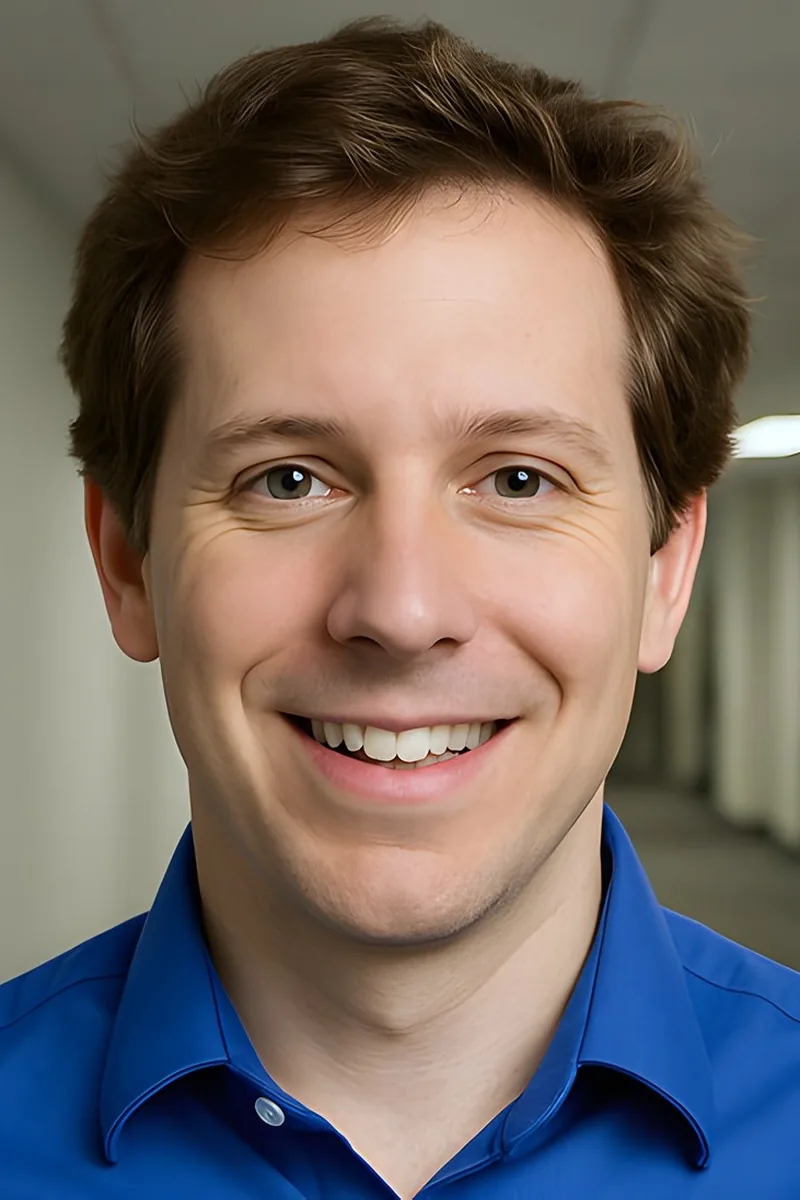
Jordan's path through neuroscience at UT Dallas and medical school at UT Houston trained a specific cognitive habit — tracing how complex biological systems break down and rebuild — that maps cleanly ...
Education & Certificates
The University of Texas at Dallas
Bachelor of Science, Neuroscience
The University of Texas Health Science Center at Houston
Doctor of Medicine, Premedicine
ACT Scores
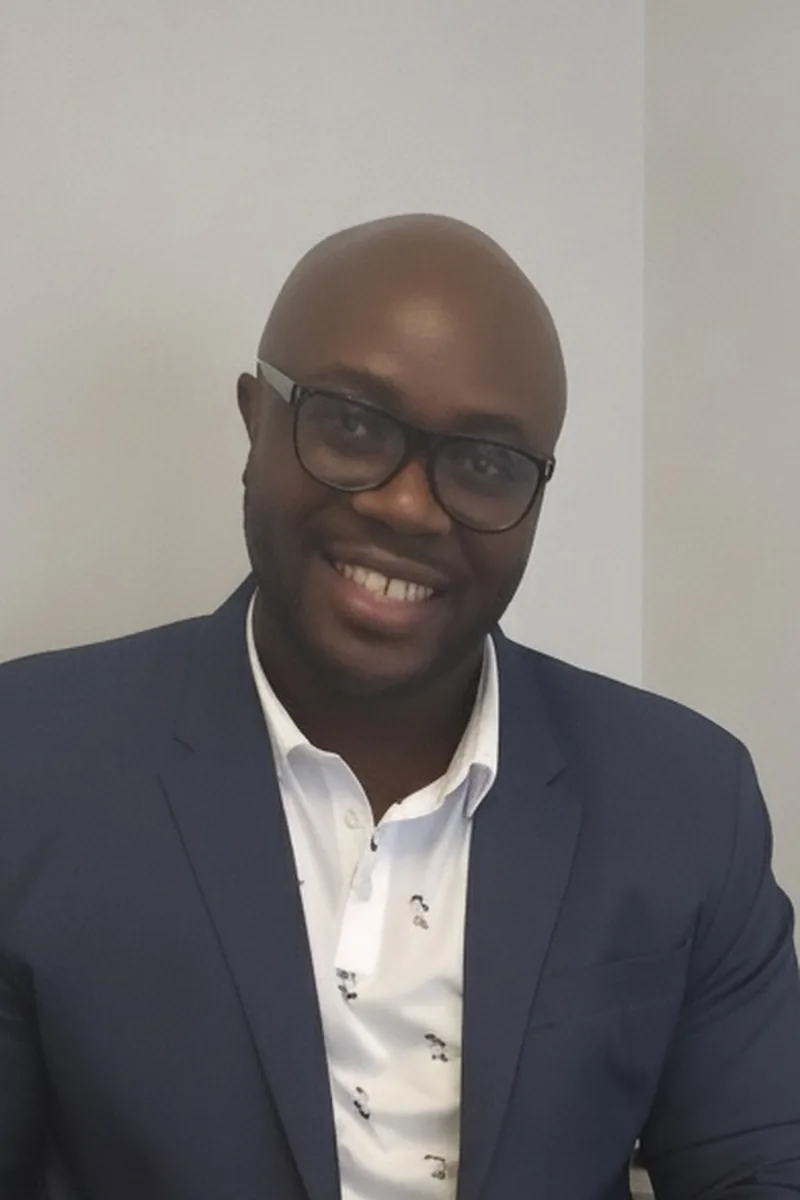
Ecological systems thinking is something Courage built from the ground up — his master's research in Environmental Science at Kwame Nkrumah University trained him to trace how human activity ripples a...
Education & Certificates
kwame nkrumah university of science and technology
Master of Science, Environmental Science
kwame nkrumah university of science and technology
Bachelor of Science, Biological and Physical Sciences

Biomedical engineering trains you to think about systems under stress — nutrient cycles, energy transfers, and ecological feedback loops are exactly the kind of interconnected systems that show up on ...
Education & Certificates
The University of Texas at Austin
Bachelor of Engineering, Biomedical Engineering
SAT Scores
Frequently Asked Questions
Students often struggle most with the quantitative sections—particularly energy flow calculations, population growth models, and water/nutrient cycle stoichiometry. The FRQ section also trips up many students because it requires synthesizing concepts across multiple units (like connecting atmospheric chemistry to acid rain impacts). Additionally, the distinction between biotic and abiotic factors in ecosystem dynamics, and understanding feedback loops in Earth systems, tends to be conceptually difficult without targeted explanation.
The exam has two sections: 80 multiple-choice questions (90 minutes) and 3 free-response questions (90 minutes). For the MC section, pace yourself at roughly 1 minute per question and flag questions involving calculations or complex diagrams to revisit. For FRQs, allocate 30 minutes per question and structure your answer clearly—define terms, show your work for calculations, and explicitly connect your answer to environmental principles. Many students lose points by not explaining the "why" behind their answers, especially in questions about human impacts or policy solutions.
Focus on understanding the underlying concepts before memorizing formulas—for example, knowing that NPP (Net Primary Productivity) = GPP minus respiration helps you interpret what the numbers mean, not just plug them in. Practice working through calculation-heavy topics like doubling time, carrying capacity, and bioaccumulation repeatedly with different scenarios. Many students benefit from creating a reference sheet of common formulas and their real-world applications, then practicing problems without looking at it to build fluency and confidence under test conditions.
The key is practicing under timed conditions with actual past FRQs and learning to structure your responses clearly. Strong FRQ answers identify the environmental concept being tested, define relevant terms, provide specific examples (like naming actual pollutants or ecosystems), and explain the cause-and-effect relationship. Many students rush through the writing portion; instead, spend the first few minutes outlining your answer, then write in complete sentences that directly address the prompt. Reviewing scoring rubrics alongside sample responses helps you understand exactly what exam readers are looking for.
You'll encounter graphs showing population trends, temperature anomalies, pollution levels, and resource consumption—and you need to extract meaning quickly. Practice identifying axes labels, units, and trends (linear vs. exponential growth, correlation vs. causation). Many students misread axes or confuse correlation with causation, especially in questions about climate data or toxicology studies. Spend time analyzing real datasets from sources like NOAA or EPA reports to build comfort with environmental data, and always ask yourself: "What does this pattern tell me about the environmental system, and what are the limitations of this data?"
The exam rewards students who see how units relate—for instance, understanding how energy flow in ecosystems (Unit 1) connects to human agriculture and food production (Unit 5), or how atmospheric chemistry (Unit 7) drives both climate change and ozone depletion. Create concept maps linking topics like nutrient cycles, human impacts, and policy responses. When studying, ask yourself questions like: "How would increased CO₂ affect photosynthesis rates and ecosystem productivity?" or "How do population dynamics influence resource consumption?" This synthesis thinking is what separates students scoring 4s and 5s from those scoring 2s and 3s.
Practice full-length exams under realistic conditions (2.5 hours, no breaks) to build stamina and familiarity with the pace—this reduces anxiety on test day. For the MC section, if you're stuck on a question after 1.5 minutes, mark it and move on; you can return if time allows. During FRQs, read all three prompts first and start with the one you feel most confident about to build momentum. Deep breathing and positive self-talk matter too—remind yourself that you've practiced these concepts and that it's okay not to know every detail; partial credit is available for showing your reasoning.
Score improvement depends on your starting point and effort level. Students who are struggling with foundational concepts (scoring 1-2) typically see the biggest gains—often 1-2 full points—when they get targeted help identifying knowledge gaps and building systematic study habits. Students scoring 3s can often reach 4s by strengthening FRQ writing and quantitative problem-solving through practice. The national average is around a 2.5, so reaching a 3 or 4 puts you ahead of most test-takers. Realistic improvement requires consistent practice with past exams, honest assessment of weak areas, and applying feedback to future attempts.
Other Houston test prep
Let's find your perfect prep plan
Answer a few quick questions. We'll recommend the right plan and match you with a top 5% instructor.