Achieve a top score with Award-Winning AP Statistics Prep
Achieve a top score with Award-Winning AP Statistics Prep
Everything you need to crush the AP Statistics. Live prep classes, practice tests, 1-on-1 expert tutoring, and AI-powered diagnostics to help you reach your target score.
Universities
Delivered
Proficiency
Who needs prep?
No obligation. Takes ~1 minute.
Instructors from
- YaleUniversity
- PrincetonUniversity
- StanfordUniversity
- CornellUniversity
Featured by


Award-Winning AP Statistics Prep Classes
 One-time classLive
AP Chemistry Monthly Review
Ace your AP Chemistry class _and_ the AP exam — without cramming or falling behind. Our AP Chemistry Monthly Review sessions are designed to help you stay one step ahead. Each month, an expert instructor will guide you through a focused review of the unit you’ve just covered in class, helping you reinforce key concepts, connect ideas across the curriculum, and build your personal study toolkit for May.
 One-time classLive
AP Physics 1 Monthly Review
Ace your AP Physics 1 class _and_ the AP exam — without cramming or falling behind. Our AP Physics 1 Monthly Review sessions are designed to help you stay one step ahead. Each month, an expert instructor will guide you through a focused review of the unit you’ve just covered in class, helping you reinforce key concepts, connect ideas across the curriculum, and build your personal study toolkit for May.
 One-time classLive
AP Calculus AB Monthly Review
Ace your AP Calculus AB class _and_ the AP exam — without cramming or falling behind. Our AP Calculus AB Monthly Review sessions are designed to help you stay one step ahead. Each month, an expert instructor will guide you through a focused review of the unit you’ve just covered in class, helping you reinforce key concepts, connect ideas across the curriculum, and build your personal study toolkit for May.
 One-time classLive
AP Biology Monthly Review
Ace your AP Biology class _and_ the AP exam — without cramming or falling behind. Our AP Biology Monthly Review sessions are designed to help you stay one step ahead. Each month, an expert instructor will guide you through a focused review of the unit you’ve just covered in class, helping you reinforce key concepts, connect ideas across the curriculum, and build your personal study toolkit for May. These sessions are ideal for students who want to maintain top grades, reduce stress, and walk into the AP exam with total confidence.
 Short-term classLive
AP English Language & Composition Monthly Review
Ace your AP Lang essays _and_ the AP exam — without cramming or falling behind. Our AP English & Composition Language Monthly Review sessions are designed to help you stay one step ahead. Each month, an expert instructor will guide you through a focused review of the skills and texts you’ve been developing in class, helping you sharpen your rhetorical analysis, build a personal study toolkit, and feel confident in timed writing and multiple-choice questions alike.
 One-time classLive
AP Psychology Monthly Review
AP Psychology Monthly Review is the high-impact prep course for students who want to walk into the AP exam with real confidence. Each month, students review and sharpen the skills that matter most for building on the rest of the school year and executing expertly on the AP exam in May. You'll dissect real texts, practice both multiple-choice and free-response question types, and shore up the fundamentals that can be so fleeting when your class moves on to new units quickly.
 One-time classLive
AP Computer Science A Monthly Review
Ace your AP Computer Science A class _and_ the AP exam — without cramming or falling behind. Our AP Computer Science A Monthly Review sessions are designed to help you stay one step ahead. Each month, an expert instructor will guide you through a focused review of the unit you’ve just covered in class, helping you reinforce key programming skills, strengthen your problem-solving strategies, and build your personal study toolkit for May.
 One-time classLive
AP Precalculus Monthly Review
AP Precalculus Monthly Review is the high-impact prep course for students who want to walk into the AP exam with real confidence. Each month, students review and sharpen the skills that matter most for building on the rest of the school year and executing expertly on the AP exam in May. You'll dissect real texts, practice both multiple-choice and free-response question types, and shore up the fundamentals that can be so fleeting when your class moves on to new units quickly.
 One-time classLive
AP Statistics Monthly Review
Ace your AP Statistics class and the AP exam — without cramming or falling behind. Our AP Statistics Monthly Review sessions are designed to help you stay one step ahead. Each month, an expert instructor will guide you through a focused review of the unit you’ve just covered in class, helping you reinforce key concepts, connect ideas across the curriculum, and build your personal study toolkit for May.
 Short-term classLive
AP Biology: 4-Week Exam Review
The AP Biology exam covers a year’s worth of content in a single afternoon. So it pays to spend 4 weeks brushing up on concepts and getting the most important skills, formulas, and strategies top of mind to be ready for test day. That’s why this 4-week exam review class provides expert-led review of critical concepts along with strategic guidance on how to handle the question formats and time limits you’ll face on the exam. By the end of the course, you’ll be ready for multiple choice and free response questions, analyzing experiments and graphics, about everything from cell structure to ecology.
Top-Rated AP Statistics Prep Instructors

Princeton-trained in both Philosophy and Statistics, Julie understands that AP Statistics exam questions are less about calculation and more about interpreting what the numbers actually mean — a disti...
Education & Certificates
Princeton University
Bachelor in Arts, Philosophy
SAT Scores

Kevin's Philosophy, Politics, and Economics coursework at Penn is built on quantitative reasoning — the same probabilistic thinking that runs through every unit of AP Statistics, from sampling distrib...
Education & Certificates
University of Pennsylvania
Bachelor in Arts
ACT Scores

Brian's Caltech economics and computer science training required building statistical arguments from the ground up — not just running procedures, but knowing which model fits the data and why — which ...
Education & Certificates
University of California-Santa Cruz
PHD, Technology & Information Mgmt (Indef. deferred)
California Institute of Technology
Bachelors in Economics and Computer Science
SAT Scores

Stanford's mathematics and computer science curriculum runs on the same probability theory and statistical inference that AP Statistics tests — and JF, who scored a perfect 1600 on the SAT, brings tha...
Education & Certificates
Stanford University
Bachelor of Science, Mathematics and Computer Science
SAT Scores

AP Statistics free-response questions reward students who can explain their reasoning in precise statistical language — not just run the right test, but justify why. Dennis coaches students to read ea...
Education & Certificates
Princeton University
Bachelor of Science
ACT Scores
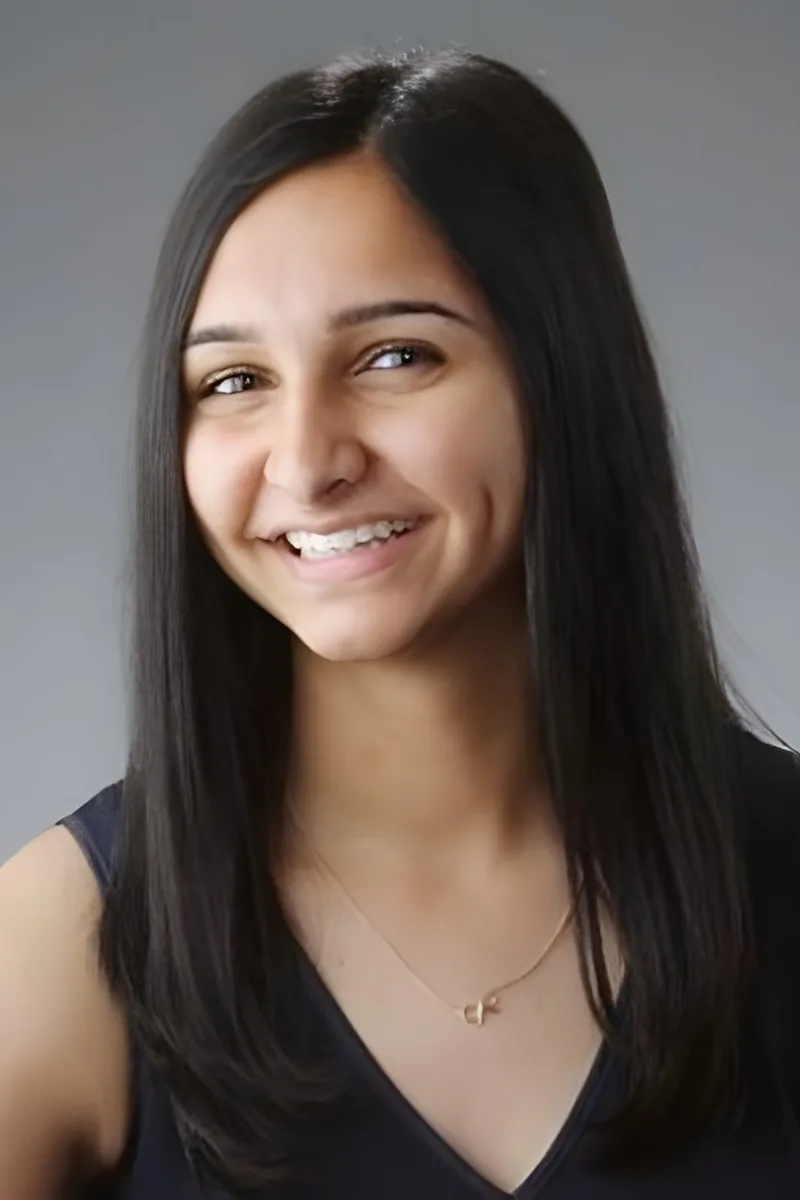
Studying biology at the University of Chicago on a pre-medical track means Rhea reads experimental data the way AP Statistics actually tests it — evaluating whether a study design supports its conclus...
Education & Certificates
University of Chicago
Bachelor of Science, Biology, General
ACT Scores

Talia's perfect 36 ACT composite came from the same disciplined reasoning AP Statistics rewards: reading a question for what it's actually asking before committing to a method. She coaches students to...
Education & Certificates
Northwestern University
Bachelor in Arts, Political Science and Government
ACT Scores

Anthony's Yale PhD in economics runs on the same inferential machinery AP Statistics tests — regression, sampling distributions, and hypothesis testing aren't abstract procedures for him but the actua...
Education & Certificates
Yale University
Bachelor of Science, Physics
Yale University
Doctor of Philosophy, Economics
SAT Scores

Martha's Duke psychology and global health training runs on the same cross-disciplinary data analysis that AP Statistics rewards — interpreting survey data, evaluating study designs, and drawing concl...
Education & Certificates
Duke University
Bachelors, Psychology
Duke University
Current Grad Student, Global Health
SAT Scores

Computational biology at Cornell is essentially applied statistics — designing experiments, modeling biological systems, and extracting defensible conclusions from noisy data — which is the same reaso...
Education & Certificates
Cornell University
Bachelor in Arts, Computational Biology
ACT Scores
Frequently Asked Questions
Students typically find probability distributions, hypothesis testing, and inference the most challenging units. Many struggle with understanding when to use z-tests versus t-tests, interpreting p-values correctly, and distinguishing between Type I and Type II errors. Additionally, the transition from descriptive statistics to inferential statistics trips up many students because it requires a conceptual shift—moving from describing data you have to making conclusions about populations you don't have complete information about. Tutors with AP Statistics expertise focus heavily on these concepts with targeted practice and clear conceptual explanations rather than just formula memorization.
The AP Statistics exam has 40 multiple-choice questions (90 minutes) and 6 free-response questions including one investigative task (90 minutes), requiring different strategies for each section. On the multiple-choice portion, time management is critical—you have roughly 2 minutes per question, so identifying when to skip and return to harder problems is essential. Free-response questions require you to show your reasoning, define variables, and justify conclusions, which means partial credit is possible even if your final answer isn't perfect. A tutor can help you practice both sections under timed conditions and teach you how to structure responses that earn maximum points, particularly for the investigative task which tests your ability to design and critique studies.
Calculator proficiency is crucial since the AP Statistics exam allows graphing calculators for the entire test, and many calculations (normal probabilities, t-tests, confidence intervals, regression) are much faster with a calculator's statistical functions. However, you must understand what the calculator is computing—blindly plugging numbers in without knowing whether to use 1-PropZTest or 2-PropZTest will lead to wrong answers. Tutors emphasize learning your calculator's specific functions (TI-84 is most common), practicing calculations under timed conditions, and always being able to explain the logic behind which test or procedure you're using, not just which button you pressed.
Score improvement depends on your starting point and consistency. Students who begin tutoring with weak conceptual foundations typically see larger gains (5-7 points on the 1-5 scale) when they work through systematic review of units like probability and inference. Students already scoring 3-4 often improve to 4-5 by refining their free-response writing, avoiding careless errors on multiple choice, and mastering the nuances of hypothesis testing interpretation. Realistic improvement requires regular practice with released AP exams, targeted review of weak topics, and time between sessions for independent problem-solving—tutors guide the strategy, but you do the work.
Starting 3-4 months before the exam allows time to work through all major units systematically and build conceptual understanding rather than cramming formulas. If you're starting closer to the exam (6-8 weeks out), tutoring should focus on your weakest topics and full-length practice test review. Some students benefit from ongoing tutoring throughout the year to stay current with coursework, while others use tutoring strategically during the units they find hardest. A tutor can assess your current level and help you create a realistic study plan based on when you're taking the exam and which topics need the most attention.
The inference unit is abstract—students must understand that a 95% confidence interval doesn't mean there's a 95% probability the true parameter is in that interval (a common misconception), and that p-values measure evidence against the null hypothesis, not the probability the null is true. These conceptual errors persist because students memorize procedures without grasping the underlying logic. Expert tutors use simulations, visual explanations, and repeated practice with varied contexts to build genuine understanding, then help you interpret confidence intervals and p-values correctly on both multiple-choice and free-response questions where interpretation is explicitly tested.
Graders award points for: clearly defining variables and parameters, stating the correct procedure or test by name, showing calculations or reasoning, and providing conclusions in context of the problem. Many students lose points by stating conclusions like "reject the null hypothesis" without explaining what that means in the actual scenario—graders want to see that you understand the practical significance, not just the statistical result. The investigative task also rewards you for critiquing study design and identifying limitations. Tutors teach you to structure free-response answers using a consistent format (like State-Plan-Do-Conclude) that ensures you hit all the points graders are looking for.
Full-length, timed practice tests should be a regular part of your study plan starting 6-8 weeks before the exam—they reveal which topics you need to review and help you build stamina and pacing strategy. After completing a practice test, spend time analyzing every wrong answer to understand whether you made a conceptual error, misread the question, or ran out of time. A tutor can review your practice tests with you, identify patterns in your mistakes (e.g., consistently misinterpreting confidence interval language, or rushing through free-response), and target tutoring sessions to address those specific weaknesses rather than re-teaching topics you already understand.
Let's find your perfect prep plan
Answer a few quick questions. We'll recommend the right plan and match you with a top 5% instructor.