Award-Winning AP Psychology Prep in Charlotte
Award-Winning AP Psychology Prep in Charlotte
Everything you need to crush the AP Psychology in Charlotte, NC. Live prep classes, practice tests, 1-on-1 expert tutoring, and AI-powered diagnostics.
Who needs prep?
No obligation. Takes ~1 minute.
Instructors from
- YaleUniversity
- PrincetonUniversity
- StanfordUniversity
- CornellUniversity
Featured by


AP Psychology Prep Classes
 Short-term classLive
Jump Start to AP & Honors Chemistry
Chemistry is the study of the properties, structures, and reactions of matter—and how substances transform through interactions at the atomic and molecular level. From the periodic table to chemical equations, each concept builds on the last—so the foundations you begin the school year with tend to shape the reactions, outcomes, and confidence you carry through every lab and lesson. In this live, interactive summer class you will learn and review the key building blocks for success in advanced high school chemistry classes, including AP, IB, and honors classes. From scientific principles to essential math concepts, you’ll cover everything you need to confidently conquer your most challenging fall class.
 Short-term classLive
Jump Start to AP & Honors Physics
Physics is the study of the fundamental forces and principles that govern how matter and energy interact in the universe. From motion and momentum to waves and electricity, each concept builds on the last—so the foundations you begin the school year with tend to govern your trajectory and velocity throughout the school year. In this live, interactive summer class you will learn and review the key building blocks for success in advanced high school physics classes, including AP, IB, and honors classes. From scientific principles to essential math concepts, you’ll cover everything you need to start your most challenging fall class with energy and momentum.
 Short-term classLive
Jump Start to AP Computer Science A
Computer Science is the study of how we use logic and code to solve problems and build the digital world around us. From variables and conditionals to classes and objects, each concept builds logically on the last—so the foundations you start with often determine how efficiently and confidently you can program throughout the year. In this live, interactive summer class, you’ll learn and review the key building blocks for success in advanced high school computer science courses, including AP Computer Science A. From core Java syntax to problem-solving strategies, you’ll cover everything you need to start this rigorous coding class with structure and logic.
 Short-term classLive
Jump Start to AP & Honors Biology
Biology is the study of the building blocks of life, how cells, systems, and processes interact to enable complex organisms to adapt and thrive. And just like living systems build from their foundations, your own biology knowledge builds concept by concept toward the complex skills you need for your labs and exams throughout the year. In this live, interactive summer class you will learn and review the key building blocks for success in advanced high school biology classes, including AP, IB, and honors classes. Armed with sound fundamentals you’ll be ready to hit the ground running in the new school year and thrive in your most challenging fall class.
Top-Rated AP Psychology Prep Instructors in Charlotte

Sherry's University of Chicago background in psychology and linguistics puts her in an unusual position for AP Psych prep — she coaches students to treat the exam's core concepts not as isolated facts...
Education & Certificates
University of Chicago
Bachelor's degree in psychology and linguistics
SAT Scores

Medical school training at the Medical University of South Carolina gives Sydny a clinical lens that reframes how AP Psychology content lands — she coaches students to connect disorders, treatments, a...
Education & Certificates
Duke University
Bachelor of Science
Medical University of South Carolina
Doctor of Medicine, Premedicine
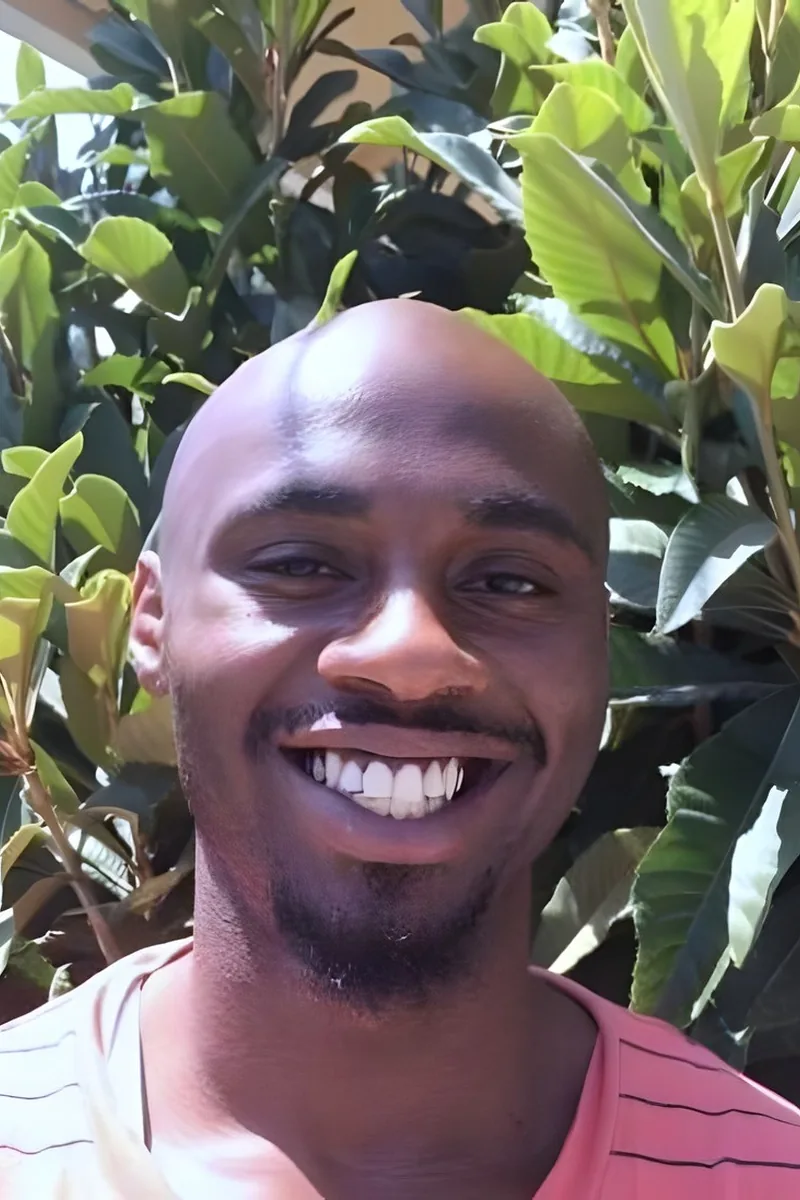
Brian's background in economics and computer science at Caltech — where quantitative reasoning and precise argumentation are non-negotiable — translates directly into a research methods prep approach ...
Education & Certificates
University of California-Santa Cruz
PHD, Technology & Information Mgmt (Indef. deferred)
California Institute of Technology
Bachelors in Economics and Computer Science
SAT Scores

Philosophy training at Yale sharpens a skill AP Psychology actually tests: distinguishing between concepts that look similar on the surface but operate through completely different mechanisms — exactl...
Education & Certificates
Yale University
Bachelor of Science, Biochemistry and Molecular Biology
ACT Scores

Timing is the hidden challenge on AP Psychology — 100 multiple-choice questions in 70 minutes means students who second-guess terminology lose points not because they don't know the material but becau...
Education & Certificates
University of Chicago
Master of Social Work, Social Work
University of Illinois at Urbana-Champaign
Bachelor of Science, Biology, General
ACT Scores

Natalie's neurobiology degree from Penn gives her an unusually strong footing on the biological bases of behavior unit — the content that trips up students who studied psychology in class but never co...
Education & Certificates
University of Pennsylvania
Bachelor in Arts, Neurobiology and Behavior
ACT Scores

Graduate training in global health at Duke sharpens a skill most AP Psychology students underestimate: connecting psychological concepts to real-world contexts — exactly what the exam's free-response ...
Education & Certificates
Duke University
Bachelors, Psychology
Duke University
Current Grad Student, Global Health
SAT Scores

A Johns Hopkins PhD in Psychological and Brain Sciences puts Tashina in a different position than most AP Psych coaches — she doesn't just know the content, she researches it, which means she can expl...
Education & Certificates
Johns Hopkins University
PHD, Psychological and Brain Sciences
Barnard College
Bachelor in Arts, Psychology
SAT Scores

A Linguistics degree from Yale trains a specific kind of analytical precision — the ability to dissect how language constructs meaning, which turns out to be exactly the skill AP Psychology's free-res...
Education & Certificates
Yale University
Bachelor in Arts, Linguistics
ACT Scores
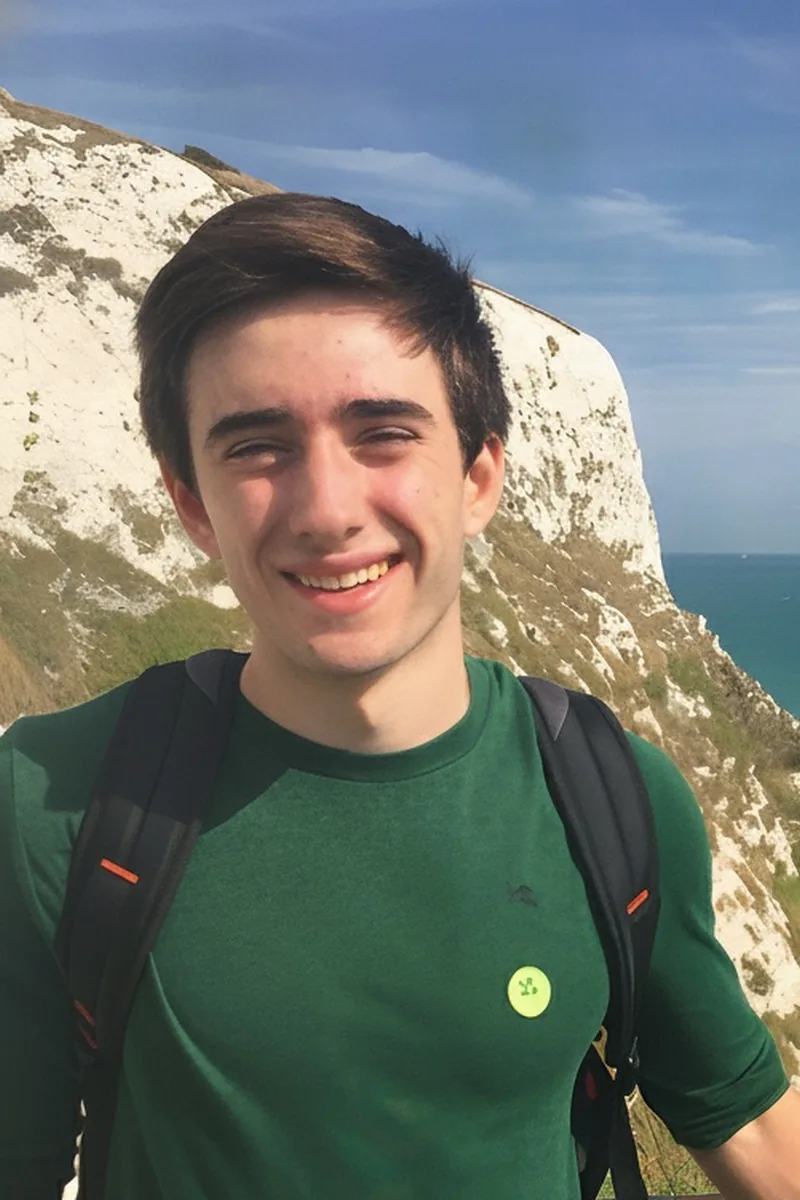
Ian's premedicine background at Notre Dame gives AP Psychology prep a grounding most students don't get in the classroom — when biological bases of behavior, sensation, and perception come up on the m...
Education & Certificates
University of Notre Dame
Bachelor of Science
SAT Scores
Frequently Asked Questions
Students typically struggle most with Units 5-7: States of Consciousness, Learning, and Cognition. These units require understanding complex processes like classical conditioning, operant conditioning, and memory encoding that don't have obvious real-world parallels. Additionally, Unit 8 (Motivation, Personality, Testing) and Unit 9 (Clinical Psychology) challenge students because they involve distinguishing between similar psychological theories and disorders—a skill the multiple-choice section heavily tests. A tutor can help you build frameworks to organize these concepts and practice applying them to unfamiliar scenarios, which is where most students lose points.
The AP Psychology FRQ section requires you to apply concepts to real-world scenarios, and students often lose points by listing definitions instead of explaining how concepts connect to the prompt. Strong answers identify the relevant psychological principle, define it clearly, and then explicitly link it to the scenario—for example, explaining how "source confusion" (a memory concept) applies to a witness misidentifying a suspect. A tutor can teach you to structure FRQ responses using this three-part framework and practice with released exams so you develop speed and accuracy under timed conditions.
Research methods (Unit 1) feels abstract because it's not about psychology itself but about how psychologists study behavior—yet the AP exam embeds research design questions throughout all units. Students often confuse experimental designs, fail to identify confounding variables, or misunderstand the difference between correlation and causation. Since this foundational unit determines how well you answer questions across the entire exam, tutoring focused on research methods early in your preparation can clarify these concepts and give you confidence tackling methodology questions in any unit.
The AP Psychology exam gives you 70 minutes for 100 multiple-choice questions—roughly 42 seconds per question—which is tight but manageable if you practice strategically. Many students spend too long on difficult questions and run out of time, or they second-guess themselves on questions they actually understood. A tutor can help you develop a pacing strategy: identify which question types you answer quickly, which require more thought, and practice triage techniques like flagging hard questions and returning to them if time allows. Working through full-length practice tests under timed conditions is essential to building this muscle memory.
Score improvement depends on your starting point and commitment. Students who are scoring 2-3 and work with a tutor on foundational concepts, test-taking strategies, and practice tests often reach 4-5 within a few months of consistent preparation. If you're already scoring 4, reaching a 5 requires mastering the most challenging units and the nuanced differences between similar concepts—this typically requires focused tutoring on your specific weak areas. The key is identifying which units or question types are costing you points, then targeting those with deliberate practice and expert feedback.
AP Psychology tests your ability to distinguish between theories—for example, knowing when to apply Erikson's stages versus Piaget's, or understanding why Bandura's social learning differs from Skinner's operant conditioning. Students often memorize names and definitions but struggle to apply the right theory to a scenario. A tutor can teach you to create comparison charts that highlight the key differences in assumptions, methods, and outcomes for competing theories, then practice applying them to exam-style questions. This active organization is far more effective than passive review and builds the conceptual clarity the exam rewards.
Effective practice test use means taking full-length exams under timed conditions, then analyzing your mistakes to identify patterns—not just reviewing answers. Track whether you're missing questions because you didn't know the concept, misread the question, or ran out of time. A tutor can help you categorize your errors and create a targeted study plan: if you're missing clinical psychology questions, focus there; if you're rushing through questions you could answer correctly, work on pacing. Taking 3-4 full-length practice tests spread across your preparation (not all at once) gives you the most diagnostic value and builds test stamina.
Test anxiety in AP Psychology often stems from feeling unprepared for the breadth of content or uncertain about how to apply concepts to unfamiliar scenarios. A tutor builds confidence by helping you master the most commonly tested concepts, teaching you question-analysis strategies so you feel in control during the exam, and giving you repeated practice with feedback in a low-stakes environment. Over time, this repeated success on practice questions reduces anxiety because you've actually solved hundreds of similar problems—you're not walking into the exam hoping you'll remember something, you're walking in knowing you've practiced exactly this.
Other Charlotte test prep
Let's find your perfect prep plan
Answer a few quick questions. We'll recommend the right plan and match you with a top 5% instructor.