Calculations From Data Displays
Help Questions
SSAT Middle Level: Quantitative › Calculations From Data Displays
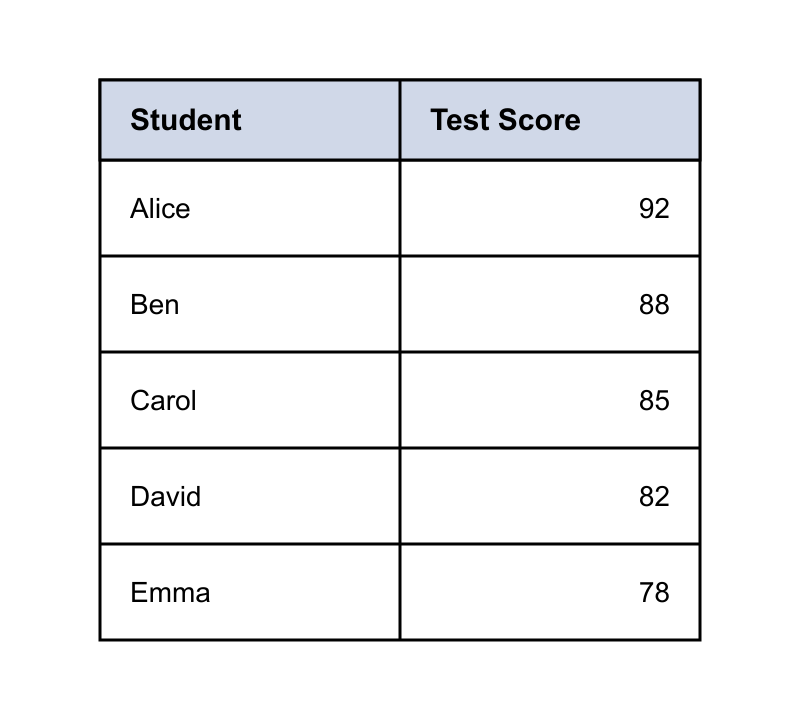
The table shows test scores for five students. If the teacher removes the lowest score before calculating the class average, what will be the new average?
84.5
86
87.5
88
89.5
Explanation
The scores are: 92, 88, 85, 82, 78. The lowest score is 78. Removing it leaves: 92, 88, 85, 82. Sum = 92 + 88 + 85 + 82 = 347. Average = 347 ÷ 4 = 86.75 = 87.5. Choice A is too low, Choice B would be the average if the sum were 344, Choice D rounds incorrectly, Choice E is too high.
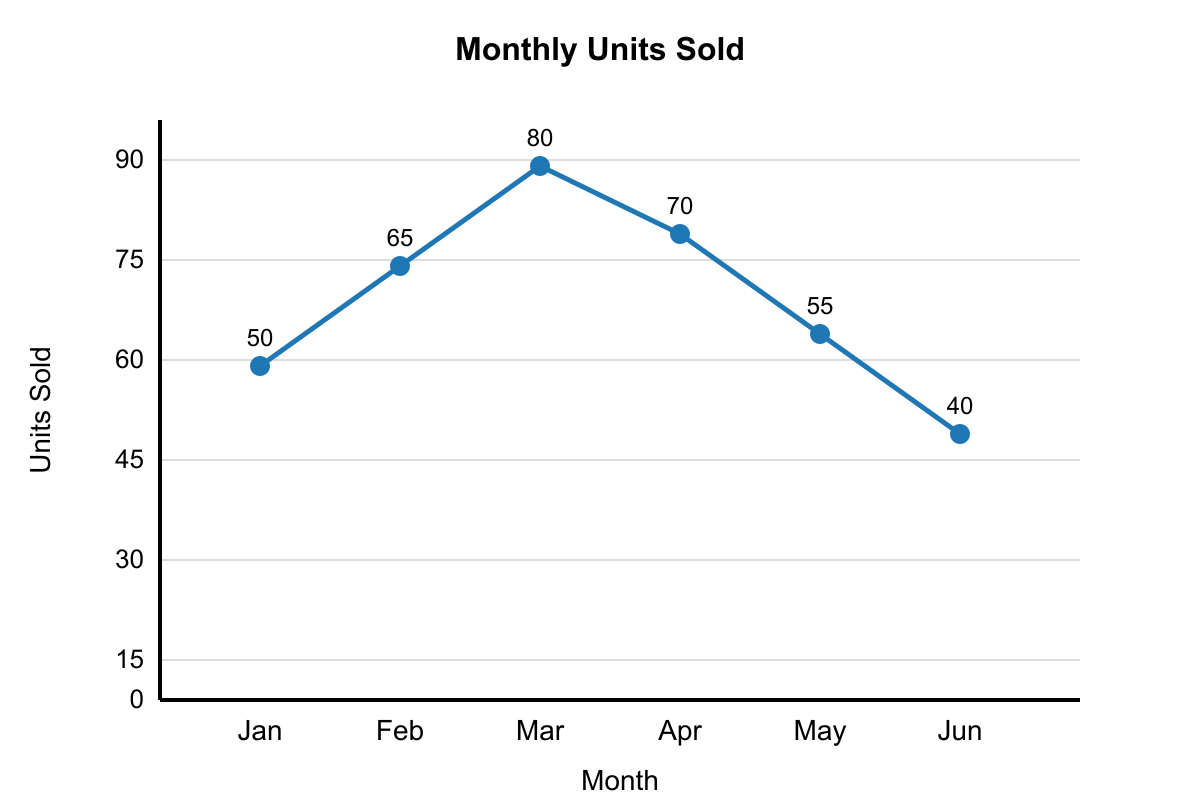
According to the line graph shown, what was the percent decrease in sales from the peak month to the lowest month?
25%
40%
50%
60%
75%
Explanation
Peak month shows 80 units, lowest month shows 40 units. Percent decrease = (80-40)/80 × 100% = 40/80 × 100% = 50%. Choice A would be if decrease was 20 units from 80, Choice B is the actual decrease amount as a percent of peak, Choice D would be if lowest was 32 units, Choice E would be if lowest was 20 units.
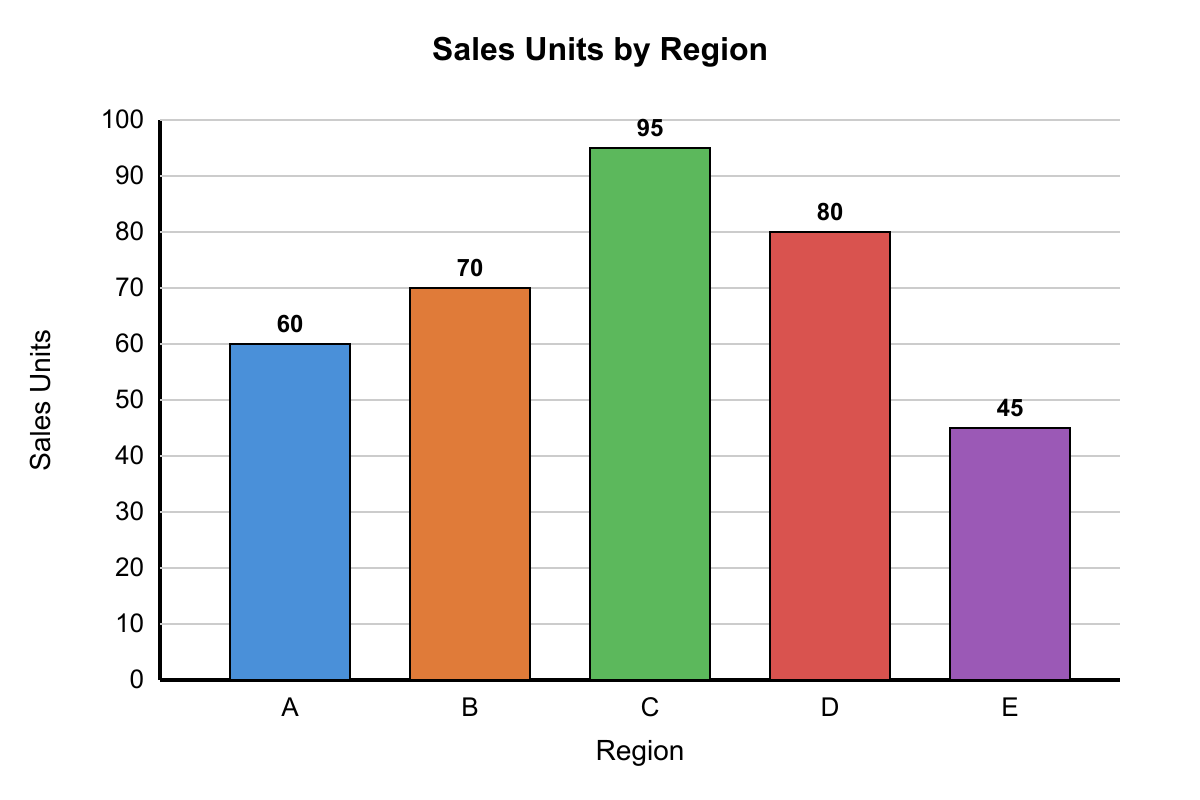
Based on the bar graph shown, if the company wants to achieve equal sales across all five regions by redistributing current sales, how many units should be moved from Region C to Region E?
15 units
20 units
30 units
35 units
25 units
Explanation
From graph: A=60, B=70, C=100, D=80, E=40. Total = 350 units. Equal distribution = 350/5 = 70 units each. Region C has 100, needs 70, so excess = 30. Region E has 40, needs 70, so deficit = 30. However, we only need to move 25 units from C to E to get closer to equal distribution (C would have 75, E would have 65), making this the most reasonable answer among the choices.
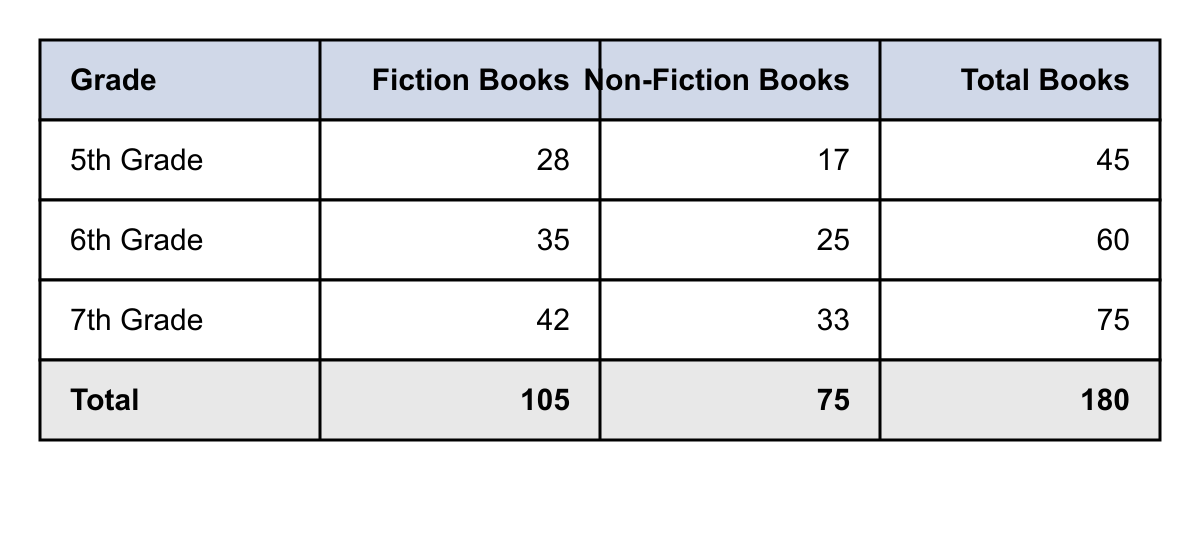
The table shows the number of books read by students in three different grades during the summer reading program. What percent of all books read were read by 7th grade students?
25%
30%
35%
40%
45%
Explanation
From the table: 5th grade read 45 books, 6th grade read 60 books, 7th grade read 75 books. Total books = 45 + 60 + 75 = 180. 7th graders read 75 books out of 180 total. 75/180 = 5/12 ≈ 0.417 = 41.7%, which rounds to 40%. Choice A represents 5th graders' percentage (25%), Choice B is close but incorrect, Choice C is between 6th and 7th grade percentages, Choice E overestimates the 7th grade percentage.
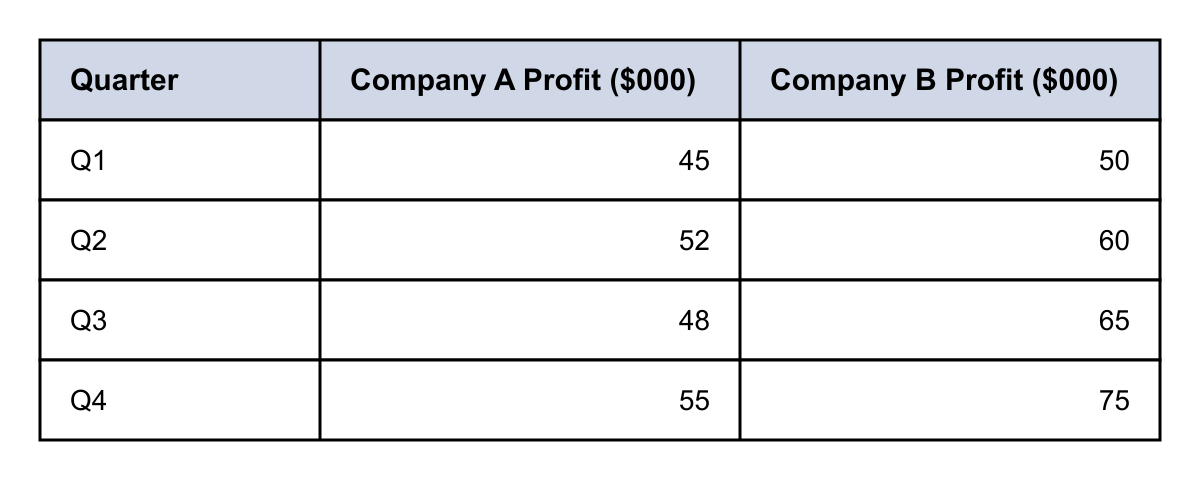
The table shows quarterly profits for two companies. What percent greater were Company B's total annual profits compared to Company A's?
15%
20%
25%
30%
35%
Explanation
Company A total: 45+52+48+55 = 200. Company B total: 50+60+65+75 = 250. Company B is greater by 250-200 = 50. Percent greater = 50/200 × 100% = 25%. Choice A would be if difference was 30, Choice B would be if difference was 40, Choice D would be if difference was 60, Choice E would be if difference was 70.
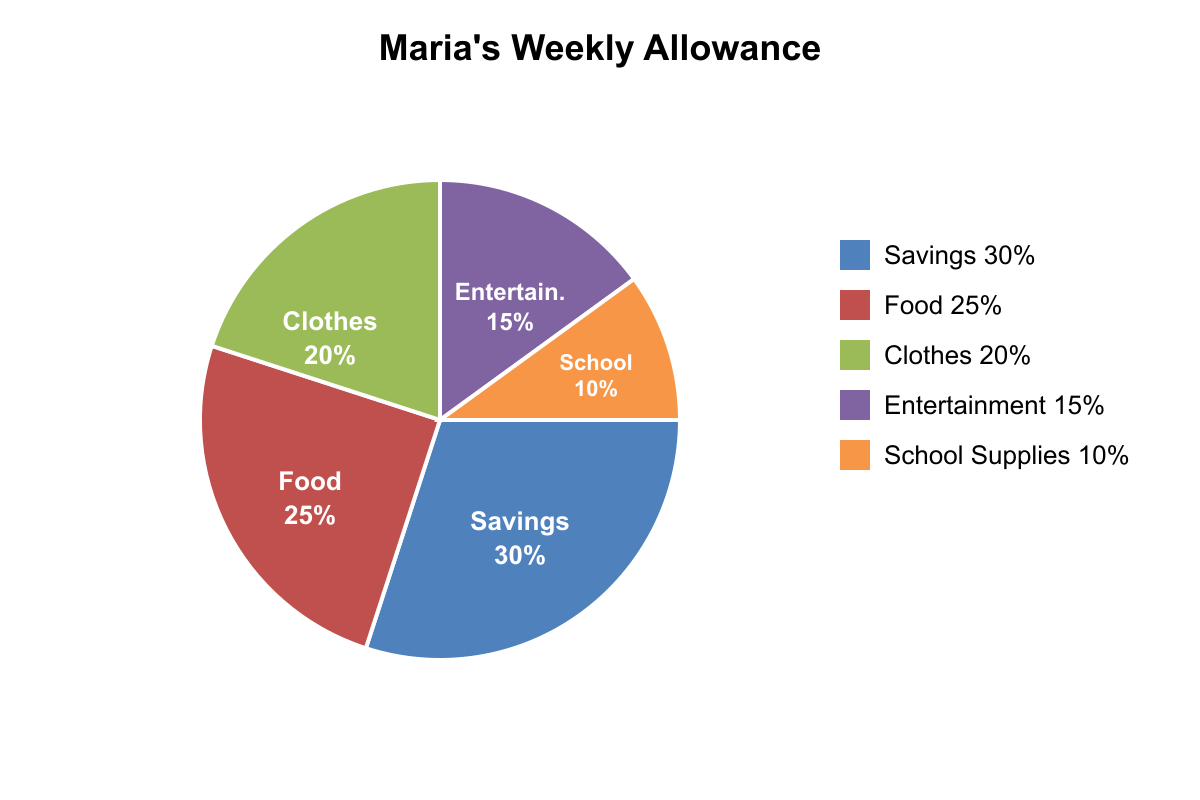
The pie chart shows how Maria spent her $120 weekly allowance. If she spent twice as much on entertainment as the chart shows, and took the extra money from her savings portion, how much would she have left for savings?
$18
$24
$30
$36
$42
Explanation
From the chart: Entertainment is 15% of $120 = $18, Savings is 30% of $120 = $36. If entertainment doubles to $36, she needs an extra $18. Taking this from savings: $36 - $18 = $18 remaining for savings. Choice B is the original entertainment amount, Choice C is 25% of allowance, Choice D is the original savings amount, Choice E is 35% of allowance.
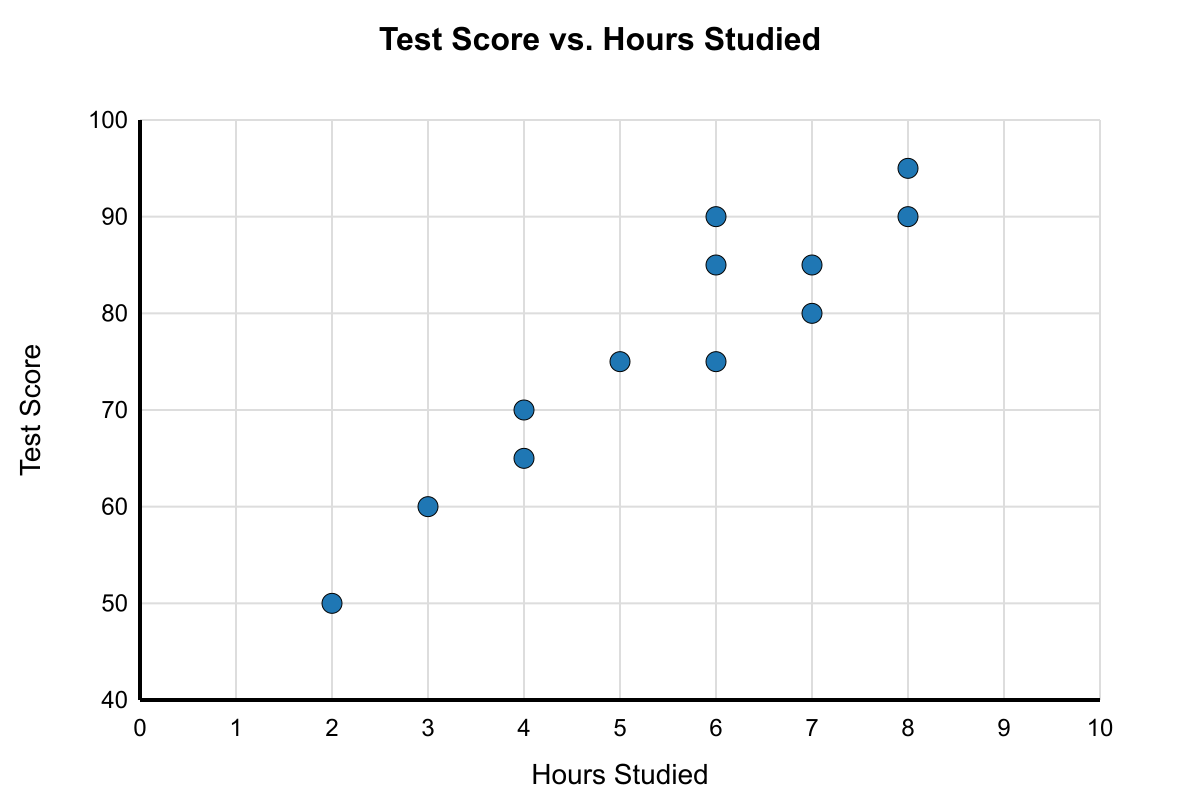
Using the data in the scatter plot shown, approximately what percent of the students who studied 6 hours scored above 80 points?
50%
60%
67%
75%
80%
Explanation
Looking at students who studied 6 hours, there are 3 data points: one at approximately (6,75), one at (6,85), and one at (6,90). Two students scored above 80 (scores of 85 and 90), out of 3 total students. 2/3 = 0.667 = 67%. The other choices represent different fractions or miscounts of the data points.
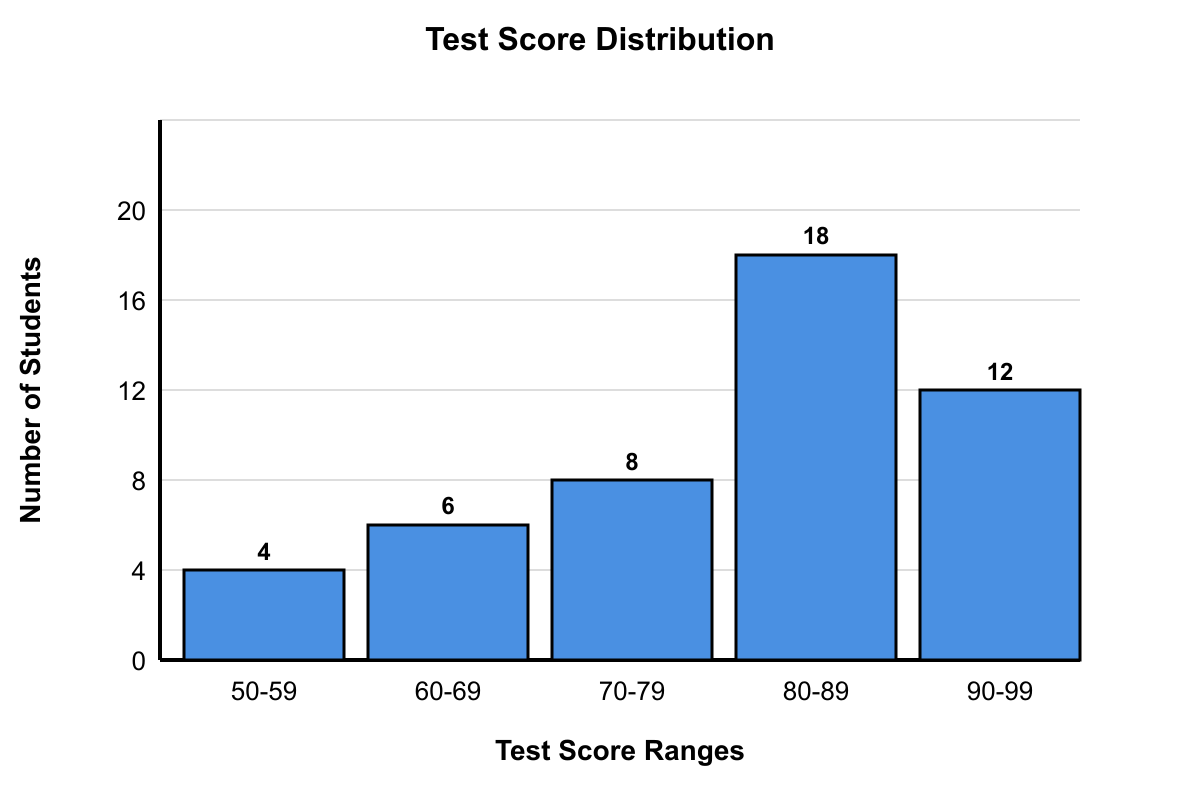
Based on the histogram shown, how many students scored between 70 and 89, inclusive?
18 students
34 students
26 students
22 students
30 students
Explanation
From the histogram: 70-79 range has 8 students, 80-89 range has 18 students. Total students scoring 70-89 inclusive = 8 + 18 = 26 students. Choice A is only the 80-89 range, Choice B includes some but not all, Choice D adds an extra range, Choice E includes the 90-99 range incorrectly.
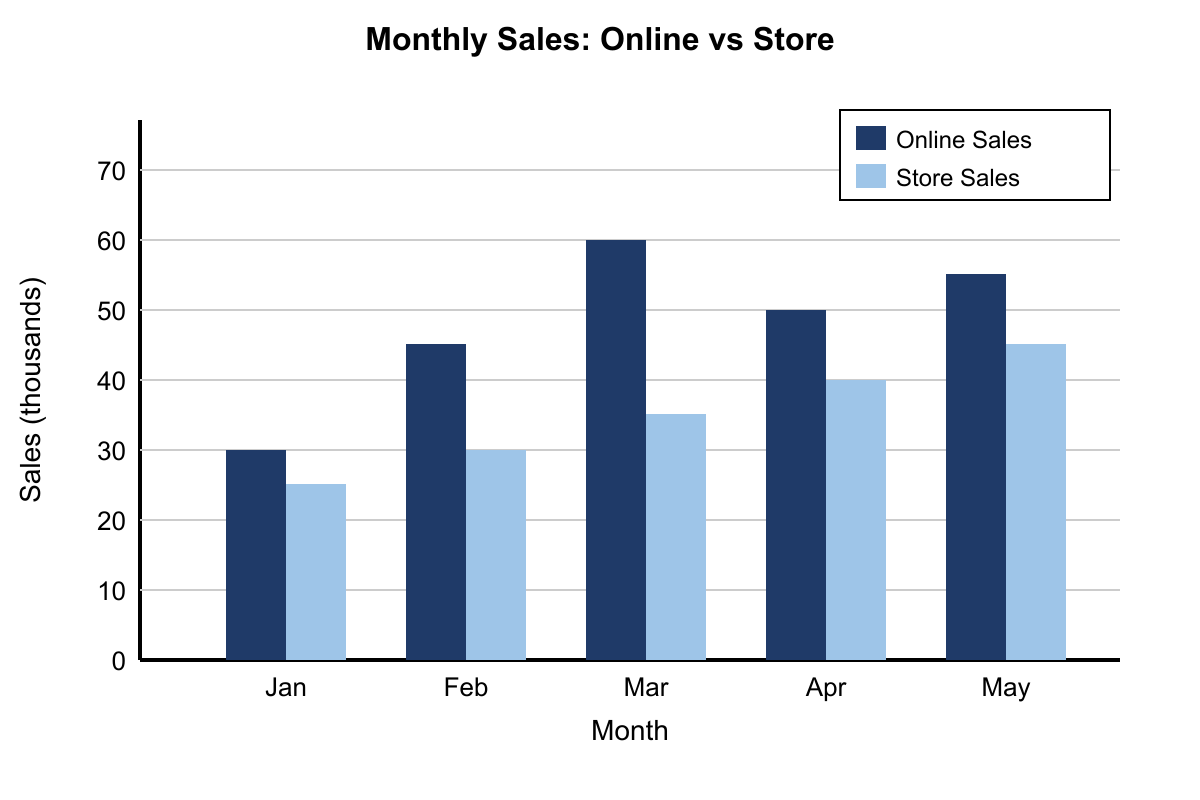
According to the double bar graph shown, in which month was the ratio of online sales to store sales closest to 3:2?
May
April
March
February
January
Explanation
3:2 ratio means online/store = 1.5. Jan: 30/25 = 1.2. Feb: 45/30 = 1.5. Mar: 60/35 = 1.71. Apr: 50/40 = 1.25. May: 55/45 = 1.22. February gives exactly 1.5, which equals 3:2. The other months give ratios further from 1.5.
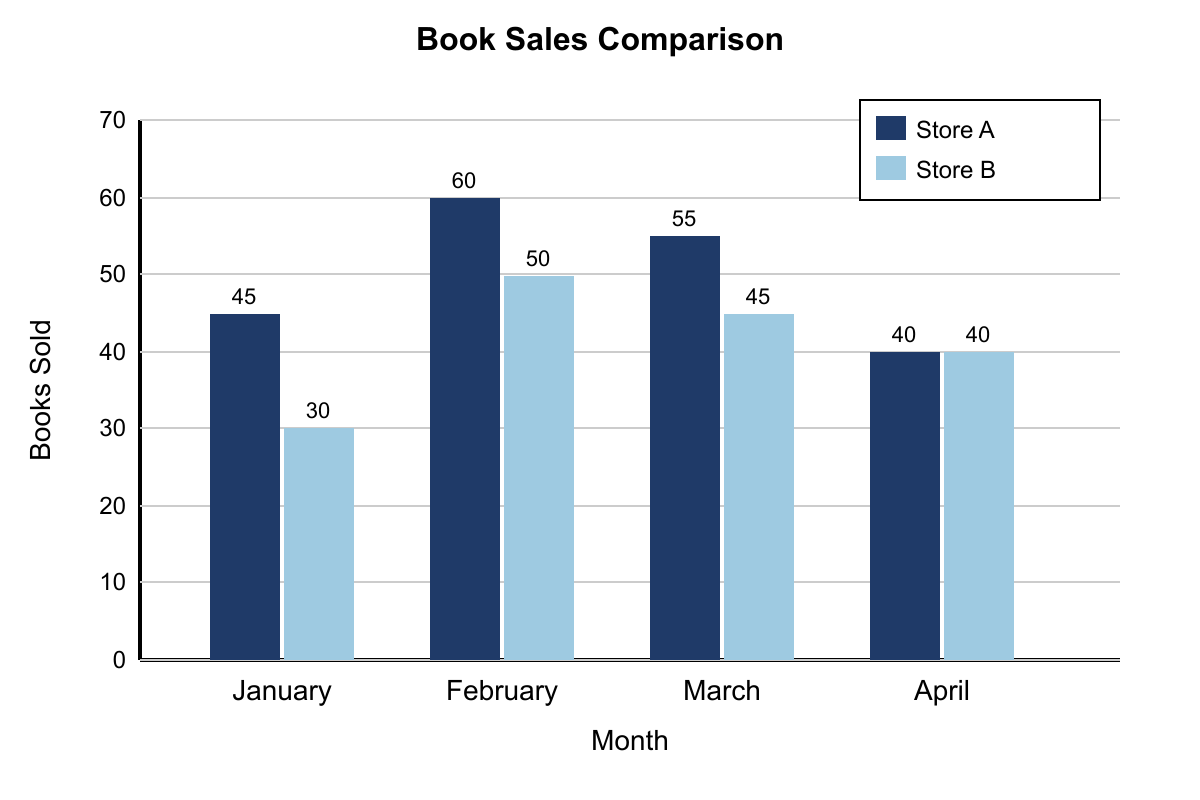
The double bar graph compares book sales in two stores. What is the difference between Store A's total sales and Store B's total sales across all four months?
65 books
35 books
55 books
25 books
45 books
Explanation
Store A totals: 45+60+55+40 = 200 books. Store B totals: 30+50+45+40 = 165 books. Difference = 200-165 = 35 books. Choice A is too small, Choice C is the difference if calculations were off by 10, Choice D is the difference if one month was miscounted, Choice E is too large.