Coordinate Geometry - SSAT Middle Level Quantitative
Card 1 of 168
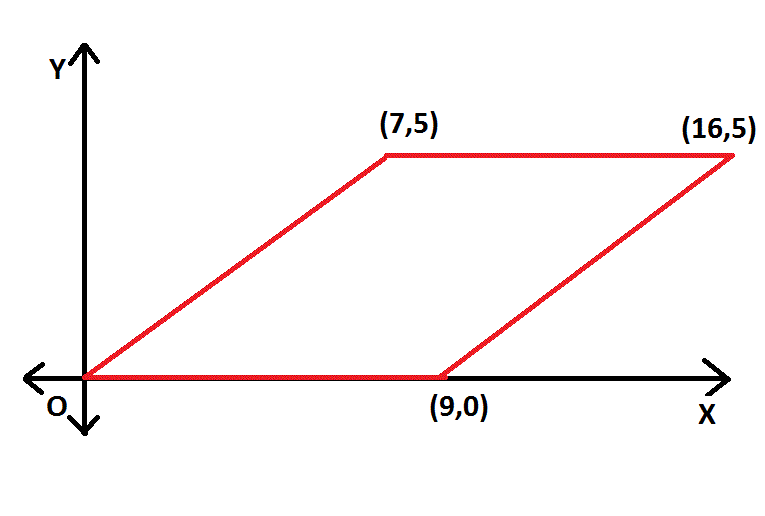
NOTE: Figure NOT drawn to scale.
What is the area of the parallelogram represented by the above figure?
NOTE: Figure NOT drawn to scale.
What is the area of the parallelogram represented by the above figure?
Tap to reveal answer
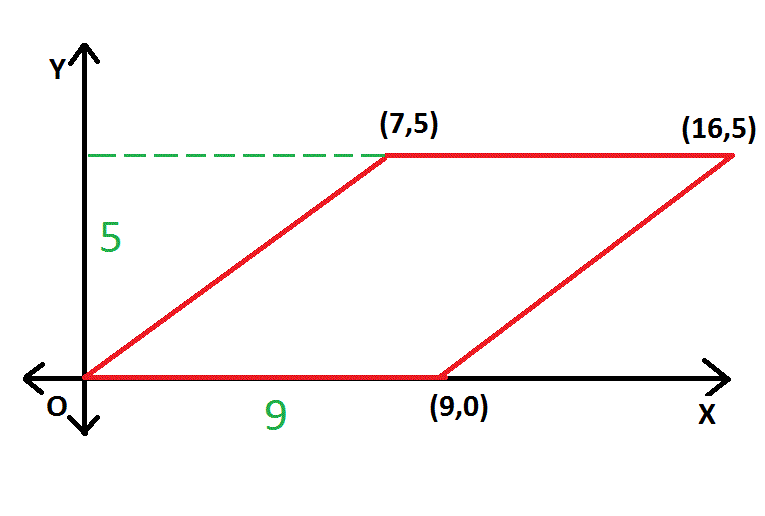
The area of a parallelogram is its base multiplied by its height. The diagram below shows both in green:

The area of a parallelogram is its base multiplied by its height. The diagram below shows both in green:
← Didn't Know|Knew It →
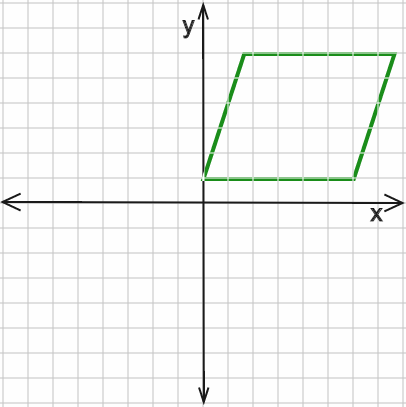
Find the area of the above parallelogram given a height of 5 units, as shown to scale.
Find the area of the above parallelogram given a height of 5 units, as shown to scale.
Tap to reveal answer
Since the diagram is drawn to scale, the base of the parallelogram must be 6 units in length. Using the area formula for a parallelogram:

Since the diagram is drawn to scale, the base of the parallelogram must be 6 units in length. Using the area formula for a parallelogram:
← Didn't Know|Knew It →
Given a base of 12 units and an area of 120 square units, find the height of the paralellogram shown above.
Given a base of 12 units and an area of 120 square units, find the height of the paralellogram shown above.
Tap to reveal answer
The area formula for a parallelogram is:

Thus, to find the height, rearrange:

The area formula for a parallelogram is:
Thus, to find the height, rearrange:
← Didn't Know|Knew It →
The above parallelogram has an area of 30 square units. Which of the following could be the lengths of the base and height of this figure? (Image not drawn to scale.)
The above parallelogram has an area of 30 square units. Which of the following could be the lengths of the base and height of this figure? (Image not drawn to scale.)
Tap to reveal answer
The formula for the area of a parallelogram is:

Thus, the base and height must equal 30 square units when multiplied together.
3 and 10 are the only combination of base and height which, when multiplied, equal the area of 30 square units.
The formula for the area of a parallelogram is:
Thus, the base and height must equal 30 square units when multiplied together.
3 and 10 are the only combination of base and height which, when multiplied, equal the area of 30 square units.
← Didn't Know|Knew It →
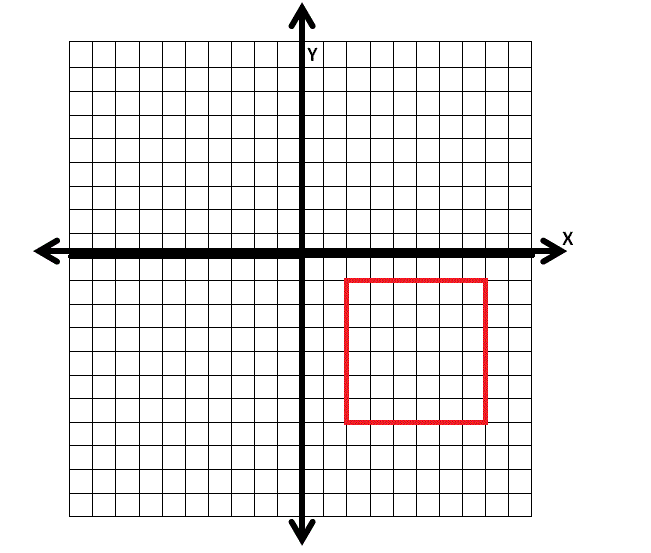
Find the area of the above square.
Find the area of the above square.
Tap to reveal answer
In order to find the area of the square above apply the formula:  , where
  the length of one side of the square.
Since  ,
,
the solution is 
In order to find the area of the square above apply the formula:
Since
the solution is
← Didn't Know|Knew It →
Find the perimeter of the square shown above.
Find the perimeter of the square shown above.
Tap to reveal answer
To find the perimeter of this square, apply the formula:  , where
  the length of one side of the square.
Thus, the solution is:


To find the perimeter of this square, apply the formula:
Thus, the solution is:
← Didn't Know|Knew It →
If a square has an area of  square units, what is the perimeter?
If a square has an area of
Tap to reveal answer
In order to solve this problem, apply the formula  , in order to conclude that the length of side
  must equal
  for the area to equal
  .
.
Once you've found the length of side  , apply the formula
  .
.
Thus, the solution is 
In order to solve this problem, apply the formula
Once you've found the length of side
Thus, the solution is
← Didn't Know|Knew It →
A square has an area of  square units, what is the perimeter?
A square has an area of
Tap to reveal answer
In order to solve this problem, apply the formula  , in order to conclude that the length of side
  must equal
  for the area to equal
  .
.
Once you've found the length of side  , apply the formula

In order to solve this problem, apply the formula
Once you've found the length of side
← Didn't Know|Knew It →
A square has an area of  square units, what is the perimeter of the square?
A square has an area of
Tap to reveal answer
In order to solve this problem, apply the formula  , in order to conclude that the length of side
  must equal
  for the area to equal
  .
.
Once you've found the length of side  , apply the formula

In order to solve this problem, apply the formula
Once you've found the length of side
← Didn't Know|Knew It →
A square has an area of  square units. Find the perimeter.
A square has an area of
Tap to reveal answer
In order to solve this problem, apply the formula  , in order to conclude that the length of side
  must equal
  for the area to equal
  .
.
Once you've found the length of side  , apply the formula

In order to solve this problem, apply the formula
Once you've found the length of side
← Didn't Know|Knew It →
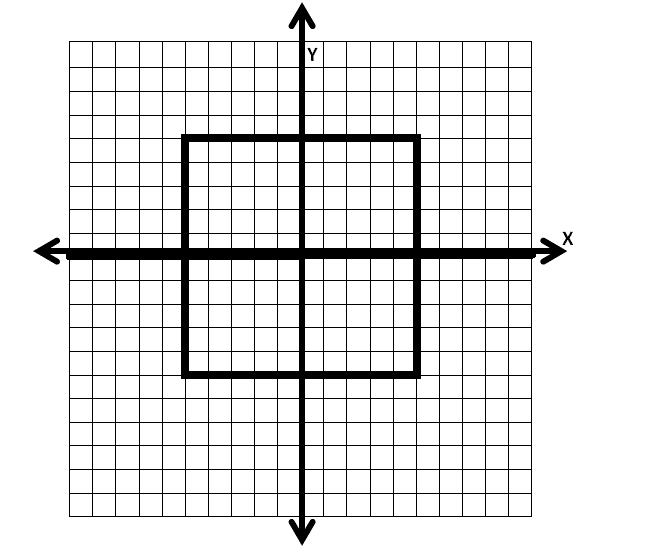
Find the area of the square shown above.
Find the area of the square shown above.
Tap to reveal answer
In order to find the area of the above square, apply the formula:  , when
  equals the length of one side of the square.
Since,  the solution is:

Make sure to attach "square units" to your answer!
In order to find the area of the above square, apply the formula:
Since,
Make sure to attach "square units" to your answer!
← Didn't Know|Knew It →
The above square has an area of  square units. What fraction of the area of square is in quadrant II?
The above square has an area of
Tap to reveal answer
To find the fraction of the entire squares area that lays in quadrant II, notice that the square is taking up an equivalent amount in each of the four quadrants. Thus,  of the squares area is in quadrant II.
Also note that the area of the square that lays in quadrant II is  square units, thus the problem could have alternatively been solved by reducing
  .
.
To find the fraction of the entire squares area that lays in quadrant II, notice that the square is taking up an equivalent amount in each of the four quadrants. Thus,
Also note that the area of the square that lays in quadrant II is
← Didn't Know|Knew It →
NOTE: Figure NOT drawn to scale.
What is the area of the parallelogram represented by the above figure?
NOTE: Figure NOT drawn to scale.
What is the area of the parallelogram represented by the above figure?
Tap to reveal answer
The area of a parallelogram is its base multiplied by its height. The diagram below shows both in green:
The area of a parallelogram is its base multiplied by its height. The diagram below shows both in green:
← Didn't Know|Knew It →
Find the area of the above parallelogram given a height of 5 units, as shown to scale.
Find the area of the above parallelogram given a height of 5 units, as shown to scale.
Tap to reveal answer
Since the diagram is drawn to scale, the base of the parallelogram must be 6 units in length. Using the area formula for a parallelogram:
Since the diagram is drawn to scale, the base of the parallelogram must be 6 units in length. Using the area formula for a parallelogram:
← Didn't Know|Knew It →
Given a base of 12 units and an area of 120 square units, find the height of the paralellogram shown above.
Given a base of 12 units and an area of 120 square units, find the height of the paralellogram shown above.
Tap to reveal answer
The area formula for a parallelogram is:
Thus, to find the height, rearrange:
The area formula for a parallelogram is:
Thus, to find the height, rearrange:
← Didn't Know|Knew It →
The above parallelogram has an area of 30 square units. Which of the following could be the lengths of the base and height of this figure? (Image not drawn to scale.)
The above parallelogram has an area of 30 square units. Which of the following could be the lengths of the base and height of this figure? (Image not drawn to scale.)
Tap to reveal answer
The formula for the area of a parallelogram is:
Thus, the base and height must equal 30 square units when multiplied together.
3 and 10 are the only combination of base and height which, when multiplied, equal the area of 30 square units.
The formula for the area of a parallelogram is:
Thus, the base and height must equal 30 square units when multiplied together.
3 and 10 are the only combination of base and height which, when multiplied, equal the area of 30 square units.
← Didn't Know|Knew It →
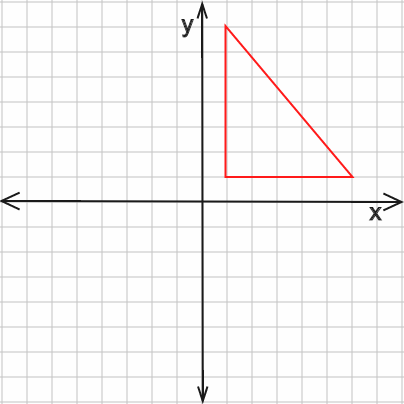
Find the area of the above triangle, given that it has a height of 12 and a base of 10.
Find the area of the above triangle, given that it has a height of 12 and a base of 10.
Tap to reveal answer
Because this is a right triangle, the area formula is simply:
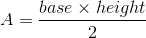
Thus, the solution is:

Because this is a right triangle, the area formula is simply:
Thus, the solution is:
← Didn't Know|Knew It →
Given the above triangle has a base of 5 and height of 6, what is the perimeter of the triangle?
Given the above triangle has a base of 5 and height of 6, what is the perimeter of the triangle?
Tap to reveal answer
First, use the Pythagorean Theorem to find the length of the hypotenuse:
 where
where  and
and  are 5 and 6, respectively, and
  is the hypotenuse.
Thus, 
Finally, the perimeter is the sum of the sides of the triangle or:

First, use the Pythagorean Theorem to find the length of the hypotenuse:
Thus,
Finally, the perimeter is the sum of the sides of the triangle or:
← Didn't Know|Knew It →
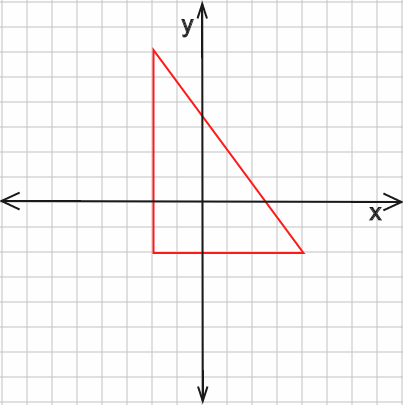
Given the above triangle has a base of  and hypotenuse of
  , find the height of the triangle.
Given the above triangle has a base of
Tap to reveal answer
Use the Pythagorean Theorem,

where  is the hypotenuse,
  is the base, and
  is the height.
Rearranging to solve for the height,  , yields:


Use the Pythagorean Theorem,
where
Rearranging to solve for the height,
← Didn't Know|Knew It →
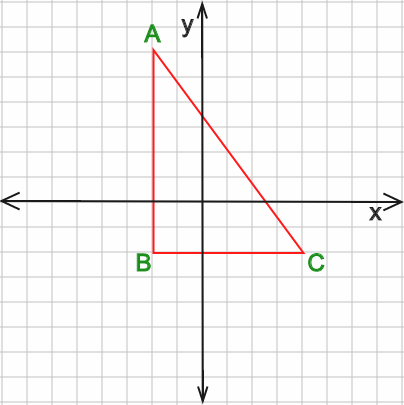
Given triangle  , where
  is at point
  and
and  is at point
  , find the area.
Given triangle
Tap to reveal answer
To find the area of this triangle, we first need to determine the length of sides AB and BC. First, point B shares the same x-coordinate as point A and the same y-coordinate as point C. Thus, B must be located at point (-2,-2).
The length of side AB must then be:

and the length of side BC:

Using the area formula,
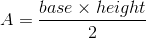
we can find the area using the base (side BC) and height (side AB):
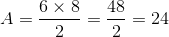
To find the area of this triangle, we first need to determine the length of sides AB and BC. First, point B shares the same x-coordinate as point A and the same y-coordinate as point C. Thus, B must be located at point (-2,-2).
The length of side AB must then be:
and the length of side BC:
Using the area formula,
we can find the area using the base (side BC) and height (side AB):
← Didn't Know|Knew It →