Study Systems Of Equations in PSAT Math with focused flashcards that help you recognize the idea, recall the key rule, and apply it in practice-style prompts.
All flashcards
Flashcard 1: What is the slope of a line in standard form Ax+By=C (with B=0)?
Answer: m=−BA. Rearrange to slope-intercept form to find slope.
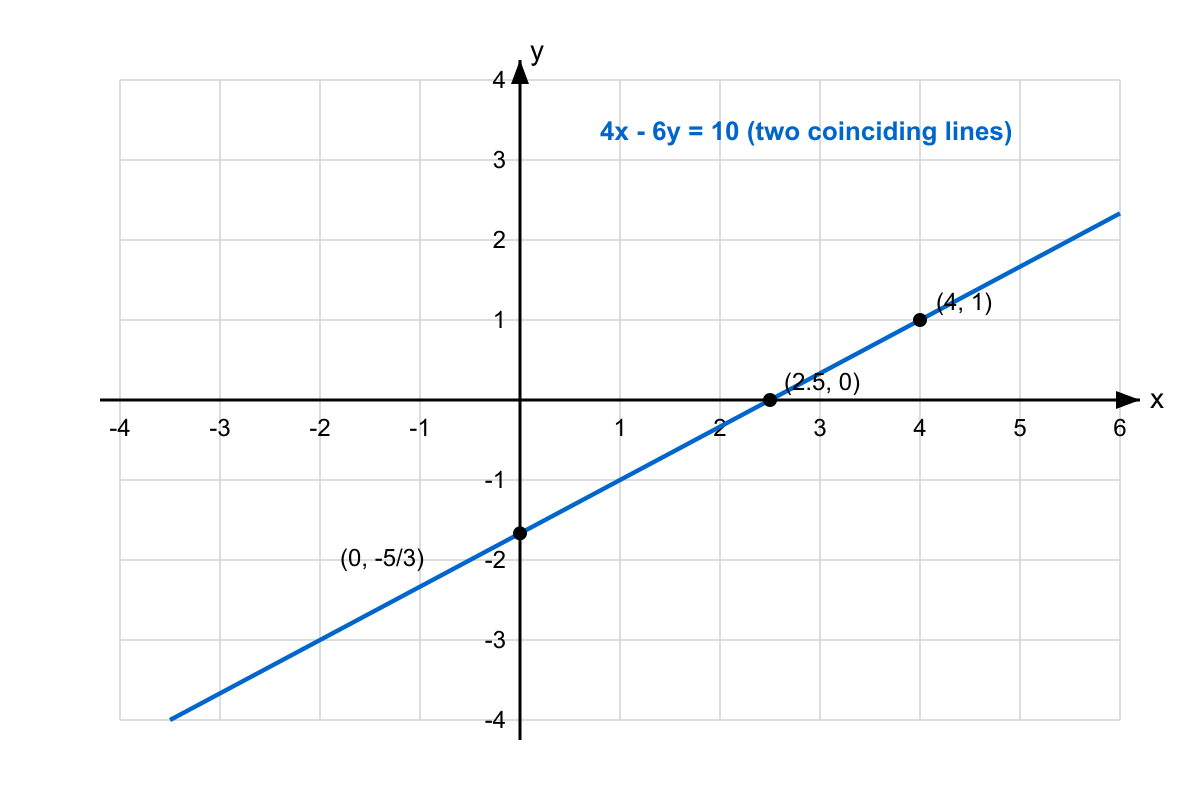
Flashcard 2: Identify the solution type for 2x+4y=6 and x+2y=3.
Answer: Infinitely many solutions. Second equation is first divided by 2; same line.
Flashcard 3: What does it mean if two lines in a linear system are parallel and distinct?
Answer: No solution. Parallel lines never intersect, so no common point exists.
Flashcard 4: What does it mean if a point (x,y) solves a system of equations?
Answer: (x,y) satisfies both equations. The point makes both equations true when substituted.
Flashcard 5: What is the elimination goal when solving a linear system using addition or subtraction?
Answer: Make one variable cancel to 0 by adding or subtracting equations. Multiply equations if needed to make coefficients opposites.
Flashcard 6: Which point is the solution to the system y=x+1 and y=−2x+7?
Answer: (2,3). Set equal: x+1=−2x+7; solve to get x=2, y=3.
Flashcard 7: Identify the number of solutions if two lines have slopes m1=3 and m2=3 with different b values.
Answer: No solution. Same slopes mean parallel lines that never intersect.
Flashcard 8: What is the meaning of a solution to a system of two equations in x and y?
Answer: An ordered pair (x,y) that makes both equations true. Both equations must be satisfied simultaneously by the same values.
Flashcard 9: What is the value of y in the system 3x−2y=4 and 3x+2y=16?
Answer: y=3. From x=310, substitute into either equation to get y=3.
Flashcard 10: What is the solution to the system 2x+y=9 and x−y=1?
Answer: (310,37). Add equations to get 3x=10, then substitute back.
Flashcard 11: Identify the solution to the system y=x2 and y=2x.
Answer: (0,0) and (2,4). Substitute: x2=2x; factor to x(x−2)=0, so x=0 or x=2.
Flashcard 12: What is the quickest way to choose between substitution and elimination?
Answer: Use substitution if a variable is isolated; otherwise use elimination. Isolated variables make substitution faster than elimination.
Flashcard 13: What is the solution type of the system y=2x+3 and y=2x−1?
Answer: No solution. Same slope (2) but different y-intercepts means parallel lines.
Flashcard 14: What is the substitution method first step for a system of two equations?
Answer: Solve one equation for one variable. Express one variable in terms of the other to substitute.
Flashcard 15: What does it mean if a system of two linear equations has exactly one solution?
Answer: The lines intersect at exactly one point. One solution occurs when lines have different slopes.
Flashcard 16: Identify the solution count for 2x+4y=8 and x+2y=5.
Answer: No solution. Second equation is 2x+4y=10, parallel to first.
Flashcard 17: What is the elimination goal when solving a system by addition or subtraction?
Answer: Make one variable cancel to get a one-variable equation. Add/subtract equations to eliminate a variable and solve for the other.
Flashcard 18: Which ordered pair is the solution to x+y=6 and 2x−y=3?
Answer: (3,3). Add equations: 3x=9, so x=3; substitute to get y=3.
Flashcard 19: Which equation results from substituting y=3x−2 into 2x+y=10?
Answer: 2x+(3x−2)=10. Direct substitution of the expression for y.
Flashcard 20: Identify the value of k so the system x+ky=6 and 2x+4y=12 has infinitely many solutions.
Answer: k=2. For same line, need 21=4k=126, so k=2.
Flashcard 21: Identify the value of k so the system x+ky=6 and 2x+4y=10 has no solution.
Answer: k=2. For parallel lines, need same slope: 21=4k, so k=2.
Flashcard 22: Identify the number of solutions for 2x+4y=8 and x+2y=4.
Answer: Infinitely many solutions. Second equation is half the first; they're the same line.
Flashcard 23: What is the solution to the system y=2x+1 and y=7?
Answer: (3,7). Substitute y=7 into first equation: 7=2x+1, so x=3.
Flashcard 24: Identify the solution to the system: y=2x+1 and y=9.
Answer: (4,9). Substitute y=9 into first equation: 9=2x+1, so x=4.
Flashcard 25: Which classification fits the system 2x+4y=10 and x+2y=5: one, none, or infinitely many solutions?
Answer: Infinitely many solutions. Second equation is first divided by 2; they're the same line.
Flashcard 26: Identify the solution to the system: x=2y and x+y=9.
Answer: (6,3). Substitute x=2y into second: 2y+y=9, so y=3.
Flashcard 27: What are the three possible numbers of solutions for a system of two linear equations?
Answer: 0, 1, or infinitely many solutions. Linear systems can have unique, no, or infinite solutions.
Flashcard 28: What condition indicates a system of two linear equations has infinitely many solutions?
Answer: Equations are equivalent (same line). Identical lines overlap at every point.
Flashcard 29: Identify the intersection point of x=2 and y=−3.
Answer: (2,−3). Vertical line x=2 meets horizontal line y=−3 at (2,−3).
Flashcard 30: What is the solution type for the system: y=2x+3 and y=2x−5?
Answer: No solution. Same slope m=2 but different y-intercepts means parallel lines.
Flashcard 31: What conclusion follows if two lines have different slopes, m1=m2?
Answer: The system has exactly 1 solution. Different slopes guarantee the lines intersect at one point.
Flashcard 32: What conclusion follows if two lines have the same slope but different intercepts?
Answer: The system has 0 solutions (parallel lines). Same slope means parallel; different intercepts means they never meet.
Flashcard 33: What is the substitution method for solving a system, stated in one sentence?
Answer: Solve one equation for a variable, substitute into the other. Replace the isolated variable in the second equation.
Flashcard 34: What is the solution to the system x+y=5 and 2x+2y=12?
Answer: No solution. Second simplifies to x+y=6, contradicting first equation.
Flashcard 35: What is the solution type of the system x+y=2 and x−y=2?
Answer: Exactly one solution. Different slopes guarantee the lines intersect once.
Flashcard 36: Identify the solution count for 2x+4y=8 and x+2y=4.
Answer: Infinitely many solutions. Second equation is half the first, same line.
Flashcard 37: What does it mean if elimination produces a true statement like 0=0?
Answer: Infinitely many solutions. True statement means the equations represent the same line.
Flashcard 38: What is the solution to the system 3x−2y=4 and x+2y=8?
Answer: (3,25). Add equations to eliminate y: 4x=12, so x=3.
Flashcard 39: Identify the solution to the system: y=−x+2 and 2x+y=5.
Answer: (3,−1). Substituting y=−x+2 into second equation gives x=3, then y=−1.
Flashcard 40: What does it mean if two linear equations graph as parallel lines in a system?
Answer: No solution (inconsistent system). Parallel lines never intersect, so no common point exists.
Flashcard 41: What is the slope-intercept form used to compare slopes and intercepts of lines?
Answer: y=mx+b. Standard form where m is slope and b is y-intercept.
Flashcard 42: What is the solution to the system y=3x+2 and y=11?
Answer: (3,11). Substitute y=11 into first equation: 11=3x+2, so x=3.
Flashcard 43: Which classification fits the system y=3x−2 and y=3x+5: one, none, or infinitely many solutions?
Answer: No solution. Same slope (3) but different y-intercepts means parallel lines.
Flashcard 44: Identify the solution to the system: 3x−2y=4 and x+2y=8.
Answer: (3,25). Add equations to eliminate y: 4x=12, so x=3.
Flashcard 45: What does it mean if two equations represent the same line?
Answer: Infinitely many solutions. Same line means every point satisfies both equations.
Flashcard 46: What does it mean if two linear equations have infinitely many solutions?
Answer: They represent the same line (equivalent equations). One equation is a multiple of the other, so they overlap completely.
Flashcard 47: What is the solution type if elimination produces a false statement like 0=5?
Answer: No solution. All variables cancel, leaving a contradiction.
Flashcard 48: What is the definition of a solution to a system of two equations in x and y?
Answer: An ordered pair (x,y) that makes both equations true. Both equations must be satisfied simultaneously by the same point.
Flashcard 49: What is the solution to the system y=x2 and y=x+2?
Answer: (−1,1) and (2,4). Set x2=x+2, solve quadratic x2−x−2=0.
Flashcard 50: What is the substitution method used for in systems of equations?
Answer: Replace a variable using one equation, then solve the other. Express one variable in terms of the other to reduce to one equation.
Flashcard 51: Identify the solution to the system 4x+2y=10 and 2x+y=5.
Answer: Infinitely many solutions. First equation is second multiplied by 2, so same line.
Flashcard 52: What is the value of x in the system 3x+2y=16 and 3x−2y=4?
Answer: x=310. Add equations to eliminate y: 6x=20, so x=rac{10}{3}.
Flashcard 53: What is the slope-intercept form of a line used to compare slopes in a system?
Answer: y=mx+b. Standard form showing slope m and y-intercept b.
Flashcard 54: What condition on slopes indicates a system of two lines has exactly one solution?
Answer: Different slopes: m1=m2. Lines with different slopes must intersect at exactly one point.
Flashcard 55: Which condition guarantees a unique solution for a1x+b1y=c1 and a2x+b2y=c2?
Answer: rac{a_1}{a_2}\ne\frac{b_1}{b_2}. Different coefficient ratios mean lines intersect once.
Flashcard 56: What is the solution type if elimination produces a true statement like 0=0?
Answer: Infinitely many solutions. All variables cancel, leaving a true identity.
Flashcard 57: What condition on slopes and intercepts indicates a system has no solution?
Answer: Same slope, different intercepts: m1=m2 and b1=b2. Parallel lines never intersect.
Flashcard 58: What value of k makes the system have infinitely many solutions? y=3x+2 and y=3x+k.
Answer: k=2. Same slope and intercept means identical lines.
Flashcard 59: Identify the solution to the system: 2x+y=9 and x−y=0.
Answer: (3,3). From x−y=0, x=y; substitute into first equation.
Flashcard 60: Identify the solution to the system: x−2y=0 and 3x+2y=16.
Answer: (4,2). Adding equations eliminates y: 4x=16, so x=4, then y=2.
Flashcard 61: What does it mean if a system of two linear equations has exactly one solution?
Answer: The lines intersect at exactly one point (x,y). This occurs when lines have different slopes.
Flashcard 62: What is the standard form of a linear equation commonly used in elimination?
Answer: Ax+By=C. Coefficients are integers, making elimination easier.
Flashcard 63: What is the solution (x,y) to the system y=2x+1 and y=9?
Answer: (4,9). Substitute y=9 into first equation: 9=2x+1.
Flashcard 64: What does a solution (x,y) to a system represent on a coordinate plane?
Answer: The intersection point of the graphs of the equations. Where the two lines cross on the graph.
Flashcard 65: What does it mean for a system of two linear equations to have no solution?
Answer: The lines are parallel: same slope, different intercepts. Parallel lines never meet, so no point satisfies both equations.
Flashcard 66: What does it mean if two equations in a linear system represent the same line?
Answer: Infinitely many solutions. Same line means every point on it satisfies both equations.
Flashcard 67: What is the solution to the system x2+y2=25 and y=0?
Answer: (5,0) and (−5,0). Circle intersects x-axis where y=0, so x2=25.
Flashcard 68: What is the meaning of a solution to a system of equations?
Answer: An ordered pair (x,y) that makes both equations true. Values that satisfy both equations simultaneously.
Flashcard 69: What is the meaning of a negative solution like x=−2 in a system word problem context?
Answer: It may be extraneous if the context requires x≥0. Negative values may not make sense for quantities like length.
Flashcard 70: What is the solution set type for y=3x−2 and y=3x+5?
Answer: No solution. Parallel lines (same slope m=3) never intersect.
Flashcard 71: Identify the intersection point of the lines x=3 and y=−2.
Answer: (3,−2). Vertical line x=3 meets horizontal line y=−2 at (3,−2).
Flashcard 72: What does it mean for an ordered pair (x,y) to be a solution to a system?
Answer: It makes both equations true when substituted. The point satisfies both equations simultaneously.
Flashcard 73: What is the solution to the system y=x+4 and 2x+y=1?
Answer: (−1,3). Substitute y=x+4 into second: 2x+(x+4)=1, so x=−1.
Flashcard 74: Identify the number of solutions: 2x−4y=8 and x−2y=4.
Answer: Infinitely many solutions. Second equation is first divided by 2; they're the same line.
Flashcard 75: What is the substitution method first step when one equation is already solved for a variable?
Answer: Substitute that expression into the other equation. Replace the variable in equation 2 with the expression from equation 1.
Flashcard 76: What is the solution type of the system 2x+4y=6 and x+2y=3?
Answer: Infinitely many solutions. Second equation is first divided by 2, so they're the same line.
Flashcard 77: What is the x-value of the solution to x+y=1 and x−y=9?
Answer: 5. Adding equations gives 2x=10, so x=5.
Flashcard 78: What is the slope-intercept form of a line used when comparing two equations in a system?
Answer: y=mx+b. Standard form showing slope m and y-intercept b.
Flashcard 79: Which condition indicates no solution for a1x+b1y=c1 and a2x+b2y=c2?
Answer: rac{a_1}{a_2}=\frac{b_1}{b_2}\ne\frac{c_1}{c_2}. Same coefficient ratios but different constant ratio means parallel lines.
Flashcard 80: Identify the solution to the system x=3y and x+y=12.
Answer: (9,3). Substitute first into second: 3y+y=12, so y=3 and x=9.
Flashcard 81: What does an ordered pair (x,y) represent in a system of two equations?
Answer: A point that satisfies both equations simultaneously. The solution where both lines intersect.
Flashcard 82: What method solves a system by replacing a variable using an equivalent expression?
Answer: Substitution. Solve one equation for a variable, then substitute into the other.
Flashcard 83: What is the solution (x,y) to the system y=x−2 and y=−x+4?
Answer: (3,1). Set equations equal: x−2=−x+4, solve for x=3.
Flashcard 84: Identify the solution to the system 2x+y=9 and x+y=6.
Answer: (3,3). Subtracting second from first gives x=3; then 3+y=6 gives y=3.
Flashcard 85: What value of k makes the system have no solution? y=3x+2 and y=3x+k.
Answer: Any k=2. Same slope requires no solution; different intercepts needed.
Flashcard 86: What are the three possible solution counts for a system of two linear equations in two variables?
Answer: One solution, no solution, or infinitely many solutions. Linear systems can intersect once, never, or everywhere.
Flashcard 87: What does it mean if two linear equations have exactly one solution?
Answer: The lines intersect at exactly one point. Unique solution occurs when lines have different slopes.
Flashcard 88: Identify the solution to the system: x=2y and x+y=9.
Answer: (6,3). Substituting x=2y into 2y+y=9 gives y=3, then x=6.
Flashcard 89: What is the solution (x,y) to the system x+2y=8 and y=3?
Answer: (2,3). Substitute y=3 into first equation: x+2(3)=8.
Flashcard 90: Identify the solution to the system: x+y=7 and x−y=1.
Answer: (4,3). Adding equations gives 2x=8, so x=4 and y=3.
Flashcard 91: Identify the solution to the system 3x−2y=4 and x−2y=0.
Answer: (2,1). Subtracting second from first gives 2x=4, so x=2; then y=1.
Flashcard 92: Identify the solution to the system 2x+3y=12 and 4x+6y=24.
Answer: Infinitely many solutions. Second equation is first multiplied by 2; same line.
Flashcard 93: Identify the solution to the system: y=−x+6 and y=x.
Answer: (3,3). Setting equations equal: −x+6=x gives x=3, so y=3.
Flashcard 94: Identify the solution to the system x−3y=−11 and 2x−3y=−5.
Answer: (x,y)=(6,317). Subtract equations to get −x=−6, so x=6; then y=317.
Flashcard 95: What is the first step to solve the system y=3x−2 and 2x+y=10 by substitution?
Answer: Substitute y=3x−2 into 2x+y=10. Replace y in the second equation with the expression from the first.
Flashcard 96: What condition on slopes guarantees exactly one solution for y=m1x+b1 and y=m2x+b2?
Answer: m1=m2. Different slopes guarantee the lines intersect at one point.
Flashcard 97: What are the three possible numbers of solutions for a system of two linear equations?
Answer: 0, 1, or infinitely many solutions. Linear systems can have unique intersection, parallel lines, or identical lines.
Flashcard 98: What condition on slopes indicates a system of two lines has no solution?
Answer: Same slope, different y-intercepts. Parallel lines never intersect.
Flashcard 99: What is the slope-intercept form of a line used to compare slopes and intercepts?
Answer: y=mx+b. Standard form showing slope m and y-intercept b.
Flashcard 100: What is the slope-intercept form of a line used to compare slopes in systems?
Answer: y=mx+b. Shows slope m and y-intercept b explicitly.