How to divide square roots - PSAT Math
Card 1 of 35
(√27 + √12) / √3 is equal to
(√27 + √12) / √3 is equal to
Tap to reveal answer
√27 is the same as 3√3, while √12 is the same as 2√3.
3√3 + 2√3 = 5√3
(5√3)/(√3) = 5
√27 is the same as 3√3, while √12 is the same as 2√3.
3√3 + 2√3 = 5√3
(5√3)/(√3) = 5
← Didn't Know|Knew It →
Divide and simplify. Assume all integers are positive real numbers.

Divide and simplify. Assume all integers are positive real numbers.
Tap to reveal answer

There are two ways to solve this problem. First you can divide the numbers under the radical. Then simplify.
Example 1

Example 2
Find the square root of both numerator and denominator, simplifying as much as possible then dividing out like terms.

Both methods will give you the correct answer of  .
.
There are two ways to solve this problem. First you can divide the numbers under the radical. Then simplify.
Example 1
Example 2
Find the square root of both numerator and denominator, simplifying as much as possible then dividing out like terms.
Both methods will give you the correct answer of
← Didn't Know|Knew It →
Simplify:

Simplify:
Tap to reveal answer
To simplfy, we must first distribute the square root.

Next, we can simplify each of the square roots.

To simplfy, we must first distribute the square root.
Next, we can simplify each of the square roots.
← Didn't Know|Knew It →
Find the quotient:

Find the quotient:
Tap to reveal answer
Simplify each radical:
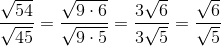
Rationalize the denominator:
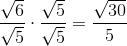
Simplify each radical:
Rationalize the denominator:
← Didn't Know|Knew It →
Find the quotient:

Find the quotient:
Tap to reveal answer
Find the quotient:

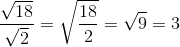
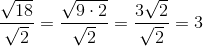
There are two ways to approach this problem.
Option 1: Combine the radicals first, the reduce
Option 2: Simplify the radicals first, then reduce
Find the quotient:
There are two ways to approach this problem.
Option 1: Combine the radicals first, the reduce
Option 2: Simplify the radicals first, then reduce
← Didn't Know|Knew It →
(√27 + √12) / √3 is equal to
(√27 + √12) / √3 is equal to
Tap to reveal answer
√27 is the same as 3√3, while √12 is the same as 2√3.
3√3 + 2√3 = 5√3
(5√3)/(√3) = 5
√27 is the same as 3√3, while √12 is the same as 2√3.
3√3 + 2√3 = 5√3
(5√3)/(√3) = 5
← Didn't Know|Knew It →
Divide and simplify. Assume all integers are positive real numbers.
Divide and simplify. Assume all integers are positive real numbers.
Tap to reveal answer
There are two ways to solve this problem. First you can divide the numbers under the radical. Then simplify.
Example 1
Example 2
Find the square root of both numerator and denominator, simplifying as much as possible then dividing out like terms.
Both methods will give you the correct answer of .
There are two ways to solve this problem. First you can divide the numbers under the radical. Then simplify.
Example 1
Example 2
Find the square root of both numerator and denominator, simplifying as much as possible then dividing out like terms.
Both methods will give you the correct answer of
← Didn't Know|Knew It →
Simplify:
Simplify:
Tap to reveal answer
To simplfy, we must first distribute the square root.
Next, we can simplify each of the square roots.
To simplfy, we must first distribute the square root.
Next, we can simplify each of the square roots.
← Didn't Know|Knew It →
Find the quotient:
Find the quotient:
Tap to reveal answer
Simplify each radical:
Rationalize the denominator:
Simplify each radical:
Rationalize the denominator:
← Didn't Know|Knew It →
Find the quotient:
Find the quotient:
Tap to reveal answer
Find the quotient:
There are two ways to approach this problem.
Option 1: Combine the radicals first, the reduce
Option 2: Simplify the radicals first, then reduce
Find the quotient:
There are two ways to approach this problem.
Option 1: Combine the radicals first, the reduce
Option 2: Simplify the radicals first, then reduce
← Didn't Know|Knew It →
(√27 + √12) / √3 is equal to
(√27 + √12) / √3 is equal to
Tap to reveal answer
√27 is the same as 3√3, while √12 is the same as 2√3.
3√3 + 2√3 = 5√3
(5√3)/(√3) = 5
√27 is the same as 3√3, while √12 is the same as 2√3.
3√3 + 2√3 = 5√3
(5√3)/(√3) = 5
← Didn't Know|Knew It →
Divide and simplify. Assume all integers are positive real numbers.
Divide and simplify. Assume all integers are positive real numbers.
Tap to reveal answer
There are two ways to solve this problem. First you can divide the numbers under the radical. Then simplify.
Example 1
Example 2
Find the square root of both numerator and denominator, simplifying as much as possible then dividing out like terms.
Both methods will give you the correct answer of .
There are two ways to solve this problem. First you can divide the numbers under the radical. Then simplify.
Example 1
Example 2
Find the square root of both numerator and denominator, simplifying as much as possible then dividing out like terms.
Both methods will give you the correct answer of
← Didn't Know|Knew It →
Simplify:
Simplify:
Tap to reveal answer
To simplfy, we must first distribute the square root.
Next, we can simplify each of the square roots.
To simplfy, we must first distribute the square root.
Next, we can simplify each of the square roots.
← Didn't Know|Knew It →
Find the quotient:
Find the quotient:
Tap to reveal answer
Simplify each radical:
Rationalize the denominator:
Simplify each radical:
Rationalize the denominator:
← Didn't Know|Knew It →
Find the quotient:
Find the quotient:
Tap to reveal answer
Find the quotient:
There are two ways to approach this problem.
Option 1: Combine the radicals first, the reduce
Option 2: Simplify the radicals first, then reduce
Find the quotient:
There are two ways to approach this problem.
Option 1: Combine the radicals first, the reduce
Option 2: Simplify the radicals first, then reduce
← Didn't Know|Knew It →
(√27 + √12) / √3 is equal to
(√27 + √12) / √3 is equal to
Tap to reveal answer
√27 is the same as 3√3, while √12 is the same as 2√3.
3√3 + 2√3 = 5√3
(5√3)/(√3) = 5
√27 is the same as 3√3, while √12 is the same as 2√3.
3√3 + 2√3 = 5√3
(5√3)/(√3) = 5
← Didn't Know|Knew It →
Divide and simplify. Assume all integers are positive real numbers.
Divide and simplify. Assume all integers are positive real numbers.
Tap to reveal answer
There are two ways to solve this problem. First you can divide the numbers under the radical. Then simplify.
Example 1
Example 2
Find the square root of both numerator and denominator, simplifying as much as possible then dividing out like terms.
Both methods will give you the correct answer of .
There are two ways to solve this problem. First you can divide the numbers under the radical. Then simplify.
Example 1
Example 2
Find the square root of both numerator and denominator, simplifying as much as possible then dividing out like terms.
Both methods will give you the correct answer of
← Didn't Know|Knew It →
Simplify:
Simplify:
Tap to reveal answer
To simplfy, we must first distribute the square root.
Next, we can simplify each of the square roots.
To simplfy, we must first distribute the square root.
Next, we can simplify each of the square roots.
← Didn't Know|Knew It →
Find the quotient:
Find the quotient:
Tap to reveal answer
Simplify each radical:
Rationalize the denominator:
Simplify each radical:
Rationalize the denominator:
← Didn't Know|Knew It →
Find the quotient:
Find the quotient:
Tap to reveal answer
Find the quotient:
There are two ways to approach this problem.
Option 1: Combine the radicals first, the reduce
Option 2: Simplify the radicals first, then reduce
Find the quotient:
There are two ways to approach this problem.
Option 1: Combine the radicals first, the reduce
Option 2: Simplify the radicals first, then reduce
← Didn't Know|Knew It →