Complex Fractions - PSAT Math
Card 1 of 21
Solve:

Solve:
Tap to reveal answer
First reduce the fraction. We can divide both the numerator and the denominator by 3.

Now our expression looks like this:

When you add or subtract fractions, you need to have the same denominator. The lowest common deonminator here is 2. So we need to multiply and solve:

First reduce the fraction. We can divide both the numerator and the denominator by 3.
Now our expression looks like this:
When you add or subtract fractions, you need to have the same denominator. The lowest common deonminator here is 2. So we need to multiply and solve:
← Didn't Know|Knew It →
Solve:
Solve:
Tap to reveal answer
First reduce the fraction. We can divide both the numerator and the denominator by 3.
Now our expression looks like this:
When you add or subtract fractions, you need to have the same denominator. The lowest common deonminator here is 2. So we need to multiply and solve:
First reduce the fraction. We can divide both the numerator and the denominator by 3.
Now our expression looks like this:
When you add or subtract fractions, you need to have the same denominator. The lowest common deonminator here is 2. So we need to multiply and solve:
← Didn't Know|Knew It →
Simplify:

Simplify:
Tap to reveal answer
Simplify the numerator and the denominator, then divide, as follows:


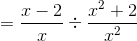
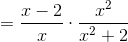
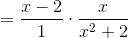

Simplify the numerator and the denominator, then divide, as follows:
← Didn't Know|Knew It →
Evaluate:

Evaluate:
Tap to reveal answer
Simplify the numerator and the denominator, then divide, as follows:


Simplify the numerator and the denominator, then divide, as follows:
← Didn't Know|Knew It →
Simplify:
Simplify:
Tap to reveal answer
Simplify the numerator and the denominator, then divide, as follows:
Simplify the numerator and the denominator, then divide, as follows:
← Didn't Know|Knew It →
Evaluate:
Evaluate:
Tap to reveal answer
Simplify the numerator and the denominator, then divide, as follows:
Simplify the numerator and the denominator, then divide, as follows:
← Didn't Know|Knew It →
Simplify:
Simplify:
Tap to reveal answer
Simplify the numerator and the denominator, then divide, as follows:
Simplify the numerator and the denominator, then divide, as follows:
← Didn't Know|Knew It →
Evaluate:
Evaluate:
Tap to reveal answer
Simplify the numerator and the denominator, then divide, as follows:
Simplify the numerator and the denominator, then divide, as follows:
← Didn't Know|Knew It →
Simplify:
Simplify:
Tap to reveal answer
Simplify the numerator and the denominator, then divide, as follows:
Simplify the numerator and the denominator, then divide, as follows:
← Didn't Know|Knew It →
Evaluate:
Evaluate:
Tap to reveal answer
Simplify the numerator and the denominator, then divide, as follows:
Simplify the numerator and the denominator, then divide, as follows:
← Didn't Know|Knew It →
Solve:
Solve:
Tap to reveal answer
First reduce the fraction. We can divide both the numerator and the denominator by 3.
Now our expression looks like this:
When you add or subtract fractions, you need to have the same denominator. The lowest common deonminator here is 2. So we need to multiply and solve:
First reduce the fraction. We can divide both the numerator and the denominator by 3.
Now our expression looks like this:
When you add or subtract fractions, you need to have the same denominator. The lowest common deonminator here is 2. So we need to multiply and solve:
← Didn't Know|Knew It →
Simplify:
Simplify:
Tap to reveal answer
Simplify the numerator and the denominator, then divide, as follows:
Simplify the numerator and the denominator, then divide, as follows:
← Didn't Know|Knew It →
Evaluate:
Evaluate:
Tap to reveal answer
Simplify the numerator and the denominator, then divide, as follows:
Simplify the numerator and the denominator, then divide, as follows:
← Didn't Know|Knew It →
Solve:
Solve:
Tap to reveal answer
First reduce the fraction. We can divide both the numerator and the denominator by 3.
Now our expression looks like this:
When you add or subtract fractions, you need to have the same denominator. The lowest common deonminator here is 2. So we need to multiply and solve:
First reduce the fraction. We can divide both the numerator and the denominator by 3.
Now our expression looks like this:
When you add or subtract fractions, you need to have the same denominator. The lowest common deonminator here is 2. So we need to multiply and solve:
← Didn't Know|Knew It →
Simplify:
Simplify:
Tap to reveal answer
Simplify the numerator and the denominator, then divide, as follows:
Simplify the numerator and the denominator, then divide, as follows:
← Didn't Know|Knew It →
Evaluate:
Evaluate:
Tap to reveal answer
Simplify the numerator and the denominator, then divide, as follows:
Simplify the numerator and the denominator, then divide, as follows:
← Didn't Know|Knew It →
Solve:
Solve:
Tap to reveal answer
First reduce the fraction. We can divide both the numerator and the denominator by 3.
Now our expression looks like this:
When you add or subtract fractions, you need to have the same denominator. The lowest common deonminator here is 2. So we need to multiply and solve:
First reduce the fraction. We can divide both the numerator and the denominator by 3.
Now our expression looks like this:
When you add or subtract fractions, you need to have the same denominator. The lowest common deonminator here is 2. So we need to multiply and solve:
← Didn't Know|Knew It →
Solve:
Solve:
Tap to reveal answer
First reduce the fraction. We can divide both the numerator and the denominator by 3.
Now our expression looks like this:
When you add or subtract fractions, you need to have the same denominator. The lowest common deonminator here is 2. So we need to multiply and solve:
First reduce the fraction. We can divide both the numerator and the denominator by 3.
Now our expression looks like this:
When you add or subtract fractions, you need to have the same denominator. The lowest common deonminator here is 2. So we need to multiply and solve:
← Didn't Know|Knew It →
Solve:
Solve:
Tap to reveal answer
First reduce the fraction. We can divide both the numerator and the denominator by 3.
Now our expression looks like this:
When you add or subtract fractions, you need to have the same denominator. The lowest common deonminator here is 2. So we need to multiply and solve:
First reduce the fraction. We can divide both the numerator and the denominator by 3.
Now our expression looks like this:
When you add or subtract fractions, you need to have the same denominator. The lowest common deonminator here is 2. So we need to multiply and solve:
← Didn't Know|Knew It →
Simplify:
Simplify:
Tap to reveal answer
Simplify the numerator and the denominator, then divide, as follows:
Simplify the numerator and the denominator, then divide, as follows:
← Didn't Know|Knew It →