Focal Length - MCAT Chemical and Physical Foundations of Biological Systems
Card 1 of 21
A concave mirror has a radius of curvature of 0.85m. Where is the mirror's focal point?
A concave mirror has a radius of curvature of 0.85m. Where is the mirror's focal point?
Tap to reveal answer
Since the mirror is concave, the focal point will be in front of the mirror. The focal length is equal to one half of the radius of curvature.

Rc is the radius of curvature. Plugging in 0.85m for Rc allows us to solve for the focal length.

0.43m is equal to 43cm.
Since the mirror is concave, the focal point will be in front of the mirror. The focal length is equal to one half of the radius of curvature.
Rc is the radius of curvature. Plugging in 0.85m for Rc allows us to solve for the focal length.
0.43m is equal to 43cm.
← Didn't Know|Knew It →
The focal point for a mirror is 56cm behind the mirror. Is the mirror concave or convex, and what is its radius of curvature?
The focal point for a mirror is 56cm behind the mirror. Is the mirror concave or convex, and what is its radius of curvature?
Tap to reveal answer
Since the focal point falls behind the mirror it must be convex. The radius of curvature can be found using the focal length equation.


Since the focal point falls behind the mirror it must be convex. The radius of curvature can be found using the focal length equation.
← Didn't Know|Knew It →
A lens has a focal length of  . What is the strength and type of lens?
A lens has a focal length of
Tap to reveal answer
Since the focal length is negative, the lens is diverging.
The diopter of a lens is found through the following formula:

Since the focal length of the lens is  :
:
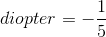
Since the focal length is negative, the lens is diverging.
The diopter of a lens is found through the following formula:
Since the focal length of the lens is
← Didn't Know|Knew It →
A concave mirror has a radius of curvature of 0.85m. Where is the mirror's focal point?
A concave mirror has a radius of curvature of 0.85m. Where is the mirror's focal point?
Tap to reveal answer
Since the mirror is concave, the focal point will be in front of the mirror. The focal length is equal to one half of the radius of curvature.
Rc is the radius of curvature. Plugging in 0.85m for Rc allows us to solve for the focal length.
0.43m is equal to 43cm.
Since the mirror is concave, the focal point will be in front of the mirror. The focal length is equal to one half of the radius of curvature.
Rc is the radius of curvature. Plugging in 0.85m for Rc allows us to solve for the focal length.
0.43m is equal to 43cm.
← Didn't Know|Knew It →
The focal point for a mirror is 56cm behind the mirror. Is the mirror concave or convex, and what is its radius of curvature?
The focal point for a mirror is 56cm behind the mirror. Is the mirror concave or convex, and what is its radius of curvature?
Tap to reveal answer
Since the focal point falls behind the mirror it must be convex. The radius of curvature can be found using the focal length equation.
Since the focal point falls behind the mirror it must be convex. The radius of curvature can be found using the focal length equation.
← Didn't Know|Knew It →
A lens has a focal length of . What is the strength and type of lens?
A lens has a focal length of
Tap to reveal answer
Since the focal length is negative, the lens is diverging.
The diopter of a lens is found through the following formula:
Since the focal length of the lens is :
Since the focal length is negative, the lens is diverging.
The diopter of a lens is found through the following formula:
Since the focal length of the lens is
← Didn't Know|Knew It →
A concave mirror has a radius of curvature of 0.85m. Where is the mirror's focal point?
A concave mirror has a radius of curvature of 0.85m. Where is the mirror's focal point?
Tap to reveal answer
Since the mirror is concave, the focal point will be in front of the mirror. The focal length is equal to one half of the radius of curvature.
Rc is the radius of curvature. Plugging in 0.85m for Rc allows us to solve for the focal length.
0.43m is equal to 43cm.
Since the mirror is concave, the focal point will be in front of the mirror. The focal length is equal to one half of the radius of curvature.
Rc is the radius of curvature. Plugging in 0.85m for Rc allows us to solve for the focal length.
0.43m is equal to 43cm.
← Didn't Know|Knew It →
The focal point for a mirror is 56cm behind the mirror. Is the mirror concave or convex, and what is its radius of curvature?
The focal point for a mirror is 56cm behind the mirror. Is the mirror concave or convex, and what is its radius of curvature?
Tap to reveal answer
Since the focal point falls behind the mirror it must be convex. The radius of curvature can be found using the focal length equation.
Since the focal point falls behind the mirror it must be convex. The radius of curvature can be found using the focal length equation.
← Didn't Know|Knew It →
A lens has a focal length of . What is the strength and type of lens?
A lens has a focal length of
Tap to reveal answer
Since the focal length is negative, the lens is diverging.
The diopter of a lens is found through the following formula:
Since the focal length of the lens is :
Since the focal length is negative, the lens is diverging.
The diopter of a lens is found through the following formula:
Since the focal length of the lens is
← Didn't Know|Knew It →
The focal point for a mirror is 56cm behind the mirror. Is the mirror concave or convex, and what is its radius of curvature?
The focal point for a mirror is 56cm behind the mirror. Is the mirror concave or convex, and what is its radius of curvature?
Tap to reveal answer
Since the focal point falls behind the mirror it must be convex. The radius of curvature can be found using the focal length equation.
Since the focal point falls behind the mirror it must be convex. The radius of curvature can be found using the focal length equation.
← Didn't Know|Knew It →
A concave mirror has a radius of curvature of 0.85m. Where is the mirror's focal point?
A concave mirror has a radius of curvature of 0.85m. Where is the mirror's focal point?
Tap to reveal answer
Since the mirror is concave, the focal point will be in front of the mirror. The focal length is equal to one half of the radius of curvature.
Rc is the radius of curvature. Plugging in 0.85m for Rc allows us to solve for the focal length.
0.43m is equal to 43cm.
Since the mirror is concave, the focal point will be in front of the mirror. The focal length is equal to one half of the radius of curvature.
Rc is the radius of curvature. Plugging in 0.85m for Rc allows us to solve for the focal length.
0.43m is equal to 43cm.
← Didn't Know|Knew It →
A lens has a focal length of . What is the strength and type of lens?
A lens has a focal length of
Tap to reveal answer
Since the focal length is negative, the lens is diverging.
The diopter of a lens is found through the following formula:
Since the focal length of the lens is :
Since the focal length is negative, the lens is diverging.
The diopter of a lens is found through the following formula:
Since the focal length of the lens is
← Didn't Know|Knew It →
A concave mirror has a radius of curvature of 0.85m. Where is the mirror's focal point?
A concave mirror has a radius of curvature of 0.85m. Where is the mirror's focal point?
Tap to reveal answer
Since the mirror is concave, the focal point will be in front of the mirror. The focal length is equal to one half of the radius of curvature.
Rc is the radius of curvature. Plugging in 0.85m for Rc allows us to solve for the focal length.
0.43m is equal to 43cm.
Since the mirror is concave, the focal point will be in front of the mirror. The focal length is equal to one half of the radius of curvature.
Rc is the radius of curvature. Plugging in 0.85m for Rc allows us to solve for the focal length.
0.43m is equal to 43cm.
← Didn't Know|Knew It →
The focal point for a mirror is 56cm behind the mirror. Is the mirror concave or convex, and what is its radius of curvature?
The focal point for a mirror is 56cm behind the mirror. Is the mirror concave or convex, and what is its radius of curvature?
Tap to reveal answer
Since the focal point falls behind the mirror it must be convex. The radius of curvature can be found using the focal length equation.
Since the focal point falls behind the mirror it must be convex. The radius of curvature can be found using the focal length equation.
← Didn't Know|Knew It →
A lens has a focal length of . What is the strength and type of lens?
A lens has a focal length of
Tap to reveal answer
Since the focal length is negative, the lens is diverging.
The diopter of a lens is found through the following formula:
Since the focal length of the lens is :
Since the focal length is negative, the lens is diverging.
The diopter of a lens is found through the following formula:
Since the focal length of the lens is
← Didn't Know|Knew It →
A concave mirror has a radius of curvature of 0.85m. Where is the mirror's focal point?
A concave mirror has a radius of curvature of 0.85m. Where is the mirror's focal point?
Tap to reveal answer
Since the mirror is concave, the focal point will be in front of the mirror. The focal length is equal to one half of the radius of curvature.
Rc is the radius of curvature. Plugging in 0.85m for Rc allows us to solve for the focal length.
0.43m is equal to 43cm.
Since the mirror is concave, the focal point will be in front of the mirror. The focal length is equal to one half of the radius of curvature.
Rc is the radius of curvature. Plugging in 0.85m for Rc allows us to solve for the focal length.
0.43m is equal to 43cm.
← Didn't Know|Knew It →
The focal point for a mirror is 56cm behind the mirror. Is the mirror concave or convex, and what is its radius of curvature?
The focal point for a mirror is 56cm behind the mirror. Is the mirror concave or convex, and what is its radius of curvature?
Tap to reveal answer
Since the focal point falls behind the mirror it must be convex. The radius of curvature can be found using the focal length equation.
Since the focal point falls behind the mirror it must be convex. The radius of curvature can be found using the focal length equation.
← Didn't Know|Knew It →
A lens has a focal length of . What is the strength and type of lens?
A lens has a focal length of
Tap to reveal answer
Since the focal length is negative, the lens is diverging.
The diopter of a lens is found through the following formula:
Since the focal length of the lens is :
Since the focal length is negative, the lens is diverging.
The diopter of a lens is found through the following formula:
Since the focal length of the lens is
← Didn't Know|Knew It →
The focal point for a mirror is 56cm behind the mirror. Is the mirror concave or convex, and what is its radius of curvature?
The focal point for a mirror is 56cm behind the mirror. Is the mirror concave or convex, and what is its radius of curvature?
Tap to reveal answer
Since the focal point falls behind the mirror it must be convex. The radius of curvature can be found using the focal length equation.
Since the focal point falls behind the mirror it must be convex. The radius of curvature can be found using the focal length equation.
← Didn't Know|Knew It →
A concave mirror has a radius of curvature of 0.85m. Where is the mirror's focal point?
A concave mirror has a radius of curvature of 0.85m. Where is the mirror's focal point?
Tap to reveal answer
Since the mirror is concave, the focal point will be in front of the mirror. The focal length is equal to one half of the radius of curvature.
Rc is the radius of curvature. Plugging in 0.85m for Rc allows us to solve for the focal length.
0.43m is equal to 43cm.
Since the mirror is concave, the focal point will be in front of the mirror. The focal length is equal to one half of the radius of curvature.
Rc is the radius of curvature. Plugging in 0.85m for Rc allows us to solve for the focal length.
0.43m is equal to 43cm.
← Didn't Know|Knew It →