Other Polygons
Help Questions
Math › Other Polygons
In a certain quadrilateral, three of the angles are 


Explanation
A quadrilateral has four angles totalling 


The above diagram depicts trapezoid 
(a)

(b)

(a) and (b) are equal.
(a) is greater.
(b) is greater.
It is impossible to tell from the information given.
Explanation


The Same-Side Interior Angles Theorem states that if two parallel lines are crossed by a transversal, then the sum of the measures of a pair of same-side interior angles is always 
Therefore, 
A regular octagon has perimeter one meter. Which is the greater quantity?
(A) The length of one side
(B) 125 millimeters
(A) and (B) are equal
It is impossible to determine which is greater from the information given
(A) is greater
(B) is greater
Explanation
A regular octagon has eight sides of equal length. The perimeter of this octagon is one meter, which is equal to 1,000 millimeters; each side, therefore, has length

making the quantities equal.
A regular octagon has perimeter one meter. Which is the greater quantity?
(A) The length of one side
(B) 125 millimeters
(A) and (B) are equal
It is impossible to determine which is greater from the information given
(A) is greater
(B) is greater
Explanation
A regular octagon has eight sides of equal length. The perimeter of this octagon is one meter, which is equal to 1,000 millimeters; each side, therefore, has length
making the quantities equal.
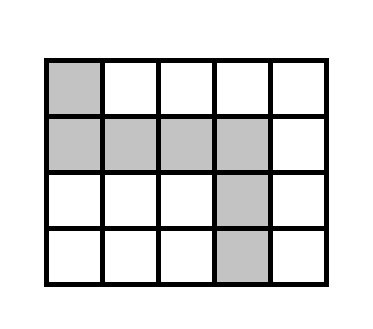
The above rectangle, which has perimeter 360, is divided into squares of equal size. Give the area of the shaded portion.


Explanation
The sides of the rectangle, in total, are divided into 18 segments of equal measure, as indicated below:
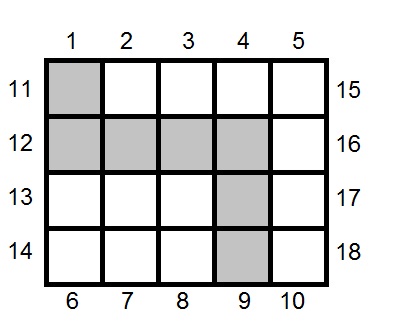
The rectangle has a total perimeter of 360, so each segment - one side of a square - measures 


Which is the greater quantity?
(a) The sum of the measures of the exterior angles of a thirty-sided polygon, one per vertex
(b) The sum of the measures of the exterior angles of a forty-sided polygon, one per vertex
(a) and (b) are equal
It is impossible to tell from the information given
(a) is greater
(b) is greater
Explanation
The Polygon Exterior-Angle Theorem states that the sum of the measures of the exterior angles of any polygon, one per vertex, is 
A regular pentagon has sidelength 72; the perimeter of a regular hexagon is 80% of that of the pentagon. Which is the greater quantity?
(A) The length of one side of the hexagon
(B) 50
(B) is greater
(A) is greater
It is impossible to determine which is greater from the information given
(A) and (B) are equal
Explanation
A regular pentagon has five sides of equal length; since one side is 72 units long, its perimeter is

80% of this is

so this is the length of the hexagon, and, since all six sides are of equal length, one side measures

(B) is greater.
Given Trapezoid 

Which is the greater quantity?
(a)

(b)

(a) is greater
(b) is greater
(a) and (b) are equal
It is impossible to tell from the information given
Explanation
The Same-Side Interior Angles Theorem states that if two parallel lines are crossed by a transversal, then the sum of the measures of a pair of same-side interior angles is always


Substitute:


(a) is the greater quantity
Which is the greater quantity?
(a) The sum of the measures of the exterior angles of a thirty-sided polygon, one per vertex
(b) The sum of the measures of the exterior angles of a forty-sided polygon, one per vertex
(a) and (b) are equal
It is impossible to tell from the information given
(a) is greater
(b) is greater
Explanation
The Polygon Exterior-Angle Theorem states that the sum of the measures of the exterior angles of any polygon, one per vertex, is

Figure NOT drawn to scale.
In the above figure, 


What is the perimeter of Trapezoid 


Explanation
The length of the midsegment of a trapezoid is half sum of the lengths of the bases, so

Also, by definition, since Trapezoid 


