Understanding Derivatives of Sums, Quotients, and Products - Math
Card 1 of 20
Find the derivative of the following function:
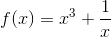
Find the derivative of the following function:
Tap to reveal answer
Since this function is a polynomial, we take the derivative of each term separately.
From the power rule, the derivative of

is simply

We can rewrite  as
as

and using the power rule again, we get a derivative of
 or
or 
So the answer is
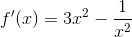
Since this function is a polynomial, we take the derivative of each term separately.
From the power rule, the derivative of
is simply
We can rewrite
and using the power rule again, we get a derivative of
So the answer is
← Didn't Know|Knew It →
Which of the following best represents  ?
?
Which of the following best represents
Tap to reveal answer
The question is just asking for the Quotient Rule formula.
Recall the Quotient Rule is the bottom function times the derivative of the top minus the top function times the derivative of the bottom all divided by the bottom function squared.
Given,
the bottom function is  and the top function is
  . This makes the bottom derivative
  and the top derivative
  .
.
Substituting these into the Quotient Rule formula resulting in the following.

The question is just asking for the Quotient Rule formula.
Recall the Quotient Rule is the bottom function times the derivative of the top minus the top function times the derivative of the bottom all divided by the bottom function squared.
Given,
the bottom function is
Substituting these into the Quotient Rule formula resulting in the following.
← Didn't Know|Knew It →
What is 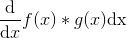
What is
Tap to reveal answer
The chain rule is "first times the derivative of the second plus second times derivative of the first".
In this case, that means  .
.
The chain rule is "first times the derivative of the second plus second times derivative of the first".
In this case, that means
← Didn't Know|Knew It →
What is the first derivative of  ?
?
What is the first derivative of
Tap to reveal answer
Since we're adding terms, we take the derivative of each part separately. For  , we can use the power rule, which states that we multiply the variable by the current exponent and then lower the exponent by one. For sine, we use our trigonometric derivative rules.
Remember, 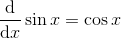 .
.


Since we're adding terms, we take the derivative of each part separately. For
Remember,
← Didn't Know|Knew It →
What is the second derivative of  ?
?
What is the second derivative of
Tap to reveal answer
To find the second derivative, we need to start by finding the first one.
Since we're adding terms, we take the derivative of each part separately. For  , we can use the power rule, which states that we multiply the variable by the current exponent and then lower the exponent by one. For sine, we use our trigonometric derivative rules.
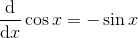
Remember, 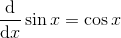 .
.


Now we repeat the process, but using  as our equation.


To find the second derivative, we need to start by finding the first one.
Since we're adding terms, we take the derivative of each part separately. For
Remember,
Now we repeat the process, but using
← Didn't Know|Knew It →
Find the derivative of the following function:
Find the derivative of the following function:
Tap to reveal answer
Since this function is a polynomial, we take the derivative of each term separately.
From the power rule, the derivative of
is simply
We can rewrite as
and using the power rule again, we get a derivative of
or
So the answer is
Since this function is a polynomial, we take the derivative of each term separately.
From the power rule, the derivative of
is simply
We can rewrite
and using the power rule again, we get a derivative of
So the answer is
← Didn't Know|Knew It →
Which of the following best represents ?
Which of the following best represents
Tap to reveal answer
The question is just asking for the Quotient Rule formula.
Recall the Quotient Rule is the bottom function times the derivative of the top minus the top function times the derivative of the bottom all divided by the bottom function squared.
Given,
the bottom function is and the top function is . This makes the bottom derivative and the top derivative .
Substituting these into the Quotient Rule formula resulting in the following.
The question is just asking for the Quotient Rule formula.
Recall the Quotient Rule is the bottom function times the derivative of the top minus the top function times the derivative of the bottom all divided by the bottom function squared.
Given,
the bottom function is
Substituting these into the Quotient Rule formula resulting in the following.
← Didn't Know|Knew It →
What is
What is
Tap to reveal answer
The chain rule is "first times the derivative of the second plus second times derivative of the first".
In this case, that means .
The chain rule is "first times the derivative of the second plus second times derivative of the first".
In this case, that means
← Didn't Know|Knew It →
What is the first derivative of ?
What is the first derivative of
Tap to reveal answer
Since we're adding terms, we take the derivative of each part separately. For , we can use the power rule, which states that we multiply the variable by the current exponent and then lower the exponent by one. For sine, we use our trigonometric derivative rules.
Remember, .
Since we're adding terms, we take the derivative of each part separately. For
Remember,
← Didn't Know|Knew It →
What is the second derivative of ?
What is the second derivative of
Tap to reveal answer
To find the second derivative, we need to start by finding the first one.
Since we're adding terms, we take the derivative of each part separately. For , we can use the power rule, which states that we multiply the variable by the current exponent and then lower the exponent by one. For sine, we use our trigonometric derivative rules.
Remember, .
Now we repeat the process, but using as our equation.
To find the second derivative, we need to start by finding the first one.
Since we're adding terms, we take the derivative of each part separately. For
Remember,
Now we repeat the process, but using
← Didn't Know|Knew It →
Find the derivative of the following function:
Find the derivative of the following function:
Tap to reveal answer
Since this function is a polynomial, we take the derivative of each term separately.
From the power rule, the derivative of
is simply
We can rewrite as
and using the power rule again, we get a derivative of
or
So the answer is
Since this function is a polynomial, we take the derivative of each term separately.
From the power rule, the derivative of
is simply
We can rewrite
and using the power rule again, we get a derivative of
So the answer is
← Didn't Know|Knew It →
Which of the following best represents ?
Which of the following best represents
Tap to reveal answer
The question is just asking for the Quotient Rule formula.
Recall the Quotient Rule is the bottom function times the derivative of the top minus the top function times the derivative of the bottom all divided by the bottom function squared.
Given,
the bottom function is and the top function is . This makes the bottom derivative and the top derivative .
Substituting these into the Quotient Rule formula resulting in the following.
The question is just asking for the Quotient Rule formula.
Recall the Quotient Rule is the bottom function times the derivative of the top minus the top function times the derivative of the bottom all divided by the bottom function squared.
Given,
the bottom function is
Substituting these into the Quotient Rule formula resulting in the following.
← Didn't Know|Knew It →
What is
What is
Tap to reveal answer
The chain rule is "first times the derivative of the second plus second times derivative of the first".
In this case, that means .
The chain rule is "first times the derivative of the second plus second times derivative of the first".
In this case, that means
← Didn't Know|Knew It →
What is the first derivative of ?
What is the first derivative of
Tap to reveal answer
Since we're adding terms, we take the derivative of each part separately. For , we can use the power rule, which states that we multiply the variable by the current exponent and then lower the exponent by one. For sine, we use our trigonometric derivative rules.
Remember, .
Since we're adding terms, we take the derivative of each part separately. For
Remember,
← Didn't Know|Knew It →
What is the second derivative of ?
What is the second derivative of
Tap to reveal answer
To find the second derivative, we need to start by finding the first one.
Since we're adding terms, we take the derivative of each part separately. For , we can use the power rule, which states that we multiply the variable by the current exponent and then lower the exponent by one. For sine, we use our trigonometric derivative rules.
Remember, .
Now we repeat the process, but using as our equation.
To find the second derivative, we need to start by finding the first one.
Since we're adding terms, we take the derivative of each part separately. For
Remember,
Now we repeat the process, but using
← Didn't Know|Knew It →
Find the derivative of the following function:
Find the derivative of the following function:
Tap to reveal answer
Since this function is a polynomial, we take the derivative of each term separately.
From the power rule, the derivative of
is simply
We can rewrite as
and using the power rule again, we get a derivative of
or
So the answer is
Since this function is a polynomial, we take the derivative of each term separately.
From the power rule, the derivative of
is simply
We can rewrite
and using the power rule again, we get a derivative of
So the answer is
← Didn't Know|Knew It →
Which of the following best represents ?
Which of the following best represents
Tap to reveal answer
The question is just asking for the Quotient Rule formula.
Recall the Quotient Rule is the bottom function times the derivative of the top minus the top function times the derivative of the bottom all divided by the bottom function squared.
Given,
the bottom function is and the top function is . This makes the bottom derivative and the top derivative .
Substituting these into the Quotient Rule formula resulting in the following.
The question is just asking for the Quotient Rule formula.
Recall the Quotient Rule is the bottom function times the derivative of the top minus the top function times the derivative of the bottom all divided by the bottom function squared.
Given,
the bottom function is
Substituting these into the Quotient Rule formula resulting in the following.
← Didn't Know|Knew It →
What is
What is
Tap to reveal answer
The chain rule is "first times the derivative of the second plus second times derivative of the first".
In this case, that means .
The chain rule is "first times the derivative of the second plus second times derivative of the first".
In this case, that means
← Didn't Know|Knew It →
What is the first derivative of ?
What is the first derivative of
Tap to reveal answer
Since we're adding terms, we take the derivative of each part separately. For , we can use the power rule, which states that we multiply the variable by the current exponent and then lower the exponent by one. For sine, we use our trigonometric derivative rules.
Remember, .
Since we're adding terms, we take the derivative of each part separately. For
Remember,
← Didn't Know|Knew It →
What is the second derivative of ?
What is the second derivative of
Tap to reveal answer
To find the second derivative, we need to start by finding the first one.
Since we're adding terms, we take the derivative of each part separately. For , we can use the power rule, which states that we multiply the variable by the current exponent and then lower the exponent by one. For sine, we use our trigonometric derivative rules.
Remember, .
Now we repeat the process, but using as our equation.
To find the second derivative, we need to start by finding the first one.
Since we're adding terms, we take the derivative of each part separately. For
Remember,
Now we repeat the process, but using
← Didn't Know|Knew It →