How to find the perimeter of a polygon - Math
Card 1 of 16
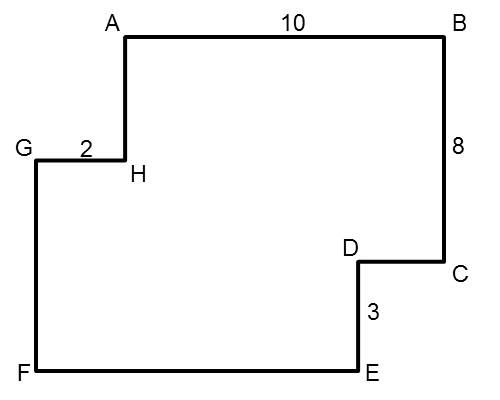
All segments of the polygon meet at right angles (90 degrees). The length of segment $\overline{AB}$ is 10. The length of segment $\overline{BC}$ is 8. The length of segment $\overline{DE}$ is 3. The length of segment $\overline{GH}$ is 2.
Find the perimeter of the polygon.
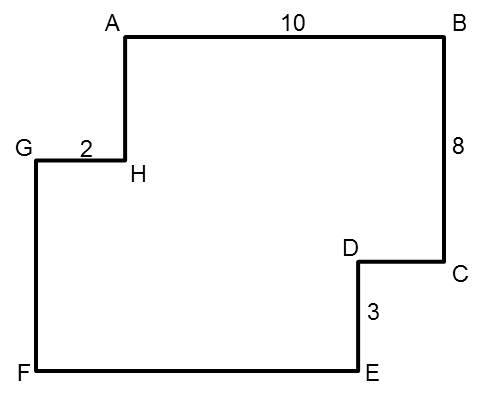
All segments of the polygon meet at right angles (90 degrees). The length of segment $\overline{AB}$ is 10. The length of segment $\overline{BC}$ is 8. The length of segment $\overline{DE}$ is 3. The length of segment $\overline{GH}$ is 2.
Find the perimeter of the polygon.
Tap to reveal answer
The perimeter of the polygon is 46. Think of this polygon as a rectangle with two of its corners "flipped" inwards. This "flipping" changes the area of the rectangle, but not its perimeter; therefore, the top and bottom sides of the original rectangle would be 12 units long (10+2=12). The left and right sides would be 11 units long (8+3=11). Adding all four sides, we find that the perimeter of the recangle (and therefore, of this polygon) is 46.
The perimeter of the polygon is 46. Think of this polygon as a rectangle with two of its corners "flipped" inwards. This "flipping" changes the area of the rectangle, but not its perimeter; therefore, the top and bottom sides of the original rectangle would be 12 units long (10+2=12). The left and right sides would be 11 units long (8+3=11). Adding all four sides, we find that the perimeter of the recangle (and therefore, of this polygon) is 46.
← Didn't Know|Knew It →
What is the perimeter of a regular nonagon with a side length of  ?
?
What is the perimeter of a regular nonagon with a side length of
Tap to reveal answer
To find the perimeter of a regular polygon, we take the length of each side,  , and multiply it by the number of sides,
  .
.

In a nonagon the number of sides is  , and in this example the side length is
  .
.

The perimeter is  .
.
To find the perimeter of a regular polygon, we take the length of each side,
In a nonagon the number of sides is
The perimeter is
← Didn't Know|Knew It →
What is the perimeter of a regular hendecagon with a side length of 32?
What is the perimeter of a regular hendecagon with a side length of 32?
Tap to reveal answer
To find the perimeter of a regular hendecagon you must first know the number of sides in a hendecagon is 11.
When you know the number of sides of a regular polygon to find the perimeter you must multiply the side length by the number of sides.
In this case it is  .
.
The answer for the perimeter is  .
.
To find the perimeter of a regular hendecagon you must first know the number of sides in a hendecagon is 11.
When you know the number of sides of a regular polygon to find the perimeter you must multiply the side length by the number of sides.
In this case it is
The answer for the perimeter is
← Didn't Know|Knew It →
Find the perimeter of the following octagon:
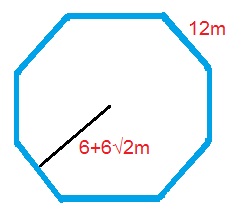
Find the perimeter of the following octagon:
Tap to reveal answer
The formula for the perimeter of an octagon is  .
.
Plugging in our values, we get:


The formula for the perimeter of an octagon is
Plugging in our values, we get:
← Didn't Know|Knew It →
All segments of the polygon meet at right angles (90 degrees). The length of segment $\overline{AB}$ is 10. The length of segment $\overline{BC}$ is 8. The length of segment $\overline{DE}$ is 3. The length of segment $\overline{GH}$ is 2.
Find the perimeter of the polygon.
All segments of the polygon meet at right angles (90 degrees). The length of segment $\overline{AB}$ is 10. The length of segment $\overline{BC}$ is 8. The length of segment $\overline{DE}$ is 3. The length of segment $\overline{GH}$ is 2.
Find the perimeter of the polygon.
Tap to reveal answer
The perimeter of the polygon is 46. Think of this polygon as a rectangle with two of its corners "flipped" inwards. This "flipping" changes the area of the rectangle, but not its perimeter; therefore, the top and bottom sides of the original rectangle would be 12 units long (10+2=12). The left and right sides would be 11 units long (8+3=11). Adding all four sides, we find that the perimeter of the recangle (and therefore, of this polygon) is 46.
The perimeter of the polygon is 46. Think of this polygon as a rectangle with two of its corners "flipped" inwards. This "flipping" changes the area of the rectangle, but not its perimeter; therefore, the top and bottom sides of the original rectangle would be 12 units long (10+2=12). The left and right sides would be 11 units long (8+3=11). Adding all four sides, we find that the perimeter of the recangle (and therefore, of this polygon) is 46.
← Didn't Know|Knew It →
What is the perimeter of a regular nonagon with a side length of ?
What is the perimeter of a regular nonagon with a side length of
Tap to reveal answer
To find the perimeter of a regular polygon, we take the length of each side, , and multiply it by the number of sides, .
In a nonagon the number of sides is , and in this example the side length is .
The perimeter is .
To find the perimeter of a regular polygon, we take the length of each side,
In a nonagon the number of sides is
The perimeter is
← Didn't Know|Knew It →
What is the perimeter of a regular hendecagon with a side length of 32?
What is the perimeter of a regular hendecagon with a side length of 32?
Tap to reveal answer
To find the perimeter of a regular hendecagon you must first know the number of sides in a hendecagon is 11.
When you know the number of sides of a regular polygon to find the perimeter you must multiply the side length by the number of sides.
In this case it is .
The answer for the perimeter is .
To find the perimeter of a regular hendecagon you must first know the number of sides in a hendecagon is 11.
When you know the number of sides of a regular polygon to find the perimeter you must multiply the side length by the number of sides.
In this case it is
The answer for the perimeter is
← Didn't Know|Knew It →
Find the perimeter of the following octagon:
Find the perimeter of the following octagon:
Tap to reveal answer
The formula for the perimeter of an octagon is .
Plugging in our values, we get:
The formula for the perimeter of an octagon is
Plugging in our values, we get:
← Didn't Know|Knew It →
All segments of the polygon meet at right angles (90 degrees). The length of segment $\overline{AB}$ is 10. The length of segment $\overline{BC}$ is 8. The length of segment $\overline{DE}$ is 3. The length of segment $\overline{GH}$ is 2.
Find the perimeter of the polygon.
All segments of the polygon meet at right angles (90 degrees). The length of segment $\overline{AB}$ is 10. The length of segment $\overline{BC}$ is 8. The length of segment $\overline{DE}$ is 3. The length of segment $\overline{GH}$ is 2.
Find the perimeter of the polygon.
Tap to reveal answer
The perimeter of the polygon is 46. Think of this polygon as a rectangle with two of its corners "flipped" inwards. This "flipping" changes the area of the rectangle, but not its perimeter; therefore, the top and bottom sides of the original rectangle would be 12 units long (10+2=12). The left and right sides would be 11 units long (8+3=11). Adding all four sides, we find that the perimeter of the recangle (and therefore, of this polygon) is 46.
The perimeter of the polygon is 46. Think of this polygon as a rectangle with two of its corners "flipped" inwards. This "flipping" changes the area of the rectangle, but not its perimeter; therefore, the top and bottom sides of the original rectangle would be 12 units long (10+2=12). The left and right sides would be 11 units long (8+3=11). Adding all four sides, we find that the perimeter of the recangle (and therefore, of this polygon) is 46.
← Didn't Know|Knew It →
What is the perimeter of a regular nonagon with a side length of ?
What is the perimeter of a regular nonagon with a side length of
Tap to reveal answer
To find the perimeter of a regular polygon, we take the length of each side, , and multiply it by the number of sides, .
In a nonagon the number of sides is , and in this example the side length is .
The perimeter is .
To find the perimeter of a regular polygon, we take the length of each side,
In a nonagon the number of sides is
The perimeter is
← Didn't Know|Knew It →
What is the perimeter of a regular hendecagon with a side length of 32?
What is the perimeter of a regular hendecagon with a side length of 32?
Tap to reveal answer
To find the perimeter of a regular hendecagon you must first know the number of sides in a hendecagon is 11.
When you know the number of sides of a regular polygon to find the perimeter you must multiply the side length by the number of sides.
In this case it is .
The answer for the perimeter is .
To find the perimeter of a regular hendecagon you must first know the number of sides in a hendecagon is 11.
When you know the number of sides of a regular polygon to find the perimeter you must multiply the side length by the number of sides.
In this case it is
The answer for the perimeter is
← Didn't Know|Knew It →
Find the perimeter of the following octagon:
Find the perimeter of the following octagon:
Tap to reveal answer
The formula for the perimeter of an octagon is .
Plugging in our values, we get:
The formula for the perimeter of an octagon is
Plugging in our values, we get:
← Didn't Know|Knew It →
All segments of the polygon meet at right angles (90 degrees). The length of segment $\overline{AB}$ is 10. The length of segment $\overline{BC}$ is 8. The length of segment $\overline{DE}$ is 3. The length of segment $\overline{GH}$ is 2.
Find the perimeter of the polygon.
All segments of the polygon meet at right angles (90 degrees). The length of segment $\overline{AB}$ is 10. The length of segment $\overline{BC}$ is 8. The length of segment $\overline{DE}$ is 3. The length of segment $\overline{GH}$ is 2.
Find the perimeter of the polygon.
Tap to reveal answer
The perimeter of the polygon is 46. Think of this polygon as a rectangle with two of its corners "flipped" inwards. This "flipping" changes the area of the rectangle, but not its perimeter; therefore, the top and bottom sides of the original rectangle would be 12 units long (10+2=12). The left and right sides would be 11 units long (8+3=11). Adding all four sides, we find that the perimeter of the recangle (and therefore, of this polygon) is 46.
The perimeter of the polygon is 46. Think of this polygon as a rectangle with two of its corners "flipped" inwards. This "flipping" changes the area of the rectangle, but not its perimeter; therefore, the top and bottom sides of the original rectangle would be 12 units long (10+2=12). The left and right sides would be 11 units long (8+3=11). Adding all four sides, we find that the perimeter of the recangle (and therefore, of this polygon) is 46.
← Didn't Know|Knew It →
What is the perimeter of a regular nonagon with a side length of ?
What is the perimeter of a regular nonagon with a side length of
Tap to reveal answer
To find the perimeter of a regular polygon, we take the length of each side, , and multiply it by the number of sides, .
In a nonagon the number of sides is , and in this example the side length is .
The perimeter is .
To find the perimeter of a regular polygon, we take the length of each side,
In a nonagon the number of sides is
The perimeter is
← Didn't Know|Knew It →
What is the perimeter of a regular hendecagon with a side length of 32?
What is the perimeter of a regular hendecagon with a side length of 32?
Tap to reveal answer
To find the perimeter of a regular hendecagon you must first know the number of sides in a hendecagon is 11.
When you know the number of sides of a regular polygon to find the perimeter you must multiply the side length by the number of sides.
In this case it is .
The answer for the perimeter is .
To find the perimeter of a regular hendecagon you must first know the number of sides in a hendecagon is 11.
When you know the number of sides of a regular polygon to find the perimeter you must multiply the side length by the number of sides.
In this case it is
The answer for the perimeter is
← Didn't Know|Knew It →
Find the perimeter of the following octagon:
Find the perimeter of the following octagon:
Tap to reveal answer
The formula for the perimeter of an octagon is .
Plugging in our values, we get:
The formula for the perimeter of an octagon is
Plugging in our values, we get:
← Didn't Know|Knew It →