How to find the length of the side of a pentagon - Math
Card 1 of 120
What is the side length of a regular pentagon with a perimeter of  ?
?
What is the side length of a regular pentagon with a perimeter of
Tap to reveal answer
To find the side length of a regular pentagon with a perimeter of  you must use the equation for the perimeter of a pentagon.
The equation is 
Plug in the numbers for perimeter and number of sides to get 
Divide each side of the equation by the number of sides to get the answer for the side length. 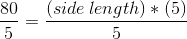
The answer is  .
.
To find the side length of a regular pentagon with a perimeter of
The equation is
Plug in the numbers for perimeter and number of sides to get
Divide each side of the equation by the number of sides to get the answer for the side length.
The answer is
← Didn't Know|Knew It →
Find the length of the side of the following pentagon.
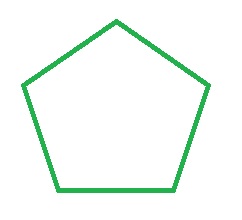
The perimeter of the pentagon is  .
.
Find the length of the side of the following pentagon.
The perimeter of the pentagon is
Tap to reveal answer
The formula for the perimeter of a regular pentagon is
 ,
,
where  represents the length of the side.
Plugging in our values, we get:


The formula for the perimeter of a regular pentagon is
where
Plugging in our values, we get:
← Didn't Know|Knew It →
Find the length of the side of the following pentagon.
The perimeter of the pentagon is  .
.
Find the length of the side of the following pentagon.
The perimeter of the pentagon is
Tap to reveal answer
The formula for the perimeter of a regular pentagon is
 ,
,
where represents the length of the side.
Plugging in our values, we get:


The formula for the perimeter of a regular pentagon is
where
Plugging in our values, we get:
← Didn't Know|Knew It →
A pentagon with a perimeter of one mile has three congruent sides. The second-longest side is 250 feet longer than any one of those three congruent sides, and the longest side is 500 feet longer than the second-longest side.
Which is the greater quantity?
(a) The length of the longest side of the pentagon
(b) Twice the length of one of the three shortest sides of the pentagon
A pentagon with a perimeter of one mile has three congruent sides. The second-longest side is 250 feet longer than any one of those three congruent sides, and the longest side is 500 feet longer than the second-longest side.
Which is the greater quantity?
(a) The length of the longest side of the pentagon
(b) Twice the length of one of the three shortest sides of the pentagon
Tap to reveal answer
If each of the five congruent sides has measure  , then the other two sides have measures
  and
and  . Add the sides to get the perimeter, which is equal to
  feet, the solve for
  :
:





 feet
feet
Now we can compare (a) and (b).
(a) The longest side has measure  feet.
feet.
(b) The three shortest sides each have length 856 feet; twice this is  feet.
feet.
(b) is greater.
If each of the five congruent sides has measure
Now we can compare (a) and (b).
(a) The longest side has measure
(b) The three shortest sides each have length 856 feet; twice this is
(b) is greater.
← Didn't Know|Knew It →
A regular pentagon has perimeter one yard. Which is the greater quantity?
(A) The length of one side
(B) 7 inches
A regular pentagon has perimeter one yard. Which is the greater quantity?
(A) The length of one side
(B) 7 inches
Tap to reveal answer
One yard is equal to 36 inches. A regular pentagon has five sides of equal length, so one side of the pentagon has length
 inches.
Since  , (A) is greater.
One yard is equal to 36 inches. A regular pentagon has five sides of equal length, so one side of the pentagon has length
Since
← Didn't Know|Knew It →
A pentagon with a perimeter of one mile has three congruent sides. The second-longest side is 250 feet longer than any one of those three congruent sides, and the longest side is 500 feet longer than the second-longest side.
Which is the greater quantity?
(a) The length of the longest side of the pentagon
(b) Twice the length of one of the three shortest sides of the pentagon
A pentagon with a perimeter of one mile has three congruent sides. The second-longest side is 250 feet longer than any one of those three congruent sides, and the longest side is 500 feet longer than the second-longest side.
Which is the greater quantity?
(a) The length of the longest side of the pentagon
(b) Twice the length of one of the three shortest sides of the pentagon
Tap to reveal answer
If each of the five congruent sides has measure , then the other two sides have measures and . Add the sides to get the perimeter, which is equal to feet, the solve for :
feet
Now we can compare (a) and (b).
(a) The longest side has measure feet.
(b) The three shortest sides each have length 856 feet; twice this is feet.
(b) is greater.
If each of the five congruent sides has measure
Now we can compare (a) and (b).
(a) The longest side has measure
(b) The three shortest sides each have length 856 feet; twice this is
(b) is greater.
← Didn't Know|Knew It →
A regular pentagon has perimeter one yard. Which is the greater quantity?
(A) The length of one side
(B) 7 inches
A regular pentagon has perimeter one yard. Which is the greater quantity?
(A) The length of one side
(B) 7 inches
Tap to reveal answer
One yard is equal to 36 inches. A regular pentagon has five sides of equal length, so one side of the pentagon has length
inches.
Since , (A) is greater.
One yard is equal to 36 inches. A regular pentagon has five sides of equal length, so one side of the pentagon has length
Since
← Didn't Know|Knew It →
A regular pentagon has a perimeter of  . Find the length of one side of the pentagon.
A regular pentagon has a perimeter of
Tap to reveal answer
By definition a regular pentagon must have five equivalent sides and five equivalent interior angles. Since this problem provides the measurement for the total perimeter of the pentagon, work backwards using the formula:
 , where
  the length of one side of the pentagon.


By definition a regular pentagon must have five equivalent sides and five equivalent interior angles. Since this problem provides the measurement for the total perimeter of the pentagon, work backwards using the formula:
← Didn't Know|Knew It →
A regular pentagon has a perimeter of  . Find the length of one side of the pentagon.
A regular pentagon has a perimeter of
Tap to reveal answer
By definition a regular pentagon must have five equivalent sides and five equivalent interior angles. Since this problem provides the measurement for the total perimeter of the pentagon, work backwards using the formula:
, where the length of one side of the pentagon.


By definition a regular pentagon must have five equivalent sides and five equivalent interior angles. Since this problem provides the measurement for the total perimeter of the pentagon, work backwards using the formula:
← Didn't Know|Knew It →
A regular pentagon has an area of  square units and an apothem measurement of
  . Find the length of one side of the pentagon.
A regular pentagon has an area of
Tap to reveal answer
A regular pentagon must have five equivalent sides and five equivalent interior angles. Regular pentagons can be divided up into five equivalent interior triangles, where the base of the triangle is a side length and the height of the triangle is the apothem. This problem provides the total area for the pentagon.
Therefore, you must work backwards using the area formula:  , where the base is equal to the length of one side of the triangle and the height of the triangle is the measurement of the apothem. However, this will only provide the measurement for one of the five interior triangles, thus you first need to divide the total area by
The solution is:

So, area of one of the five interior triangles is equal to: 
Now, apply the area formula:


A regular pentagon must have five equivalent sides and five equivalent interior angles. Regular pentagons can be divided up into five equivalent interior triangles, where the base of the triangle is a side length and the height of the triangle is the apothem. This problem provides the total area for the pentagon.
Therefore, you must work backwards using the area formula:
The solution is:
So, area of one of the five interior triangles is equal to:
Now, apply the area formula:
← Didn't Know|Knew It →
A regular pentagon has an area of  square units and an apothem measurement of
  . Find the length of one side of the pentagon.
A regular pentagon has an area of
Tap to reveal answer
A regular pentagon must have five equivalent sides and five equivalent interior angles. Regular pentagons can be divided up into five equivalent interior triangles, where the base of the triangle is a side length and the height of the triangle is the apothem. This problem provides the total area for the pentagon.
Therefore, you must work backwards using the area formula: , where the base is equal to the length of one side of the triangle and the height of the triangle is the measurement of the apothem. However, this will only provide the measurement for one of the five interior triangles, thus you first need to divide the total area by
The solution is:

So, area of one of the five interior triangles is equal to: 
Now, apply the area formula:


A regular pentagon must have five equivalent sides and five equivalent interior angles. Regular pentagons can be divided up into five equivalent interior triangles, where the base of the triangle is a side length and the height of the triangle is the apothem. This problem provides the total area for the pentagon.
Therefore, you must work backwards using the area formula:
The solution is:
So, area of one of the five interior triangles is equal to:
Now, apply the area formula:
← Didn't Know|Knew It →

The pentagon shown above has been divided into a top portion with two equivalent right triangles and a bottom rectangular portion. Find the length of side 
The pentagon shown above has been divided into a top portion with two equivalent right triangles and a bottom rectangular portion. Find the length of side
Tap to reveal answer
To solve this problem notice that the area is provided for the bottom rectangular portion of the pentagon. Therefore, work backwards using the area formula:


To solve this problem notice that the area is provided for the bottom rectangular portion of the pentagon. Therefore, work backwards using the area formula:
← Didn't Know|Knew It →
A regular pentagon has a perimeter of  . Find the length of one side of the pentagon.
A regular pentagon has a perimeter of
Tap to reveal answer
By definition a regular pentagon must have five equivalent sides and five equivalent interior angles. Since this problem provides the measurement for the total perimeter of the pentagon, work backwards using the formula:
, where the length of one side of the pentagon.


Check:

By definition a regular pentagon must have five equivalent sides and five equivalent interior angles. Since this problem provides the measurement for the total perimeter of the pentagon, work backwards using the formula:
Check:
← Didn't Know|Knew It →
A regular pentagon has an area of  square units and an apothem measurement of
  . Find the length of one side of the pentagon.
A regular pentagon has an area of
Tap to reveal answer
A regular pentagon must have five equivalent sides and five equivalent interior angles. Regular pentagons can be divided up into five equivalent interior triangles, where the base of the triangle is a side length and the height of the triangle is the apothem. This problem provides the total area for the pentagon.
Therefore, you must work backwards using the area formula: , where the base is equal to the length of one side of the triangle and the height of the triangle is the measurement of the apothem. However, this will only provide the measurement for one of the five interior triangles, thus you first need to divide the total area by
The solution is:

So, area of one of the five interior triangles is equal to: 
Now, apply the area formula:


A regular pentagon must have five equivalent sides and five equivalent interior angles. Regular pentagons can be divided up into five equivalent interior triangles, where the base of the triangle is a side length and the height of the triangle is the apothem. This problem provides the total area for the pentagon.
Therefore, you must work backwards using the area formula:
The solution is:
So, area of one of the five interior triangles is equal to:
Now, apply the area formula:
← Didn't Know|Knew It →
A regular pentagon has a perimeter of  . Find the length of one side of the pentagon.
A regular pentagon has a perimeter of
Tap to reveal answer
By definition a regular pentagon must have five equivalent sides and five equivalent interior angles. Since this problem provides the measurement for the total perimeter of the pentagon, work backwards using the formula:
, where the length of one side of the pentagon.


By definition a regular pentagon must have five equivalent sides and five equivalent interior angles. Since this problem provides the measurement for the total perimeter of the pentagon, work backwards using the formula:
← Didn't Know|Knew It →
A regular pentagon has an area of  square units and an apothem measurement of
  . Find the length of one side of the pentagon.
A regular pentagon has an area of
Tap to reveal answer
A regular pentagon must have five equivalent sides and five equivalent interior angles. Regular pentagons can be divided up into five equivalent interior triangles, where the base of the triangle is a side length and the height of the triangle is the apothem. This problem provides the total area for the pentagon.
Therefore, you must work backwards using the area formula: , where the base is equal to the length of one side of the triangle and the height of the triangle is the measurement of the apothem. However, this will only provide the measurement for one of the five interior triangles, thus you first need to divide the total area by
The solution is:

So, area of one of the five interior triangles is equal to: 
Now, apply the area formula:


A regular pentagon must have five equivalent sides and five equivalent interior angles. Regular pentagons can be divided up into five equivalent interior triangles, where the base of the triangle is a side length and the height of the triangle is the apothem. This problem provides the total area for the pentagon.
Therefore, you must work backwards using the area formula:
The solution is:
So, area of one of the five interior triangles is equal to:
Now, apply the area formula:
← Didn't Know|Knew It →

The pentagon shown above has been divided into a top portion with two equivalent right triangles and a bottom rectangular portion. Find the length of side
The pentagon shown above has been divided into a top portion with two equivalent right triangles and a bottom rectangular portion. Find the length of side
Tap to reveal answer
To solve this problem notice that the area is provided for the bottom rectangular portion of the pentagon. Therefore, work backwards using the area formula:


CHECK:

To solve this problem notice that the area is provided for the bottom rectangular portion of the pentagon. Therefore, work backwards using the area formula:
CHECK:
← Didn't Know|Knew It →
A regular pentagon has a perimeter of  . Find the length of one side of the pentagon.
A regular pentagon has a perimeter of
Tap to reveal answer
A regular pentagon must have five equivalent sides and five equivalent interior angles.
This problem provides the measurement for the total perimeter of the pentagon, work backwards using the formula:
, where the length of one side of the pentagon.


A regular pentagon must have five equivalent sides and five equivalent interior angles.
This problem provides the measurement for the total perimeter of the pentagon, work backwards using the formula:
← Didn't Know|Knew It →
A regular pentagon has an area of  square units and an apothem measurement of
  . Find the length of one side of the pentagon.
A regular pentagon has an area of
Tap to reveal answer
A regular pentagon must have five equivalent sides and five equivalent interior angles. Regular pentagons can be divided up into five equivalent interior triangles, where the base of the triangle is a side length and the height of the triangle is the apothem. This problem provides the total area for the pentagon.
Therefore, you must work backwards using the area formula: , where the base is equal to the length of one side of the triangle and the height of the triangle is the measurement of the apothem. However, this will only provide the measurement for one of the five interior triangles, thus you first need to divide the total area by
The solution is:

So, area of one of the five interior triangles is equal to: 
Now, apply the area formula:


A regular pentagon must have five equivalent sides and five equivalent interior angles. Regular pentagons can be divided up into five equivalent interior triangles, where the base of the triangle is a side length and the height of the triangle is the apothem. This problem provides the total area for the pentagon.
Therefore, you must work backwards using the area formula:
The solution is:
So, area of one of the five interior triangles is equal to:
Now, apply the area formula:
← Didn't Know|Knew It →
If a regular pentagon has an area of  and an apothem length of
  , what is the length of a side of the pentagon?
If a regular pentagon has an area of
Tap to reveal answer
Recall how to find the area of a regular pentagon:

Now, the perimeter of a regular pentagon can be found by multiplying the side length by  :
:

Substitute this into the equation for the area.

Now, rearrange the equation to solve for the side length.


Plug in the given area and apothem to solve for the side length of the pentagon.

Recall how to find the area of a regular pentagon:
Now, the perimeter of a regular pentagon can be found by multiplying the side length by
Substitute this into the equation for the area.
Now, rearrange the equation to solve for the side length.
Plug in the given area and apothem to solve for the side length of the pentagon.
← Didn't Know|Knew It →